
Rayovac Size 312 Hearing Aid Batteries
4.5Editor score
56 size 312 batteries
Reclosable storage door
Four-year shelf life
Explore 10 leading hearing aid battery options compared by size, count, packaging, shelf life, installation, reliability, and trusted brand features in this
Hearing aid batteries are small components with a major daily impact. A fresh, correctly sized zinc-air cell can keep a hearing device working consistently, while the wrong fit, age, or handling method can cause frustration. The best options combine reliable power, clear size identification, protected packaging, and an installation design that is easy to manage.
This guide compares ten hearing aid battery products, concentrating on the details that affect everyday use. The evaluation considers battery size, quantity, voltage and chemistry where stated, packaging features, shelf life, tabs, portability, and suitability for frequent users or devices with advanced streaming features. It also distinguishes between standard size 312 batteries and size 10 alternatives.
The list opens with the strongest general option for a size 312 battery, then identifies a smaller-count purchase for value and a larger protected multipack for users who want convenience. Each review explains the product's standouts and practical trade-offs. Product ratings and availability can change, and current prices should always be checked before purchasing.
4.5Editor score

4.6Editor score
4.2Editor score
The comparison below covers ten hearing aid battery products using the specifications supplied for each listing. Most options use size 312, while two are size 10 batteries; pack quantity, installation tabs, storage protections, country-of-origin claims, and stated battery life help distinguish the selections.




This Duracell size 312 battery earns the Editor's Choice position with a 4.6 rating and a combination of practical installation features, long storage assurance, and easy size recognition. The package contains 32 brown-coded batteries, making it a balanced option for regular users who want enough supply for routine changes without purchasing the largest possible multipack.
We may earn a commission when you buy through this link, at no additional cost to you.
The extra-long tab is one of the most useful details for anyone with limited dexterity. The listing states that the product is certified by the Arthritis Foundation for ease of use, and its brown color coding helps distinguish size 312 from Duracell's other hearing aid battery sizes. A four-year storage guarantee also provides useful planning confidence for households keeping spare cells on hand.
Duracell describes the cells as engineered for reliable, long-lasting performance, and the established brand identity may appeal to buyers who prioritize familiarity. The trade-off is quantity: 32 batteries is fewer than the 60-, 80-, or 56-cell alternatives elsewhere in this list. It is also specific to size 312, so users with another battery size would need to look elsewhere.
This is the most broadly appealing selection for someone using a size 312 hearing aid and seeking a manageable pack, a straightforward tab system, and a strong customer rating. It is also a sensible first purchase because it balances replenishment frequency with compact storage. Confirm that your hearing aid requires size 312 before ordering and compare the current listing details with your usual battery brand.
The extra-long pull tab is designed to make the battery easier to grasp, remove, and position. Combined with the stated Arthritis Foundation ease-of-use certification, this feature makes the pack especially relevant to users who find small-cell handling frustrating.
A four-year storage guarantee gives buyers a stated assurance that unused cells can remain ready for future replacement. The brown color code also reduces the chance of confusing this size with Duracell size 10, 13, or 675 batteries.
We may earn a commission when you buy through this link, at no additional cost to you.
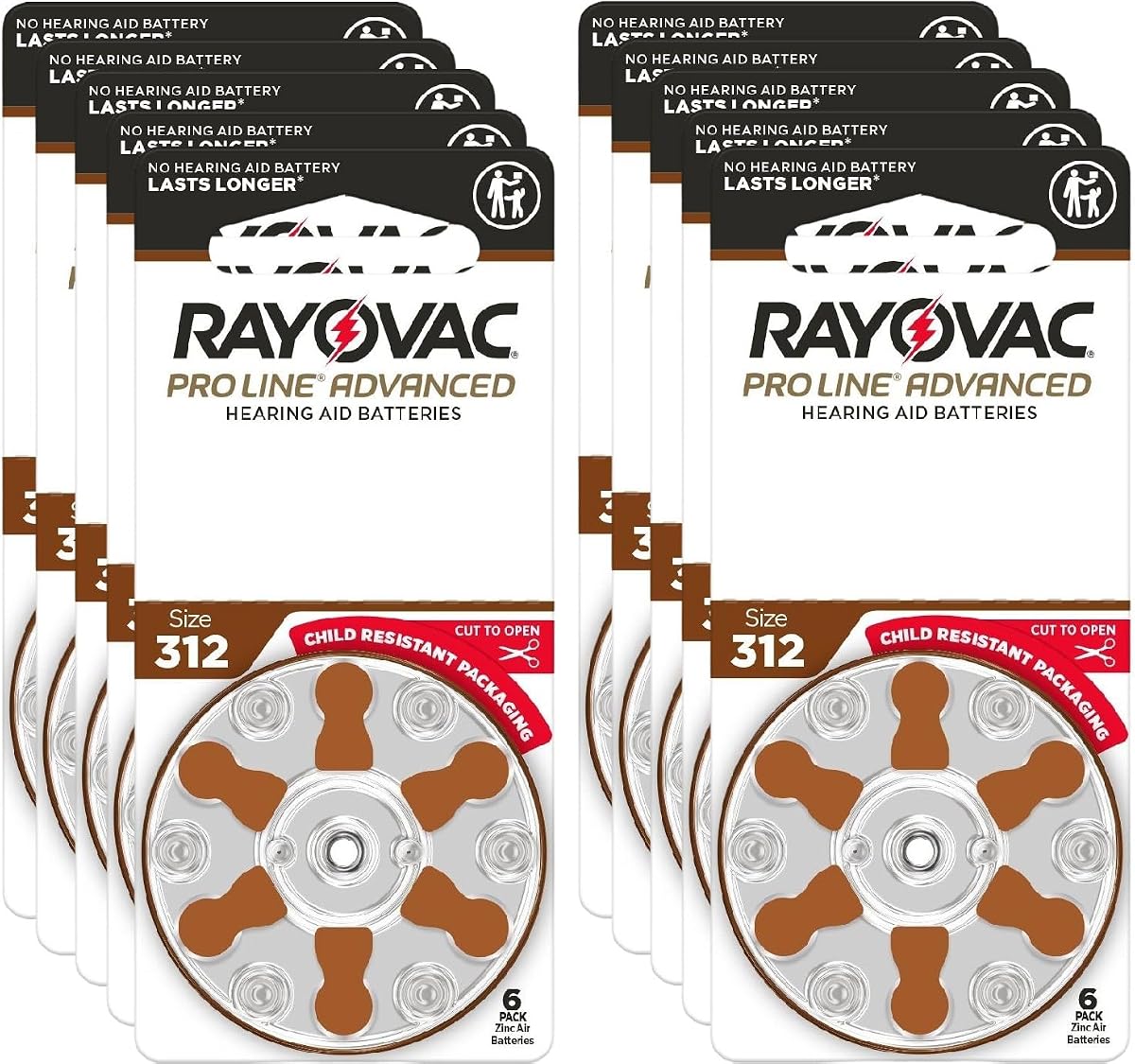
The Rayovac Proline Advanced is defined by unusually detailed listing specifications, including 1.45-volt nominal voltage, 170–180 mAh capacity, a 7.9 mm diameter, and a 3.6 mm cell height. Its 3.9 rating is the lowest among the ten selections, but the product data provides objective dimensions and chemistry details that can be useful when matching a battery to a specific device.
We may earn a commission when you buy through this link, at no additional cost to you.
The 60-battery pack is substantial, and the product uses zinc-air chemistry with a stated 100 percent mercury-free formulation. The listing highlights an optimized alloy and electrolyte mixture intended to maintain electronic consistency under changing current demands, as well as anti-corrosion protection designed to reduce swelling and leakage. Child-resistant packaging adds another practical layer for households with young children.
The principal drawback is the 3.9 rating, which sits below every other product in the comparison. That makes this less compelling as a general recommendation, particularly when shoppers have many established alternatives. The extensive technical claims also come from the supplied listing and should not be treated as independent laboratory findings beyond what the product description states.
This option is most appropriate for a buyer who values explicit cell dimensions, capacity, voltage, and corrosion-protection information. Those details can be particularly relevant to professionals or technically informed users. For everyone else, a higher-rated size 312 option with simpler branding may be easier to evaluate and more reassuring.
The stated diameter, height, weight, voltage, and capacity make this listing more technically transparent than most. Comparing those measurements with a device's requirements can reduce the risk of choosing an incompatible cell.
The listing describes anti-corrosion protection intended to limit swelling and leaking. That focus is particularly relevant because battery leakage can damage the internal contacts and electronics of a hearing aid.
We may earn a commission when you buy through this link, at no additional cost to you.
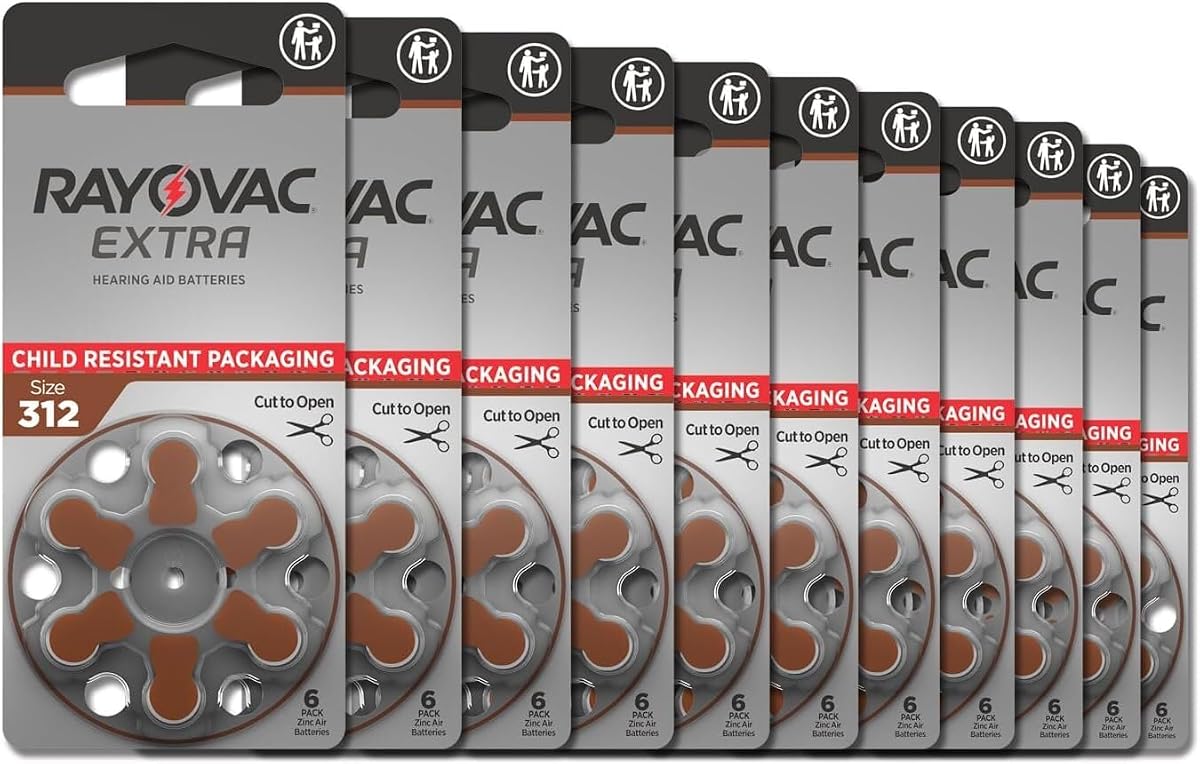
With 80 batteries and a 4.4 rating, this Rayovac Extra Advanced package is the largest-quantity product in the list. It is a strong fit for frequent hearing aid users, households with more than one size 312 device, or anyone who prefers to keep a substantial replacement supply in a secure, protected location.
We may earn a commission when you buy through this link, at no additional cost to you.
The product is described as mercury-free and positioned for high-use devices and features such as streaming video, audio, and phone calls. The new package is certified as child resistant. According to the supplied instructions, users should sit down with scissors and carefully cut the package open, then remove batteries individually rather than pulling them through an opening.
That child-resistant design is a meaningful safety benefit, but it is also a daily-use trade-off. Buyers who want instant access to a cell may find the scissors step inconvenient, particularly when changing a battery away from a table. The 80-cell quantity may also create unnecessary storage needs for a light user or someone with a single hearing aid.
This package suits users who value quantity, child safety, and a mercury-free size 312 product. It is particularly attractive for frequent users and households managing multiple hearing devices. If a smaller pack is sufficient or you prefer packaging that offers immediate cell access, compare the alternatives before deciding.
Eighty cells offer one of the deepest reserves in the comparison. Users with two hearing aids, regular travel needs, or a desire to reduce replenishment frequency can benefit from keeping more batteries together.
The certified child-resistant packaging is designed to reduce accidental access by children. It does require cutting the pack with scissors, so buyers should keep that tool available wherever routine changes take place.
We may earn a commission when you buy through this link, at no additional cost to you.
This 16-count Duracell package is the most compact size 312 selection in the guide. Its 4.2 rating is solid, and it retains the features many buyers look for in Duracell hearing aid cells: an extra-long installation tab, color-coded sizing, protected packaging, and a stated four-year storage guarantee.
We may earn a commission when you buy through this link, at no additional cost to you.
The smaller quantity is useful for travelers, occasional users, or people who want to test a battery brand without committing to a large pack. Because the cells use the familiar brown identification for size 312, they are easy to distinguish from batteries in other sizes. The extra-long tab also supports controlled removal from the package and placement into a compatible hearing aid.
The obvious limitation is replenishment frequency. Sixteen batteries will not last as long as the 48-, 56-, 60-, or 80-cell multipacks. Buyers who use two hearing aids, change batteries daily, or do not want frequent orders may find a larger pack more practical. The child-secure packaging also cannot be opened easily without scissors.
This is a good choice for someone who travels occasionally, has limited storage space, or wants a manageable trial quantity of a trusted battery brand. It is less compelling as a long-term supply purchase. Verify the required size, keep scissors nearby for the protected package, and consider how frequently your batteries are replaced.
A 16-cell pack takes up relatively little room in a drawer, travel case, or hearing aid kit. It can cover a short trip without creating the larger inventory required by an 80-battery multipack.
Duracell's color-coded system makes the brown size 312 cells easy to separate from the brand's other hearing aid battery sizes. The four-year storage guarantee adds useful confidence for cells being held as spares.
We may earn a commission when you buy through this link, at no additional cost to you.
Powermax's 60-count size 312 package is designed for frequent hearing aid users, medical professionals, and people who want a broad supply in one place. Its 4.0 rating is moderate, but the product offers a long tab, zinc-air technology, and compatibility with a wide range of hearing aid brands according to the listing.
We may earn a commission when you buy through this link, at no additional cost to you.
The batteries are described as 1.4-volt cells made with premium zinc and without cadmium or mercury. The long brown tab supports handling, while the stated ability to retain power during storage makes the pack practical for travel. A 60-cell inventory is large enough to suit two devices or frequent changes without reaching the 80-cell maximum.
Packaging is the main practical issue. Powermax states that its newer packaging may be more challenging to open because it follows the child-safety requirements associated with Reese's Law. The pack therefore needs to be opened carefully, and users should follow the printed instructions rather than forcing the package. The 4.0 rating also trails the leading choices, so brand familiarity may not carry the same weight here.
This product is most appropriate for a frequent user who values bulk quantity, a long tab, and broad compatibility over the reassurance of a higher customer rating. It can also suit a professional maintaining batteries for several clients. Check the hearing aid manufacturer's compatibility guidance, keep unused cells in their original package, and confirm that the current packaging design suits your routine.
The 60-cell count is a practical middle ground between compact 16-cell packaging and an 80-cell reserve. It is well suited to daily users who would rather order less frequently.
The brown long tab is intended to simplify both removal and placement. It is a meaningful daily benefit because a short tab can be difficult to grasp when fingers are dry or the user has limited dexterity.
We may earn a commission when you buy through this link, at no additional cost to you.
The Rayovac Extra Advanced 60-pack is a straightforward size 312 choice with a 4.2 rating. Its most notable supplied fact is the claim that it is made in the USA, which may matter to buyers who place importance on manufacturing origin. Otherwise, the product's appeal rests on a familiar format and a useful mid-to-large battery quantity.
We may earn a commission when you buy through this link, at no additional cost to you.
A pack of 60 is enough for regular use across multiple hearing aids, and it avoids the need to reorder as often as a small pack. The size 312 format and brown-tab convention make it familiar to users who already recognize hearing aid battery color coding. The product can be kept in its packaging and opened only as cells are needed, helping protect unused batteries.
The supplied data is less detailed than for several competing products. It does not provide a specific capacity, shelf-life period, or child-packaging description. That does not establish that those features are absent, but it gives buyers less information at the point of comparison. Buyers who need precise dimensions, storage duration, or a particular certification should consult the current package and manufacturer information.
This is a sensible option for a regular size 312 user who values a 60-cell quantity, a solid customer rating, and a listed country of origin. It may be especially appealing to buyers seeking a Rayovac product with fewer units than the 80-battery option. Compare the latest package information and current availability before settling on it.
Sixty cells can be a useful supply for people who use two hearing aids or replace batteries daily. It offers more reserve than compact packs while remaining easier to organize than the largest option.
The listing explicitly states that the batteries are made in the USA. Buyers who place weight on country-of-origin information can use that claim as one factor in comparing this pack with alternatives.
We may earn a commission when you buy through this link, at no additional cost to you.
The Duracell Activair Size 10 pack combines an 80-battery count with a 4.6 rating, tying the highest customer rating in this guide. It is the leading choice for users whose hearing aids require size 10 batteries and who want a large supply in compact, protected packaging.
We may earn a commission when you buy through this link, at no additional cost to you.
The listing specifies 1.45-volt zinc-air batteries, an EasyTab installation design, and packaging described as compact, discreet, and protective. The large count makes it practical for daily users or households with multiple compatible devices. Users can keep the cells together in their original packaging and remove one at a time as needed.
The essential limitation is size compatibility. A size 10 battery is physically different from size 312, size 13, and size 675, and it will not fit a device designed for another format. A buyer attracted by the rating and quantity should confirm the required size from the hearing aid manual or existing battery before ordering.
This is the strongest bulk option in the guide for size 10 users. It offers a strong rating, a large inventory, and an installation feature intended to make handling easier. People using size 312 should choose one of the size 312 options instead, and all buyers should inspect the hearing aid's battery compartment before purchasing.
The combination of a 4.6 rating and 80 cells gives this package an attractive balance of customer feedback and supply. It is well suited to users who would rather keep spare batteries available for an extended period.
The listing describes the package as compact, discreet, and protective. That makes the large count easier to store without creating a loose collection of small batteries.
We may earn a commission when you buy through this link, at no additional cost to you.
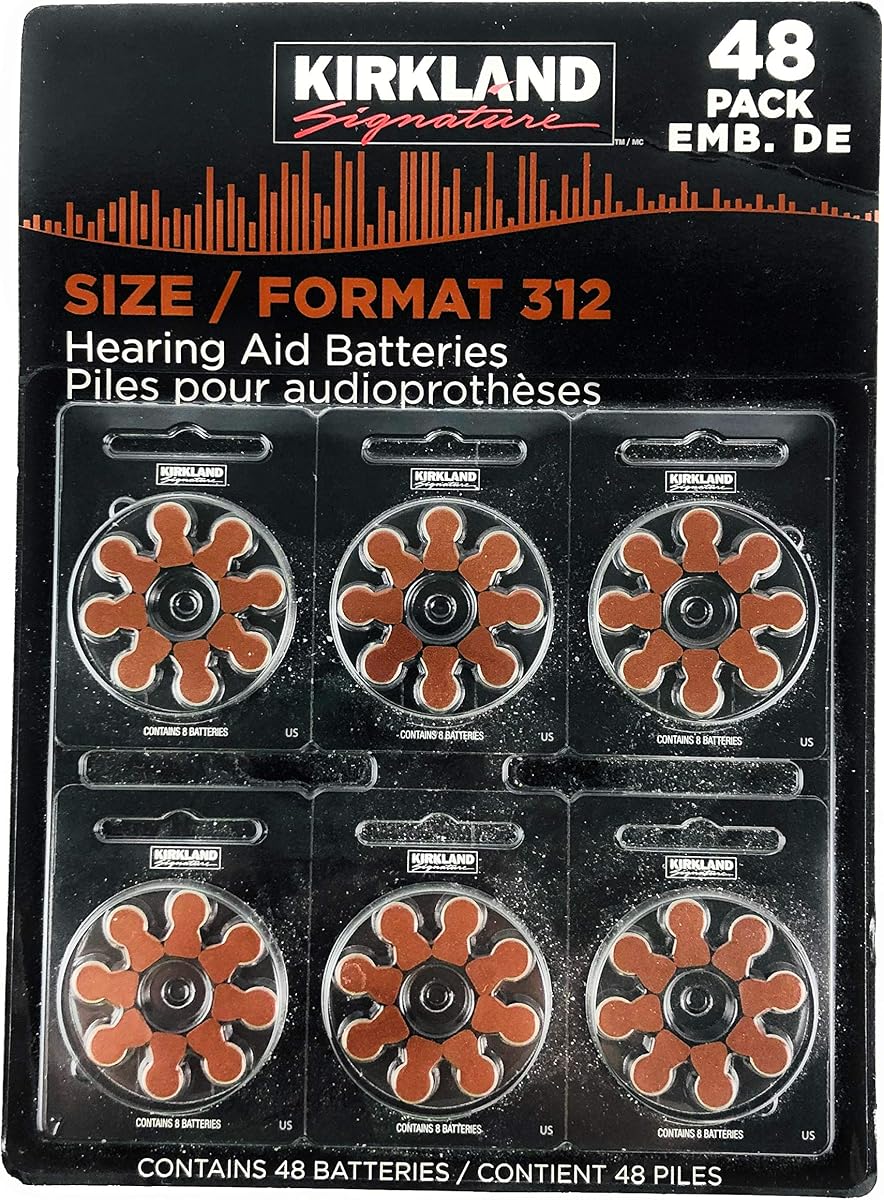
Kirkland Signature's 48-pack occupies a useful middle ground between smaller trial packs and high-volume multipacks. Its 4.2 rating indicates generally favorable customer feedback, while the mercury-free specification and recognized brand make it an accessible choice for regular size 312 users.
We may earn a commission when you buy through this link, at no additional cost to you.
Forty-eight batteries can cover the needs of someone using a single hearing aid on a moderate replacement schedule, or two hearing aids on a somewhat less frequent schedule. The product is specified as 1.45 volts and mercury free. Its compact package dimensions listed in the supplied data are 0.762 cm by 14.224 cm by 14.986 cm, which helps indicate a relatively flat storage format.
Compared with the leading Duracell option, this pack offers more cells but less explicit information about tabs, shelf life, and ease-of-use certification. Those omissions do not mean the product lacks such features, but the provided listing does not support specific claims about them. Shoppers who rely on a very long tab may want to inspect package photographs or manufacturer information before ordering.
This pack is a sensible value-focused selection for a size 312 user who wants a moderate bulk order and a mercury-free battery. It offers more supply than the 16-count Duracell without reaching the storage burden of an 80-cell pack. Confirm the size and voltage requirements, then compare the current cost and terms with the other size 312 options.
A 48-cell pack can provide a comfortable reserve without occupying as much space as an 80-cell product. It is a practical middle choice for regular users and households with two compatible hearing aids.
The product is explicitly described as mercury free and uses a 1.45-volt specification. Buyers should still check the hearing aid manual to confirm that both the size and voltage match their device.
We may earn a commission when you buy through this link, at no additional cost to you.
The Rayovac Advanced size 312 package earns the Best Premium designation because it combines a strong 4.5 rating with a considered storage and installation design. The listing describes a 56-battery total, long and wide tabs, a reclosable door, and a four-year shelf life, making it a particularly polished option for organized users.
We may earn a commission when you buy through this link, at no additional cost to you.
The reclosable door is a meaningful distinction from packaging that is cut open and discarded. It can help protect remaining batteries while allowing convenient access to individual cells. Long, wide tabs are designed to make the small zinc-air cells easier to handle, and the stated shelf life provides a clear basis for rotating stock.
The product is sold as eight batteries in a pack of seven, creating 56 cells in total. That is a large amount of batteries, and the nested package format may be more than a light user needs. The product is also intended specifically for size 312 devices. Although the listing states that its mercury-free formula uses U.S. and global parts and is produced in the USA, buyers should review the current package for any applicable certifications or warnings.
This is a strong recommendation for a frequent size 312 user who values organized storage, easy handling, and a long stated shelf life. It is particularly attractive for people who keep batteries in a travel pouch, bedside drawer, or care setting where a reclosable package is preferable to disposable wrapping. Confirm your device size and choose it when a substantial but organized inventory makes sense.
The reclosable door allows the remaining cells to be returned to protective storage after a battery is removed. This is convenient for anyone who changes batteries in several locations or carries spare cells between home and travel.
Long, wide tabs improve access to the cell, while the stated four-year shelf life supports keeping a larger reserve. Together, these features favor users who want fewer replenishments and better-organized spares.
We may earn a commission when you buy through this link, at no additional cost to you.
The Duracell Size 10 EasyTab listing carries a 4.4 rating and describes a 60-battery total with an EasyTab installation feature. It is a large size 10 option for frequent users, though the supplied title creates some ambiguity because it says '6 Duracell Hearing Aid Batteries' while the product details refer to a pack of six and 60 batteries total.
We may earn a commission when you buy through this link, at no additional cost to you.
The detailed bullets identify the product as 1.45-volt zinc-air batteries, specify size 10, and describe packaging that is compact, discreet, and protective. Those are useful qualities for a large collection of very small cells. The EasyTab design is intended to make opening and installing each battery easier, while a protected pack reduces the risk of loose batteries being mixed with unrelated items.
The inconsistency in the listing is important and should be verified before purchase. Buyers should check the package quantity on the current product page and compare it with the amount they actually need. A large purchase is not economical if the quantity differs from expectations, and it only applies to devices that take size 10 batteries rather than the more common size 312 format in this guide.
For a size 10 user who confirms the 60-cell quantity, this remains a good bulk option with a solid rating and a familiar installation feature. It is less suitable for a first-time buyer because of the listing ambiguity. Check the product images, manufacturer information, and current quantity before ordering, and never infer compatibility from a similar-looking package.
If the stated total of 60 batteries is confirmed, the pack can serve regular users or two compatible devices without frequent replenishment. Keep the cells in their protected packaging to preserve organization and handling convenience.
The supplied title and product details present different quantity references. Prospective buyers should check the current packaging and listing photographs carefully to confirm exactly how many cells they will receive.
We may earn a commission when you buy through this link, at no additional cost to you.
Choosing a hearing aid battery involves more than matching a color to a package. Battery size, device requirements, expected consumption, handling needs, storage conditions, and package accessibility all influence whether a product will work well in your daily routine.
The first and most important step is to identify the exact size required by your hearing aid. Eight of the ten products in this guide are size 312 batteries, while two are size 10. A size 312 cell is generally longer and larger than a size 10 cell, and the two formats are not interchangeable. Check the battery compartment, the hearing aid manual, or the dimensions of a cell you already know works. The conventional color system can provide an extra check: size 312 is commonly brown, while size 10 is often yellow, although packaging and color conventions should also be read carefully.
In short, never select a battery by brand or quantity alone. Verify the required size first, then compare products that genuinely fit your device.
The products range from 16 batteries to 80 batteries. A small pack may be sufficient for occasional use, a travel reserve, or a trial. Medium packs of 48 or 56 cells are convenient for regular users, while 60- and 80-cell packages are better for daily changes, two hearing aids, or households that want fewer orders. Because some hearing aids consume power faster when using streaming or other advanced features, users should consider their actual replacement pattern instead of relying on a generic estimate.
Choose a quantity you can use before batteries reach the end of their stated shelf life. A large multipack offers convenience and fewer replenishments, but it is unnecessary for a light user and consumes more storage space.
Hearing aid batteries are extremely small, and a narrow tab can make them difficult to remove from the package and position correctly. Duracell's EasyTab products emphasize an extended pull tab, while the Rayovac Advanced listing specifically describes long, wide tabs. These design details can be more important than packaging claims for users with arthritis, reduced dexterity, tremors, or generally imprecise grip.
Look for a tab that is easy to grasp and peel without bending the cell. If possible, choose a package that keeps each cell in a protected compartment until it is needed, because loose small batteries can be difficult to organize and may pose a risk to children or pets.
Child-resistant packaging can reduce the likelihood that a child will remove and swallow a battery. Several products in this comparison mention certified or compliant child-resistant packaging, and some require scissors to open. The added step is an inconvenience, but it is a meaningful safety trade-off when a household includes young children. Users should never place loose hearing aid batteries where children or pets can reach them, regardless of whether the package is child resistant.
For people who change batteries frequently, decide whether a scissors-based pack is manageable in the locations where you normally replace cells. A reclosable door, such as the one described for the Rayovac Advanced 56-pack, may provide a different balance of protection and accessibility.
The products use zinc-air chemistry, a common format for hearing aid batteries. Most supplied specifications list 1.45 volts, while the Powermax pack is listed as 1.4 volts. The Rayovac Proline Advanced product gives a more complete technical profile, including 1.45-volt nominal voltage, a 170–180 mAh capacity range, a 7.9 mm diameter, and a 3.6 mm height. These numbers can help when comparing size and electrical details, but the hearing aid manufacturer's requirements remain the deciding reference.
Do not assume a battery with similar dimensions is interchangeable. Confirm the required voltage and size, and never mix battery types in the same device. Dispose of used cells according to local guidance and keep them away from children and pets.
Fresh hearing aid batteries can remain useful for a meaningful period when kept in their original packaging and stored appropriately. Duracell states a four-year storage guarantee for its listed hearing aid batteries, and the Rayovac Advanced product states a four-year shelf life. Stated shelf lives are useful when estimating how large a reserve should be, particularly for infrequent travelers who may not use their entire supply quickly.
Store cells in a cool, dry place and avoid unnecessary heat, humidity, and direct sunlight. Keeping batteries sealed until needed helps preserve their condition and makes it easier to rotate stock without confusion.
Some hearing aid features, including wireless streaming, audio, and phone calls, may place additional power demands on a battery. Rayovac's 80-battery Extra Advanced listing specifically positions its cells for high-use devices and advanced features, while the Proline Advanced description discusses performance under fluctuating current demands. These are brand-provided positioning statements, not the results of an independent comparison performed for this guide.
Users with power-hungry features should look for a product that explicitly addresses those use cases, but should also follow the hearing aid maker's battery recommendations. A high-demand device can shorten battery life, making a larger pack more useful even when the cell itself has an identical nominal voltage and size.
Customer ratings can reveal broad satisfaction patterns, but they should not be the only criterion. The ratings in this guide range from 3.9 to 4.6, and the highest-rated option is not the largest pack. Look at rating, quantity, tab design, packaging, and device requirements together. A product with a slightly lower rating may still provide a better fit if its packaging is easier for you to use or its inventory better matches your replacement schedule.
Prioritize the battery that matches your device, remains easy for you to handle, and is supported by clear specifications. Treat the rating as useful context rather than a substitute for safe compatibility.
Begin by washing and drying your hands before opening the hearing aid and battery compartment. Remove the old cell according to the hearing aid manufacturer's instructions, and inspect the compartment for dust or residue. Take the new battery from its protective package only when you are ready to install it. Do not handle the flat surface of a zinc-air cell with bare fingers if avoidable, because oils from the skin can interfere with clean contact.
Remove the protective tab from the new battery and wait for the brief air-activation period specified in the battery or hearing aid instructions. Hold the battery by its edges or tab, match the positive and negative markings to those in the compartment, and place it flat in the correct orientation. Close the battery door, turn on the hearing aid, and confirm that sound is restored before putting the device back in your ear.
Keep unused batteries sealed in their original packaging and store them in a cool, dry location away from heat, direct sunlight, children, and pets. When a cell is no longer needed, dispose of it promptly according to local battery guidance. Never swallow a hearing aid battery, and seek urgent medical help if ingestion is suspected. For uncertain installation or compatibility questions, consult the hearing aid manufacturer or hearing care professional.
No. Size 312 and size 10 batteries have different physical dimensions and should never be substituted for one another. Check the hearing aid manual, the battery compartment, or the printed marking on a battery already known to work. Even if two cells have the same nominal voltage, their size and shape must match for safe and reliable operation.
Size 312 hearing aid batteries are commonly identified with brown packaging or a brown tab. Size 10 is often associated with yellow, size 13 with orange, and size 675 with blue. Color is a helpful cross-check, but the printed size number and the hearing aid manufacturer's instructions should remain the primary reference.
The tab covers the air inlet of the zinc-air battery and helps keep the cell inactive while it is stored. Removing it allows the battery to activate by drawing air. Buyers should use the tab for handling where possible, remove it only when ready to install the cell, and follow any activation time stated in the product instructions.
Keep unused batteries in their original packaging, where they are protected from moisture, accidental shorting, and direct contact with metal objects. Store the package in a cool, dry place away from extreme heat and sunlight. A stated four-year shelf life or storage guarantee can help guide stock planning, but older cells should still be checked before use.
A battery that has been installed and activated should not be returned to service. Its useful life depends on the device, feature use, and operating conditions, and it may be partly depleted when removed. Keep unused cells sealed, but treat a used battery as a single-use disposable cell and dispose of it according to local guidance.
The new battery may be the wrong size, may have been installed in the wrong direction, or may not have completed its air-activation period. Also check the battery door, remove any visible debris from the compartment, and confirm that the device powers on before replacing the battery again. If the problem continues, follow the manufacturer's troubleshooting instructions and contact your hearing care professional.
They are designed to be more difficult for children to open, so some packages require scissors or a similar tool. That extra step is a safety feature rather than a defect. Because a battery pack may be opened in different locations, keep scissors accessible and always place opened packaging and loose batteries out of children's reach.
Not necessarily. Within the correct size and voltage, a larger pack usually provides convenience and fewer replenishments rather than better electrical performance. Individual battery life can vary with the hearing aid, output settings, streaming, and other power demands. Compare package size, storage life, handling features, and your actual replacement rate to determine which quantity is most useful.
The Duracell Size 312 EasyTab 32-pack stands out as the best overall option because it combines a 4.6 rating, an extra-long installation tab, color coding, and a four-year storage guarantee. The Rayovac Advanced 56-pack earns the premium recommendation for its reclosable storage door, long and wide tabs, four-year shelf life, and 4.5 rating, while the Kirkland Signature 48-pack provides a balanced budget-oriented alternative.
Start with size and voltage because no packaging feature can compensate for an incompatible cell. From there, consider how often you replace batteries, whether you use two hearing aids or advanced streaming, how easy it is for you to handle small tabs, and how much storage space you have. Larger packs reduce ordering frequency, but a moderate quantity may be more sensible for occasional users or travelers.
Ratings, packaging claims, and availability can change, so check the current product page and manufacturer information before ordering. Compare current prices as well as pack quantities, and remember that the lowest per-battery figure is not necessarily the best purchase if the cells are the wrong size or difficult to handle.
