
RubensTab T11 Pro
4.4Editor score
Standalone 10.1-inch drawing tablet
Full HD IPS display
Battery-free pressure-sensitive pen
An iPad is a capable digital-art tool, but it is not the only route to a portable sketchbook. The strongest alternatives combine a pressure-sensitive pen, a responsive display, useful drawing software, and enough battery life to move beyond a fixed desk. Some work as complete standalone tablets, while others act as pen displays connected to a computer.
This guide compares ten drawing tablets according to screen quality, pen performance, portability, standalone capability, included software, hardware specifications, and compatibility. It covers both compact options for travel and larger screens for illustration, note-taking, animation, and other professional creative work, without assuming that every artist needs the same type of device.
Each pick reveals which workflow it best supports and where its compromises lie. The products span different price tiers, but specifications, ratings, software, and availability can change over time. Check current listings and confirm your preferred creative applications before making a final purchasing decision.
4.4Editor score

4.5Editor score

4.4Editor score
As an Amazon Associate we earn from qualifying purchases.
The table below compares all ten options by core drawing features, portability, screen design, and operating approach, making it easy to distinguish standalone tablets from computer-dependent pen displays.


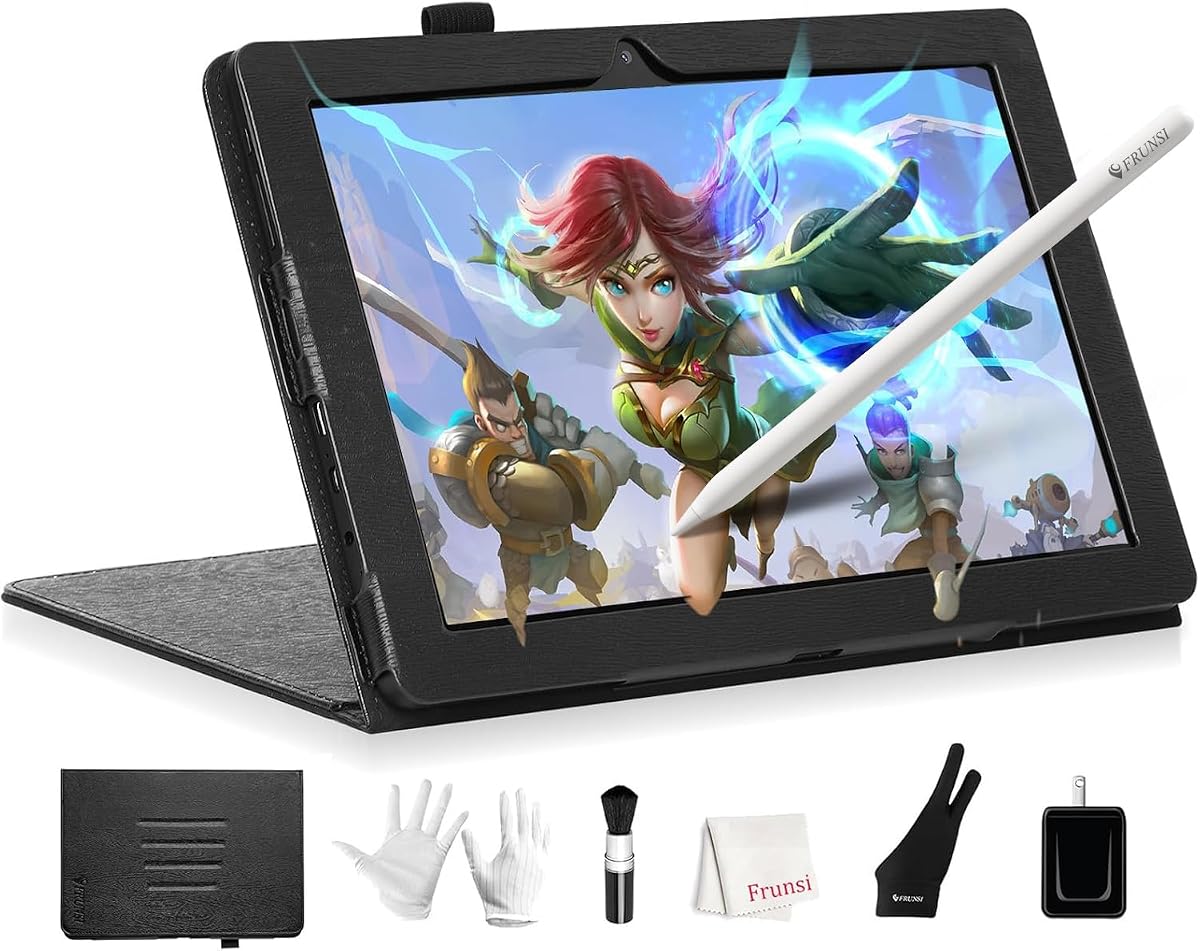

The RubensTab T11 Pro is a budget-minded alternative for artists who want an iPad-like drawing experience without needing an iPad. It combines a 10.1-inch Full HD IPS display, a pressure-sensitive pen, and standalone operation in a portable package. Its 4.4 rating reflects a generally approachable device with enough capability for sketching, illustration, editing, and everyday tablet tasks.
We may earn a commission when you buy through this link, at no additional cost to you.
Its main strength is independence. The tablet runs without an external computer, includes a battery-free pen, and arrives with drawing applications already installed. A 5,800mAh battery is listed for up to five hours of continuous use, while USB-C charging adds convenient travel flexibility. The adjustable stand case also makes it practical to use at a desk or hold it in a more natural sketching position.
The 10.1-inch screen is the central compromise. It provides a useful amount of canvas but will feel considerably smaller than the 13- to 15.6-inch alternatives in this guide, particularly for detailed illustration, extensive editing, or multi-panel layouts. Because it operates as a standalone Android-style tablet, software access may also differ from the broad desktop application support found on computer-dependent pen displays.
Choose the T11 Pro if your priority is affordable standalone creation, portability, and an immediately usable drawing setup. It is especially compelling for students, hobbyists, and travelers who do not want to carry a laptop. Artists needing a larger professional canvas should consider a pen display, while users with demanding standalone software requirements should verify supported applications before buying.
The T11 Pro removes the cable dependency associated with conventional pen displays. Its built-in battery, preinstalled creative software, and included pen let an artist power on and sketch without first configuring a desktop workflow, making it useful for classes, travel, meetings, and spontaneous drawing sessions.
The pressure-sensitive, battery-free pen supports adjustable sensitivity, while multi-touch controls make zooming, panning, and scrolling more intuitive. Full HD resolution supplies enough detail for studies, sketches, and lighter illustration work, although the compact display remains the main limitation for large compositions.
We may earn a commission when you buy through this link, at no additional cost to you.
The HUION Kamvas Pro 16 is the strongest fit for desktop-based artists who want a large drawing surface and broad creative-software compatibility. Its 15.6-inch full-laminated display, 4.5 rating, and extensive shortcut controls make it feel more like a specialized professional instrument than a repurposed general-purpose tablet.
We may earn a commission when you buy through this link, at no additional cost to you.
Visuals are a major attraction. The screen covers 120% sRGB and 92% AdobeRGB, offers a stated 1000:1 contrast ratio, and uses anti-glare glass with a slight texture for a more controlled drawing experience. The six express keys and touch bar reduce reliance on menus and mouse input, while the included ST200 stand adjusts from 20 to 60 degrees to improve viewing and posture.
Pen performance includes accurate tracking, 60-degree tilt recognition, two programmable side buttons, and a battery-free design. Compatibility extends across Windows, macOS, and Linux, with stated support for Photoshop, Clip Studio Paint, SAI, Lightroom, and other creative tools. Its obvious limitation is that it is not standalone: a capable computer or laptop is required for every session.
This is an excellent choice for illustrators, designers, photo editors, and animators who want a large, color-focused canvas without replacing their computer. It is less appropriate for commuters or anyone wanting to sketch immediately after a flight. If a large display matters but complete portability is nonnegotiable, look toward the standalone models farther down the list.
A 15.6-inch screen offers substantially more working room for layered illustrations, timelines, reference images, and editing tools than a compact tablet. The anti-glare laminated panel helps maintain visibility in varied lighting while offering a slightly textured surface that can feel more familiar during extended work.
Six express keys, a touch bar, and two programmable pen buttons place frequently used actions close to the artist’s hand. These controls can reduce menu navigation and make brush selection, zooming, and other routine operations faster without replacing the precision of a full keyboard and mouse.
We may earn a commission when you buy through this link, at no additional cost to you.
The RubensTab T14 brings a generous 14.1-inch canvas to the standalone tablet category. Unlike a traditional pen display, it can run drawing applications directly without a computer, making it appealing to students, illustrators, and travelers who want more screen area than a compact model without giving up immediate startup.
We may earn a commission when you buy through this link, at no additional cost to you.
The Full HD IPS display promises vibrant color, sharp detail, and wide viewing angles. Drawing is handled by a battery-free, pressure-sensitive pen with adjustable sensitivity, while multi-touch supports zooming, panning, and scrolling. A 10,000mAh battery is stated to provide up to five hours of continuous use, and the octa-core processor gives the tablet more headroom for general tablet tasks.
Preinstalled drawing applications and tutorials make the device approachable, while the adjustable case supports desktop use and travel. However, its larger footprint reduces the pocketability of an eight- or ten-inch tablet, and the battery remains a constraint for genuinely all-day mobile work. Software support should also be checked against the particular programs required by the artist.
The T14 is a strong middle ground for people who want an iPad-like portable canvas but need a larger working surface. It suits concept art, sketching, classroom notes, and moderately detailed illustration. Pick it when standalone convenience and screen size matter more than access to a complete desktop creative suite.
The 14.1-inch display gives artists a materially larger canvas for character studies, environmental sketches, diagrams, and page layouts. Its Full HD IPS panel also supports comfortable viewing from different angles, which helps when the device is propped up on its included adjustable case.
Preinstalled creative apps and tutorials shorten the path from unpacking to first sketch. The large internal battery supports travel and classroom use, while Wi-Fi connectivity allows access to online learning, cloud resources, and additional compatible applications.
We may earn a commission when you buy through this link, at no additional cost to you.
The Wacom MovinkPad 11 is a premium Android drawing tablet centered on pen performance and a low-friction mobile workflow. Its 4.4 rating, slim Pro Pen 3, and matte etched screen distinguish it from general-purpose tablets whose styluses are merely included accessories.
We may earn a commission when you buy through this link, at no additional cost to you.
The specially designed Pro Pen 3 provides 8,192 pressure levels, three buttons, and replacement nibs stored in the pen’s back end. The 11.45-inch display uses bright etched glass intended to feel more paper-like while reducing glare and fingerprints. A press-and-hold gesture on the screen can launch Wacom Canvas, helping artists move from inspiration to sketching with less friction.
Standalone operation is supported through Android 14, 8GB of memory, and 128GB of storage. The package includes Wacom Canvas, two years of Clip Studio Paint Debut, trials of selected painting apps, and ArtWorld training. At 1.3 pounds, the device is lighter than many laptops, while support for popular third-party pens broadens its creative potential.
This is the pick for an artist who values a refined stylus experience, immediate sketching, and a premium portable ecosystem. It is particularly useful for concept artists, designers, and students who already recognize Wacom’s software environment. The premium cost may be difficult to justify for casual users, but those focused on pen feel and portability receive the most relevant upgrades.
The Pro Pen 3 is built around the MovinkPad rather than treated as a generic accessory. Its high pressure resolution, three physical buttons, replacement nibs, and slim barrel support varied line weights and controls while maintaining a traditional pen-like profile.
The press-and-hold Canvas shortcut reduces the time between an idea and the first mark. Etched glass contributes a subtle texture that can make digital strokes feel more familiar, while anti-fingerprint and glare-related benefits help keep the surface clear during mobile sessions.
We may earn a commission when you buy through this link, at no additional cost to you.
The PicassoTab A10 is a compact standalone drawing tablet aimed at beginners, students, and artists who prioritize a small physical footprint. Its 10-inch laminated display, pressure-sensitive pen, and preloaded creative applications create an approachable alternative to a much larger iPad.
We may earn a commission when you buy through this link, at no additional cost to you.
The device operates without a computer and includes apps for drawing, painting, animation, tutorials, and guided lessons. Lifetime upgrades for Concepts and Artixo add structured learning material, while the Xplore app provides drawing guides and help. A protective case, drawing glove, universal power adapter, and installed screen protector make the package practical for mobile use.
Its laminated display is designed to reduce glare and parallax, while the active pen supplies 4,096 pressure levels for expressive sketching and illustration. An octa-core processor, 6GB of RAM, and 64GB of storage provide solid everyday performance, with storage expandable to 1TB. The 4.2 rating is the lowest in this group, making it wise to examine current owner feedback for specific app or reliability concerns.
The A10 is best for learners and users who want a compact, self-contained introduction to digital art. It can also handle schoolwork, streaming, and multitasking. More demanding illustrators should investigate the expanded storage, stylus accuracy, and application performance, while professionals who need desktop software may prefer a dedicated pen display.
The included Artixo VIP access and Xplore support are valuable for users who are unfamiliar with pressure, layers, brushes, and composition. Guided exercises can make the transition from traditional media to a digital canvas less intimidating without requiring separate course subscriptions.
A 10-inch body is easier to carry than the larger alternatives and still offers enough area for thumbnail sketches, character studies, and everyday illustration. The laminated panel and included glove support a controlled drawing experience with less visible parallax and fewer accidental palm marks.
We may earn a commission when you buy through this link, at no additional cost to you.
The XPPen Artist 13.3 Pro V2 is a high-resolution pen display for digital artists who want precise pen input and a screen without giving up desktop creative software. Its 4.5 rating and combination of 16,384 pressure levels, 60-degree tilt support, and a fully laminated 13.3-inch display place it among the most technically detailed picks here.
We may earn a commission when you buy through this link, at no additional cost to you.
The display offers wide viewing angles and color specifications of 88% NTSC, at least 91% AdobeRGB, and at least 123% sRGB. Fully laminated construction virtually eliminates parallax, helping the pen tip appear aligned with the underlying image. Low initial activation force is intended to produce a light, responsive touch, while the listed 220 RPS response supports lag-free movement.
Workflow controls include eight customizable shortcut keys and a red dial that can zoom, change brush size, or flip the canvas. The battery-free stylus includes two customizable buttons, eight replacement nibs, and a multifunctional case that doubles as a holder or stand. Compatibility with Windows, macOS, Chrome OS, and Linux covers major applications such as Photoshop, Illustrator, SAI, and Blender 3D.
This display is a strong choice for illustrators, 3D artists, and designers who work primarily on a computer. It offers a middle ground between compact tablets and the very large Kamvas Pro 16. It cannot function without a computer, however, and the included case may not provide the same ergonomic adjustment as a dedicated adjustable desktop stand.
The 16,384 pressure levels provide fine gradation for line weight, shading, and texture, while 60-degree tilt recognition allows shading to follow the pen’s orientation. Low initial activation force can make delicate lines easier to place, which is valuable for technical drawing and detailed illustration.
Because the glass and display are laminated rather than separated, the visual distance between the pen tip and its mark is minimized. This helps with fine detail, precise selection, and sketching, particularly when comparing the device with a display that has more pronounced parallax.
We may earn a commission when you buy through this link, at no additional cost to you.
The PicassoTab X14 is a large standalone drawing tablet designed for artists who want a generous canvas without tying their creative process to a desktop computer. It combines a 14-inch laminated display with preloaded drawing, painting, animation, and tutorial applications.
We may earn a commission when you buy through this link, at no additional cost to you.
The included pen delivers 4,096 pressure levels, while the fully laminated panel is intended to reduce glare and parallax. An octa-core processor, 6GB of RAM, and 128GB of storage give the tablet more room for creative files and multitasking than smaller models. Storage is listed as expandable to 1TB.
The package also includes a premium case, drawing glove, universal power adapter, screen protector, a lifetime Concepts upgrade, and lifetime Artixo tutorial access. These additions are especially useful for students and beginners because they cover both physical handling and skill development. Its 4.2 rating, however, suggests that some buyers may have encountered issues that deserve attention.
Choose the X14 for a large standalone canvas, school use, and guided learning. It is less compelling for artists who require the extensive application support of a desktop operating system, and the wide body may be cumbersome for highly mobile use. Verify current software compatibility and included accessories before ordering.
The 14-inch display creates room for larger drawings, page layouts, and side-by-side reference without requiring a computer display. Its laminated construction also brings the drawing surface closer to the pen, supporting more precise placement than a deeply layered display.
Lifetime upgrades and tutorials provide structured guidance for beginners, while the glove, case, adapter, and screen protector address common accessory needs. This makes the package especially practical for students building a first portable creative setup.
We may earn a commission when you buy through this link, at no additional cost to you.
The HUION Kamvas Pad 12 2K+ is a feature-rich standalone drawing tablet that blends a pen display with modern tablet computing. Its 4.5 rating reflects a combination of a sharp 12.2-inch panel, 16,384 pressure levels, a smooth 90Hz refresh rate, and a substantial 256GB storage configuration.
We may earn a commission when you buy through this link, at no additional cost to you.
The 3:2 display offers more vertical working area than a typical 16:9 panel, with a listed 2K+ resolution, 236 PPI, and 350-nit brightness. Color performance covers 99% sRGB with factory calibration of ΔE below 1.8. The fully laminated Canvas Glass 3.0 surface uses nano-etching to reduce glare while maintaining a paper-like texture and fingerprint resistance.
Its PenTech 4.0 system supports 16,384 pressure levels, 60-degree tilt, a 2g initial activation force, tilt auto-alignment, and a 0.35mm nib retraction. The standalone Android 16 environment includes HiPaint, Clip Studio Paint, ibisPaint X, MediBang Paint, and Huion Note. An eight-core processor, 8GB of RAM, expandable storage, cameras, and built-in speakers expand its use beyond drawing.
This is the most technically complete standalone option in the list for creators who value screen sharpness, pen precision, and modern app flexibility. It can also support classes, reading, media, and video calls. Its premium tier is less suitable for casual sketching, and artists who depend on desktop-only software should choose a computer-dependent pen display instead.
Sixteen thousand pressure levels create fine gradations for shading and line weight, while 60-degree tilt supports brush-oriented strokes. Low activation force helps light marks, and the auto-alignment and retraction features are intended to improve tip stability and edge accuracy.
The 3:2 panel is useful for reading and vertical layouts as well as artwork. Eight gigabytes of RAM, 256GB of storage, cameras, speakers, split-screen multitasking, and parental controls make it a broader portable creative computer rather than a dedicated pen screen.
We may earn a commission when you buy through this link, at no additional cost to you.
The T8 is the smallest standalone drawing tablet in this guide, offering an 8-inch display for artists who value portability above canvas size. Its Android 13 operating system, included creative applications, and 4.4 rating make it a practical alternative for quick sketches, notes, and lightweight illustration.
We may earn a commission when you buy through this link, at no additional cost to you.
The 1200-by-800 screen is modest compared with the Full HD and 2K options elsewhere, but it provides enough space for thumbnails, studies, diagrams, and compact compositions. The device includes support for apps such as SketchBook, ArtFlow, and ibis Paint X, along with tutorials and bonus items intended to help newcomers begin quickly.
Hardware consists of an MTK quad-core processor, 4GB of RAM, and 64GB of expandable storage up to 256GB. Its 4,000mAh battery is stated to deliver up to 20 hours of drawing, offering a potentially longer untethered experience than several larger rivals. That advantage assumes real-world app demands remain moderate.
The T8 is ideal for travelers, students, and artists who want a sketchbook-sized device that is always ready. Its 8-inch screen makes detailed work inconvenient, and 4GB of memory may not suit demanding multi-app workflows. Pick it for spontaneous drawing and portability; choose a larger model for serious illustration or expansive projects.
The 8-inch format is easy to carry in a small bag and can be used quickly without arranging a desk or connecting cables. It suits urban sketching, quick character ideas, class notes, and practice sessions where a full-size canvas would be inconvenient.
The stated 20-hour drawing battery life could be particularly useful during travel or fieldwork. Android app support provides access to established drawing and painting tools, while expandable storage offers room for artwork and course materials.
We may earn a commission when you buy through this link, at no additional cost to you.
The Callsky-Tab Ctab 12 is a versatile Android drawing tablet aimed at users who split time between art, teaching, communication, and entertainment. Its 4.2 rating reflects a broadly capable package built around a 12-inch 2K IPS display, modern hardware, and a rechargeable stylus.
We may earn a commission when you buy through this link, at no additional cost to you.
The T616 octa-core processor, 16GB of RAM, and 256GB of expandable storage provide ample capacity for creative applications, multitask workflows, and large files. The 12-inch screen offers wide viewing angles and anti-glare treatment, which can help during extended drawing or when the tablet is propped up for a video call.
The included stylus provides 4,096 pressure levels and tilt support. It is rechargeable, attaches magnetically to reduce the chance of loss, and comes with a drawing glove intended to prevent smudges and improve palm comfort. The included protective flip case folds into three positions, supporting sketching, typing, and media viewing with different viewing angles.
The Ctab 12 is a sensible choice for a student or professional who wants one device for drawing, online teaching, Zoom meetings, animation, 3D work, and general tablet tasks. Its stated creative battery life is around six hours, so a charger or power bank matters for long outings. The modest user rating also makes recent owner feedback worth checking.
The Android 15 operating system, substantial memory, and expandable storage make the Ctab 12 suitable for more than sketching. It can support online teaching, presentations, communication, entertainment, and design workflows, making it a practical general-purpose companion for mobile workers.
Tilt support expands shading and brush orientation, while 4,096 pressure levels provide a broad range of line weights. Magnetic pen storage and the included glove address common practical problems: finding the stylus and keeping the drawing surface clear during palm-supported work.
We may earn a commission when you buy through this link, at no additional cost to you.
The right drawing tablet depends on whether your priority is a self-contained mobile canvas or a precise desktop pen display. Screen size, software, pen behavior, battery life, portability, and color accuracy should be balanced against the way you actually create.
A standalone tablet contains its own operating system and processing hardware, allowing you to draw without a separate computer. It is the closest functional substitute for an iPad because it can support mobile apps, note-taking, web access, and offline creation. A pen display, by contrast, normally acts as a precise input-and-output screen for a desktop or laptop. It usually offers deeper compatibility with professional software such as Photoshop, Illustrator, Clip Studio Paint, Blender, and SAI, but it cannot operate independently. Artists who commute, teach away from an office, or sketch spontaneously should lean toward a standalone model. Artists who already have a powerful computer and depend on desktop applications should favor a pen display.
Screen size changes both the amount of visible artwork and the physical bulk of the device. Eight- and ten-inch models are easiest to carry and work well for thumbnail sketches, notes, and compact character designs. A 12- to 14.1-inch tablet offers a more comfortable balance for illustration, layouts, and reference work, while a 15.6-inch pen display provides an expansive professional canvas. Larger screens can reduce the need to zoom and pan but are harder to support physically and may require more desk space. Resolution also matters: Full HD remains practical for many tasks, while 2K or 2K+ panels show finer detail and make color selection more precise.
Pressure sensitivity determines how subtly the stylus can vary line width, opacity, and texture. Devices listed with 4,096 pressure levels are suitable for a wide range of illustration, while 8,192 and 16,384 levels offer finer gradation for advanced work. Tilt recognition is valuable for brush shading, broad strokes, and simulating a traditional side of the pencil. Look for a battery-free pen if consistent tracking and simple maintenance are priorities, or consider a rechargeable stylus if that fits your routine better. Regardless of the stated pressure maximum, low activation force, stable tracking, and low parallax have a greater effect on the everyday drawing experience than an additional numerical increment.
Color accuracy matters when preparing artwork for print, branding, animation, or digital delivery. sRGB coverage is a useful general baseline for standard creative work, while AdobeRGB figures can be relevant for professional color workflows. Factory calibration, stable color modes, and stated contrast specifications add confidence that the display will present colors consistently. Surface design is equally important: laminated glass reduces the gap between the pen tip and the image, which minimizes parallax, while matte or etched finishes can reduce glare and give the pen a more tactile feel. Artists should choose a texture they enjoy rather than assuming the roughest surface is automatically the most realistic.
A drawing tablet is only as useful as the software it can run. Standalone Android devices should be checked for current support for your preferred illustration, painting, animation, and note-taking applications. Some products include licenses or lifetime upgrades for specific apps, while others merely provide tutorials or short trials. Pen displays generally rely on the software installed on the connected computer and may advertise broad Windows, macOS, or Linux compatibility. Confirm driver support, shortcut behavior, and whether your chosen application uses pressure and tilt before buying. For school, work, or client deliverables, a familiar software ecosystem may matter more than a newer processor or a larger internal speaker.
Portable drawing tools should be easy to carry, comfortable to hold, and able to survive a realistic day away from an outlet. Compact eight- and ten-inch models fit more readily into small bags, while larger standalone tablets may require a dedicated sleeve and take up more room. Battery claims should be treated as comparative guidance because screen brightness, wireless activity, drawing complexity, and individual app demands affect runtime. USB-C charging is convenient, and compatibility with a mobile power bank can extend travel sessions. A pen display saves space in another way because the computer remains responsible for processing and power, but it offers no drawing function when disconnected.
Express keys, touch bars, dials, and programmable stylus buttons can materially improve repetitive workflows. They allow zoom, brush selection, canvas rotation, undo, and other commands to be reached without moving a hand far from the pen. The number of controls should match your software habits; an artist who uses layers, transforms, and selection tools may benefit more than someone who only sketches. Ergonomics also depend on the included stand or case. A stable adjustable stand can reduce neck and shoulder strain during long sessions, whereas a folding cover case is better for portability. Look for a comfortable pen barrel, reliable nib support, and an arrangement that does not force awkward wrist angles.
Begin by charging the tablet fully, installing the manufacturer’s pen and display drivers where required, and confirming that the operating system recognizes the stylus. For a standalone model, open the included drawing application and adjust pressure, tilt, palm rejection, brush behavior, and hand orientation to match your technique. For a pen display, connect the device using the supplied or recommended cable, select the correct display input, and test pen movement across the full screen before starting a detailed project.
Create a few pressure and tilt test strokes before committing to finished work. Use light marks to check line consistency, gradually increase pressure to evaluate the full range, and tilt the pen to confirm that shading behaves naturally. Configure shortcuts and workspace tools around your most frequent actions, then adjust the stand or case so the display is positioned without straining your neck or wrist. Keep the active area clean and place the tablet on a stable surface during long sessions.
Protect the screen and pen tip from the most common sources of damage. Store the tablet in its case, avoid placing it face-down without a protective cover, and keep replacement nibs available in case the current tip becomes rough or damaged. Clean the display with a soft, lint-free cloth and avoid abrasive or liquid cleaners unless the manufacturer approves them. Do not leave a rechargeable stylus on the tablet for extended periods, and follow the battery guidance for the specific device. Periodic app updates and recalibration, where supported, can also help maintain consistent behavior.
A standalone drawing tablet with a pressure-sensitive pen is generally the closest iPad alternative because it does not require a separate computer. The RubensTab T11 Pro, PicassoTab models, Wacom MovinkPad 11, and HUION Kamvas Pad 12 2K+ all support this approach. The best choice depends on screen size, preferred apps, battery needs, and the level of pen precision required.
Yes, if it supports the applications and working style you need. Standalone tablets offer mobile-style app use, while pen displays provide a larger precise surface but depend on a computer. Illustrators working in desktop software should choose a pen display, whereas artists who sketch on the move may prefer a standalone tablet with preinstalled drawing and painting apps.
Standalone tablets are better for portability, travel, teaching, note-taking, and immediate use without cables. Pen displays are usually better for professional desktop applications, broad operating-system compatibility, and working directly in tools such as Photoshop, Illustrator, or Blender. Neither is universally superior; the right choice follows the artist’s physical workflow.
No. A device with 4,096 levels can provide good results for many forms of illustration, and factors such as tracking stability, activation force, and screen parallax strongly affect the drawing feel. Higher pressure resolution can help advanced artists achieve finer gradations, but it is more important to choose a pen that feels natural and works with the intended software.
Ten-inch screens are convenient for travel and quick sketches, while 12- to 14-inch screens provide a better balance for detailed work and reference images. A 15.6-inch pen display is attractive for professional illustration and editing but requires more desk space. Choose based on the size of your compositions and how often you intend to work on the move.
Generally, yes. Lamination reduces the gap between the pen tip and the displayed image, which can minimize parallax and improve the precision of small marks. Matte or etched versions can also reduce glare and feel more tactile, although artists with different preferences may find smoother or textured surfaces more comfortable.
Many can, but compatibility depends on the device and the required application. Pen displays often support desktop animation and 3D software when paired with a suitable computer, while standalone models depend on available Android or tablet applications. Confirm the specific program, operating-system version, pen features, and performance needs before purchasing.
Keep it in a protective case, use a soft lint-free cloth for the screen, and avoid abrasive cleaning products. Protect the stylus from drops, replace worn nibs promptly, and follow the manufacturer’s charging guidance. Stable stands and regular software updates can also improve comfort, reliability, and long-term performance.
The RubensTab T11 Pro stands out as the best budget standalone option, combining a compact Full HD pen display with no-computer operation. The HUION Kamvas Pro 16 is the editor’s choice for artists who want a large, color-focused desktop canvas, while the Wacom MovinkPad 11 leads the premium portable group with its specialized Pro Pen 3, paper-like etched surface, and rapid canvas launch.
Most buyers should prioritize the workflow they need rather than the largest specification. Choose a standalone model for mobility and note-taking, a computer-dependent pen display for professional desktop applications, and a screen size that matches your typical compositions. Pen tracking, app compatibility, ergonomics, and battery requirements often influence daily satisfaction more than a single headline number.
Before ordering, review current ratings and owner feedback, confirm that your essential drawing apps are supported, and verify the included pen, stand, cable, or accessories. Product specifications and pricing can change over time, so checking the current listing ensures that the device still matches your software, portability, and creative requirements.