
XRDS-RF 50W PL259 UHF Dummy Load
4.7Editor score
50-watt power handling
DC-to-520 MHz coverage
Low 1.2 maximum VSWR
PL259 male connector
This CB Radio Dummy Load guide compares ten options for power handling, connectors, frequency range, heat dissipation, and safe RF testing.
A CB Radio dummy load provides a controlled 50-ohm termination for transmitter testing, tuning, calibration, and bench work. A worthwhile model must handle the output of your radio, match its connector, dissipate heat safely, and maintain a low voltage standing wave ratio. These factors matter whether you are tuning a mobile rig, servicing equipment, or establishing a compact test setup.
This guide compares ten dummy loads using the specifications supplied for each product. The list covers PL259, UHF, SMA, and oil-filled can designs, with particular attention to rated power, usable frequency range, impedance, VSWR, connector type, cooling, and intended applications. It is a specification-led comparison rather than a claim of personal testing.
The reviews reveal that the strongest choice depends on the radio and the way the load will be used. Some models are better for lower-powered bench testing, while others are intended for sustained transmitter operation or broader high-frequency coverage. Product listings and prices can change, so confirm the current specifications, connector requirements, and operating conditions before purchasing.
4.7Editor score

4.8Editor score

4.7Editor score
The comparison below places all ten loads by their most important practical characteristics, including power capacity, frequency coverage, impedance, connector, and thermal design. Use it to identify the right form factor for your radio before considering secondary details.



The XRDS-RF 100W PL259 UHF Male Plug RF Dummy Load is a well-balanced option for radio owners who need more power tolerance than a small bench load but do not require a large high-power termination. Its 4.6 rating reflects a generally favorable user reception, and its 100-watt rating provides a useful middle ground for many CB and amateur transmitter arrangements.
We may earn a commission when you buy through this link, at no additional cost to you.
The load uses a PL259 male connector, a standard interface for many mobile and amateur radios. Its specified 50-ohm impedance and VSWR of no more than 1.2 make it appropriate for transmitter testing, antenna calibration, and RF equipment validation across the listed DC-to-520 MHz range. The nickel-plated copper outer shell and silver-plated inner needle emphasize conductivity and dependable contact at the connector.
The main limitation is that 100 watts is the ceiling rather than an unlimited rating, and the frequency range stops at 520 MHz. It also provides less headroom than the 200-watt option in this list. Those constraints are sensible for a compact PL259 load and are unlikely to be a concern if your radio’s output remains comfortably below the rating.
This is a strong selection for operators seeking a straightforward, generously rated dummy load without moving to a much larger can-style design. It is particularly appropriate for routine CB radio service, ham radio bench work, and UHF testing where a PL259 connection and dependable 50-ohm termination are the priorities.
The 100-watt rating gives this model more scope than lower-powered bench terminations. It is a sensible middle tier for many mobile and amateur radios, provided continuous output remains within the stated limit.
A PL259 male plug allows direct connection to compatible radios, while the specified 50-ohm impedance and maximum 1.2 VSWR support dependable RF termination and reduced reflection.
We may earn a commission when you buy through this link, at no additional cost to you.
The BECEN 100 Watt PL259 Dummy Load stands out for its unusually broad stated frequency range. Instead of stopping in the VHF region, it is listed from DC through 1.0 GHz, making it useful for technicians who work with more than traditional CB and amateur-radio frequencies. Its 4.7 rating indicates strong user satisfaction, while the 100-watt continuous rating is suitable for demanding test applications.
We may earn a commission when you buy through this link, at no additional cost to you.
The product is engineered as a high-power UHF termination with a 50-ohm impedance. Silver-plated UHF pins are intended to support conductivity and reduced loss at high frequencies. A compact housing with integrated heat-dissipation fins addresses the need to remain stable during prolonged use, and the listed operating range from minus 55 to plus 125 degrees Celsius supports varied working environments.
One detail worth checking before purchase is that the description refers to low VSWR but does not provide the same explicit maximum figure shown for several competing models. The 1 GHz upper frequency is also a broad claim that should be considered alongside the specific bands and equipment you intend to test. Despite those points, the extra bandwidth, cooling design, and warranty make this a polished higher-tier option.
Choose this model when your testing reaches beyond 520 MHz or when you want one PL259 load for commercial, educational, broadcast, radio, and laboratory tasks. It is less necessary for basic low-power CB servicing, but it offers the most expansive specified coverage among the PL259 choices.
The DC-to-1 GHz specification makes this a practical single-platform load for users who test equipment across HF, VHF, UHF, and portions of the microwave range. Actual performance should still be matched to the equipment and band in use.
Integrated heat-dissipation fins are a meaningful advantage during sustained transmitter tests. They help the unit manage the energy converted to heat by the resistive element.
We may earn a commission when you buy through this link, at no additional cost to you.
The XRDS 200W PL259 UHF Male RF Dummy Load is the leading choice in this comparison for users who want comfortable power headroom in a conventional PL259 package. It carries a 4.8 rating, the highest among the rated multi-product PL259 loads here, and its 200-watt capacity is double that of the 100-watt models.
We may earn a commission when you buy through this link, at no additional cost to you.
The self-contained air-cooled resistive unit attaches to the male PL259 antenna connector found on the back of an amateur radio rig. Its listed frequency coverage is DC through 520 MHz, impedance is 50 ohms, and maximum VSWR is 1.2. Nickel-plated copper on the outer shell and silver-plated copper on the inner needle support reliable conductivity and contact integrity.
This rating also means the load is not limited to small bench signals. It can serve higher-output mobile or amateur transmitters while still operating within the stated frequency band, provided duty cycle and cooling conditions are appropriate. The tradeoff is that a 200-watt load can be less convenient to carry or reposition than a 50-watt model, and it does not extend to the higher frequencies offered by the BECEN unit.
For radio enthusiasts and service technicians who regularly work with high-output rigs, this model offers the most persuasive balance of capacity, rating, and direct PL259 compatibility. It is the recommendation to prioritize when dependable high-power termination matters more than minimal size.
A 200-watt rating provides meaningful margin for testing more powerful transmitters. This makes the model more adaptable than lower-watt alternatives when the output level is high or may change over time.
The air-cooled resistive design avoids the need for an external oil fill or a large liquid reservoir. That simplifies setup for owners who want a ready-to-attach PL259 termination.
We may earn a commission when you buy through this link, at no additional cost to you.
The Diamond Antenna DL30A is a compact dummy load created for testing and calibrating transmitters without producing an actual radiated RF signal. Its 4.4 rating is respectable but trails several of the specification-rich alternatives. The biggest appeal is its straightforward approach: a durable, heat-resistant load designed to work with standard mobile, amateur, and CB radio connections.
We may earn a commission when you buy through this link, at no additional cost to you.
The product description emphasizes that the DL30A maintains proper impedance and minimizes reflection, which are essential characteristics for meaningful SWR and output testing. Its compact format makes it easier to keep in a vehicle, service kit, or crowded workbench. The stated compatibility with several radio categories also differentiates it from loads sold with one connector type only.
The supplied information does not state a numerical power rating, maximum VSWR, or exact frequency band. Those omissions make careful comparison difficult, especially against products with clear 50-watt, 100-watt, or 200-watt limits. A compact, established-brand model can still be very practical, but the buyer should verify the connector and electrical limits in the current listing before connecting a transmitter.
This is a strong candidate for operators who prioritize a small, versatile load and do not need a high-power or wide-frequency specification. It is less compelling for a bench where maximum power, VSWR, and frequency limits are being compared numerically, but its simple setup and cross-radio applicability remain useful.
The DL30A’s compact construction reduces the footprint of a transmitter test setup. It can be moved more easily between a bench, vehicle, or temporary operating location.
A dummy load gives a radio a controlled destination for RF energy instead of an antenna that may radiate. This supports bench testing while reducing unwanted emissions into the surrounding environment.
We may earn a commission when you buy through this link, at no additional cost to you.
The 50W PL259 UHF Male Dummy Load is a practical middle-ground option for lower- and mid-power radio testing. Its 4.7 rating shows a favorable response from buyers, and the published specifications are easy to interpret: 50 watts of power, 50 ohms of impedance, a PL259 male connector, and DC-to-520 MHz coverage.
We may earn a commission when you buy through this link, at no additional cost to you.
The maximum VSWR of 1.20 supports a clean termination with limited reflection, making the device suitable for RF testing and calibration within the listed band. Its operating range of minus 55 to plus 125 degrees Celsius is unusually broad, while the construction is described as providing effective heat dissipation. These qualities make it practical for controlled bench and service environments.
The defining limit is its 50-watt power rating. It should not be treated as a high-power continuous load, and a radio operating at or near that level may leave little thermal or specification margin. Buyers wanting a wider operating band will also need to look beyond 520 MHz. For ordinary service work within the rating, however, those restrictions are easy to understand and plan around.
Choose this model if your CB or amateur radio output is comfortably below 50 watts and you want a direct PL259 connection, a low-VSWR termination, and a compact load without moving to a 100- or 200-watt design. It is particularly useful for routine tuning, bench checks, and antenna-system testing.
The 50-watt ceiling and 520 MHz upper frequency are clearly stated, helping users avoid overloading the device. Staying comfortably within both limits makes this a predictable bench companion.
The listed heat-dissipation design is important because a resistive dummy load converts much of the applied RF energy into heat. Efficient thermal management supports more consistent operation.
We may earn a commission when you buy through this link, at no additional cost to you.
The XRDS 100W PL259 UHF Male RF Dummy Load is designed to attach directly to the male PL259 antenna connector on the back of an amateur radio. Its 4.6 rating indicates a generally positive response, while the 100-watt power handling and DC-to-520 MHz frequency range make it relevant for a broad range of common radio service work.
We may earn a commission when you buy through this link, at no additional cost to you.
The load is a self-contained air-cooled resistive unit with a stated impedance of 50 ohms and maximum VSWR of 1.2. Connector construction includes a nickel-plated copper outer shell and silver-plated copper inner needle. Those features align well with the needs of a practical test load intended for routine transmitter checks rather than a complex laboratory assembly.
Its specifications overlap heavily with the other 100-watt PL259 model in the list, so the decision may depend on connector fit, physical size, current listing details, or user preference. It does not offer the 200-watt headroom of the top-ranked high-capacity PL259 option or the extended 1 GHz coverage of the BECEN model. The 520 MHz ceiling remains adequate for many conventional amateur and CB applications.
This is a sensible recommendation for ham radio operators who want a direct, self-contained PL259 termination for testing a 100-watt-class setup. It is particularly helpful when a technician values simple attachment and an air-cooled design over a compact wattage or broader band.
The male PL259 connector is designed to fit the corresponding antenna connection on compatible amateur radio equipment. That direct interface reduces adapter complexity during routine testing.
The combination of 50-ohm impedance, a maximum 1.2 VSWR, and a 100-watt rating provides a clear operating envelope. It suits many transmitter tests without approaching a very high-power configuration.
We may earn a commission when you buy through this link, at no additional cost to you.
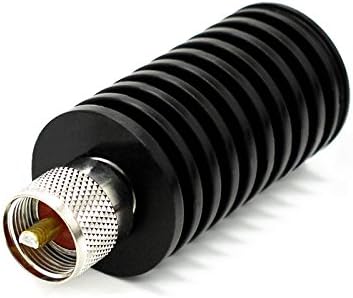
The XRDS-RF 50W PL259 UHF Male Plug RF Dummy Load combines a strong 4.7 rating with a practical 50-watt capacity. It is a natural choice for a compact test bench, a mobile radio service kit, or any setup where a radio needs a controlled 50-ohm termination without the weight and complexity of a large power load.
We may earn a commission when you buy through this link, at no additional cost to you.
The specifications cover DC through 520 MHz, with VSWR limited to 1.2. A PL259 male plug provides direct connectivity to compatible equipment, while the nickel-plated copper outer shell and silver-plated copper inner needle are intended to support conductivity. The stated working temperature range is minus 55 to plus 125 degrees Celsius, making it suitable for normal workshop and field-service conditions.
The 50-watt limit is the central trade-off. Users with high-output amplifiers, powerful mobile transmitters, or continuous-duty requirements may be better served by a 100- or 200-watt unit. Likewise, anyone testing above 520 MHz will need a different design. For applications inside those boundaries, the specifications are clear and uncomplicated.
This model is a compelling value-oriented pick for routine CB radio, amateur-radio, and general RF bench work. It is best suited to owners who need a dependable PL259 load, value a low VSWR specification, and do not need to handle high-output or very-high-frequency equipment.
The 50-watt limit makes this load appropriate for modest transmitters and service work. Keeping continuous output comfortably below the rating helps manage heat and avoids unnecessary stress.
Plated copper components are used at both the outer shell and inner needle. The construction is intended to preserve conductivity and dependable electrical contact.
We may earn a commission when you buy through this link, at no additional cost to you.
The XRDS 15W UHF Male Dummy Load is the smallest-capacity dedicated UHF option in the group, and it is intended for a different task from the high-power transmitter loads. Its 4.9 rating is the highest numerical rating in this comparison, reflecting strong user satisfaction, although that score should not be mistaken for a statement that it can handle powerful radios.
We may earn a commission when you buy through this link, at no additional cost to you.
This model maintains a consistent 50-ohm impedance and uses a UHF male connector for secure connections to suitable test equipment. It is suited to RF testing, calibration, and general equipment termination where the signal level remains within its 15-watt handling capacity. The construction is described as durable, and the heat-dissipation design is intended to prevent overheating during prolonged use.
The principal limitation is low power handling. It should not be attached to a high-output CB transmitter, powerful mobile radio, or amplifier operating above the stated limit. The supplied information also does not identify a frequency range, which matters for technicians who need broad band coverage or precise operating limits.
This is a good choice for low-level RF bench work, service diagnostics, and equipment where a compact 50-ohm termination is needed. It is not a substitute for the 50-, 100-, or 200-watt models when a transmitter’s output may approach their limits.
A 15-watt load is well suited to lower-level test signals and compact equipment. It gives technicians a controlled 50-ohm destination without carrying a larger transmitter-rated load.
The stated heat-dissipation design helps remove the heat generated at supported power levels. Continuous operation still depends on staying within the 15-watt limit.
We may earn a commission when you buy through this link, at no additional cost to you.
The 10W SMA Dummy Load is the most frequency-flexible compact bench load in the list. Its 5.0 rating is the highest numerical score shown, and its DC-to-3 GHz specification makes it useful for signal generators, SWR meters, transceivers, laboratory arrangements, and radio work that crosses widely separated frequency bands.
We may earn a commission when you buy through this link, at no additional cost to you.
It provides a 50-ohm termination with a stated maximum VSWR of 1.20, intended to minimize reflection and preserve measurement reliability. The standard SMA male connector integrates with compatible RF equipment, while the small portable form makes it easy to carry between a bench and a field service location. One 10-watt SMA load is included in each order.
Its 10-watt rating is the decisive limitation. This is not the appropriate load for a high-power CB transmitter or amplifier, and the low capacity should not be overlooked because of the wide frequency specification. It is also not a direct plug-in substitute for a PL259 radio without the correct adapter or a suitable cable and interface arrangement.
Choose this model for low-level, wide-band testing where SMA is the established interface on your equipment. It is a useful precision-oriented bench accessory, particularly for technicians working with modern compact RF systems rather than high-power legacy radios.
A DC-to-3 GHz range is the widest stated here, allowing one compact termination to cover many bench tasks. It is especially useful for signal generators and modern transceiver interfaces.
The compact SMA form is easy to organize in a tool case. It fits neatly into lab, field-service, and amateur-radio accessory kits where space is limited.
We may earn a commission when you buy through this link, at no additional cost to you.
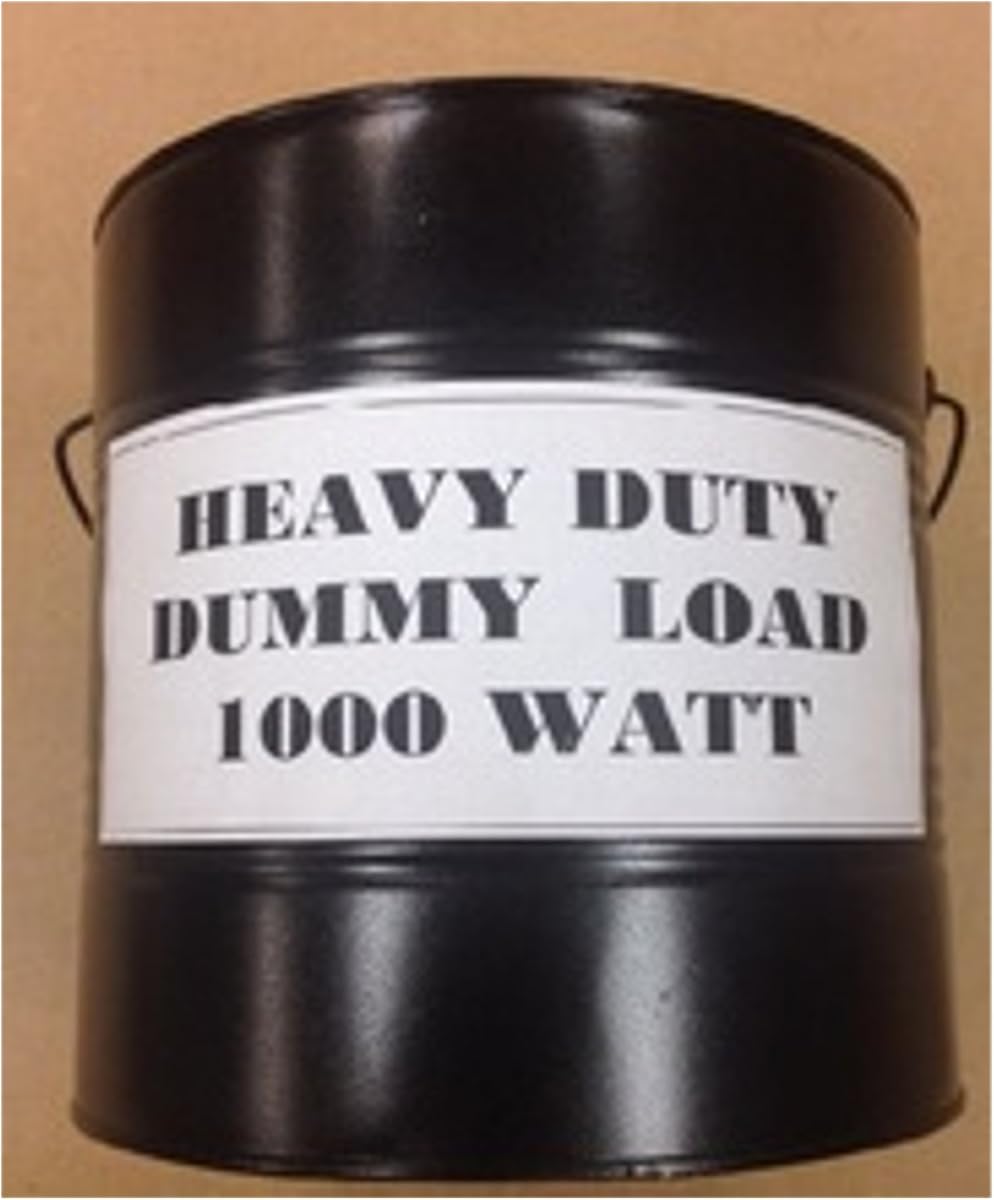
The Pro Trucker 1000-watt can dummy load is built for a different scale of transmitter testing. It has a listed 1000-watt capacity, 50-ohm impedance, and a frequency range from 0 to 30 MHz, making it suited to high-power HF amateur-radio equipment, amplifiers, and bench configurations where lower-rated loads would be inadequate.
We may earn a commission when you buy through this link, at no additional cost to you.
Oil filling is central to the design. The product must be filled with motor oil or mineral oil, which is not included, so setup is less immediate than with a self-contained air-cooled unit. Once prepared, the oil provides a substantial thermal medium for absorbing the energy that the resistive element converts to heat. Heavy-duty construction and rust-proof powder coating inside and out support long-term use.
The listed VSWR is 1.2 or less through 30 MHz, with low SWR continuing to 400 MHz according to the description. Its 3.8 rating is the lowest in the group, but ratings should be interpreted alongside the specialized format and setup. The major inconveniences are its one-gallon bulk, the need to source and add oil, and more involved handling compared with a compact PL259 load.
This model is the appropriate option for operators who genuinely need 1000-watt capability and work in the HF range. It is less attractive for ordinary CB service, but it provides the highest power capacity and strongest thermal-medium approach in this comparison.
The 1000-watt rating separates this can load from every compact alternative. It provides substantial headroom for testing powerful HF transmitters and amplifiers within the specified limits.
Motor oil or mineral oil distributes heat through the one-gallon can. Because the fluid is not included, buyers should obtain the appropriate oil and allow time for setup before testing.
We may earn a commission when you buy through this link, at no additional cost to you.
The right dummy load is determined by the radio’s output, connector, operating frequency, and duty cycle. Review the electrical limits before considering convenience, because a compact or attractive device is only useful when it can safely absorb the intended power.
Power rating is the first limit to check. A load should be rated above the maximum continuous output of the transmitter, amplifier, or signal source connected to it. The 10-watt SMA and 15-watt UHF models are appropriate for low-level bench signals, while 50-watt loads suit more modest radios, 100-watt models handle higher-output equipment, and the 200-watt and 1000-watt products serve substantially more demanding systems. Do not treat the rating as a target; it is a ceiling. Leaving more headroom can reduce thermal stress and provide flexibility if the test signal changes.
The connector must physically and electrically match the equipment. Most of the list uses a PL259 male plug, which is common for higher-power mobile and amateur-radio connections. The 15-watt product is described more generally as UHF male, while the wide-band bench model uses SMA. UHF and SMA are different interfaces even though both appear in RF work. Check the connector on the radio, cable, adapter, and any inline instrument before ordering. An appropriate adapter may make a load usable, but added adapters can introduce avoidable connection points during sensitive testing.
A load can be electrically correct at one frequency yet unsuitable at another. The PL259 models in this guide generally cover DC through 520 MHz, the BECEN model extends to 1 GHz, the SMA load reaches 3 GHz, and the can load emphasizes 0 through 30 MHz with reduced low-SWR performance to 400 MHz. Match the intended test band to the listed range. If one device must handle many bands, favor broader coverage; if all work is in a familiar CB or amateur segment, a more limited model may be sufficient.
Most 50-ohm radio systems work best when terminated in 50 ohms. All ten products in the comparison specify a 50-ohm impedance. VSWR indicates how closely the load reflects the intended impedance to the source; a value at or below 1.2 is desirable for clean testing. Several products state this limit explicitly, while others mention low VSWR without a numerical maximum. A low figure reduces unwanted reflections and improves confidence in SWR, power, and tuning measurements, especially when a sensitive meter is connected.
A dummy load converts RF power into heat, so thermal design determines how long it can operate safely. Compact air-cooled models are convenient for intermittent testing and moderate signals. The BECEN product explicitly emphasizes integrated cooling fins, and the XRDS PL259 units are described as self-contained air-cooled resistive devices. The can-style 1000-watt model relies on an oil fill for heat distribution, giving it enormous thermal capacity but requiring additional preparation. Match cooling method to the test duration, ambient temperature, and available workspace rather than focusing only on wattage.
The intended duty cycle can change the most practical choice. A bench technician making quick signal-generator checks may find a 10-watt SMA load sufficient, while an operator conducting long amplifier tests may need a larger air-cooled or oil-filled unit. Continuous operation deserves extra attention to ventilation, rest periods, and the manufacturer’s limits. Even a properly rated load should not be assumed to tolerate abuse or overheating. For occasional radio service, a compact 50- or 100-watt PL259 model usually offers the simplest balance.
Consider the space required for storage, transport, and connection. PL259 loads are straightforward to carry and attach, while the one-gallon can occupies considerably more room and must be filled before use. The wide-band SMA model is highly portable but limited to 10 watts. A useful setup should fit the intended vehicle, bench, or equipment cabinet without blocking airflow. If the load is used in multiple locations, portability can matter as much as the maximum power rating, provided every test remains within specification.
The broader environment can influence the decision. Workshop users may have room for a large oil-filled can and benefit from its high power capacity. Field technicians may favor a small PL259 or SMA termination with a known output limit. Professional broadcast, laboratory, and educational users may also value documented frequency limits, explicit continuous-power statements, warranty support, and connector specifications. Check the current product listing for these details because technical descriptions can change. The most dependable purchase is one whose published limits comfortably cover the intended radio, band, and working environment.
Before connecting anything, confirm that the load’s connector, impedance, frequency range, and power rating match the radio or signal source. Reduce transmitter output before attaching the load, and follow the radio’s instructions for entering a dummy-load or non-antenna operating state if applicable. This prevents accidental transmission into an unsuitable connector and makes the connection sequence more predictable.
Connect the load when the transmitter is off, then select the required operating power and begin with a short test. Monitor heat, smoke, odor, or any unexpected behavior, and stop if the load becomes excessively hot or the equipment does not behave normally. For an oil-filled can, use motor oil or mineral oil as directed, fill it in the intended location, allow it to settle as required, and keep the load level during operation. Never transmit before the recommended filling and setup procedure is complete.
After testing, return the radio to low power or switch it off before disconnecting the load. Let the unit cool naturally, clean the connector and housing with appropriate nonabrasive methods, and inspect for corrosion, loose contacts, damaged insulation, or oil leaks. Store the load dry and protected from impact, and periodically recheck the connector and any oil fill. A little maintenance helps preserve consistent contact, safe heat dissipation, and dependable measurements.
A dummy load provides a controlled 50-ohm termination for a transmitter instead of an antenna. It is used for power checks, tuning, SWR measurements, calibration, troubleshooting, and bench testing. Because the load absorbs and converts RF energy into heat, it can allow testing without producing a useful radiated signal. The radio’s output must remain within the load’s power, frequency, and connector limits.
No. The load must support the radio’s maximum output, cover the frequency being used, and have a compatible connector. A 10-watt SMA load, for example, may have excellent impedance and frequency characteristics but cannot safely terminate a high-power CB transmitter. A PL259 load with a 50-watt rating is more appropriate for a lower-power radio, while stronger rigs need a suitably higher-rated model.
A correctly rated dummy load should not damage a radio; it provides the intended 50-ohm termination and prevents the transmitter from driving a high-reflection antenna. Problems arise when output power exceeds the load rating, the connector is wrong, the equipment is operated without a proper load, or a poorly terminated setup causes the radio’s protection system to reduce or shut down power. Always follow both manufacturers’ instructions.
Yes. A higher VSWR means more of the transmitter’s energy is reflected rather than absorbed by the intended 50-ohm termination. This can distort readings, increase stress on the radio’s output stage, and make calibration less meaningful. A maximum VSWR of 1.2 or lower is generally desirable, although measurement conditions and the connected system also influence the final reading.
Usually not for a modest CB radio. A correctly rated 50-watt, 100-watt, or 200-watt air-cooled PL259 model is generally more convenient for ordinary service and testing. Oil-filled can loads become more compelling for very high-power HF equipment, extended duty cycles, or setups where substantial heat must be absorbed. If using a can load, fill it with motor oil or mineral oil as directed; the oil is not included with the model in this guide.
Yes. A calibrated dummy load can provide a known termination for checking transmitter output, measuring SWR, comparing systems, or verifying the behavior of an antenna analyzer and related equipment. The load must have suitable impedance, frequency coverage, and power capacity, while the measurement instrument and cabling must also be appropriate. For precise work, account for connector losses, cable characteristics, and the accuracy of the measuring device.
Stop the test if you notice excessive heat, smoke, a burning odor, discoloration, or instability. Some warming is expected because a dummy load intentionally converts RF energy into heat, and the amount depends on output power and duration. Follow the manufacturer’s thermal limits, maintain ventilation, and avoid leaving the load in a closed container. For an oil-filled unit, also inspect for leaks and confirm the fluid level is correct.
In the vast majority of cases, yes. Most CB transceivers and related RF test equipment are designed around a 50-ohm system, so the load should present 50 ohms to minimize reflection. A load with a different impedance can produce inaccurate readings and may cause the radio’s protection circuitry to behave unexpectedly. Confirm that the radio’s manual specifies a 50-ohm antenna system before selecting a termination.
The XRDS 200W PL259 UHF Dummy Load is the strongest all-around recommendation for users who need substantial power headroom, a low stated VSWR, and a direct PL259 connection. The BECEN 100W model is the most compelling choice for work extending toward 1 GHz, while the XRDS-RF 50W PL259 model offers a practical lower-power option for routine radio service and bench testing.
Prioritize power rating, connector, frequency range, impedance, VSWR, and cooling in that order. A load is only appropriate when it can safely absorb the intended signal and present the impedance the radio expects. Also consider test duration, storage space, and whether an oil fill is practical, since those details affect convenience more often than the basic connector choice.
Ratings, listings, and prices can change, so check the current product page and manufacturer guidance before ordering. Verify the connector, numerical power rating, frequency coverage, and setup requirements one final time, especially if the radio is powerful or operates outside the CB bands.