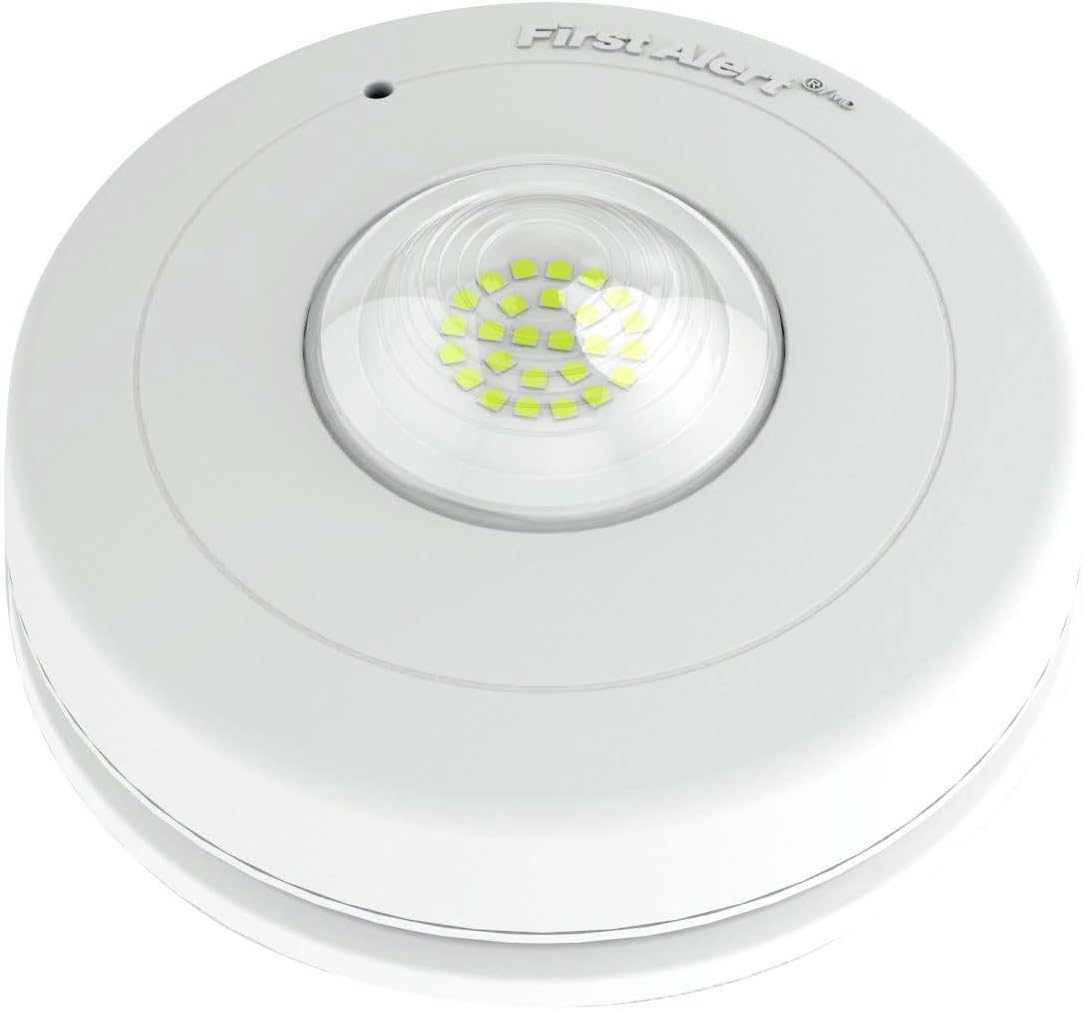
First Alert SLED177 Hardwired Hearing Impaired Led Strobe Light
4.1Editor score
177-candela visual warning
Synchronized strobe operation
Quick-connect hardwiring
Our guide compares the best smoke alarms for hearing impaired, including visual alerts, backup power, smart features, installation, and overall suitability.
Smoke alarms for hearing impaired people must communicate danger clearly through visual signals as well as sound. The strongest options combine reliable sensing with bright strobes, accessible warning patterns, interconnection, and dependable backup power, while installation requirements and smart connectivity help determine which model fits a particular home.
We compared the ten products in this guide by considering their stated detection capabilities, visual alert features, power options, interconnection, accessibility features, installation method, maintenance requirements, and customer ratings. The list covers standalone strobes, combination smoke and carbon monoxide devices, battery alarms, hardwired models, and connected detectors.
Each review explains the product's most useful attributes, along with the trade-offs that may matter during installation or daily use. The top picks represent the strongest balance of visual warning, detection features, power resilience, and practical functionality. Product availability, configurations, and pricing can change, so readers should confirm current details before purchasing.
4.1Editor score

4.6Editor score
4.2Editor score
The comparison below highlights the different coverage, visual warning, power, and connectivity approaches offered by these smoke alarms and visual alert devices, helping readers identify the most appropriate option for their home.


This First Alert model combines a hardwired smoke alarm, a 10-year backup battery, and an integrated LED strobe in one enclosure. Its 4.6 rating reflects a strong combination of features for hearing impaired users who need a warning that remains visible through both smoke and darkness. The device also offers a familiar smoke alarm format rather than functioning only as an accessory light.
We may earn a commission when you buy through this link, at no additional cost to you.
First Alert's Precision Detection sensing technology is designed to reduce nuisance alarms caused by cooking while still providing early warning. The most important accessibility feature is the integrated LED strobe, which gives residents a visual indication when danger is detected. Because the alarm can interconnect with most First Alert and BRK units, households can create a coordinated network in which compatible devices sound together and multiple strobes can provide broader visual coverage.
The hardwired design gives the device a dependable primary power source, while the 10-year battery backup reduces the likelihood of losing protection during a power interruption. A test and silence button makes routine checks easier and can temporarily silence nuisance warnings for up to eight hours. The trade-off is installation complexity: it is best suited to a location with suitable alarm wiring and, for many households, the assistance of someone experienced with electrical work.
This is the strongest general recommendation in the list for someone who wants smoke detection and an accessible visual warning in one unit. It suits a home already using compatible First Alert or BRK alarms and especially benefits from the combination of continuous backup power, interconnection, and nuisance-alarm reduction. Verify wiring compatibility before ordering, and have the unit installed according to its instructions and applicable local requirements.
The integrated LED strobe provides a clear visual signal without requiring the user to locate a separate alert accessory. This simplifies the setup while ensuring that a detected emergency can be communicated through sight as well as sound.
A 10-year backup battery helps maintain alarm coverage during outages. Combined with hardwired primary power, this makes the unit especially useful in homes where dependable operation and broad visual notification are priorities.
We may earn a commission when you buy through this link, at no additional cost to you.
The SLED177 is a dedicated visual alarm accessory rather than a smoke detector. Its 4.1 rating reflects a straightforward solution for households that already have suitable smoke alarms and need a powerful strobe to make an emergency visible. With a 177-candela LED, it is built to deliver a conspicuous warning across a room, making it particularly relevant for hearing impaired residents.
We may earn a commission when you buy through this link, at no additional cost to you.
A major advantage is its synchronization capability. When several units are installed, their strobes flash in unison, extending the visual warning through multiple rooms. The slim enclosure can be mounted on a ceiling or wall without the bulk associated with many traditional alarm units, and quick-connect wiring is intended to make installation more straightforward.
The stated compliance with UL standards and requirements of the Americans with Disabilities Act reinforces its positioning as an accessibility-focused alert. However, this product's narrow purpose is also its main limitation. It does not detect smoke, so it needs to be paired with one or more functioning smoke alarms and connected to the appropriate alarm system. It is also a 120-volt hardwired device, which can complicate installation in older homes or rooms without suitable wiring.
Choose this model when the main objective is an accessible, high-intensity visual signal that can be distributed throughout the home. It is especially practical for homeowners with existing compatible hardwired alarms who want more than one synchronized strobe. It should complement rather than replace smoke detection, and professional installation may be advisable when the wiring arrangement is unfamiliar.
The 177-candela LED is the defining feature, producing a bright strobe intended to wake and alert hearing impaired residents. Its high output makes room placement and visibility important considerations.
Multiple compatible strobes can flash together, providing a coordinated warning throughout the home. This is particularly useful when a single visual alarm cannot be seen or heard from every occupied area.
We may earn a commission when you buy through this link, at no additional cost to you.
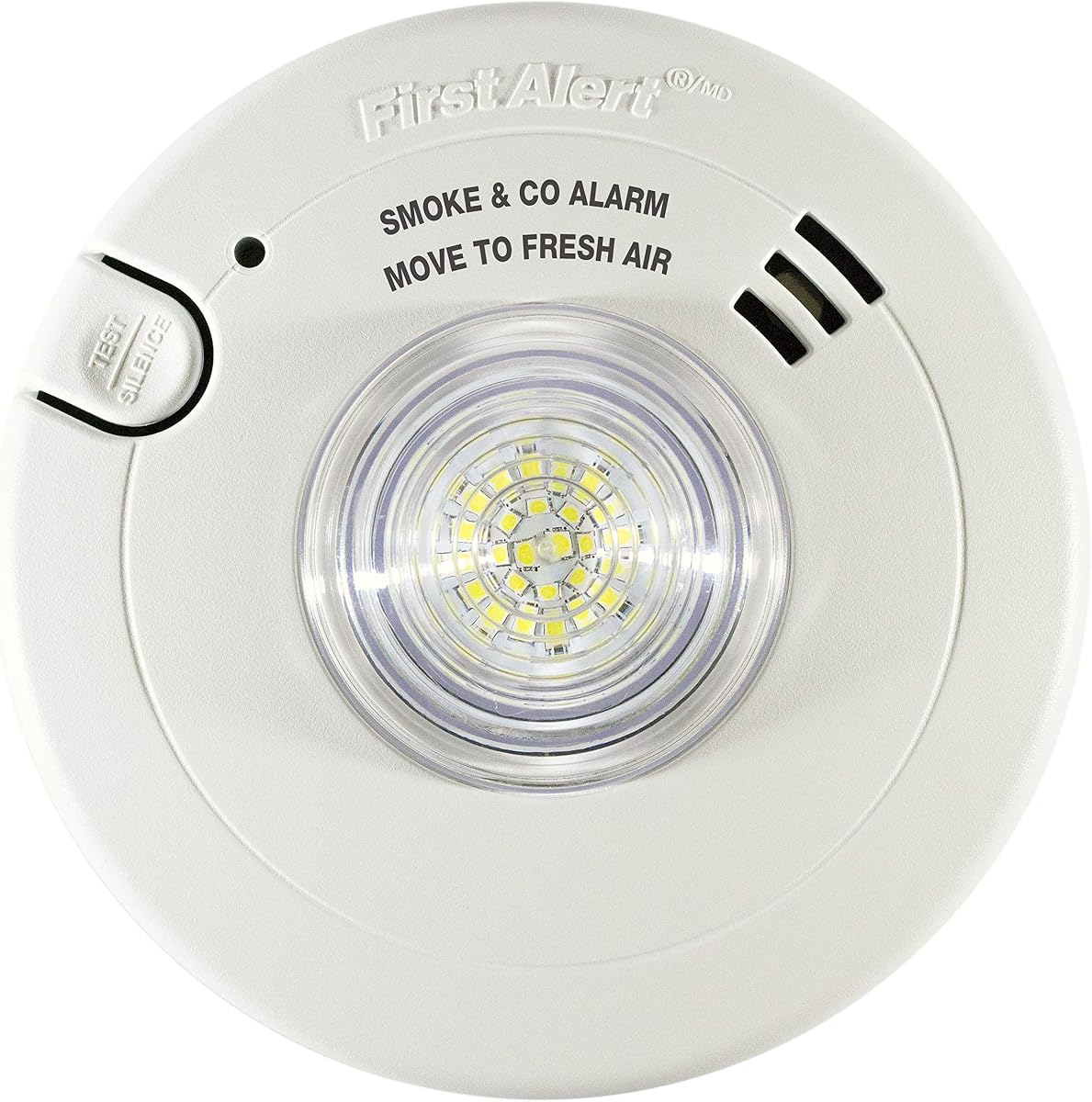
The BRK 7030BSL integrates smoke detection, carbon monoxide detection, and an LED strobe within a single hardwired alarm. Its 4.2 rating makes it a compelling all-in-one option for households seeking comprehensive detection and an accessible warning. The product is particularly useful where both smoke and carbon monoxide risks are relevant and separate visual notifications would be helpful.
We may earn a commission when you buy through this link, at no additional cost to you.
Its smart strobe uses different flash patterns to distinguish smoke warnings from carbon monoxide warnings. That distinction can communicate the nature of the danger without relying on an audible message alone. The 77-candela LED is synchronized when multiple units are installed, helping ensure that a warning appears throughout the home at the same time. OptiPath 360 technology also provides direct access around the smoke sensing chamber.
Integration is the main strength because it can reduce the number of separate devices required for detection and visual notification. The 10-year limited warranty adds reassurance, subject to the stated terms and proof of purchase. As a hardwired model, however, it requires suitable wiring and more deliberate installation than a battery alarm. Buyers should also consider whether the 77-candela strobe provides sufficient visibility for their home layout.
This is the pick for someone who wants a more complete, coordinated alert system rather than a basic smoke alarm. Its separate warning patterns are particularly valuable when the user must immediately determine whether the alert concerns smoke or carbon monoxide. It is best suited to a well-planned hardwired installation and can serve as a central device in a larger compatible alarm network.
Separate flash patterns for smoke and carbon monoxide allow residents to identify the type of warning visually. This adds useful context at the moment when an emergency requires immediate action.
Combining smoke sensing, carbon monoxide detection, and a strobe can simplify system planning. It also reduces the need to mount separate detection and visual notification units in the same location.
We may earn a commission when you buy through this link, at no additional cost to you.
This hardwired combination alarm provides smoke and carbon monoxide detection along with an integrated LED strobe. It carries a 4.6 rating and occupies a strong position in the roundup because it combines several practical needs in one device. It is designed for homes where residents need both multi-hazard detection and a visible warning during an emergency.
We may earn a commission when you buy through this link, at no additional cost to you.
Precision Detection technology is intended to reduce cooking-related nuisance alarms while supporting early warning. The integrated strobe provides the visual signal needed by hearing impaired residents, and interconnection with most First Alert and BRK alarms allows compatible units across the home to respond together. A test and silence button supports regular maintenance and temporary quieting of nuisance events for up to eight hours.
Compared with a dedicated visual strobe, this model performs its own detection rather than simply repeating another alarm. Compared with the BRK 7030BSL, it does not list separate flash patterns for smoke and carbon monoxide, so users who need to distinguish those hazards visually may find the 7030BSL more informative. The lack of a stated battery backup also makes its outage behavior less reassuring than that of the rank-one model.
This alarm is a strong choice for a hardwired home seeking detection, visual notification, and system interconnection in a single unit. It works especially well alongside compatible First Alert or BRK products. Buyers should verify local wiring requirements, compatible alarm models, and installation guidance before purchase, with qualified help recommended where electrical modifications are needed.
The integrated LED ensures that detection is communicated through more than one sensory channel. This is valuable for hearing impaired residents and for anyone who may not hear an audible alarm clearly.
The stated cooking-nuisance reduction can make the alarm more practical in kitchens and open-plan living areas. It does not eliminate false alarms, but it addresses a common source of everyday frustration.
We may earn a commission when you buy through this link, at no additional cost to you.
This Kidde detector is designed for carbon monoxide detection and includes an illuminated safety light for hearing impaired or deaf residents. It has a 4.2 rating and stands apart from most entries because it uses a simple plug-in installation rather than requiring new alarm wiring. The 10-year lithium backup battery preserves operation during a power outage.
We may earn a commission when you buy through this link, at no additional cost to you.
A digital LED display presents the carbon monoxide level and uses a parts-per-million reading to indicate detected presence. Peak Level Memory records the last detection or test, which can help users understand recent device activity. The built-in safety light illuminates the surrounding area, offering a path reference when dense smoke makes it difficult to navigate.
The test and hush button provides an easy way to test the detector or temporarily silence a low-battery warning. The simplicity of plugging it into a standard 120-volt outlet is a major advantage, particularly for renters or homes without compatible hardwired alarm circuits. The limitation is its scope: it is not a smoke detector and does not provide the extensive strobe output or multi-warning patterns of the dedicated visual alarms.
This is a practical choice for a household seeking carbon monoxide monitoring, accessible path lighting, and minimal installation effort. It can complement smoke detection rather than serve as a complete fire-warning solution. Users should select a suitable outlet location and follow the instructions regarding placement, testing, and replacement timing.
The digital display provides an immediate numeric reading and a parts-per-million indication of detected carbon monoxide. Peak Level Memory adds a record that can be useful during follow-up checks or conversations with safety professionals.
The integrated safety light illuminates the area around the detector. Although it is not a high-output emergency strobe, it can help residents locate their way when visibility has been compromised by smoke.
We may earn a commission when you buy through this link, at no additional cost to you.
The First Alert BRK hardwire combination alarm combines smoke and carbon monoxide detection with an LED strobe and a 10-year battery backup. Its 4.0 rating reflects a capable one-device solution with particularly strong emphasis on coordinated visual notification. It is intended for a home with compatible hardwired alarm wiring.
We may earn a commission when you buy through this link, at no additional cost to you.
Precision Detection technology is designed to reduce cooking nuisance alarms, while the integrated strobe provides a visual warning for hearing impaired residents. Multiple BRK units can be interconnected so that when one alarm detects danger, the strobes flash in unison. This network behavior helps users receive a warning in multiple rooms rather than relying on a single location.
The 10-year backup battery is a major practical advantage over hardwired devices without stated backup. It helps protect against the exact scenario in which a power interruption coincides with a smoke or carbon monoxide event. The one-pack format does mean additional compatible units may be required for broad room coverage, and the alarm is still subject to the installation demands of a hardwired device.
This model is well suited to homeowners who want synchronized visual alerts and dual-hazard detection with outage resilience. It is a good candidate for new construction, remodeling, or replacing an existing compatible BRK system. Confirm the wiring, device compatibility, and number of units needed before installation, and use qualified electrical assistance when required.
Interconnected BRK units can flash together, creating a consistent visual alert throughout the home. This is particularly helpful for large spaces, multi-level residences, and sleeping areas.
The integrated 10-year battery backup adds continued coverage when household electricity is interrupted. This provides an extra layer of protection beyond the standard hardwired power source.
We may earn a commission when you buy through this link, at no additional cost to you.
The First Alert Battery Smoke Alarm is a conventional residential smoke detector with a 4.5 rating, a straightforward battery-powered format, and easy-to-use maintenance features. It does not include the high-output strobe found in the accessibility-focused models, but it can serve as core detection within a larger system that also provides visual alerts.
We may earn a commission when you buy through this link, at no additional cost to you.
Precision Detection technology is stated to comply with new industry standards, reduce cooking nuisance alarms, and provide early warning. Battery operation makes installation easy and avoids the need for alarm wiring. The front-access compartment allows users to change batteries without dismantling the unit, while the end-of-life warning provides a clear indication when the alarm has reached the end of its useful service period.
The test and silence button makes routine verification more convenient. Its main limitation for a hearing impaired user is the absence of an integrated visual warning. It therefore needs to be paired with strobes or another reliable visual notification method if the audible alarm cannot adequately provide warning. Battery replacement is another ongoing responsibility, although the accessible compartment simplifies the task.
This model is a practical choice for a rental, an older home without suitable wiring, or any location where quick installation is important. It works best as part of a complete alert plan rather than the sole means of warning a hearing impaired resident. Users should test it regularly, replace batteries as directed, and replace the entire alarm when the end-of-life warning appears.
A front-access battery compartment and dedicated test and silence button keep routine upkeep straightforward. These details matter because alarms are most effective when users can and do test them regularly.
Although this is not a strobe model, it can provide the detection layer for a system supplemented by visual alerts. Installing it near sleeping areas and other important locations remains important even when separate accessibility devices are present.
We may earn a commission when you buy through this link, at no additional cost to you.
This second First Alert Battery Smoke Alarm shares the same fundamental feature set as the rank-seven model: 4.5 rating, Precision Detection technology, battery operation, front-access battery compartment, end-of-life warning, and a test and silence button. It is best viewed as a simple detection option for households that need a new smoke alarm but already have another method of visual notification.
We may earn a commission when you buy through this link, at no additional cost to you.
Its easy installation is the primary advantage. Because it runs on a battery, it can be placed in a suitable location without running new wiring or arranging a hardwired alarm circuit. The front-access battery design makes replacement more convenient, and the end-of-life signal tells the owner when the entire unit should be replaced rather than treating battery replacement as a permanent solution.
Precision Detection technology is designed to meet new industry standards and reduce nuisance alarms associated with cooking while still delivering early warning. As with any battery-only alarm, dependable operation depends on the user replacing the battery as required. The model also lacks a built-in strobe, so it should not be the only warning device in a home where an audible alarm is unlikely to be noticed.
This alarm is a sound choice for renters, additions to an existing battery-based system, or locations where electrical work is inconvenient. It can be paired with one of the dedicated strobes in this guide or a compatible interconnected system. Read the manual carefully for placement, testing, and replacement guidance, and do not ignore the end-of-life indicator.
Battery power removes the main installation barrier associated with hardwired alarms. That makes the model useful when adding coverage in a room without an existing alarm circuit.
The end-of-life warning helps owners distinguish between a routine battery change and the need to replace the whole alarm. Acting on that signal helps maintain confidence in the protection provided.
We may earn a commission when you buy through this link, at no additional cost to you.
The Kidde RGCUAR-RW brings together smoke and carbon monoxide detection with hardwired primary power, AA battery backup, and Ring app connectivity. Its 4.1 rating reflects a feature-rich model for households that want mobile warnings in addition to standard local alarms. It is especially relevant when a resident may be away from home or unable to rely entirely on audible alarms.
We may earn a commission when you buy through this link, at no additional cost to you.
Real-time Ring app notifications cover smoke, carbon monoxide, and low-battery warnings without requiring a subscription for those core alerts. The product can also connect with Alexa-enabled devices. Because it supports whole-home smart connectivity, adding one Kidde smart detector can enable mobile alerts for every hardwired alarm in the home, according to the user guide.
Kidde states that its sensing technology is over 25 percent faster at smoke detection than a leading competitor based on internal testing. It also uses enhanced sensing to reduce false alarms caused by cooking compared with prior Kidde generations. Optional professional monitoring is available through a separate subscription, while basic smoke, CO, and low-battery notifications do not require one.
This detector is a strong fit for smart homes and for residents who want alerts away from home. Its lack of an integrated high-intensity strobe means it should be paired with a visual warning device, especially for sleeping areas. The hardwired design also requires compatible wiring, and users must set up the app and notification preferences carefully to receive the remote alerts they expect.
Ring app notifications can inform users about smoke, carbon monoxide, and low-battery events even when they are not at home. This is valuable for caregivers, frequent travelers, and anyone managing alerts for another household.
The stated whole-home connectivity can extend mobile awareness beyond the smart detector itself. Users should consult the guide and their existing hardwired alarms to confirm compatibility and network behavior.
We may earn a commission when you buy through this link, at no additional cost to you.
The Kidde RGSAR-RW is an app-enabled smoke detector focused on delivering mobile notifications and integrating with a connected alarm setup. Its 4.2 rating makes it an appealing option for people who want remote awareness of smoke and low-battery events. The product supports both hardwired operation and an AA battery backup.
We may earn a commission when you buy through this link, at no additional cost to you.
The Ring app provides real-time smoke and low-battery notifications without a subscription for those core features. Users can also connect the detector with Alexa-enabled devices. As with the Kidde smart combination model, adding one smart detector may allow mobile alerts for other hardwired alarms in the home, subject to the compatibility details in the user guide.
The stated detection technology is more than 25 percent faster than a leading competitor based on internal testing and is designed to reduce cooking-related false alarms compared with earlier Kidde generations. The product is described as tested and certified to meet UL 217 and FCC requirements. These features make it well suited to connected homes that want a simple upgrade from a conventional smoke alarm.
This model should not be chosen as a standalone solution for a hearing impaired resident because it does not include a built-in strobe. Pairing it with a dedicated visual alarm creates a more complete system, while the mobile notifications add another way to receive warning information. Confirm wiring and app compatibility before installation, and test both the alarm and connected notifications regularly.
Smoke and low-battery alerts can provide important information when nobody is physically near the alarm. These notifications supplement, rather than replace, local visual and audible warning devices.
This model detects smoke but not carbon monoxide. Households needing both hazards addressed can consider the Kidde smart combination model or a dedicated combined alarm with a strobe.
We may earn a commission when you buy through this link, at no additional cost to you.
The right smoke alarm for a hearing impaired resident should provide reliable detection, a visible warning, dependable power, and a clear installation plan. Comparing these factors alongside the home's wiring, sleeping arrangements, and connected-device preferences makes it easier to build a system that works as a whole.
A visible alarm must be bright enough to notice through smoke, darkness, or a closed doorway, and it should be positioned where residents can see it. The dedicated SLED177 provides 177 candela of LED output, while the combined BRK devices use 77-candela strobes. These figures do not guarantee identical performance because placement, room layout, and obstructions also affect visibility. Look for units installed near sleeping areas, hallways, and common spaces, and consider whether multiple synchronized devices would provide better coverage.
A smoke alarm addresses fire smoke, while a carbon monoxide detector addresses a different hazard that may originate from fuel-burning appliances or other sources. Combination units offer both functions in one enclosure, which can simplify installation, but they are not interchangeable with dedicated smoke alarms. Consider the specific risks in the home, the placement of fuel-burning equipment, and whether local guidance calls for both types of protection.
Hardwired alarms depend on household electricity but avoid routine battery replacement and often support larger interconnected systems. Battery backup improves outage resilience, and the rank-one First Alert and rank-six BRK models specify 10-year backup batteries. Fully battery-operated models are easier to install but require user maintenance and may not provide the same uninterrupted protection if a battery is depleted. Compare both the primary and secondary power arrangements rather than looking only at whether a product is called hardwired.
An interconnected network can ensure that detection in one area triggers audible and visual warnings throughout the home. First Alert states that its hardwire models work with most First Alert and BRK alarms, while the BRK combination model supports synchronized strobes. This is especially important for larger homes and for anyone who sleeps away from the first smoke detector. Compatibility must be verified before purchase because interconnection generally works only among supported models and correct wiring configurations.
A single strobe tells a resident that an emergency exists, but separate flash patterns can communicate whether the cause is smoke or carbon monoxide. The BRK 7030BSL specifically distinguishes smoke and carbon monoxide alerts. This added context can help residents make faster decisions, although it should never delay evacuation. Anyone unfamiliar with a particular pattern should review the manual and test it regularly with household members.
Hardwired strobes and combination alarms may require opening walls, running connections, or replacing existing alarm wiring. Battery models are much easier to add in a new location, while plug-in detectors need only an accessible outlet. Installation should follow the manufacturer instructions and applicable local requirements, and qualified help is sensible when modifying electrical wiring. Placement should account for sleeping rooms, stairways, dead ends, and whether a closed door could block the warning.
Kidde's Ring-compatible detectors can send smoke, carbon monoxide, and low-battery notifications through an app, and they support Alexa-enabled devices. These alerts are useful for remote awareness and caregiver monitoring. They still need correct setup, adequate network access, and compatible hardwired alarms to realize their full value. A connected detector does not replace a local strobe, so hearing impaired residents should use app notifications as one layer of a broader warning plan.
Every smoke alarm needs periodic testing, and battery-operated models also need timely battery changes. Front-access compartments make battery replacement easier, while test and silence buttons support routine checks. End-of-life warnings indicate that an entire unit should be replaced when it can no longer provide dependable protection. Record installation dates, follow manufacturer replacement guidance, and test visual alarms as well as audible signals so a failed component does not go unnoticed.
Begin by mapping the home's sleeping areas, hallways, stairways, and other locations where smoke or a visual warning may need to reach. Place smoke alarms according to the manufacturer's placement instructions, and position strobes where residents can see them from multiple rooms. Install hardwired units with the appropriate electrical knowledge and compatible equipment; do not assume a model will interconnect with an existing system without confirmation.
Once installation is complete, test each detector and visual alarm with the household present. Explain what the sound, light, and any distinct flash patterns mean, and create a plan for responding and evacuating. For connected models, confirm that phone notifications arrive and that the account, permissions, and compatible devices are configured correctly. Test one alert at a time so users know which source produced each warning.
Create a maintenance routine based on the manuals for every device. Test alarms regularly, replace batteries when required, clean accessible surfaces, and respond immediately to low-battery or end-of-life warnings. Replace hardwired units within their specified service life, and ask a qualified installer to address wiring issues. After any replacement or layout change, recheck placement, visibility, synchronization, and remote notifications.
For a resident who cannot reliably hear an audible alarm, a visual warning is one of the most important accessibility features to compare. Some products combine smoke detection with a built-in strobe, while others require a separate visual alarm connected to the detection system. A dedicated strobe can work well in a properly wired home, but it does not replace the need for smoke detection.
Hardwired models generally avoid routine battery replacement and are often easier to interconnect throughout a home, but they require suitable wiring and more involved installation. Battery-operated models are simpler to install and can be placed in locations without an alarm circuit. The most important issue is dependable operation, so a hardwired model with long-term battery backup offers an especially resilient arrangement when properly installed.
A smoke alarm detects smoke from a fire, while a combination alarm also detects carbon monoxide. Models with a strobe add visual notification to those detection functions. Because smoke and carbon monoxide require different warnings and placement considerations, households should confirm which hazards their chosen device covers before relying on it.
Some compatible models do, including the First Alert SLED177 and specified BRK units. Synchronization can create a more noticeable, consistent warning throughout the home when one alarm activates. It is not universal, however, so buyers should check the compatibility list and installation guide for every alarm in the system.
A smart detector can send notifications by phone and may work with Alexa-enabled devices, but it does not automatically provide the same in-home visual warning as a dedicated strobe. Hearing impaired residents should still consider a local visual alarm, especially near sleeping areas. App notifications are best treated as an additional layer of protection.
Follow the manufacturer instructions and local safety guidance, but routinely test each device so that both audible and visual warnings are familiar to everyone in the household. Testing should confirm the alarm sounds, the strobe flashes, connected units synchronize, and required app notifications arrive. Replace the entire device when its end-of-life warning appears.
Installation may involve opening walls, connecting alarm wiring, and working around mains electricity, so it is best handled by someone with the appropriate electrical expertise. Accessibility devices should also be positioned where they can actually be seen and heard by the people who depend on them. If the wiring is unfamiliar, a qualified installer can reduce installation errors and ensure the system is configured correctly.
The appropriate number depends on the floor plan, sleeping arrangements, bedroom doors, and how well the strobe can be seen from each occupied area. Installing synchronized units in bedrooms, hallways, and other critical locations generally provides more reliable coverage than relying on one alarm. Test different positions during installation and add units where walls, doors, or turns obstruct the warning.
The First Alert hardwire smoke alarm with LED light and 10-year battery backup is the strongest all-around recommendation because it combines detection, visual notification, interconnection, and outage resilience. The SLED177 is a focused choice for adding synchronized visual coverage to compatible hardwired systems, while the BRK 7030BSL offers the most complete combination of smoke detection, carbon monoxide detection, and differentiated visual warning patterns.
Prioritize a strong local visual signal, dependable power, and reliable interconnection before considering convenience features. Ensure that strobes are visible from sleeping rooms and important circulation areas, that the alarm type matches the hazards present in the home, and that every device is tested regularly. A smart detector can add valuable remote notifications, but it should complement rather than replace accessible local warning equipment.
Before buying, confirm the current specifications, compatible accessories, installation requirements, and maintenance schedule. Product configurations and pricing can change, and local building or fire-safety requirements may affect the final choice. Taking the time to evaluate the whole warning system is more effective than focusing on a single alarm without considering power, placement, and how warnings will reach residents.