
Dell 24 Plus S2425HSM
4.7Editor score
Sharp 1080p IPS panel
Integrated dual speakers
Height and pivot adjustment
A monitor can materially affect how efficiently a lawyer reviews contracts, compares exhibits, conducts research, and communicates with clients. The right display balances readable detail, comfortable viewing, reliable color, flexible connectivity, and enough screen space to reduce constant window switching during demanding legal work.
We compared ten monitors using the specifications and features supplied for each product, focusing on resolution, panel technology, refresh rate, eye-comfort features, adjustability, connectivity, portability, and practical screen area. The list covers conventional office displays, curved and ultrawide models, high-resolution screens, and portable alternatives for mobile work.
Each review explains where a model fits best in a legal workflow and where its compromises may matter. Ratings reflect the supplied customer feedback, while availability and pricing can change, so readers should confirm current specifications and deal terms before purchasing. The best choice depends on case types, workspace constraints, and viewing habits.
4.7Editor score

4.6Editor score

4.4Editor score
As an Amazon Associate we earn from qualifying purchases.
The table below compares all ten displays by their most important legal-work attributes, including screen size, resolution, panel type, refresh rate, and standout productivity features.



The Dell 24 Plus S2425HSM combines a sharp Full HD panel, unusually high 144Hz refresh rate, and flexible ergonomic stand, making it a well-rounded legal workstation display. Its supplied 4.7 rating is the highest among the ten products, which indicates strong customer satisfaction, although ratings should not be treated as a substitute for hands-on evaluation.
We may earn a commission when you buy through this link, at no additional cost to you.
Legal work often depends on readable text and flexible window placement. The 1920×1080 resolution provides a conventional, familiar workspace, while height, tilt, pivot, and swivel adjustments make it easier to position the screen comfortably over long document-review sessions. The 1ms MPRT specification and AMD FreeSync support help keep motion smooth, a benefit in meetings when scrolling or switching among browser-based case-management tools.
The integrated dual 3W speakers are more useful than they might first appear. A lawyer can take a call or conduct a short client meeting without immediately relying on separate audio equipment. Dell also highlights a 4-star TÜV-certified eye-comfort feature and reduced harmful blue-light emissions, while the 1500:1 contrast ratio supports clear separation between text and background.
The main limitation is screen size: 23.8 inches is compact beside a 27-inch monitor or the 34-inch Dell S3425DW. It also provides only Full HD resolution, so extremely dense pages, small annotations, and high-resolution scanned exhibits may be easier to inspect on a higher-resolution display. For a home office, solo practice setup, or space-conscious legal desk, however, it is an excellent all-around recommendation.
Adjustable height, tilt, pivot, and swivel help users place dense legal text at a comfortable angle. The eye-comfort certification and high refresh rate also make prolonged reading and page navigation feel more fluid.
The two integrated 3W speakers give the display more practical value than a basic office screen, particularly for quick internal meetings and client calls conducted from the same workstation.
We may earn a commission when you buy through this link, at no additional cost to you.
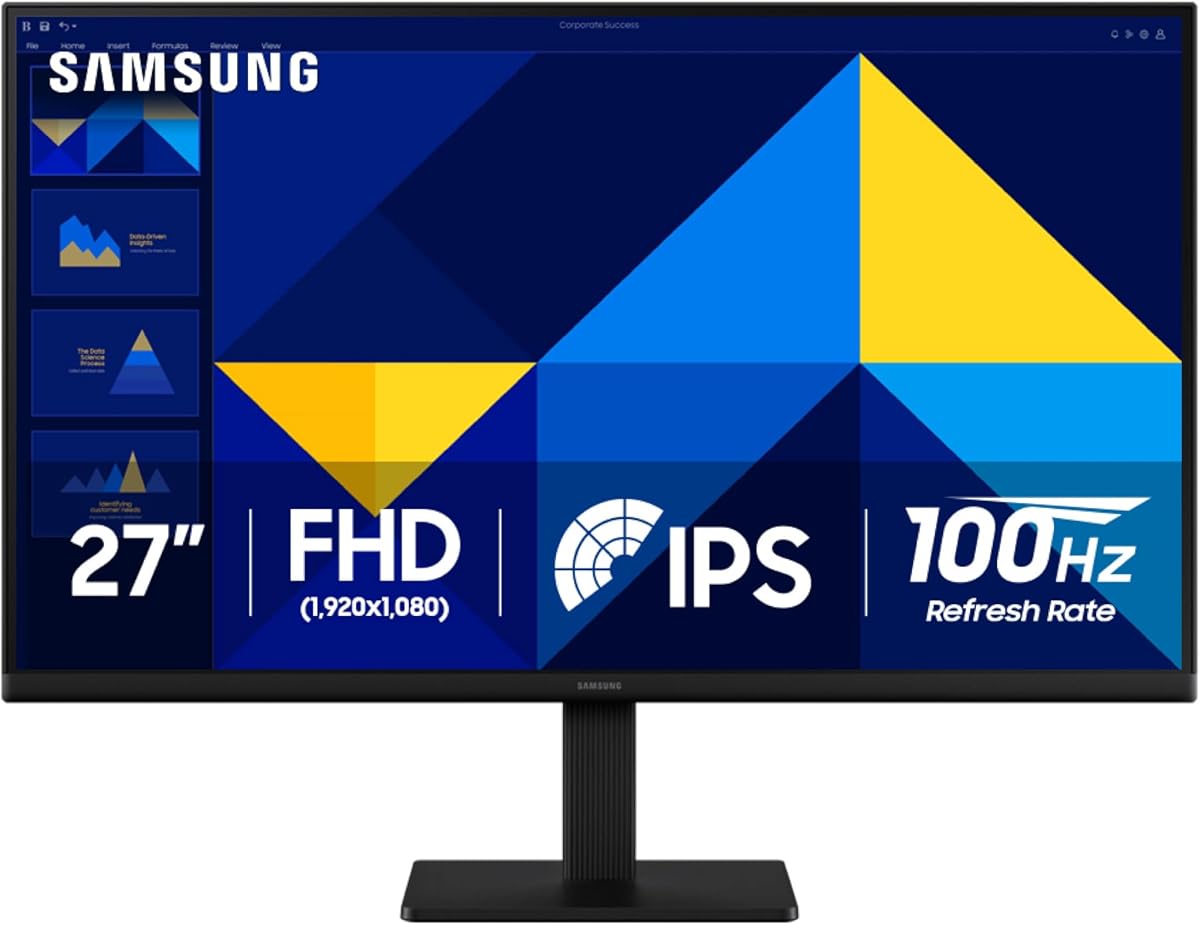
The Samsung 27 Essential S30GD offers a straightforward 27-inch IPS display for lawyers who want a conventional office monitor without paying for specialized professional features. Its 4.5 rating reflects generally favorable customer feedback, and the combination of a 100Hz refresh rate, broad viewing angles, and eye-comfort functions suits long periods of reading and research.
We may earn a commission when you buy through this link, at no additional cost to you.
The IPS panel is a sensible match for a shared office because its colors are described as remaining clear and consistent when the viewing angle changes. This can be useful when a colleague, paralegal, or client leans toward the screen during a case review. A slim bezel design preserves useful desk space without making the display look visually heavy.
Samsung's Game Mode and adjustable color and image contrast are not exclusive to legal work, but they offer practical controls that can help users tune the display to different viewing conditions. Reduced blue light and screen flicker are particularly relevant to attorneys and staff who spend most of the day reading contracts, pleadings, and electronic discovery files.
This monitor is a strong middle-ground choice for a standard legal office. A 27-inch Full HD panel is more spacious than a compact 24-inch model, although the resolution is lower than the QHD and 4K alternatives later in the list. Its value lies in balancing physical size, eye comfort, visual consistency, and smooth everyday performance without adding a premium specification burden.
The IPS panel's broad viewing angles help preserve color and clarity when colleagues or clients briefly view the same documents, making it a practical shared-office choice.
A 100Hz refresh rate reduces perceived lag during scrolling and window changes, while Samsung's eye-comfort features help address the discomfort associated with extended screen sessions.
We may earn a commission when you buy through this link, at no additional cost to you.
The MNN 15.6-inch portable monitor is designed for lawyers who move between offices, court locations, hotels, and client sites while needing more usable screen area than a laptop provides. Its supplied 4.3 rating indicates a generally favorable reception, and the portable form factor is its defining advantage.
We may earn a commission when you buy through this link, at no additional cost to you.
A Full HD IPS panel offers 1920×1080 resolution and a claimed 178-degree viewing angle, allowing the screen to function as a second display for research, calendar management, client notes, or a call window. Two full-feature USB-C ports mean a single compatible USB-C cable can carry both display signal and power, reducing setup time when the lawyer moves between locations.
Copy, extended, second-screen, and portrait modes give the display flexibility beyond a simple mirror. A smart cover made from PU leather protects the panel and doubles as a stand. The product information also notes support for compatible laptops, phones, MacBooks, and game systems through different connection methods, although users should verify whether their own device supports the required USB-C DisplayPort Alt Mode or Thunderbolt 3 behavior.
This is not the best choice for fine print at a permanently seated desk, and 60Hz is less fluid than the 100Hz and 144Hz alternatives. It is, however, a compelling second screen for mobile legal workflows. Its portability and flexible orientation make it particularly useful for someone who reviews documents in transit and values a lightweight, self-contained kit.
With a compatible device, a single full-feature USB-C cable can transmit the display and supply power, simplifying setup at temporary offices and reducing the number of adapters that must travel.
Copy, extended, and portrait modes allow the lawyer to arrange research, notes, and meeting applications according to the task rather than being limited to a fixed horizontal layout.
We may earn a commission when you buy through this link, at no additional cost to you.
The Xebec Tri-Screen 3 is a specialized portable workstation for professionals who routinely need more than one screen. By attaching two 13.3-inch displays to a laptop, it creates a triple-screen environment for legal research, document comparison, spreadsheet analysis, video calls, and other multitasking-intensive workflows. Its supplied rating is 4.4.
We may earn a commission when you buy through this link, at no additional cost to you.
The standout feature is the embedded USB-C cable, which drives both displays and provides 60W pass-through charging to the host laptop. That single-cable arrangement reduces desk clutter and makes the system especially attractive for mobile professionals who cannot depend on a fixed office monitor. A protective travel case is included, and the aluminum enclosure is designed to withstand repeated transport.
The product information specifically identifies lawyers reviewing case files as one of the intended high-stakes use cases. Two additional displays can reduce constant tab switching by keeping a word processor, legal research platform, and case calendar visible simultaneously. The tension-fit design avoids magnets and adhesive attachment, and the product is backed by a one-year manufacturer warranty with support based in Texas.
The main drawback is the specialized and comparatively premium design. It is intended for compatible PCs and laptop workflows rather than a casual desktop-monitor upgrade, and users may need to accommodate its dimensions. For an attorney who travels to hearings or client locations but cannot tolerate a single small laptop screen, it offers one of the clearest productivity advantages in this roundup.
Keeping pleadings, research results, a calendar, and drafting software visible across three areas can reduce the disruption caused by repeatedly minimizing and reopening legal applications.
The aluminum construction, integrated cable, pass-through charging, and included travel case create a more self-contained mobile workstation than carrying multiple conventional monitors and separate power accessories.
We may earn a commission when you buy through this link, at no additional cost to you.
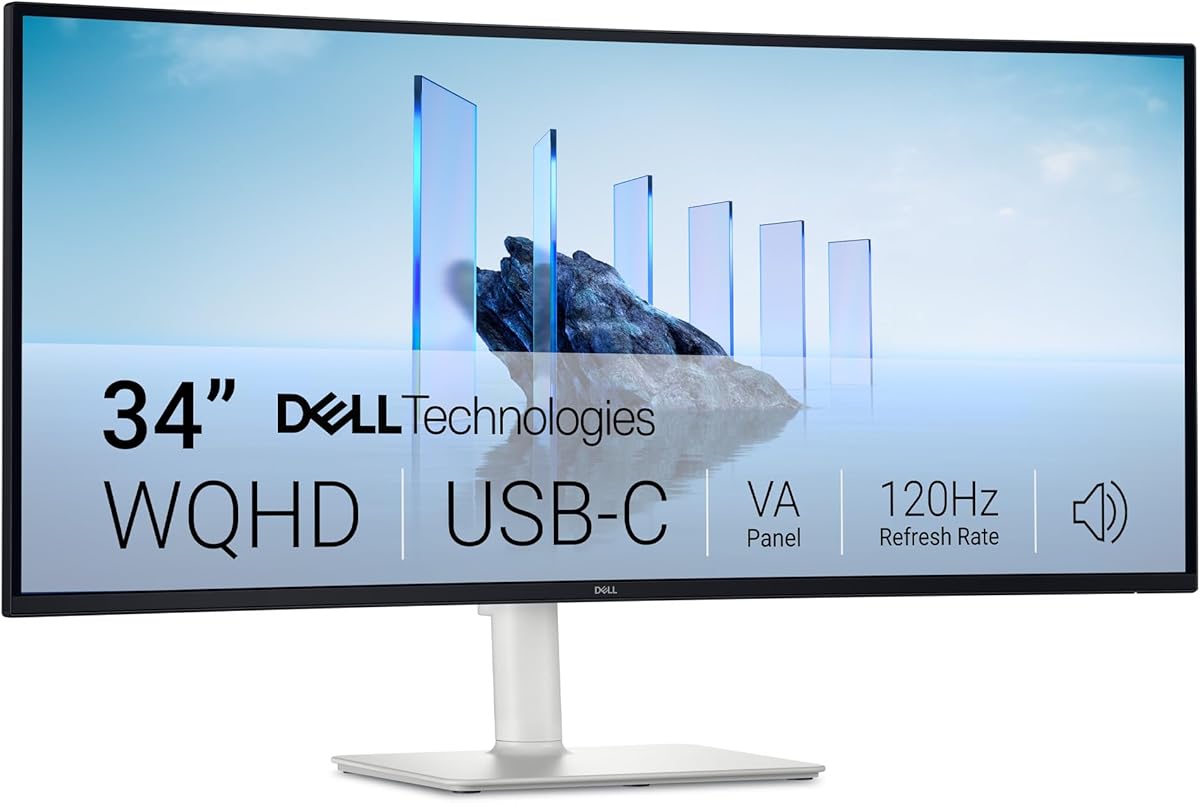
The Dell 34 S3425DW is a compelling choice for lawyers who prefer a broad, largely uninterrupted workspace over a collection of smaller displays. Its 34-inch WQHD canvas can accommodate long documents, a research browser, and a communication application together. The supplied 4.4 rating reflects generally positive customer feedback.
We may earn a commission when you buy through this link, at no additional cost to you.
The VA panel supplies a 3000:1 contrast ratio, which is well suited to reading dark text on a bright background because it can create deeper blacks and stronger tonal separation. Dell lists 99% sRGB and 95% DCI-P3 coverage for color accuracy, while 120Hz refresh and AMD FreeSync Premium keep scrolling and other motion smooth.
ComfortView Plus is designed to reduce harmful blue-light emissions to no more than 35%, and the 0.03ms response specification supports fluid interaction. Connectivity is streamlined through a single USB-C cable that can provide up to 65W of power delivery, useful for a laptop-based legal practice that wants a single connection for video, data, and charging.
A 34-inch monitor needs more physical desk space than a 24-inch or 27-inch model, and some users may need to adjust their viewing distance. The VA technology also differs from the color consistency associated with IPS panels. Even so, this is one of the most productivity-focused displays here, especially for comparing documents, reviewing pleadings, or working with several large applications at once.
The wide format lets users place a draft, cited authority, and communication window side by side without requiring multiple monitor bezels, which can make a virtual desk feel less restrictive.
A high native contrast ratio and broad color coverage support comfortable reading of contracts, spreadsheets, scanned exhibits, and presentation material in a professional office.
We may earn a commission when you buy through this link, at no additional cost to you.
The Samsung 27 Essential S3 combines a curved 27-inch format with a 100Hz refresh rate and eye-comfort technology, offering a distinct alternative to flat office monitors. Its 4.5 rating indicates favorable customer feedback, and the 1800R curve gives the display a more enveloping appearance and field of view.
We may earn a commission when you buy through this link, at no additional cost to you.
For legal work, the curve can help keep peripheral content closer to the user's central viewing area. That may be useful when reviewing a long document or watching a video conference, because the screen is designed to reduce the amount of content positioned far to the side. Samsung also emphasizes minimizing peripheral distraction.
A 100Hz refresh rate reduces lag and motion blur during active viewing, while the TÜV-certified eye-comfort technology focuses on lower blue-light output and reduced screen flicker. Adjustable color and contrast settings and Game Mode add flexibility, though the legal professional's main benefits will come from the larger curved workspace and reduced visual strain.
Comfort is subjective with curved screens, and the included information does not list detailed stand adjustments. Full HD resolution on a 27-inch display is also less precise than the QHD and 4K choices in this guide. It remains a solid option for someone who values immersion, a 27-inch size, and a familiar 100Hz refresh rate without moving to a premium professional panel.
The 1800R curve brings the edges of the display somewhat closer to the viewer, which can make a long reading session feel more contained than a flat screen of the same size.
TÜV-certified eye-comfort features address blue light and flicker, while the 100Hz refresh rate helps maintain smooth scrolling through lengthy electronic documents.
We may earn a commission when you buy through this link, at no additional cost to you.
The Fagomfer S6 is a portable 15.6-inch screen extender designed to create as many as three working screens, depending on configuration. It is aimed at professionals who need a larger digital workspace away from a permanent desk, and its supplied rating of 4.1 is the lowest among the featured products, so buyers should pay close attention to device compatibility.
We may earn a commission when you buy through this link, at no additional cost to you.
Its detachable design includes a standalone portable monitor, folding stand, sleeve, and single-screen stands. Users can combine or rearrange the displays, mirror or extend content, and switch between landscape and portrait orientations. These configurations are useful for lawyers who alternate between a research browser, a word-processing document, and a vertical view of a mobile phone or meeting application.
The FHD panel has a 16:9 aspect ratio, 300-nit brightness, 86% NTSC color gamut, and 1000:1 contrast ratio. A special included custom cable can convert a USB-A or USB-C connection into a display connection, addressing some limitations on computers that cannot natively extend two displays. The system also supports Windows, macOS, Home, and Linux environments as described in the supplied information.
Setup is more involved than with a conventional desktop monitor, and the product depends on compatible ports, cables, and display-output settings. Its color gamut is also less ambitious than premium professional alternatives. Nevertheless, the S6 offers one of the broadest portable arrangements in the roundup and may suit frequent travelers who value screen configuration over maximum color performance.
Detachable panels, single-screen stands, and a folding rear stand allow the user to adapt the arrangement to a hotel desk, office, or meeting table instead of accepting one fixed configuration.
The included hub-style custom cable expands connection options for devices that lack multiple native video outputs, though exact support should be verified before purchasing.
We may earn a commission when you buy through this link, at no additional cost to you.
The Samsung 27 ViewFinity S7 is the strongest choice in this roundup for lawyers who need fine visual detail in a conventional desktop form factor. Its 3840×2160 4K UHD resolution provides substantially greater pixel density than Full HD, allowing small type, scanned exhibits, complex diagrams, and dense pleadings to appear more distinctly. Its supplied rating is 4.6.
We may earn a commission when you buy through this link, at no additional cost to you.
Samsung positions the display for professionals and highlights greater screen space for intricate designs, complex diagrams, and dynamic video content. IPS technology provides a stable foundation for document review, while HDR10 optimizes contrast and supports a claimed palette of more than one billion colors with darker blacks and brighter highlights. That makes the monitor relevant to lawyers who also review video evidence or high-quality visual exhibits.
Eye Saver Mode is TÜV certified and focuses on reduced blue light and prevention of screen flicker, both useful during long drafting and research sessions. The display also includes HDMI and DisplayPort connections, giving a legal office a straightforward way to connect a desktop, laptop, or docking solution. A dedicated Game Mode can adjust color and contrast when needed.
4K output requires a computer and applications capable of driving the resolution, and the additional pixels may make on-screen elements smaller unless proper scaling is configured. A high-quality system or laptop is therefore important. For users reviewing fine print or comparing complex images, the clarity advantage can be substantial enough to justify the move above QHD and Full HD.
The high pixel density can make dense contracts, small footnotes, and scanned documents easier to inspect, particularly when Windows or application scaling is configured for comfortable text size.
HDR10 support and IPS technology provide a more refined foundation for reviewing photographs, video evidence, presentation graphics, and other material where contrast and color consistency matter.
We may earn a commission when you buy through this link, at no additional cost to you.
The Samsung 27 ViewFinity S6 occupies a practical middle ground between standard Full HD office monitors and more specialized high-resolution displays. Its 2560×1440 QHD panel offers noticeably more room and detail than 1080p without moving to a 34-inch footprint. The supplied customer rating is 4.3.
We may earn a commission when you buy through this link, at no additional cost to you.
For legal productivity, the increased pixel density can make long documents, spreadsheets, and side-by-side research windows easier to read. The 27-inch size is large enough for meaningful multitasking but remains more manageable on many desks than a 34-inch model. A 100Hz refresh rate reduces lag and motion blur during rapid scrolling or window movement.
HDMI and DisplayPort provide straightforward connectivity for a range of professional equipment. The stand supports tilt, pivot, and height adjustment, which is particularly important for users who alternate between upright document reading, drafting, and collaborative screen reviews. Samsung's TÜV-certified Eye Saver Mode is intended to reduce eye strain during lengthy sessions.
Game Mode and adjustable image settings add some flexibility, but the ViewFinity S6 does not include the HDR10 specification listed for the S7. It is best understood as a productive, high-resolution office display for users who want more detail than 1080p and a manageable size, but do not need 4K resolution or an ultrawide canvas.
QHD delivers more usable detail and room than Full HD while remaining a sensible option for standard office workflows and laptop-based practices.
Height, tilt, and pivot adjustments help users find a comfortable viewing position, while Eye Saver Mode addresses common sources of digital eye fatigue.
We may earn a commission when you buy through this link, at no additional cost to you.
The Philips 24 V Line is a compact display designed with document-heavy users in mind. Its 23.8-inch Full HD panel may be smaller than the larger options in this guide, but EasyRead mode and strong VA contrast make it a credible choice for offices focused on contracts, statutes, briefs, and other lengthy text. Its supplied rating is 4.6.
We may earn a commission when you buy through this link, at no additional cost to you.
EasyRead mode is intended to create a more paper-like viewing experience, which is especially relevant for attorneys spending hours reading dense legal materials. The VA panel produces brighter whites and deeper blacks with a claimed 16.7 million colors, giving text strong foreground-to-background separation. A 100Hz refresh rate also keeps navigation smoother than a conventional 60Hz office panel.
The display's virtually bezel-free design on three sides creates a modern appearance and makes it easier to incorporate into a multi-monitor setup. Its 178/178-degree viewing-angle specification is intended to prevent color shifting when the screen is viewed from an offset angle, useful in shared workspaces and collaborative client meetings.
The primary limitation is physical size. Twenty-four-inch monitors are best suited to smaller desks, hot-desking, or users who rely on a laptop and need one supplementary display. The Full HD resolution is also less detailed than the QHD and 4K alternatives. Even so, the combination of EasyRead mode, VA contrast, a 100Hz refresh rate, and a strong customer rating makes it an excellent reading-oriented option.
EasyRead mode adjusts the display for a more traditional reading appearance, potentially making long contracts, court rules, and case summaries less harsh on the eyes.
The narrow three-sided bezels help separate displays look coordinated, while the smaller 23.8-inch format makes the monitor practical for compact desks and hot offices.
We may earn a commission when you buy through this link, at no additional cost to you.
The best monitor for legal work is not necessarily the one with the longest specification list. Resolution, usable area, comfort, connectivity, and the ability to organize several documents efficiently should take priority over gaming-oriented extras.
Resolution determines how much information fits on the screen and how finely small text can be rendered. Full HD is adequate for a single document or a smaller desk, QHD offers a more useful balance of detail and screen area, and 4K UHD is strongest for dense pleadings, scanned exhibits, spreadsheets, and detailed graphics. A lawyer should also consider whether the connected computer can drive the chosen resolution and whether the operating system can scale text comfortably.
Choose enough pixels for clear reading without shrinking every interface element. High resolution is valuable, but it is not useful if the display, laptop, or application environment forces awkward sizing.
A 23.8-inch display preserves desk space and works well in a home office, while 27 inches provides a more comfortable standard for side-by-side research. A 34-inch ultrawide model can show more material without multiple bezels, although it requires greater desk depth and often a greater viewing distance. Portable and extender designs are worth considering for lawyers who move frequently.
Measure the available width and depth before ordering. The largest screen is not automatically the most productive if it forces awkward neck movement, cramped peripherals, or constant scaling.
IPS panels are widely associated with consistent color and broad viewing angles, making them useful in collaborative offices. VA panels can provide stronger native contrast and deeper blacks, which can benefit black text on bright backgrounds. The supplied product information includes IPS and VA options, but it does not provide a universal color-accuracy report, so buyers should treat the listed color-gamut and viewing-angle figures as comparative guidance.
For prolonged reading, prioritize a panel that remains clear and comfortable at the angle and distance you naturally use. Accurate color matters more when reviewing visual evidence, design files, or photographs.
Long document sessions make eye comfort and physical adjustability essential. Features such as reduced blue-light output, flicker reduction, TÜV certification, and a 100Hz or higher refresh rate can improve the daily experience. A stand with height, tilt, pivot, or swivel adjustment lets the user align the top of the screen with eye level and position the panel directly in front of the viewer.
Look for comfort features that are explicitly supported by the monitor's specifications, but also adjust brightness, text size, and room lighting to match your own environment. A certified feature cannot eliminate discomfort caused by an unsuitable viewing position.
The connection method should complement the computer. HDMI and DisplayPort cover many conventional setups, while USB-C is particularly attractive for laptop users who want one cable to carry video, data, and potentially charging. Some portable screen extenders also include adapters or special hub cables, but compatibility should be confirmed against the exact ports and display-output limitations of the host device.
A single-cable setup can keep a mobile or meeting room less cluttered. For a permanent desk, check whether the included cable reaches the monitor comfortably and whether the computer supports the advertised resolution and refresh rate.
Lawyers often benefit from separating drafting, research, email, court calendars, and video calls. A 27-inch or QHD display can support two useful windows, while a 34-inch ultrawide or portable triple-screen system creates a more laptop-like desktop. Portable extenders are especially useful when the lawyer works from court, client offices, hotels, or temporary home workspaces.
More screens can improve organization, but they do not automatically create more productive work. Choose a configuration that is physically stable, easy to connect, and large enough that the user does not have to constantly lean forward.
For a lawyer who travels, weight, thickness, power requirements, and setup time may matter more than maximum resolution. The MNN 15.6-inch portable monitor offers a single-cable USB-C approach, while the Xebec Tri-Screen 3 provides two additional displays and pass-through charging. The Fagomfer S6 offers the broadest visible arrangement options and includes several stands and a sleeve.
Choose a portable system based on the devices and places you actually use. Confirm video-output support, power requirements, included accessories, and whether the protective case or stand matches your travel routine.
Built-in speakers can make a display more useful for short internal meetings, informal client calls, and quick review sessions. The Dell 24 Plus S2425HSM includes dual 3W speakers, while the Dell 34 S3425DW highlights re-engineered sound with greater output power and deeper frequency response. For frequent or confidential video calls, a separate microphone and headset may still provide a better experience.
Integrated audio is best treated as a convenience rather than a substitute for a dedicated conferencing setup. Evaluate the room acoustics, microphone needs, and privacy requirements of the calls you regularly conduct.
Begin by positioning the monitor directly in front of the chair, with the upper edge near or slightly below eye level. Use the stand's height, tilt, pivot, or swivel controls to avoid bending the neck, and place frequently used documents in the central portion of the screen. Increase text and application scaling until legal documents are comfortable without leaning forward.
For color-sensitive review, choose a neutral application background, avoid placing the screen near uncontrolled sunlight, and set brightness according to room lighting. If the monitor includes Eye Saver, flicker-reduction, HDR, or picture modes, use them as starting points rather than automatic guarantees. Maintain consistent viewing habits so sudden changes in brightness do not disrupt concentration.
Clean the panel with a soft microfiber cloth and avoid applying liquid directly to the screen. Keep vents unobstructed, route cables so they cannot be pulled, and handle portable displays by their frames rather than their screens. Before traveling, fold portable monitors into their cases, secure loose adapters, and confirm that the host computer supports the required connection and display mode.
A 4K monitor can be worth it for attorneys who regularly review fine print, scanned exhibits, spreadsheets, or multiple detailed applications. Its higher pixel density makes small content more distinct and provides more usable room without needing an ultrawide panel. The connected computer must support the resolution, and interface scaling should be configured so text remains comfortable.
A 27-inch monitor is a common and practical choice for legal work because it offers more space than a compact 24-inch display without requiring a very large desk. Resolution also matters: QHD or 4K can make dense text and side-by-side documents easier to inspect than Full HD. The best choice depends on workspace size and the density of the material being reviewed.
A 24-inch display is often best for a compact desk or hot-desking setup, while a 27-inch model provides a more comfortable balance of screen area and physical footprint. A 34-inch ultrawide is useful for heavy multitasking but requires more desk depth. Portable systems are another option for lawyers who need to move between home, court, and client offices.
Gaming features such as Game Mode, a high refresh rate, and adaptive synchronization can provide smoother motion, but they are not prerequisites for legal work. A high refresh rate may be pleasant during scrolling, while an IPS or VA panel, accurate text rendering, eye comfort, and adjustable ergonomics are more directly relevant to extended document review.
A portable monitor can provide a dedicated space for research, notes, calendars, client communication, or video calls while the laptop remains available for drafting. Multi-screen extenders can reduce tab switching, but they require compatible ports, a clear desk area, and attention to cable management. A single portable display is usually easier to deploy than a full multi-screen arrangement.
USB-C is especially useful when a laptop can be connected with one cable for display output, data transfer, and supported charging. It simplifies setup and reduces desk clutter. However, the USB-C port must support the required video mode, and the included cable and host system should be checked for compatibility before purchasing a portable or docking-oriented display.
IPS is often attractive for consistent colors and broad viewing angles, particularly in shared offices. VA can provide deeper blacks and stronger contrast, which may make black text on a bright background feel clearer. Neither panel guarantees perfect accuracy, so the viewing angle, text comfort, resolution, and individual sensitivity should guide the final choice.
Begin with an ergonomic position, moderate brightness, and text scaling that keeps the document readable without forcing a forward lean. Use the display's certified eye-comfort mode when appropriate, keep the room evenly lit, and take regular breaks from the screen. A higher refresh rate may also make scrolling feel smoother during long reading sessions.
The Samsung 27 ViewFinity S7 is the leading choice for lawyers who prioritize exceptional text and image detail, while the Dell 24 Plus S2425HSM offers the strongest all-around value with smooth performance, speakers, and flexible adjustment. The Xebec Tri-Screen 3 stands apart for high-stakes users who need a portable triple-screen workflow.
For conventional office use, prioritize resolution, screen size, eye comfort, and a stand that fits your desk. A QHD Samsung ViewFinity S6 is a balanced middle option, the Dell 34 S3425DW supports expansive multitasking, and the smaller Philips V Line includes a useful reading mode. Portable alternatives are best for attorneys who work across changing locations.
Check the current specifications, included accessories, and deal terms before purchasing, since prices and availability can change. The right monitor should make contracts easier to read, research easier to organize, and client communication less disruptive, regardless of which category ultimately fits your practice.