
ACEIRMC CH341A Programmer Kit
4.4Editor score
Includes 1.8V adapter
Adds SOIC8-to-DIP8 adapter
Supports 24 and 25 series
Includes SOP8 test clip
Bios Flash Tool guide compares ten products for BIOS chip programming, recovery, bootable USB creation, and related computer maintenance tasks for confident
A Bios Flash Tool is used to read, back up, erase, or write firmware held in EEPROM and SPI flash chips, while related bootable USB devices can help with recovery, installation, and troubleshooting. The right choice depends on chip compatibility, supported voltage, connector design, and whether the tool must operate in-circuit or accept an adapter.
This guide compares all ten supplied products across their stated functions, hardware formats, compatibility claims, and practical limitations. It covers dedicated CH341A and EZP2023 programmers, SOIC and SOP test clips, and bootable USB products for password recovery, Windows maintenance, or ethical security testing.
The selections show that no single device handles every BIOS task, so the best fit depends on whether you need chip-level programming or operating-system recovery. Reader ratings and specifications are reproduced from the supplied product information, and prices can change, so confirm the current listing and hardware requirements before purchasing.
4.4Editor score

4.3Editor score

4.1Editor score
The comparison below distinguishes true chip programmers from clips, adapters, and bootable recovery devices, while highlighting the package contents, supported chip families, connection methods, and stated compatibility of every product.



The WWZMDiB CH341A EEPROM BIOS Programmer is a compact hardware option for reading, erasing, programming, checking, and backing up compatible 24- and 25-series flash chips. Its 4.1 rating reflects a generally practical approach to inexpensive BIOS programming, while the package adds a SOIC8 clip and SOP8-to-SOP16 conversion plate.
We may earn a commission when you buy through this link, at no additional cost to you.
Its strongest feature is the combination of a CH341A USB programmer with selectable 3.3V and 5V operation. That makes the kit relevant to common desktop, notebook, router, and other embedded flash applications without requiring the user to perform delicate soldering. The included test clip allows a chip to be contacted in-circuit, while the conversion plate broadens the range of package arrangements that can be handled.
There are important boundaries. The stated compatibility focuses on 24 and 25 series devices, and the manufacturer warns that peripheral circuits surrounding a chip can make direct clipping unreliable. Users must verify the chip identifier, package type, and intended voltage before applying power. It is therefore a sensible entry-level programmer, but not an automatically universal solution for every BIOS package.
This kit is best for a technician or technically inclined computer owner who needs straightforward chip reading and writing at a modest cost. It is a particularly good match when the target uses a supported 24- or 25-series chip and the user can work carefully around voltage and in-circuit connection issues. For those conditions, it offers an economical and well-equipped starting point.
The programmer supports the core operations associated with flash maintenance: backup, erase, programming, calibration, and chip checks. Including both a clip and a conversion plate reduces the need to buy separate basic accessories for common SOP8 and SOP16 tasks.
Switchable 3.3V and 5V support is useful because the correct voltage must match the target chip. The clip reduces physical work, but users should still check the board layout and avoid forcing a connection onto components that could be damaged by an unstable contact.
We may earn a commission when you buy through this link, at no additional cost to you.
The ACEIRMC SOIC8 SOP8 Flash Chip IC Test Clips kit pairs a CH341A USB programmer with a double-clip arrangement for 24CXX, 25CXX, and 93CXX devices. Its 4.4 rating is among the strongest in the group, and the in-circuit design can simplify BIOS maintenance by avoiding full chip removal.
We may earn a commission when you buy through this link, at no additional cost to you.
The kit covers a useful set of common EEPROM families. Its test clip is designed to connect to an SOIC8 or SOP8 flash package while the board remains assembled, making the tool practical for backups, reads, writes, erase operations, calibration, and chip checks. Two clips provide some flexibility for working with different physical arrangements.
Compatibility is not absolute. The product information specifically notes that ESMT SST 25-series chips can be read but not written because of CH341A characteristics. It also warns that surrounding motherboard circuits can prevent direct clipping. A failed identification attempt therefore does not always mean the programmer is defective; sometimes the target must be removed or accessed through a different method.
This is a strong choice for users who repeatedly service compatible motherboard flash chips and value a higher rating plus in-circuit convenience. It is less appropriate for SST flash writing or for boards where the chip is physically inaccessible. Buyers should identify the chip family and inspect the board before ordering.
The SOIC8/SOP8 test clip is the center of this package. By contacting the installed chip directly, it can reduce disassembly and make routine firmware backup or recovery operations more efficient for compatible boards.
The explicit read-only limitation for ESMT SST 25 chips is important for anyone planning firmware recovery. A successful read does not imply that the same part can be written through this programmer.
We may earn a commission when you buy through this link, at no additional cost to you.
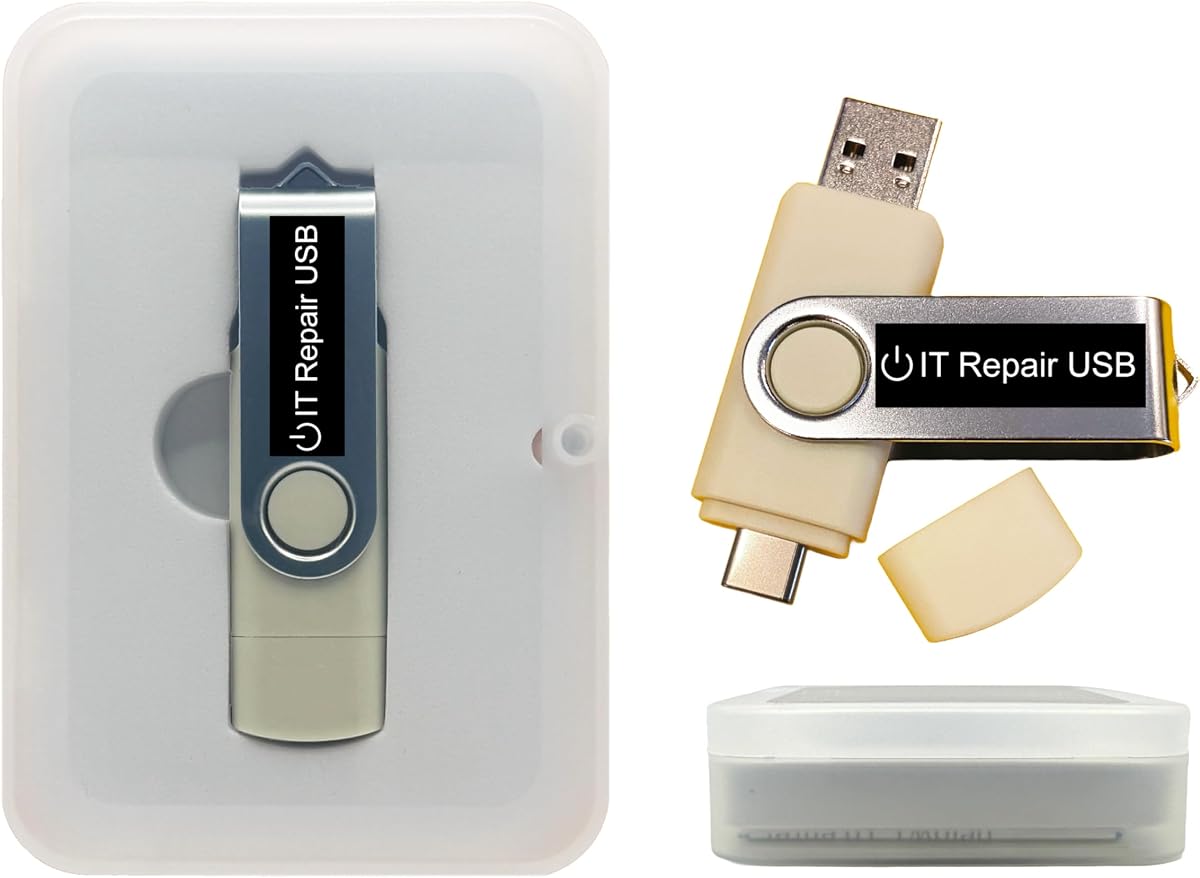
The Password Reset Bootable USB is not a traditional BIOS flash programmer; it is a boot-oriented recovery device designed to help access Windows or Linux user accounts. It offers a 3.6 rating and stands apart from the CH341A products by focusing on operating-system access rather than reading or writing an EEPROM package.
We may earn a commission when you buy through this link, at no additional cost to you.
The drive includes both USB-A and USB-C connectors and supports Legacy BIOS and UEFI boot modes. Its stated operating-system coverage includes Windows 2000 through Windows 11 and most Linux distributions, which makes it broadly relevant when the immediate goal is account recovery without reinstalling the system or losing files.
Its utility interface is designed to guide the user through recovery, while the USB can be customized with compatible bootable ISO applications, installers, or utilities. That makes it more flexible than a fixed one-function rescue disk. However, its 3.6 rating is lower than the programmers and specialist clip products, and it cannot back up or rewrite a motherboard's flash chip.
Choose this drive when a customer has forgotten a Windows or Linux password and needs a bootable recovery environment. It is not appropriate for dead motherboards, failed storage, or firmware-chip programming. Its main value lies in broad account-recovery support and flexible boot media rather than direct BIOS programming.
Windows and Linux support gives technicians a broad option for account recovery across mixed client fleets. The combination of USB-A and USB-C also reduces connection problems with newer laptops and older desktop towers.
Because compatible bootable applications can be added, replaced, or upgraded, the drive can serve as a reusable maintenance medium. Users should confirm that any replacement utility is suitable for their architecture and intended recovery task.
We may earn a commission when you buy through this link, at no additional cost to you.
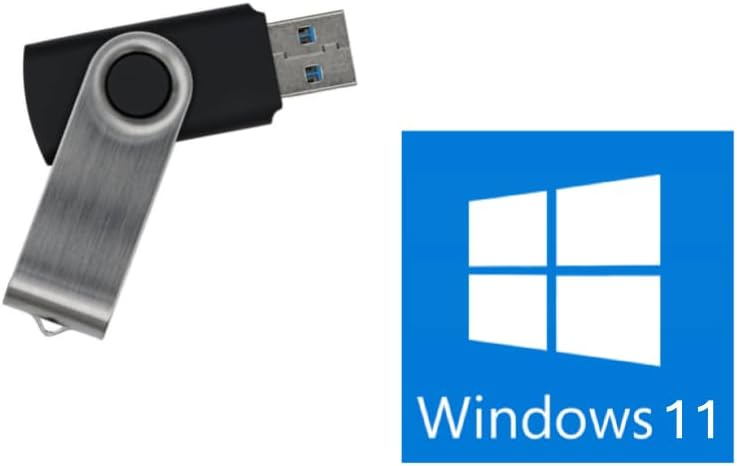
The Windows 11 Bootable USB is an 8GB setup and recovery drive designed to install or repair Windows 11, including systems that do not meet the stated TPM requirement. It carries a 4.0 rating and supports both UEFI and Legacy BIOS boot modes.
We may earn a commission when you buy through this link, at no additional cost to you.
The product's most useful feature is its focused deployment workflow. Rather than a broad multi-purpose toolkit, it is designed around Windows 11 installation and recovery, with clear guidance for machines capable of reaching their firmware setup or boot menu. It can be useful for rebuilding a compatible system without immediately turning to a full disk-reinstallation process.
The limitations are significant and clearly stated. No Windows product key is included, and the drive cannot repair dead motherboards, bad RAM, failing hard drives, or a computer that will not power on or enter BIOS. It is also excluded from Chromebook, ARM-based or Snapdragon PC, Apple-silicon Mac, BitLocker recovery, data recovery, and failed-drive file-saving use cases.
This drive suits owners of a working computer that needs a clean Windows 11 installation or supported recovery operation. It should not be mistaken for a firmware programmer or a universal repair solution. Confirming that the machine can access UEFI or BIOS and boot from USB is the essential purchase check.
The no-TPM approach expands the stated install target beyond computers that meet current Secure Boot and TPM expectations. It remains a Windows 11 medium, so separate license requirements still apply.
The device is intentionally limited to functioning systems that can reach their boot menu. It cannot revive a computer with failed core hardware, making early verification essential to avoid an ineffective purchase.
We may earn a commission when you buy through this link, at no additional cost to you.
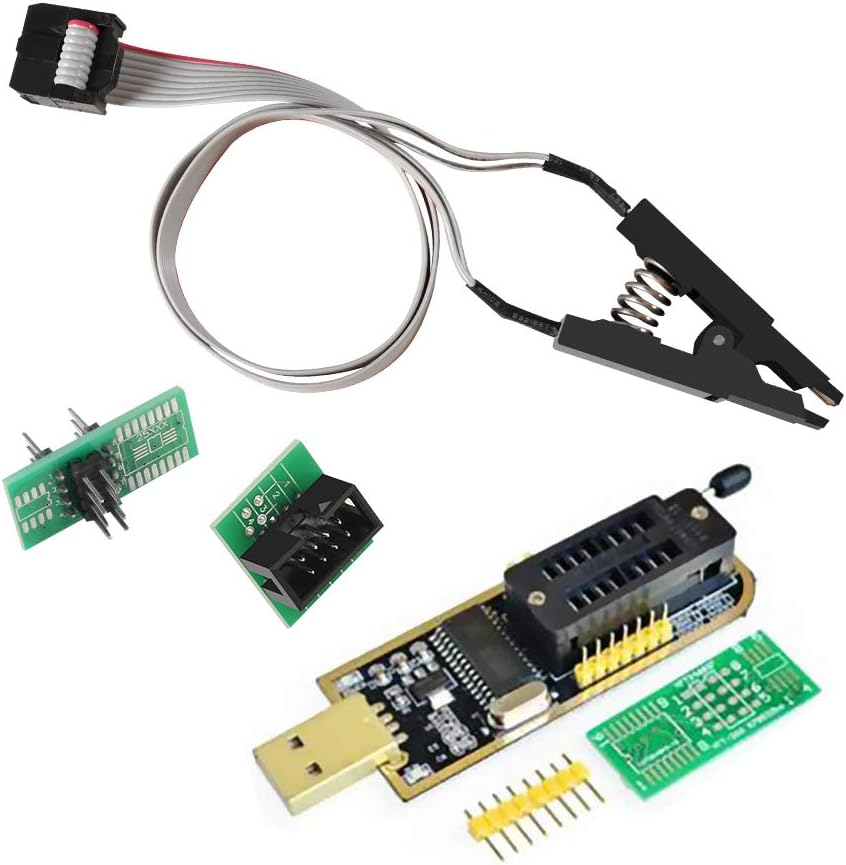
The ACEIRMC CH341A Adapter Kit is a broad hardware package for 24- and 25-series flash programming, with a 4.4 rating. Unlike simpler bundles, it includes the CH341A programmer, a 1.8V adapter, a SOIC8-to-DIP8 converter, and an SOIC8/SOP8 test clip in one set.
We may earn a commission when you buy through this link, at no additional cost to you.
The additional voltage adapter makes this the most versatile package among the listed CH341A options. It can support 1.8V SPI flash applications found in certain motherboards and other devices, while the clip supports in-circuit access and the DIP8 adapter provides another way to interface with supported packages.
The stated programming claims include faster operation than an ordinary ATMEGA8 25-series programmer, with write and erase speed described as 2–3 times faster and an erase check rate of approximately 2–3 Mbit per minute. The product is listed for tasks involving TV memory, desktop motherboards, LCDs, notebooks, routers, cards, DVD equipment, and set-top boxes, including backup, erase, burn, check, and repair operations.
This is the most complete option for a technician who wants several connection methods in one purchase. It is a good match for supported 24- and 25-series chips, especially where low-voltage devices are encountered. The larger accessory set does require careful organization, and compatibility outside the stated families should not be assumed.
The test clip, SOIC8-to-DIP8 adapter, and programmer together provide flexibility for both installed and adapter-based work. This reduces the need to source separate handling tools for common motherboard and embedded-device repairs.
The included 1.8V adapter expands the kit beyond the commonly encountered 3.3V and 5V environments. Users must still identify the target device voltage and connect the appropriate adapter correctly.
We may earn a commission when you buy through this link, at no additional cost to you.
The EZP2023 USB Programmer is the most feature-rich dedicated flash programmer in this guide. It has a 4.3 rating, a 15-adapter set, and support for 25-series SPI flash as well as 24-, 25-, 93-, and 95-series EEPROM devices.
We may earn a commission when you buy through this link, at no additional cost to you.
Automation is its defining advantage. The programmer can automatically identify primarily 25-series chips, detect whether a chip is placed correctly, and select the supply voltage. Some 24-, 25-, 93-, and 95-series EEPROM chips still require manual selection, so the automation is useful but not universal.
The stated performance is particularly attractive for common EN25T80 chips: the listing reports approximately three seconds to read and nine seconds to write. These figures are manufacturer claims, and real results can vary with the chip, adapter, connection, and software workflow. The full package positions the device for offline copying and programming rather than only clip-based in-circuit work.
This is the most complete choice for users who handle several flash families and want fewer manual setup steps. It is a particularly sensible pick for a repair bench that regularly works with 25-series BIOS chips. Buyers should still identify the target chip and package, and they should keep replacement or specialized adapters available for less common arrangements.
Automatic model detection, placement detection, and voltage selection can make a programming session faster and reduce setup errors. The manual override for certain EEPROM families preserves flexibility when automatic identification cannot resolve a target.
The 15-adapter package and stated coverage of four major memory families make the EZP2023 more adaptable than a basic clip kit. It is especially useful for technicians who want one programmable platform across a varied collection of supported chips.
We may earn a commission when you buy through this link, at no additional cost to you.
The Windows PC Repair Bootable USB Recovery Toolkit is a customizable boot drive for diagnosing and repairing Windows systems. Its 3.5 rating is the lowest listed, but its breadth of maintenance functions makes it relevant to technicians, computer resellers, and owners of aging or slow machines.
We may earn a commission when you buy through this link, at no additional cost to you.
The toolkit can address startup problems, malware, file recovery, partition repair, account unlocking, and forgotten passwords. It can run as a live environment or be used as a recovery operating system, and its stated offline operation is valuable on systems with no network connection.
Like the other bootable products, it is not a programmer for motherboard EEPROM or SPI flash packages. Its lower rating may reflect variability in a broad software bundle, but buyers should also examine the exact utilities and current maintenance requirements. The included instructions for adding, replacing, or upgrading bootable ISO applications add flexibility, although the operating system must be suitable for the target machine.
Choose this toolkit for broad Windows troubleshooting rather than firmware-chip work. It is especially helpful for repair shops that need a reusable offline diagnostic medium. It should not be expected to recover a completely dead computer or to replace a chip-level programmer.
Running tools directly from USB can leave the installed operating system untouched while the user investigates a problem. That is useful when the system is too unstable to boot normally or when files need to be copied before a repair.
Compatible ISO applications can be added or replaced, allowing the drive to evolve with a technician's workflow. Keeping known-good copies of required utilities is advisable when the device will be used in offline environments.
We may earn a commission when you buy through this link, at no additional cost to you.
The SOP16 IC Test Clip is a specialized hardware accessory rather than a complete programmer. It earns a 4.3 rating and is designed to make contact with 16-pin SOP and SOIC flash chips through an adapter compatible with RT809F, TL866CS, and TL866A programmers.
We may earn a commission when you buy through this link, at no additional cost to you.
The clip supports 150MIL and 300MIL SOP16 packages, two dimensions found on different boards. Its hardened construction, gold-plated pin contacts, and 40-centimeter connection line are intended to provide a stable link between the installed chip and a programmer.
The primary limitation is that successful in-circuit communication is not guaranteed. Peripheral circuits can affect the chip's behavior, and some programmers may not identify every board correctly through the clip. When online access fails, the product information states that the chip may need to be removed for programming.
This accessory is a good match for a technician who already owns a compatible RT809F, TL866CS, or TL866A programmer and routinely encounters SOP16 flash packages. It is not a standalone solution. Check the programmer's connector, the target package dimensions, and the board's component layout before purchasing.
Supporting both 150MIL and 300MIL SOP16 devices is useful because package dimensions are not consistent across all boards. The adapter design lets the clip work with several common programmer platforms without redesigning the connection.
Because peripheral components may interfere with in-circuit identification, having a removal-based workflow ready is important. The clip can save time when it works, but it should not be treated as a guarantee of universal board-level programming.
We may earn a commission when you buy through this link, at no additional cost to you.
The Windows Recovery USB is a bootable reinstall and recovery product for Windows 10 and Windows 11. It has no supplied numeric rating, so the absence of a star score should not be interpreted as either strong or poor performance; its documented features provide the better basis for comparison.
We may earn a commission when you buy through this link, at no additional cost to you.
A notable advantage is stated Secure Boot compatibility, allowing the recovery process to run with Secure Boot enabled and without requiring BIOS changes. The drive downloads genuine Windows 11 or Windows 10 media directly from Microsoft rather than relying on an outdated or unofficial ISO, which is a useful distinction for users concerned about recovery image provenance.
The current version is limited to 64-bit systems with UEFI BIOS, generally covering most PCs manufactured from 2013 onward, and it does not support Legacy BIOS. A Windows product key is not included, so users need an existing license or a separate license. It is a recovery and reinstallation device, not a BIOS chip programmer.
This is a practical choice for a compatible modern PC that can boot from USB and needs a current Windows installation. It may be particularly useful where Secure Boot is enabled and the user does not want to alter firmware settings. Verify UEFI support, operating-system architecture, licensing, and internet availability before relying on it.
Supporting Secure Boot is a meaningful convenience for current managed and security-conscious systems. Users can launch the recovery environment without first disabling a firmware protection feature that the drive is stated to support.
Downloading installation media directly from Microsoft allows the tool to provide a current Windows version. The operating system still requires a valid license, and the system must meet the stated 64-bit UEFI requirements.
We may earn a commission when you buy through this link, at no additional cost to you.
The Kali Linux Bootable USB is a portable Linux environment intended for ethical hacking, cybersecurity analysis, penetration testing, forensics, and digital investigation. It has a 4.1 rating and includes more than 600 pre-installed tools across network, web, and wireless security categories.
We may earn a commission when you buy through this link, at no additional cost to you.
Its dual USB-A and USB-C construction supports a wide range of desktop and laptop hardware, while Legacy BIOS and UEFI support makes it flexible for older and newer systems. Both amd64 and arm64 builds are included, allowing it to run on supported Intel, AMD, and ARM-based computers.
Users can boot Kali directly from the USB or install it permanently for stronger performance. The drive is also customizable with compatible bootable ISO applications, installers, or utilities. It is important to use these security capabilities only on systems for which the user has explicit authorization, since penetration-testing tools can access networks, accounts, and stored data.
This product is best for authorized security professionals, students, and researchers who want a portable testing platform. It belongs in a broader toolkit rather than replacing a BIOS programmer, and it should not be selected for routine Windows account recovery unless the customization workflow is more appropriate for that task.
The included security-analysis tools make the drive useful for authorized network, web, and wireless audits without requiring a full Kali installation on every device. Live operation is particularly convenient for assessment environments where persistent changes are undesirable.
Support for amd64, arm64, UEFI, and Legacy BIOS broadens the hardware range. The trade-off is that a security-focused environment is less general-purpose than a standard Windows installation or recovery drive.
We may earn a commission when you buy through this link, at no additional cost to you.
The right choice starts with the exact maintenance job, the target chip or system, and the hardware already available. Chip programmers, test clips, and bootable recovery drives solve different problems, so compatibility and intended use matter more than feature count.
A genuine BIOS flash programmer reads, erases, verifies, and writes firmware held in supported EEPROM or SPI flash chips. A bootable USB instead boots an operating-system environment for installation, account recovery, diagnostics, or security analysis. These categories should not be treated as interchangeable, because a recovery drive cannot repair a corrupted motherboard chip and a programmer cannot recover a forgotten Windows password.
Choose a chip programmer for firmware backup, firmware replacement, or offline chip recovery. Choose a bootable drive for reinstalling Windows, resetting an account, diagnosing a boot problem, or running a security environment. If the goal is unclear, identify the desired end result before comparing hardware.
Programmers in this guide support different combinations of 24-, 25-, 93-, and 95-series chips, while the WWZMDiB and ACEIRMC kits are principally described for 24- and 25-series devices. Package size and pin count also matter: SOIC8, SOP8, DIP8, and SOP16 devices require different contacts or adapters.
Read the full marking on the target chip and compare it with the programmer's supported list. A device can be electrically similar while remaining unsupported by the controlling software. If the package is uncommon, verify that the required adapter or clip is included before ordering.
Applying the wrong voltage can prevent successful communication and may damage a target chip. The WWZMDiB model supports switching between 3.3V and 5V, while the ACEIRMC kit includes a 1.8V adapter. Other products may select voltage automatically or require the correct configuration to be chosen in software.
Confirm the target chip's rated voltage before attaching any programmer or adapter. When uncertain, consult board documentation or a reliable chip database. Voltage selection should never be based only on the form factor, because similar packages can use different electrical specifications.
An in-circuit test clip contacts a chip while it remains soldered to the board. This is faster and less invasive, but nearby resistors, capacitors, protection circuits, or other components can interfere with reading and writing. Offline programming requires careful chip removal and a correct package adapter.
For a first attempt, a clip-based product is often convenient if the board layout permits a clear connection. Be prepared to remove the chip if identification fails. If your workflow already includes board repair and chip extraction, a programmer with a broad adapter set may be more suitable.
The EZP2023 provides automatic chip-model detection for primarily 25-series devices, automatic placement detection, and automatic supply-voltage selection, although some 24-, 25-, 93-, and 95-series EEPROMs still need manual selection. More automation can reduce setup time, but reliable chip identification remains essential.
Look for a clear method to select the exact chip and a verification step after writing. Automatic detection is convenient, not a substitute for reading the physical chip marking. Keep software and driver information current for the platform on which the programmer will run.
A programmer becomes more useful when it includes the right connection hardware. The ACEIRMC CH341A Adapter Kit includes a 1.8V adapter, SOIC8-to-DIP8 converter, and test clip, while the EZP2023 listing includes 15 adapters. The SOP16 product includes a test clip and SOP16-to-DIP16 adapter but requires a compatible programmer.
Make a checklist of the chip packages and voltages you actually encounter. A large bundle is more valuable when its parts are relevant; otherwise, a smaller kit with the correct one or two accessories may be easier to organize and use.
For bootable recovery media, verify Legacy BIOS versus UEFI support and the available USB ports. Products with both USB-A and USB-C are more convenient across modern laptops and older desktops, but the host must still be able to boot from the selected device. The Windows Recovery USB is explicitly limited to 64-bit UEFI systems.
Also check the operating system or distribution, CPU architecture, Secure Boot requirements, and whether the computer can reach its boot menu. A product cannot begin a recovery workflow if damaged hardware prevents the machine from reaching firmware setup or USB boot.
A customizable bootable drive can be more valuable over time because installers, recovery tools, and diagnostic environments can be added, replaced, or upgraded. That is particularly useful for technicians who need a reusable offline toolkit. For a dedicated programmer, ongoing driver and software compatibility may matter more than media customization.
Check whether the seller provides understandable instructions and reliable support. Keep a separate record of the exact utility version installed on a customizable drive, and maintain backups of important recovery media so a failed update does not leave the device unusable.
Begin by documenting the target system, reading the complete chip marking, and checking its package, voltage, and supported family. For a chip programmer, disconnect power from the board unless the established procedure specifically calls for an in-circuit powered connection, and inspect the area around the chip for components that could obstruct a clip. Save the original firmware before making changes whenever the device can still be read.
Connect the programmer to the computer, install the required driver and programming software, and select the exact chip model rather than relying on an unidentified guess. Verify the supply voltage and test the connection. When writing, use a stable cable and adapter, keep the board powered as required, and allow the software to complete erase, write, and verification stages without interruption. Never remove a chip or clip while an operation is active.
For a bootable USB, confirm that the target can enter its boot menu and that the selected recovery environment matches its boot mode and architecture. Make a current backup of important files before reinstalling or making major partition changes, and keep a valid operating-system license available. Store programmers, clips, and adapters in a dry protective case, and maintain a written inventory of voltage adapters and package converters for future repairs.
A BIOS flash tool reads, backs up, erases, writes, and verifies firmware stored in compatible EEPROM or SPI flash chips. It is commonly used for motherboard recovery, firmware replacement, and offline chip programming. A bootable recovery USB serves a different purpose, so it cannot directly replace a chip programmer.
Usually, no. A bootable USB can reinstall an operating system or provide recovery tools, but it does not rewrite the firmware package soldered to a motherboard. A compatible chip programmer is required for that type of operation, although actual firmware replacement may need additional board-level knowledge.
Read the complete marking printed on the chip and determine its package type, pin count, voltage, and memory family. Compare those details with the programmer's supported-device list and required adapter. Similar-looking chips may behave differently, so the physical marking should be the basis for your selection.
It can be faster and avoids desoldering, but it is not always safer for successful communication. Nearby circuit components may interfere with identification or writing. If the chip cannot be read through the clip, removing it and using the appropriate socket adapter is a valid alternative.
The CH341A kits in this guide provide a familiar USB programmer with clips and, in one bundle, low-voltage and package adapters. The EZP2023 emphasizes automatic chip detection, placement detection, and voltage selection while providing a larger adapter set. The better choice depends on chip coverage, required voltage, and the accessories you actually need.
No. The supplied information says automatic identification mainly applies to 25-series chips, while 24-, 25-, 93-, and 95-series EEPROM devices may need manual selection. Knowing the exact chip marking is therefore still important when using the programmer.
It depends on the product. The Windows 11 installer, Windows PC Repair Toolkit, Password Reset USB, and Kali Linux drive are described as supporting both UEFI and Legacy BIOS. The Windows Recovery USB for Windows 10 and 11 is explicitly limited to 64-bit UEFI systems, so its current version will not support Legacy BIOS.
Yes, whenever the chip can be read reliably. A verified backup can restore the original firmware if a replacement image is incompatible or an operation is interrupted. Store the backup in more than one location and confirm that it is readable before making any changes.
For the most capable dedicated programming setup, the EZP2023 leads with automatic detection, broad support across four major memory families, and a 15-adapter package. The ACEIRMC CH341A Adapter Kit is the strongest all-in-one option for low-voltage work and flexible connections, while the WWZMDiB CH341A Kit offers an economical starting point with a clip and conversion plate.
Prioritize the task before the accessory count. Identify the chip family, package, and voltage for firmware work, or confirm boot mode, architecture, and operating-system needs for a recovery drive. Also account for the supplied limitations: SST 25 write restrictions, interference from peripheral circuits, absent Windows licenses, and systems that cannot reach their own boot menu.
Ratings can help distinguish established options, but the supplied information and current listing are the best final references. Prices and availability can change, so compare the complete package at the time of purchase and make sure every included adapter or clip corresponds to a task you genuinely need.