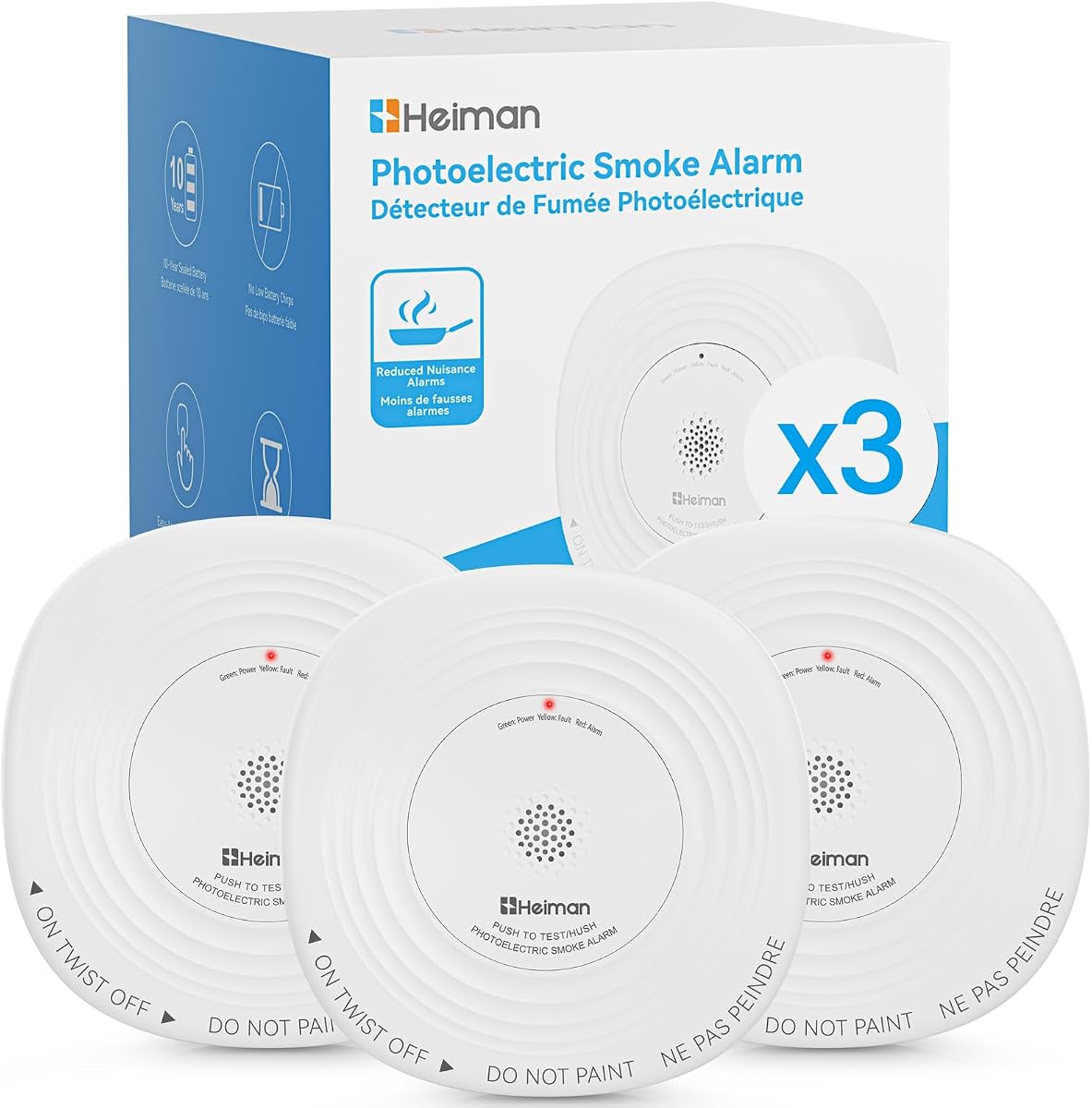
Heiman 3-Pack Smoke Detector
4.2Editor score
Dual-beam photoelectric sensing
Ten-year sealed lithium battery
UL 217 10th Edition certified
Compare the 10 best smoke alarms that detect vape smoke, including dedicated vaping sensors, smart smoke alarms, and multi-unit systems for home or business.
Vape smoke is difficult to detect because it can be faint, short-lived, and far less visible than cigarette smoke. The most useful products combine a dedicated vaping sensor with app alerts, while conventional photoelectric smoke alarms offer broader protection against fire hazards in homes, offices, schools, and public spaces.
We compared sensor purpose, alert capabilities, installation requirements, power options, certification, and suitability for different environments. The list includes a purpose-built vape detector, a cigarette and PM2.5 monitor, interconnected smart smoke alarms, and conventional residential alarms that complement a broader safety strategy.
Each review explains where the product is most useful, the trade-offs buyers should consider, and who may benefit from choosing it. Product availability, features, and pricing can change, so verify the current listing and local safety requirements before making a final purchase.
4.2Editor score

2.8Editor score

4.2Editor score
This side-by-side comparison covers dedicated vaping sensors, cigarette and PM2.5 monitors, interconnected smart smoke systems, and conventional smoke and carbon monoxide alarms. The distinction matters because general smoke alarms are primarily designed for fire detection, not specialized vape-particle identification.


The Forensics Vape Detector is the most purpose-specific product in this guide. Rather than asking a general smoke alarm to identify an aerosol, it uses super-sensitive laser-scattering sensor technology to monitor for vaping around the clock. Its 2.8 rating is the lowest here, but that figure should be interpreted in the context of a specialized device rather than a conventional residential smoke alarm.
We may earn a commission when you buy through this link, at no additional cost to you.
Its most valuable feature is the connection between the sensor, the Smart app, and a user's smartphone. WiFi and Bluetooth support allow alerts to be sent away from the monitored area, while programmable notifications offer flexibility for homes, schools, hotels, offices, bathrooms, lockers, and rental properties. The stated recommendation of one unit per 200 to 300 square feet also gives buyers a useful starting point for estimating coverage.
There are trade-offs. A dedicated vape sensor is not the same as a complete fire-safety system, and the relatively low rating may reflect concerns about support, installation, or early product performance. Buyers should also verify how the product integrates into an existing alarm plan, how alerts are configured, and whether the installation environment suits the manufacturer’s placement guidance.
This is the strongest choice when the primary problem is discreet vaping in a school bathroom, hotel room, rental property, or workplace where a general smoke alarm may not provide a distinct vaping response. It is less compelling for a homeowner who mainly needs code-compliant fire detection. For that requirement, the Heiman and Kidde options in this guide provide more clearly defined smoke-alarm functions and certifications.
Unlike general photoelectric alarms that respond to suspended particles, this detector is designed specifically around vape aerosol. That makes it more relevant when the main objective is to identify vaping behavior or notify a responsible party promptly.
Smartphone notifications reduce the need to remain physically near the detector. Programmable alerts can also help schools, landlords, and managers establish a consistent response protocol when vaping is detected in a restricted area.
We may earn a commission when you buy through this link, at no additional cost to you.
The Heiman Smart Wireless Interconnected Smoke Detector system is a substantial upgrade for buyers who want more than isolated alarms. This six-pack includes a gateway and provides both local wireless interconnection and app-supported remote monitoring. Its 4.2 rating reflects a balanced combination of useful connected features and strong residential smoke-detection fundamentals.
We may earn a commission when you buy through this link, at no additional cost to you.
One of the system's defining advantages is that one alarm can trigger all linked units. That local interconnection works without WiFi, while the gateway adds smartphone and email notifications through the Heiman Home App. The gateway also supports other compatible Heiman safety sensors, allowing users to build a more complete network for temperature and humidity, doors and windows, carbon monoxide, or water leaks.
The setup does add technical considerations. The gateway must be added through a 2.4GHz WiFi network, and buyers who want integrations with platforms such as Home Assistant, IFTTT, Google Home, or SmartThings need compatible hardware and configuration. The dual-beam photoelectric sensors focus on slow-smoldering smoke and are designed to reduce nuisance alerts from cooking vapor and dust, but they remain smoke alarms rather than dedicated vape detectors.
This package is a strong fit for large homes, apartments, offices, and multi-story properties that need coordinated alerts. It is especially attractive to buyers who value remote awareness and plan to expand their smart safety system. For a smaller dwelling or a location focused specifically on vaping incidents, a smaller conventional alarm or a dedicated vape detector may be more proportionate.
Wireless interconnection ensures that smoke detected by one unit can activate the rest of the linked system. This is useful when an alarm outside the occupied room may go unheard or when occupants need a common warning throughout the property.
The included gateway can connect with compatible Heiman sensors, turning this package into the foundation of a broader home or workplace safety network. Expansion is most valuable for property managers and homeowners who want centralized notifications.
We may earn a commission when you buy through this link, at no additional cost to you.
The Heiman 10-Year Sealed Battery Smoke Detector 3-Pack is a practical option for buyers who want several dependable residential alarms without the complexity of a connected gateway. It carries a 4.2 rating and includes three units, making it easier to cover multiple rooms or a small property with a consistent set of alarms.
We may earn a commission when you buy through this link, at no additional cost to you.
Dual-beam photoelectric sensing is the central technical feature. It is intended to identify slow-smoldering fire smoke while reducing nuisance alarms associated with cooking vapor and dust. Each unit also produces an 85dB alert with a flashing red LED, and a 20-second alarm memory helps indicate that a warning occurred even if it was not heard immediately.
The sealed ten-year lithium battery removes the need for routine battery changes, while automated fault and end-of-life warnings address long-term maintenance. The compact ABS and polycarbonate housing is heat-resistant, and the units can be mounted on a wall or ceiling. The trade-off is that the pack does not include the smart gateway and app features found in the six-pack system.
This is a good match for homeowners, landlords, and small offices seeking affordable multi-room fire detection, especially where a long service life is important. It should not be described as a dedicated vape alarm, although its sensor may respond to some airborne particles. Buyers whose main concern is identifying vaping behavior should consider the Forensics unit or cigarette-monitor option instead.
A sealed ten-year lithium battery removes annual battery-replacement tasks and reduces low-battery chirps. For a multi-unit property, the long service interval can also simplify inventory and maintenance planning.
The flashing alarm-memory indicator can reveal that an event occurred while a room was unattended. That feature is helpful in homes with sleeping occupants and in properties where staff may not enter a space immediately.
We may earn a commission when you buy through this link, at no additional cost to you.
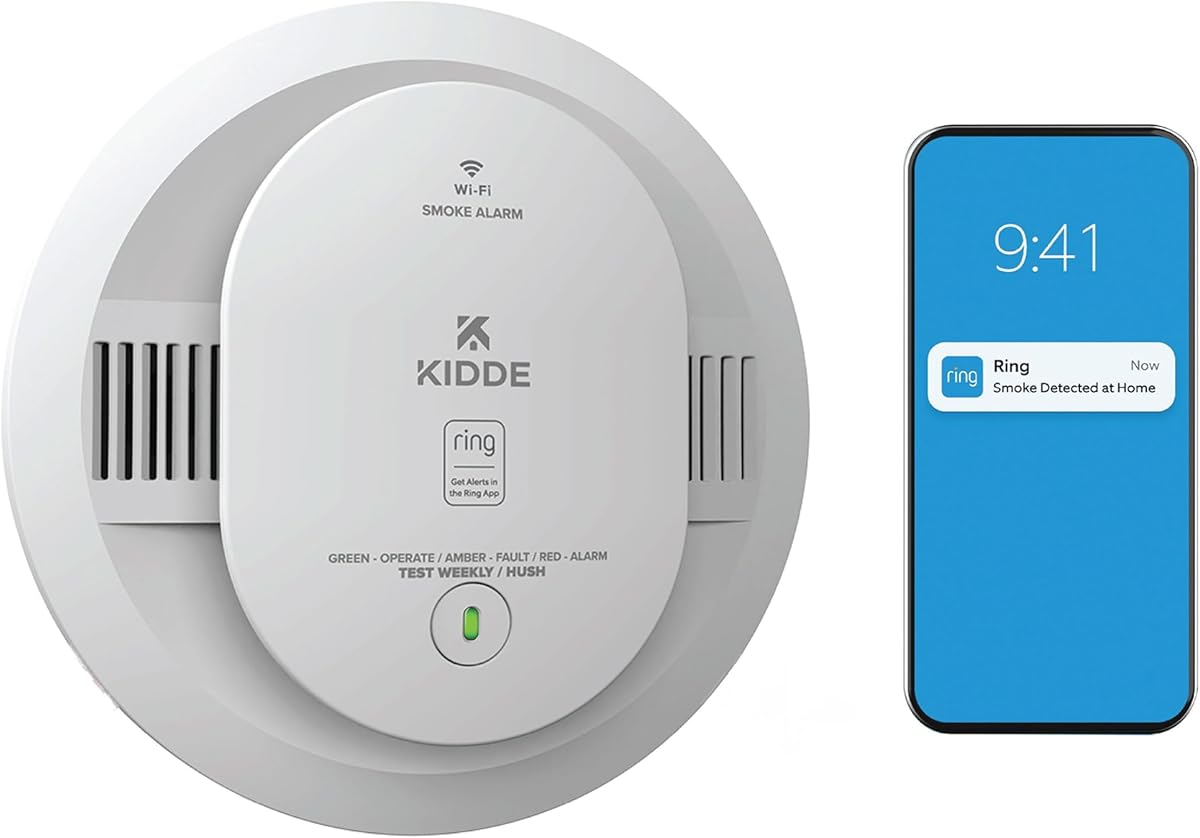
The Kidde Smart Smoke Detector with Ring is designed for buyers who want conventional smoke detection and phone-based warnings without hardwiring. Its 4.2 rating and smart features make it more versatile than a basic standalone alarm, particularly for homeowners who already use the Ring ecosystem.
We may earn a commission when you buy through this link, at no additional cost to you.
Real-time Ring app notifications cover smoke and low-battery warnings without requiring a subscription. Optional professional monitoring is available as a separate service, but buyers who only want local and app alerts do not need it. The alarm also supports wire-free interconnectivity, allowing all compatible Kidde alarms in a home to sound when one detects smoke.
The detector operates on two included AA alkaline batteries, making placement and replacement simpler than a hardwired installation. Enhanced sensing technology is designed to reduce cooking-related nuisance alarms compared with earlier Kidde generations, and compatibility with Alexa-enabled devices offers another notification channel. The principal limitations are the need to replace AA batteries eventually and the emphasis on the Ring platform for app-based features.
Choose this model for a rental, apartment, or home that benefits from remote smoke and low-battery warnings but does not require a dedicated vape sensor. It works particularly well for users already invested in Ring-compatible devices. It is less appropriate for a facility whose primary objective is identifying a specific vaping incident.
Core app notifications for smoke and low-battery events do not require a subscription. That makes the device useful for owners who want awareness and basic history without paying for professional monitoring services.
Two AA batteries eliminate hardwiring, while compatible alarms can communicate across the home. This simplifies installation in finished rooms and gives renters a more flexible way to improve coverage.
We may earn a commission when you buy through this link, at no additional cost to you.
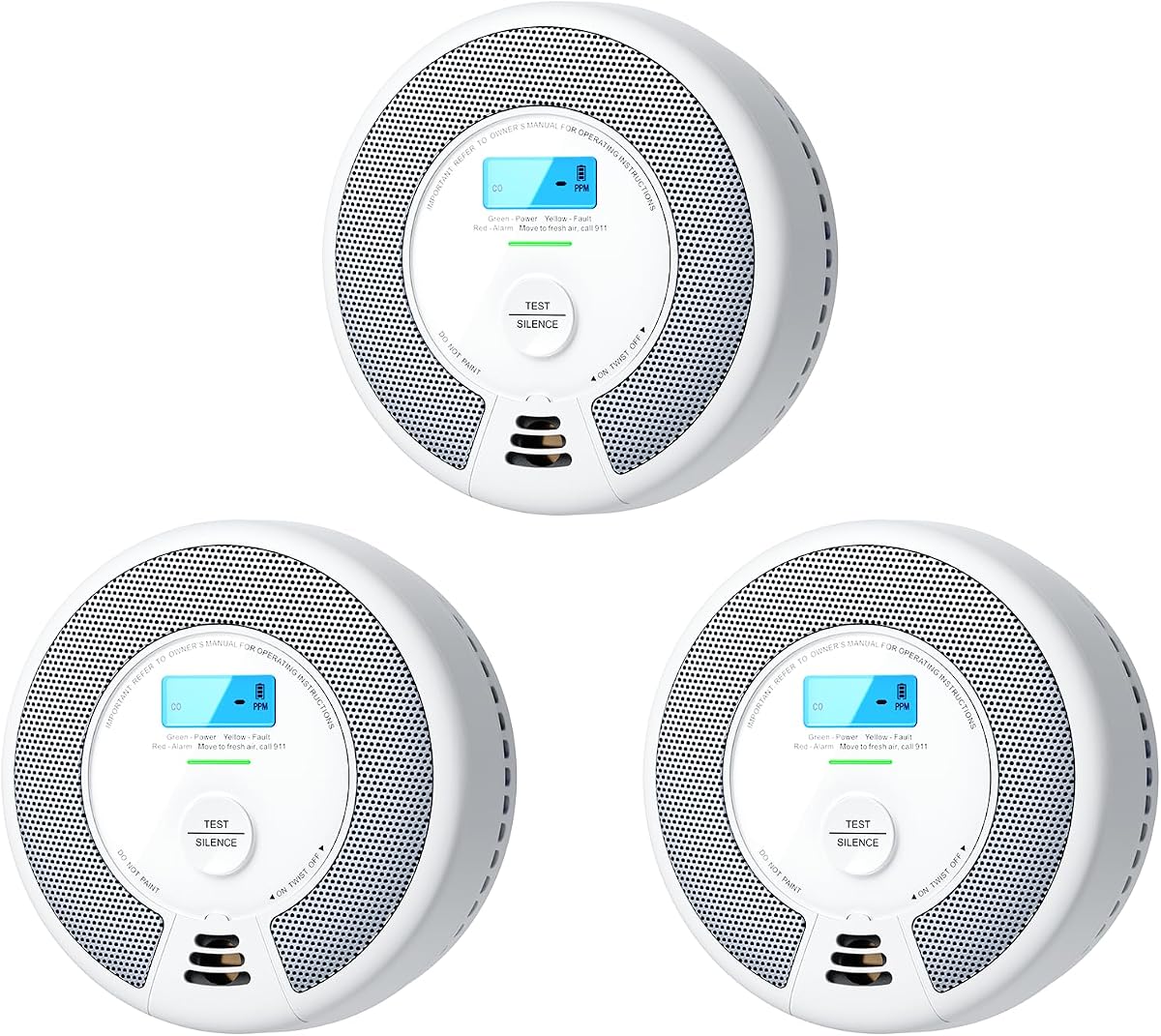
The X-Sense SC07 3-Pack combines a photoelectric smoke sensor with an electrochemical carbon monoxide sensor in a single unit. Its 4.5 rating is among the strongest in this guide, and the three-unit format makes it a sensible option for bedrooms, hallways, basements, and other residential areas where both hazards are relevant.
We may earn a commission when you buy through this link, at no additional cost to you.
The large LCD display is one of the product's most useful practical features. It shows real-time carbon monoxide levels, the battery level, and operating status, allowing users to check the detector without relying entirely on an audible alarm. The mounting bracket, screws, and anchor plugs support straightforward wall or ceiling installation without rewiring.
This is a conventional safety device rather than a dedicated vape alarm. It is ETL Listed to UL 217 and UL 2034 safety standards, but its stated purpose is smoke and carbon monoxide detection. The LCD does not identify the chemical composition of an aerosol, and the product does not provide app-based alerts or a distinct vaping alert. Buyers seeking remote notifications or specialized vape identification must look elsewhere.
The SC07 3-Pack is best for homeowners, landlords, and small property managers who want a straightforward combination alarm without wiring. It is particularly useful where carbon monoxide is a known risk, such as near a garage, fuel-burning appliance, or other approved installation location. For a dedicated anti-vaping installation, pair this kind of coverage with a purpose-specific detector rather than expecting the alarm to provide that function.
Combining smoke and carbon monoxide sensing reduces the number of separate devices required in suitable locations. It is particularly beneficial for apartments, rentals, and homes with fuel-burning appliances.
The LCD provides carbon monoxide readings, battery status, and working status. That visibility makes routine checks and troubleshooting easier than with an alarm that offers only sound and light.
We may earn a commission when you buy through this link, at no additional cost to you.
The X-Sense SC07 10-Pack carries the same core sensing approach as the smaller three-pack but is better suited to large homes, apartment buildings, offices, and managed properties. Its 4.5 rating indicates strong customer reception, while the ten-unit package simplifies coordinated installation across numerous rooms.
We may earn a commission when you buy through this link, at no additional cost to you.
Each alarm combines a photoelectric smoke sensor with an electrochemical carbon monoxide sensor. A large LCD provides real-time carbon monoxide readings, battery status, and working status, giving occupants a clear way to check the device. The units are ETL Listed to UL 217 and UL 2034 standards and can be mounted on a wall or ceiling without rewiring.
The bundle is large by definition, and buyers should confirm that they need ten combination alarms rather than a smaller quantity. It also remains a standard smoke and CO product with no app connectivity, remote alerts, or specialized vape classification. Local code, the type of fuel-burning equipment present, and manufacturer placement rules should guide the actual distribution of units.
This pack is an efficient choice for contractors and property managers who need a uniform set of combination alarms. It is also relevant to homeowners renovating a large property or outfitting a multi-unit building. It should complement, rather than replace, dedicated vape monitoring in schools, hotels, workplaces, or other locations where vaping is a recurring concern.
Ten matching alarms streamline installation and maintenance across larger properties. A standardized model also simplifies replacement planning when an upgrade or end-of-life event occurs.
Each unit reports carbon monoxide levels, battery condition, and operating status on its display. This helps property staff identify an abnormal condition before relying solely on an alarm.
We may earn a commission when you buy through this link, at no additional cost to you.
The Cigarette Detector and PM2.5 Alarm is built for tobacco-control and air-quality monitoring rather than conventional residential fire protection. Its 2.9 rating is lower than the ratings of the mainstream smoke alarms in this roundup, but it addresses a different operational need: discouraging smoking in offices and public spaces.
We may earn a commission when you buy through this link, at no additional cost to you.
The device combines a no-smoking alert function with PM2.5 monitoring. Real-time voice reminders can notify people when smoke is present, creating a direct and visible enforcement mechanism. A remote control allows operation and adjustments from a distance, and the two-meter power cord can be adapted to different installation environments.
Important distinctions should be clear before purchase. The listing does not identify this as a UL-certified residential smoke or fire alarm, and its cigarette-oriented sensing function is not the same as a dedicated vape detector. It may be more appropriate for tobacco smoke or general air-quality surveillance than for providing legally required residential fire coverage. Buyers should confirm the detection behavior and placement requirements for their intended environment.
This monitor is best suited to offices, reception areas, public rooms, and other spaces where a spoken no-smoking reminder is useful and visible enforcement is desired. It can complement a dedicated vape detector in a school or hotel, but it should not replace code-compliant smoke and carbon monoxide alarms. The primary caution is to understand its specialized role before assuming it provides the same protection as a residential alarm.
Voice reminders make the no-smoking policy visible at the moment of detection. That immediacy can be useful in reception areas and shared workplaces where a silent indicator might be overlooked.
PM2.5 monitoring adds broader environmental context to cigarette detection. Buyers can use both functions to identify periods when the indoor air quality warrants attention or corrective action.
We may earn a commission when you buy through this link, at no additional cost to you.
The Kidde Compact Smoke Detector 10SDR focuses on the essentials: dependable smoke sensing, a loud alarm, and straightforward battery-powered installation. Its 4.5 rating is among the highest here, and the compact housing makes it a practical fit for bedrooms, hallways, apartments, and other spaces where visual bulk matters.
We may earn a commission when you buy through this link, at no additional cost to you.
The alarm sounds at 85dB and uses a red LED for a clear visual warning. Advanced sensing technology is designed to distinguish real smoke from everyday cooking or steam, helping reduce nuisance alarms without abandoning rapid detection. It meets UL 217 10th Edition and FCC requirements and is backed by a ten-year limited warranty from the date of purchase.
Two included AA alkaline batteries make installation quick and avoid hardwiring. Unlike a sealed ten-year model, however, this unit requires battery attention over its service life. It also has no app, remote alert, or interconnected smart-home features. The absence of connected functions is not necessarily a flaw for a rental, guest room, basement, or other location where simple local warnings are sufficient.
This detector is a strong choice for buyers seeking a compact, code-conscious alarm without smart-home complexity. It can improve ordinary fire-safety coverage around a home, but it should not be selected as a dedicated vape alarm. Facilities with a specific anti-vaping requirement need a sensor or monitoring system designed to identify vaping behavior and notify the appropriate person.
The compact enclosure is easy to incorporate into finished rooms without visually dominating the ceiling or wall. It is especially suitable for modern interiors, rental units, and smaller sleeping spaces.
Sensing technology that helps separate cooking or steam from smoke can make a home alarm easier to live with. That benefit is most relevant in kitchens, dining areas, and rooms near frequently used appliances.
We may earn a commission when you buy through this link, at no additional cost to you.
The Kidde 20SD10 is a single smoke alarm built around low-maintenance operation. Its 3.9 rating is solid, and the sealed ten-year battery is the feature most likely to influence a buyer comparing it with models that use replaceable AA cells.
We may earn a commission when you buy through this link, at no additional cost to you.
The detector provides an 85dB alarm with a red LED and uses sensing technology designed to reduce false alarms caused by cooking or steam. It also supports faster smoke detection based on the manufacturer's internal comparison with a leading competitor. UL 217 10th Edition and FCC testing provide recognized safety context, while the ten-year limited warranty supports long-term ownership confidence.
Because the product is a one-pack, buyers needing coverage in several rooms must purchase multiple units. It also lacks a gateway, app notifications, and smart-home interoperability, so remote awareness is not part of its design. Its role is local, visible, and audible smoke detection rather than dedicated vape recognition.
The 20SD10 works well for a homeowner, landlord, or contractor who wants one dependable replacement alarm with minimal battery servicing. It is a good fit for a bedroom, hallway, basement, or similar location and can be paired with a dedicated vape detector in facilities where anti-vaping monitoring is important. The key buying priority here is dependable local coverage with minimal ongoing maintenance.
The built-in ten-year battery eliminates routine replacement tasks and recurring low-battery chirps. That simplicity is particularly attractive for hard-to-reach units and properties with many alarms.
LED indicators supplement the audible alarm, helping users see the device's status and recognize an event. Visual warnings are useful for sleeping occupants, visitors, and people with hearing concerns.
We may earn a commission when you buy through this link, at no additional cost to you.
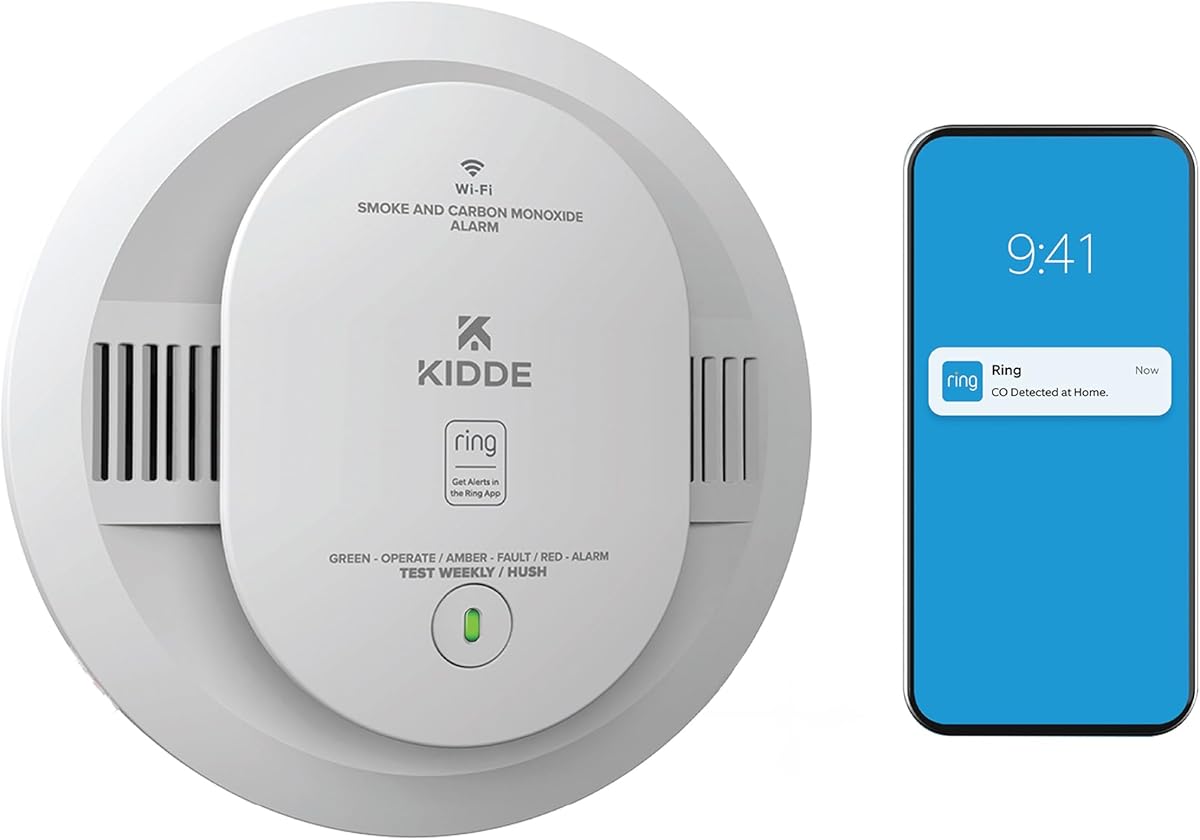
The Kidde Smart Smoke and CO Detector with Ring combines two important home hazards in one connected device. Its 4.3 rating reflects a versatile feature set: smoke and carbon monoxide alerts, app notifications, wireless interconnection, and compatibility with Alexa-enabled devices.
We may earn a commission when you buy through this link, at no additional cost to you.
The detector can send real-time warnings for smoke, carbon monoxide, and a low battery through the Ring app. Core notifications do not require a subscription, while an optional monitoring service is available separately. It can also provide low-level carbon monoxide mobile alerts, allowing occupants to investigate a developing condition before reaching a severe level.
Installation remains straightforward because the device uses two included AA alkaline batteries instead of hardwiring. Compatible Kidde alarms can communicate wirelessly across the home, so one detection event can activate the broader alarm network. The trade-offs are the eventual battery replacement requirement and the emphasis on Ring for the richest smart features. As with other combination alarms, it is not a dedicated vape-detection device.
This model is a strong option for Ring users who want combined smoke and carbon monoxide coverage with remote warnings. It is particularly useful for homes, apartments, and offices that already use compatible smart-home equipment. Buyers with an anti-vaping priority should choose a purpose-built vape detector or cigarette monitor for that requirement while retaining this model for standard smoke and CO protection.
App notifications cover smoke, carbon monoxide, and low-battery conditions. This gives occupants useful information even when they are away from the room where the alarm is installed.
Low-level carbon monoxide alerts can prompt investigation before conditions become critical. Pairing those warnings with a display-based model may be useful where continuous local readings are important.
We may earn a commission when you buy through this link, at no additional cost to you.
The right product depends on whether the primary goal is identifying vaping, discouraging smoking, sending remote alerts, or providing code-compliant fire detection. Review the sensor purpose and placement requirements before comparing convenience features.
A dedicated vape detector is designed to recognize vaping aerosol and provide a distinct response. This is different from a general photoelectric smoke alarm, which is engineered to identify smoke from fires and may not offer reliable, specific vape identification. The Forensics detector is the clearest dedicated option in this guide, while the cigarette and PM2.5 monitor is specialized for tobacco-related monitoring.
If vaping is the central concern, choose a purpose-built sensor and confirm that the manufacturer supports the intended environment. If fire safety is the central concern, select a certified residential smoke alarm for each required location.
A combination alarm can monitor smoke and carbon monoxide in one device, reducing the number of separate units required in suitable locations. The X-Sense SC07 and Kidde RGCUDR-RW are the combination options here. Placement must still follow the manufacturer and local code, particularly around sleeping areas and fuel-burning appliances.
Choose a combination model when both hazards are relevant. A smoke-only alarm may be adequate elsewhere, but a dedicated vape sensor should supplement rather than replace required fire-safety coverage.
Remote alerts can be valuable in schools, hotels, rental properties, offices, and homes because responsible personnel may not be near the sensor. WiFi-connected systems can deliver smartphone or email notifications, while local wireless interconnection ensures everyone nearby hears an alarm. Gateway setup, network requirements, and ecosystem compatibility all affect the user experience.
Prioritize local audible warnings first, then add remote notifications if they solve a real operational need. Check whether the required app, hub, WiFi band, and smart-home platform are compatible before purchasing.
Photoelectric sensing is well suited to slow-smoldering fire smoke, while dual-beam designs aim to improve accuracy and reduce nuisance responses to cooking vapor or dust. Dedicated laser-scattering detection serves a different purpose: recognizing aerosol associated with vaping. Understand the difference rather than assuming all particle sensors perform the same task.
Choose dual-beam or advanced photoelectric technology for broad residential coverage, and choose a dedicated vaping sensor for anti-vaping enforcement. Consider cooking patterns and air movement when deciding where to install any device.
Sealed ten-year lithium batteries minimize routine maintenance, while replaceable AA batteries simplify individual changes and may suit renters or temporary installations. Wired systems are not represented in this group, so buyers should compare installation convenience with long-term servicing. A low-battery warning or end-of-life indicator is valuable even when battery changes are infrequent.
Choose sealed batteries for low-touch ownership, or standard cells when easy battery replacement is the priority. Test each unit on the schedule specified by the manufacturer and replace any unit that reaches its end-of-life date.
Certification provides important evidence that a smoke alarm has been evaluated against recognized performance and safety standards. The Heiman and Kidde smoke alarms include UL 217 references, while the X-Sense combination units are ETL Listed to UL 217 and UL 2034. Dedicated vape detectors and environmental monitors serve different roles and should not be assumed to satisfy residential smoke-alarm codes.
Check the certification mark and local code requirements before installation. Use certified smoke alarms where required, then add a dedicated vape detector as a supplementary control where policy requires it.
The number of alarms needed depends on building size, layout, ceiling height, local code, and manufacturer instructions. The Forensics listing recommends one unit per 200 to 300 square feet, while standard smoke-alarm placement is governed by required locations throughout a dwelling. Multi-packs can be convenient for several bedrooms, hallways, basements, or rental units.
Map the building before ordering and avoid choosing a pack solely by room count. Include every required smoke-alarm location, then consider a dedicated vape sensor at the locations where vaping is most likely to occur.
Bathrooms, schools, hotels, offices, homes, and rentals present different acoustic, connectivity, and environmental conditions. Voice reminders may be effective in an open public space, while app alerts are better for a private room or property where a manager needs remote awareness. Placement should avoid dead zones and follow instructions related to airflow, walls, ceilings, and nearby equipment.
Choose the alert method that fits the space, then verify that the sensor can be installed in the intended location. Wireless units are convenient in finished rooms, while power cords and gateways may influence placement in commercial environments.
Begin by reading the product's manual, confirming the sensor type, and identifying the correct mounting location. A dedicated vape detector should be installed where vaping is most likely and where an alert can be heard or received. General smoke alarms must follow the placement instructions and local code, and combination alarms require additional care near carbon monoxide sources.
Install the unit on the recommended wall or ceiling surface, enable its app or gateway when applicable, and configure the recipient for phone, email, voice, or smart-home notifications. Test the sensor with the manufacturer-approved method, confirm that the alarm is audible, and verify that remote messages reach the intended account. If several alarms are interconnected, check the local link as well as the app connection.
For ongoing care, test each device at the stated interval, clean the exterior gently, and keep dust, paint, humidity, insects, and obstructed airflow away from the sensing area. Replace batteries according to the battery type, replace sealed units at end of life, and avoid ignoring fault or warning signals. Keep the manufacturer's app and gateway firmware updated, and test the response procedure used by staff or family members.
A regular photoelectric smoke alarm may react to some airborne particles, including vape aerosol, but it is not designed to identify vaping as a separate event. Its primary purpose is detecting fire smoke, and aerosol characteristics, airflow, and concentration can affect the response. A dedicated vape detector is more appropriate when the goal is to identify or discourage vaping with a distinct notification.
A device with a sensing method specifically designed for vaping is the most direct choice. The Forensics model in this guide uses laser-scattering technology for that purpose, while the cigarette and PM2.5 monitor targets tobacco smoke and air-quality conditions. Review the manufacturer's test method and environmental limitations before purchasing for a particular location.
No. A dedicated vape detector should generally supplement code-compliant smoke alarms rather than replace them. The two devices serve different purposes: smoke alarms respond to fire hazards, while vape sensors focus on aerosol or smoking-related behavior. Homes, schools, hotels, and businesses may need both types, subject to local safety requirements.
No. Remote notifications are useful when no one is near the device, but an internal alarm remains essential for warning occupants immediately. A strong system combines an 85dB local alert with wireless interconnection and optional phone, email, voice, or smart-home notifications.
Install it in an area where vaping is most likely and where the manufacturer permits the device to operate. The Forensics listing recommends one unit per 200 to 300 square feet, but actual placement should account for room size, airflow, obstructions, connectivity, and alert coverage. Confirm instructions before installation and avoid positions where the sensor may be blocked or unable to communicate.
They may respond to particles in the air, but a combination alarm is not marketed as a dedicated vape classifier. Its value comes from dual smoke and carbon monoxide protection, visible status information, and standard residential safety coverage. Add a purpose-built vape sensor if specific vaping notifications are important.
Follow the testing interval in each product manual, and test more often if occupants are unsure whether the alarm is functioning. Pressing the test button checks the alarm circuit, while manufacturer-approved aerosol or test methods may be needed for a vaping sensor. Confirm the audible output, local interconnection, and remote notifications during the test.
Establish a written response procedure before deploying the detector. The procedure should identify who receives the alert, who verifies the source, how occupants are protected, and when the incident is documented. Remote notification is valuable only when responsibility for follow-up is clearly assigned.
The Forensics Vape Detector is the leading choice for a facility whose main requirement is dedicated vaping detection with smartphone and programmable alerts. The Heiman interconnected system is the strongest premium option for connected whole-home or workplace protection, while the Heiman three-pack offers balanced multi-room coverage with sealed batteries and no complex hub setup.
Prioritize the sensor that matches the actual problem. Choose a purpose-built vape detector for anti-vaping enforcement, a certified smoke alarm for fire coverage, and a combination alarm when smoke and carbon monoxide both require attention. Connectivity, unit count, certification, and maintenance requirements should then be matched to the building and the people responsible for responding.
Before purchasing, check the current product listing, compatibility details, installation requirements, and local safety codes. Features, ratings, bundles, and pricing can change, and the right configuration may involve more than one type of device rather than a single universal alarm.