
Kids Smart Phone 4-Inch
4.4Editor score
No Wi-Fi needed
32GB included storage
Learning and play functions
Choosing a smartphone for an 11-year-old means balancing independence, communication, entertainment, and safety without overselling features the child may not need yet. A useful first phone should be easy to set up, comfortable to use, and protected by clear parental controls, while still providing enough performance for schoolwork, messaging, and everyday fun.
We compared full-function Android phones with camera-equipped toy phones to show the important differences. The evaluation focused on connectivity, screen size, battery life, storage, cameras, parental tools, carrier restrictions, durability, and the kinds of activities each device supports, with special attention to which options make sense for an older child approaching a real smartphone.
Each pick highlights a different use case, from connected communication to offline learning and games. Ratings reflect the supplied customer feedback, while practical features and limitations come from the available product information. Product availability and pricing can change, so confirm the current listing, carrier requirements, software state, and included accessories before purchasing.
4.4Editor score

3.7Editor score

3.8Editor score
As an Amazon Associate we earn from qualifying purchases.
The table below compares all ten options, separating connected smartphones from offline toy phones and highlighting the features that matter most to an 11-year-old and their family.




The NUU N20 Basic is the most conventional first smartphone in this list because it provides cellular calling, messaging, web access, applications, and normal Android features rather than simulating a phone. Its supplied customer rating is 3.7, so it is not an unqualified recommendation, but its specification set is well aligned with an 11-year-old who is ready for a genuine connected device.
We may earn a commission when you buy through this link, at no additional cost to you.
A 6.6-inch 90Hz display gives games, videos, school apps, and group messages plenty of room, while 6GB of physical RAM plus 6GB of extended memory provides useful headroom for ordinary multitasking. Storage starts at 128GB and can be expanded by another 128GB through a separately sold microSD card. The 16MP rear camera, 8MP wide-angle lens, and 5MP front camera are suitable for everyday photographs and video calls.
The main compromise is its 3.7 rating, which suggests the overall experience may not satisfy every buyer. Battery performance is explicitly framed for light use: up to eight hours of video playback under optimal conditions, while gaming or high-brightness use requires more frequent charging. Compatibility also needs checking because the phone is unlocked but does not include a SIM card, and individual carrier bands and service areas can affect performance.
This is the strongest recommendation for a family ready to manage a real first phone. Parents can begin with Google Family Link and add the compatible Bark, Qustodio, or other control apps mentioned in the product information. For a child who only needs calls, games, and camera functions without online exposure, one of the offline toy phones will be simpler and less distracting.
Android 15, side fingerprint unlocking, and a straightforward SIM-card setup make the NUU easier to introduce than a complex device. The included screen protector, TPU case, and charger also reduce the number of accessories a parent needs to buy immediately.
The 90Hz screen, generous memory, expandable storage, and multi-camera setup cover common needs without turning the phone into a specialized gaming device. Battery expectations should still be discussed with the child so that heavy gaming does not become a daily routine.
We may earn a commission when you buy through this link, at no additional cost to you.
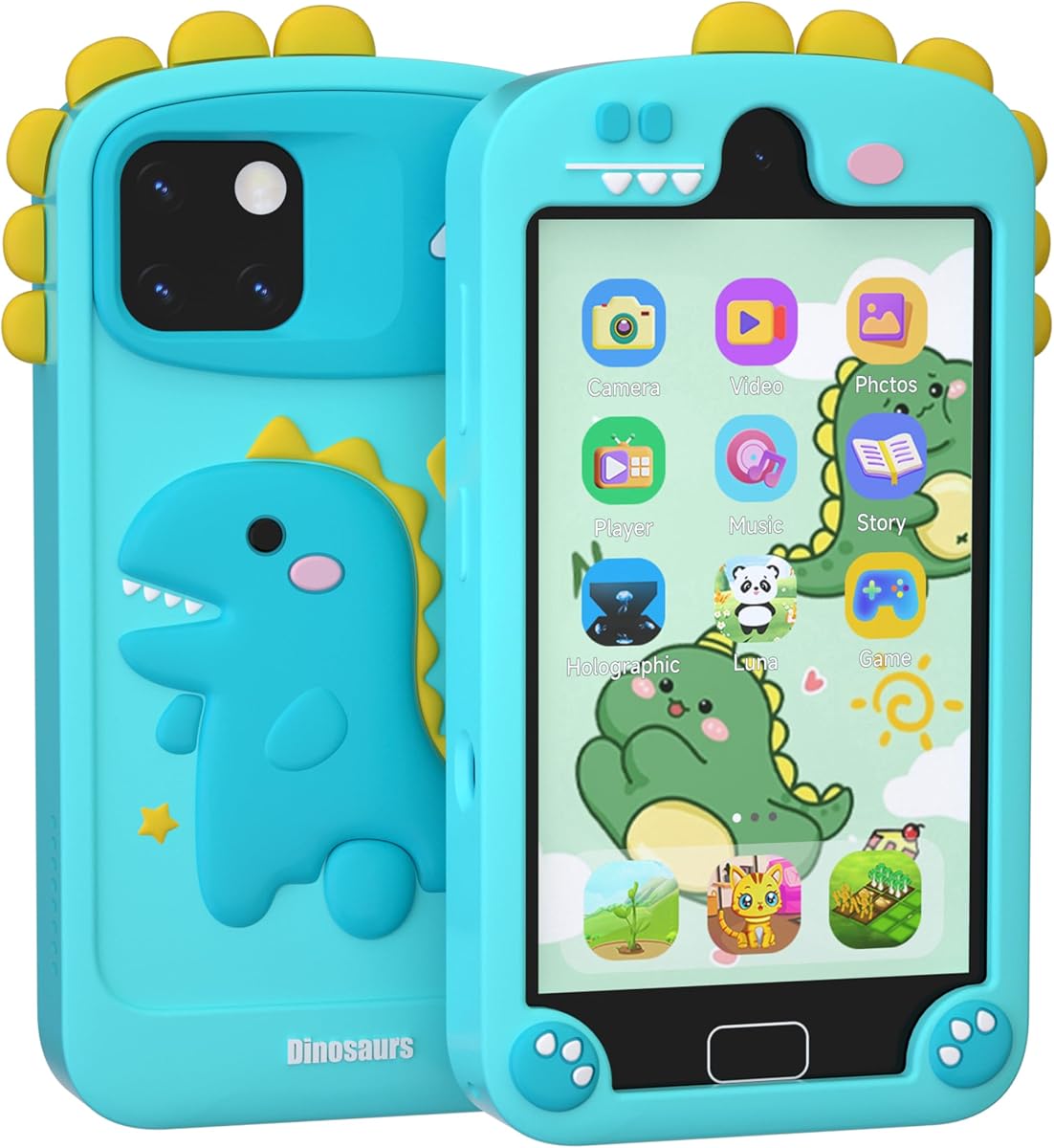
This 4-inch toy smartphone is a strong choice when the priority is giving an 11-year-old phone-shaped entertainment without granting open internet access. It carries a supplied rating of 4.4, tied for the highest rating among the listed products, and its no-Wi-Fi operation creates a clear boundary between offline play and the full online experience of a conventional phone.
We may earn a commission when you buy through this link, at no additional cost to you.
The device combines puzzle games, ABC learning, stories, a piano, and 3D holographic projection with a 32GB card. Its feature set includes 28 educational games and seven learning themes, while the 1000mAh battery is stated to support as much as eight hours of play. Dual cameras, 13 stickers, 23 wallpapers, and a shockproof silicone case make it appealing and child-friendly.
It is important to understand that this is a toy phone, not a cellular communication device. It cannot substitute for a smartphone used for school platforms, real messaging, navigation, or emergency contact with family unless the family provides a separate solution for those needs. The smaller hardware and simplified functions also mean it will not age into a teen device in the way an Android phone might.
For an 11-year-old who enjoys quizzes, stories, music, drawing, and hands-on games, this can be a satisfying first personal device. The enclosed silicone case and included 32GB card reduce breakage and setup friction. It is less suitable for a child ready for browser-based learning, live video calls, or independent access to family communication.
Because no Wi-Fi connection is needed, the child can use the included games, stories, music, and camera features at home or during travel. This limits exposure to web content while preserving many of the familiar activities that make a phone feel useful.
The 4-inch sensitive touchscreen, nine-point-nine-ounce portable design, and included cartoon-pattern silicone case are especially relevant for an 11-year-old who may already be comfortable with a small phone. The eight-hour stated play time also supports long car rides and other offline activities.
We may earn a commission when you buy through this link, at no additional cost to you.
The Kids Smart Phone 8GB is a compact offline device intended primarily for younger children, but its school mode and broad collection of functions can also make it useful for an 11-year-old who wants structured play without cellular access. Its supplied rating is 4.2, placing it in the middle of this list's customer-rating range.
We may earn a commission when you buy through this link, at no additional cost to you.
Twenty-three functions cover games, drawing, music, photos, letter cards, habit tracking, audio books, calendars, and other activities. Parents can use school mode to control playtime, while children can select from 31 wallpapers and 11 themes. The product also includes front and rear 8.5MP autofocus cameras, 19 cartoon stickers, a 3.5mm headphone connection, and an 8GB memory card.
The 2.8-inch IPS HD screen and dimensions of approximately 4.3 by 2.3 by 0.5 inches make this more of a compact toy than a modern first smartphone. Its 600mAh battery is said to charge fully in two hours and provide up to five hours of continuous use. The included thick silicone case, lanyard, ABS material, and USB-C cable help make it manageable for younger users.
This is most attractive to an 11-year-old who prefers a dedicated toy with school and habit tools rather than a full web-connected phone. It is less appropriate when homework requires websites, shared documents, or messaging. Its stated age positioning also extends only to the younger end of the requested age group, so parents should consider whether a more mature-looking device would feel more appropriate.
School mode gives parents a basic way to limit play, while the habit tracker and calendar add a sense of routine. These features can make the device feel more purposeful than an unrestricted entertainment tablet for children who are ready for a little more structure.
The small body, included lanyard, and thick silicone case are useful for a child who tends to lose small objects or worry about drops. A 3.5mm jack also allows individual listening without requiring the phone speaker to be used around others.
We may earn a commission when you buy through this link, at no additional cost to you.
The Ashfly 3.97-inch Kids Smart Phone is an offline learning device with one of the largest advertised activity collections in this roundup. It lists more than 210 interactive learning games, 28 pages of drawing templates, 120 coloring pages, and five stories, while its supplied rating is 4.2. That makes it a credible choice for an 11-year-old who has outgrown basic sound buttons but does not need a connected phone.
We may earn a commission when you buy through this link, at no additional cost to you.
The product also supports front and rear photography, 8MP imaging, 1080P video, and an 8GB memory capacity for photos, songs, and learning content. A 2000mAh rechargeable battery is among the larger capacities listed for the toy-phone category. Parental tools include a password-protected mode, application management, time management, multi-account creation, and other device controls.
The trade-off is that a large library does not equal the breadth of a real Android device. The content is designed around educational and creative exercises, and there is no indication of normal cellular calling, web browsing, or access to a full app store. The supplied age guidance extends to children ages 3 through 12, so the feature set formally includes an 11-year-old even if the toy styling may feel younger.
This is a good fit for a child who enjoys drawing, puzzles, STEM-inspired activities, and making short videos. Families can introduce it as a learning-focused personal device rather than a first smartphone. It is less appropriate when communication with friends or teachers is the central requirement.
The combination of games, drawing templates, coloring pages, and stories gives an 11-year-old more varied material than a single-purpose sound or puzzle device. The 3.97-inch screen also provides a more mature viewing area than many of the smaller toy phones.
Password protection, time management, application controls, and separate accounts let a parent set boundaries without disabling every feature. The 2000mAh battery is another practical advantage for longer sessions away from a charger.
We may earn a commission when you buy through this link, at no additional cost to you.
This 2.8-inch Kids Phone is a straightforward offline toy that provides camera functions, games, music, and basic organization tools. It has a supplied rating of 4.2 and needs no downloaded apps, making it easy to introduce and use immediately. For an 11-year-old, it works best as a lightweight entertainment or learning accessory rather than a primary communications device.
We may earn a commission when you buy through this link, at no additional cost to you.
The feature list includes dual 8MP cameras, 1080P video, 23 stickers, an MP3 player, a 3.5mm headphone jack, 13 puzzle games, ABC themes, talking cards, animal sounds, and a habit tracker. Practical utilities include a recorder, calculator, calendar, alarm clock, flashlight, countdown timer, and stopwatch. An anti-addiction mode allows parents to manage daily gaming time.
The device weighs 70 grams and measures approximately 4.29 by 2.32 by 0.7 inches. Its 600mAh rechargeable battery supports four to five hours of continuous shooting, while the included 8GB SD card adds room for photos. The small dimensions, narrow age target, and feature mix may appear juvenile to an older child even though the functions remain useful.
Parents looking for an inexpensive way to let a child practice using a phone interface without giving access to the internet may find this model practical. It is better suited to short play sessions than all-day use and should not be expected to support schoolwork, live conversations, or contemporary applications.
Turning on the device is enough to access the included functions, with no app store or account setup. That simplicity makes it useful for travel, waiting rooms, and short periods of independent entertainment.
The alarm, timer, stopwatch, flashlight, recorder, and calculator extend beyond basic games. A lightweight design and headphone jack also make the device easier to carry and use privately.
We may earn a commission when you buy through this link, at no additional cost to you.
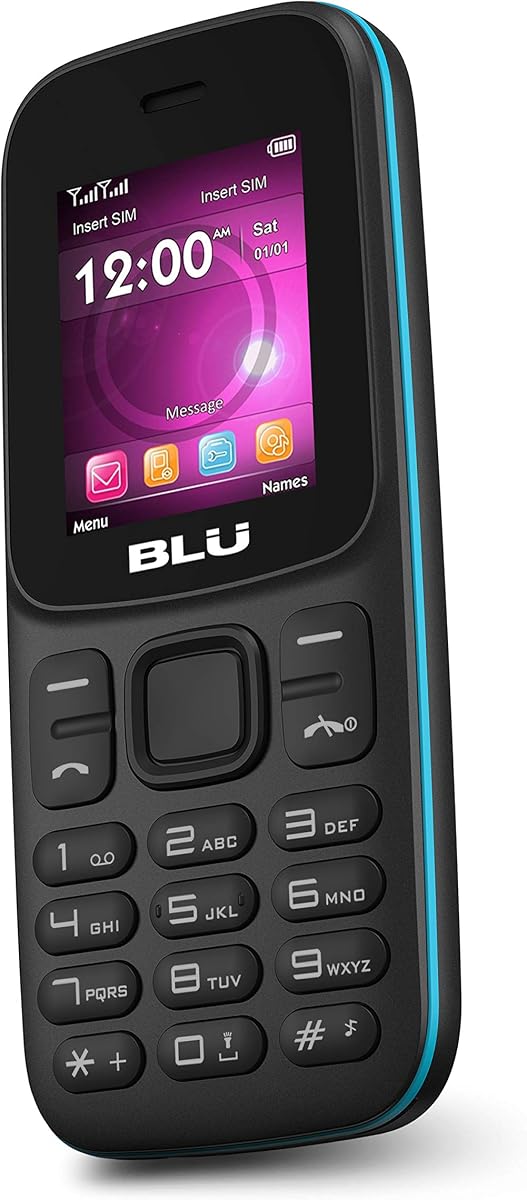
The BLU Z5 is a basic unlocked GSM phone rather than an Android smartphone, and its strengths come from doing very little without complication. Its supplied rating is 3.4, the lowest among the ten products, while the tiny 1.8-inch display and limited memory clearly place it in the feature-phone category.
We may earn a commission when you buy through this link, at no additional cost to you.
Dual SIM support allows the user to manage two cellular lines, and the phone is unlocked for compatible GSM networks. A 32GB microSD slot can expand storage, while the built-in FM antenna, MP3 and MP4 players, flashlight, and VGA camera provide basic offline functions. The 600mAh battery is modest, but the device is designed for light communication rather than continuous media use.
The 32MB internal storage and 128-by-160 display are extremely limited by current smartphone standards. There is no indication of modern app support, Wi-Fi, or advanced camera processing, so the phone cannot be recommended for contemporary schooling, navigation, or media-rich online activity. The 3.4 rating may also reflect issues that buyers should investigate in current customer feedback.
For a family seeking a simple first phone for calls and texts, the BLU Z5 can offer valuable separation from smartphone distractions. It may also work as a backup phone for travel or emergencies. An 11-year-old who wants games, creative tools, and a modern interface will likely find it less engaging than the NUU N20 or Nokia G10.
A feature phone can be a practical transitional step for a child who is ready to manage calls but not yet ready for unrestricted apps and web access. Its limited hardware keeps the learning curve simple.
Dual-SIM capability, an FM radio, media playback, a flashlight, and microSD expansion cover basic needs. Carrier compatibility should be confirmed before activation, particularly when buying a device intended for regular communication.
We may earn a commission when you buy through this link, at no additional cost to you.
The Nokia G10 is the strongest choice in this group for a family prioritizing battery endurance and carrier flexibility. Its supplied rating is 3.8, and the defining feature is an advertised battery life of up to three days between charges. That makes it a practical first smartphone for school days, afterschool activities, and weekends when a child may not consistently have a charger nearby.
We may earn a commission when you buy through this link, at no additional cost to you.
The phone offers a 6.5-inch screen with brightness boost, a 13MP triple camera, Android features, dual SIM support, a side fingerprint sensor, and face recognition. It is unlocked and listed as compatible with AT&T, Boost, Cricket, H2O Wireless, Metro, Net10, Simple Mobile, T-Mobile, and Tracfone, although coverage remains dependent on each carrier's service area.
The 3GB RAM and 32GB storage are modest, and Android 11 is an older software generation than the NUU's Android 15. The product information also mentions two years of upgrades, but this should be understood as the provided description rather than a guarantee about future support. Most importantly, the listing states that the device is not compatible with Verizon.
This is a compelling recommendation for a child who communicates frequently and needs a phone that can comfortably last through a full day or longer between charges. It is also a more conventional Android option than the offline toys. Choose it when battery life and broad listed GSM compatibility matter more than maximum storage, newest software, or carrier-free availability on every network.
The advertised three-day battery life reduces the likelihood that an 11-year-old will need to ask for a charge during a normal school and activity schedule. Actual results will vary with use, brightness, network conditions, and application activity.
Side fingerprint unlock and face recognition provide convenient device access, while the unlocked design allows families to compare compatible GSM plans. Check the current network list and coverage because the phone cannot be used with Verizon according to the supplied details.
We may earn a commission when you buy through this link, at no additional cost to you.
This 4-inch toy phone is another high-rated offline option, carrying a 4.4 supplied rating and offering more than ten general functions. It is marketed for boys and girls ages 3 through 12, so it formally fits an 11-year-old while remaining visually and functionally closer to a learning toy than a connected phone.
We may earn a commission when you buy through this link, at no additional cost to you.
Available activities include puzzle games, educational themes, camera functions, video, music, stories, holographic projection, a piano, painting, a recorder, calculator, calendar, alarm, flashlight, and stopwatch. The included 32GB card can hold downloaded songs, stories, pictures, and video, while 23 wallpaper styles and a cartoon-pattern case let the child personalize the device.
The important limitation is that this is not an internet-connected phone. It cannot deliver the communications, browser access, educational applications, and account-based services available on the NUU N20, Nokia G10, or Moto g Play. It is also built around 13 educational puzzle games and seven learning themes, so an older child may quickly exhaust the content if that is the main attraction.
This device is best for a child who wants a personal device for creative and educational play away from a parent’s phone. The larger 4-inch screen, generous included storage, and broad selection of activities improve the experience compared with very small toy phones. It is less suitable once school assignments, messaging, and social communication become central.
Painting, stories, music, video, and holographic projection create more varied play than a device limited to basic puzzles. An 11-year-old can use these functions to make short videos, experiment with music, and customize the interface.
The 32GB card provides useful local storage for music, stories, images, and video without requiring an online account. The included drop-resistant case helps protect the device during travel and everyday play.
We may earn a commission when you buy through this link, at no additional cost to you.
The Motorola Moto g Play combines a large 6.5-inch 90Hz HD+ display, a 5000mAh battery, and a 16MP triple camera system in a modern connected phone. Its supplied rating is 3.8. The most important decision point is not the hardware but the carrier lock: this device can only be used on the Total by Verizon network.
We may earn a commission when you buy through this link, at no additional cost to you.
The phone activates through the Total by Verizon website, and service requires one of the carrier's no-contract talk, text, and data plans. For families already using that network, the arrangement may offer a straightforward path to service. The 90Hz display should make menus, games, and scrolling feel smooth, while the stated three-day battery life makes the phone suitable for regular use.
The 32GB storage capacity is limited for an Android device, and the carrier lock sharply reduces flexibility if the household changes networks or wants to use a different SIM arrangement. A child also cannot begin normal phone use until service is activated. Although the hardware specification is modern, the supplied information does not detail the Android version, so buyers should check that before purchase.
This is a strong option for a household committed to Total by Verizon that values a smooth screen, large battery, and capable camera system. It is less suitable for families seeking carrier freedom. Those who can choose their network should compare the NUU N20 and Nokia G10, both of which are listed as unlocked.
A 90Hz HD+ display gives everyday interaction a more fluid feel, while the 5000mAh battery is advertised for up to three days of use. These traits suit a child who uses the phone throughout a busy school day.
The phone cannot switch to another cellular network, so Total by Verizon must fit the household's current and future plans. Activation is described as a straightforward web process, but it must be completed before regular service begins.
We may earn a commission when you buy through this link, at no additional cost to you.
The Kids Learning Phone 3.97-inch is an offline activity device with more than 220 games, making it one of the broadest toy-phone collections in the comparison. Its supplied rating is 4.0, and the stated age range extends through 12, making it a credible educational gift for an 11-year-old who wants variety without web access.
We may earn a commission when you buy through this link, at no additional cost to you.
The library includes 55 first-learning games, 15 brain-training games, more than 90 Montessori games, 39 art-and-craft games, and 19 STEM games. It also provides drawing, an alarm clock, timer, stopwatch, and calculator. A 3.97-inch touchscreen supports the interface, and dual camera functions let the child take photos and record videos without downloading apps.
Parental controls include password protection, application management, time management, child-account creation, and phone settings. The product information states that the design follows CPC and CPSIA regulatory standards and does not require Wi-Fi. The main weakness is battery life: the 1500mAh battery is stated to provide only 1.5 to 2 hours of continuous use, making it better for shorter sessions.
This is a useful option for a child who wants variety in learning and creative activities but is not ready for a connected smartphone. Its long list of categories makes it less repetitive than a basic toy phone. It is less appropriate for daily communication, school platforms, or any activity requiring a live internet connection.
The mix of first-learning, brain-training, Montessori, art, and STEM activities offers several ways to engage. It may be particularly useful for a child who quickly loses interest with devices that offer only a small number of games.
Password protection, time management, application controls, and separate child accounts give adults several ways to shape use. Because the phone works offline and requires no downloaded applications, it also reduces exposure to external content.
We may earn a commission when you buy through this link, at no additional cost to you.
The right choice depends on whether the child needs a genuine connected phone, a temporary bridge to smartphone ownership, or an offline learning device. Consider connectivity, supervision, hardware, battery life, durability, and the child's daily responsibilities before deciding.
A connected Android phone supports calls, messaging, web browsing, educational applications, navigation, and the account-based services used by schools. The NUU N20, Nokia G10, and Moto g Play fall into this category. Toy phones provide selected games, music, stories, cameras, and learning activities without cellular service or Wi-Fi, making them easier to supervise but unable to handle most online communication.
Choose a connected phone when an 11-year-old needs to coordinate with family, complete web-based homework, join video calls, or use teacher-approved tools. Choose an offline device when independence, creative play, and reduced internet exposure are the main goals.
Carrier compatibility can determine whether a phone works with the family's network, bands, SIM arrangement, and service plan. The NUU N20 is unlocked and includes a SIM card, the Nokia G10 is unlocked but excludes Verizon according to its listing, and the Moto g Play can only operate on Total by Verizon. Coverage still depends on the local carrier network, even when a device is unlocked.
Verify the exact carrier, coverage area, activation process, and plan requirements before buying. For an unlocked phone, ask the carrier whether the device and its bands are supported. A device that is technically unlocked may still provide weaker service or no service on a particular network.
Parental tools should match the child's maturity and the parent's supervision plan. The NUU N20 supports Google Family Link and is described as compatible with controls such as Bark and Qustodio. The Ashfly, 3.97-inch learning phone, and Kids Smart Phone 8GB offer dedicated parental modes, time management, app or account controls, and password protection.
Look for controls that limit screen time, purchases, unsuitable content, and account creation rather than assuming a single setting will solve every issue. Agree on when the phone is used, which contacts are permitted, and what happens when the limits are reached. Offline toy phones reduce exposure by removing the internet entirely, but they do not replace family rules.
An 11-year-old may use a phone for browsing, videos, games, messaging, photographs, and homework, but a child does not need elite processing power for ordinary family use. The NUU N20 offers 6GB RAM, 6GB extended memory, and 128GB storage, while the Nokia G10 has 3GB RAM and 32GB storage. These are more meaningful distinctions than model names alone.
Consider how many apps will run, how many photos and videos will be stored, and whether a microSD card or cloud service is appropriate. For a connected first phone, 32GB can become crowded quickly after app installation and media use. For an offline toy, the included 8GB or 32GB card may be sufficient, but content should still be curated.
Battery claims are often based on light or optimal use, so parents should compare the advertised figure with likely activities. The Nokia G10 and Moto g Play are described as offering up to three days of battery life, while the NUU N20 has a 5000mAh battery and is positioned for light use with up to eight hours of video playback. Offline toy-phone estimates vary from about two hours to eight hours.
A child who regularly uses the phone at school should prioritize a phone that can last through the day and recharge at home. A toy device intended for car rides or short sessions may need less. Discuss charging responsibilities, use a protective case, and avoid making constant access to a charger an excuse for unrestricted screen time.
Connected phones in this list generally offer screens around 6.5 to 6.6 inches, which are more comfortable for browsing, videos, and school work. Toy devices range from 2.8 to 4 inches, making them easier to carry but less useful for detailed reading or typing. A 4-inch toy phone can be a useful middle ground for a child who wants a personal device but not a full smartphone.
Children are likely to drop, scratch, or forget devices. The toy phones commonly include silicone cases, and the NUU includes a TPU case and screen protector. A case alone does not make any phone waterproof, so parents should also use reasonable care and teach the child to keep food, liquids, and charging cables away from the device.
The connected phones offer more conventional camera systems: the NUU N20 has a 16MP main camera, 8MP wide-angle lens, and 5MP front camera; the Nokia G10 has a 13MP triple camera; and the Moto g Play has a 16MP triple camera. Toy phones list cameras too, but their stated megapixel figures should not be compared directly with full smartphone camera systems because lens quality, processing, and software differ.
For an 11-year-old, a front camera may be more useful than a high-resolution rear sensor for approved video calls with family. If the phone will remain offline, consider whether camera features and creative tools provide enough value to justify it. Parents should establish rules about taking photographs of other people and sharing images.
An 11-year-old is close to the age when many families increase device responsibility, but readiness differs. A toy phone can remain useful as a travel or activity device, while a connected phone can gradually gain school applications, messaging, navigation, and more advanced parental controls. A feature phone such as the BLU Z5 offers an even simpler transition, although its small display and limited storage are difficult to modernize.
Think about the next twelve months as well as the first week. Will the child need browser-based homework or group chats? Is the family likely to change carriers? Does the child want to keep playing creative games, or would a real phone be more useful? A purchase that matches near-term needs is usually less frustrating than one based on features the child cannot use.
Begin with a family setup session rather than handing over the device immediately. Insert the compatible SIM card, connect to the intended network, update the operating system, and create or sign into the appropriate child account. For an offline toy, charge the included cable, remove any shipping film, and explain which functions and settings are available without creating unnecessary online accounts.
Configure parental controls before adding many apps or contacts. Set daily time limits, approved app or category permissions, purchase restrictions, and location expectations. Agree on charging times, quiet periods, school-night boundaries, camera etiquette, and what to do if the device is lost. Keep a written account of the device's serial or identifying information and the recovery details for the family account.
Charge the phone on a hard, dry surface away from bedding and water, and use the supplied or manufacturer-approved cable. Keep the screen protector and case in place, clean the device with a soft dry cloth, and avoid filling ports with dust or liquid. Review app permissions, browser history, storage, and account activity periodically, and remove unused content as the child accumulates photos, videos, and games.
The best type depends on the child's readiness and daily needs. A connected Android phone is more useful for schoolwork, messaging, and video calls, while an offline toy phone is easier to supervise and offers games, cameras, and learning activities without internet access. A feature phone can be a simpler middle ground for calls and essential communication.
An offline kids phone is better when the priority is controlled entertainment without web access or social media. It is less useful for online homework, group chats, navigation, and live communication. An 11-year-old who regularly completes school tasks online is likely to benefit more from a supervised Android phone, even with stricter parental controls.
The Nokia G10 and Motorola Moto g Play are each described as offering up to three days of battery life. The NUU N20 has a 5000mAh battery and is stated to deliver up to eight hours of video playback under optimal conditions. Real results vary with brightness, network reception, gaming, video, and other high-use activities.
No device should be treated as automatically safe for unsupervised use. Even offline phones can expose children to games, camera misuse, or excessive screen time. Connected phones also add messaging, browsing, location, purchases, and social-media risks. A family agreement, parental controls, regular reviews, and clear device-free periods remain important regardless of the model.
An unlocked phone can offer more carrier flexibility, but it requires the family to select and obtain a compatible SIM separately. The NUU N20 and Nokia G10 are listed as unlocked, while the Moto g Play is locked to Total by Verizon. The BLU Z5 is also unlocked, but its GSM bands and local coverage should be checked before purchase.
Storage needs depend on whether the device is connected and how the child uses it. Online applications, messages, video calls, and camera files use more space, making 128GB more comfortable than 32GB. Offline devices often include 8GB or 32GB cards, which can be adequate for selected games, music, and videos without the demands of a full app store.
A toy phone can work if the child enjoys offline learning, creative tools, and camera play and does not yet need online school platforms. Choose one with parental controls, a protective case, sufficient storage, and useful content. If communication and web-based homework are already important, a supervised connected smartphone will be more satisfying and versatile.
Discuss privacy, stranger contact, location sharing, purchases, respectful communication, cyberbullying, and what to do if content feels uncomfortable. Configure restrictions before handing over the phone, explain that the device can be monitored according to the family agreement, and schedule regular check-ins. As the child demonstrates responsible use, gradually adjust limits rather than changing everything without explanation.
The NUU N20 is the most practical all-around first smartphone in this group, combining modern Android software, unlocked 4G service, a large smooth display, expandable storage, and multiple cameras. The Nokia G10 stands out for its advertised three-day battery life, while the Moto g Play serves families already committed to Total by Verizon. For an offline introduction, the 4-inch toy phone with 32GB offers a particularly broad mix of learning, creative, and entertainment functions.
Prioritize the device that matches the child's actual responsibilities. A connected phone is necessary for live communication and online schoolwork; a toy phone is better for structured, internet-free play; and the BLU Z5 is useful when simplicity and distraction avoidance matter more than modern applications. In every case, parental controls, clear rules, protective accessories, and regular family discussion are as important as the hardware.
Before purchasing, verify the current listing, carrier compatibility, storage needs, included accessories, software version, and available parental tools. Ratings and product details can change, as can promotions and service plans, so check the latest information rather than relying only on this guide. The right first phone is not necessarily the most advanced one—it is the device the child can use safely, understand, and continue to enjoy.