
CORSAIR RM850e
4.6Editor score
850W single-rail capacity
ATX 3.1 compliant design
Fully modular cable layout
Native GPU power support
Quiet 120mm fan
Explore the best power supply for RTX 5080 options, comparing wattage, efficiency, connectors, modularity, noise control, and build fit.
A power supply for the RTX 5080 should deliver stable high-current power through the correct 12V-2×6 connection while leaving practical headroom for a demanding processor and other components. Capacity, ATX 3.1 compliance, efficiency, thermal behavior, cable design, and case clearance all shape the final result.
This guide compares ten power supplies suited to RTX 5080 builds, emphasizing wattage, native connector support, efficiency certifications, transient-load handling, modular cabling, fan characteristics, warranty coverage, and included accessories. It covers mainstream options from established brands as well as higher-capacity and feature-focused alternatives.
Each review explains the strongest reasons to consider the model and any limitations visible in the available specifications. The top selections represent different priorities, including value, balanced performance, and advanced features. Product availability and pricing can change, so confirm the current listing and compatibility before purchasing.
4.6Editor score

4.8Editor score
5.0Editor score
The table below compares all ten candidates by power capacity, efficiency, connector support, and practical design features, making it easier to identify the right model for an RTX 5080 system.




The Seasonic Focus GX-850 combines an 850W capacity with explicit support for the RTX 5080 and other modern graphics cards. Its 4.6 rating reflects a well-rounded feature set, particularly the native 12V-2×6 connection, ATX 3.1 compliance, PCIe 5.1 readiness, and two recognized efficiency certifications.
We may earn a commission when you buy through this link, at no additional cost to you.
Its strongest qualities center on electrical readiness and component design. The native 12V-2×6 connector removes the need for a transitional adapter, while the ATX 3.1 and PCIe 5.1 standards are relevant for high-current graphics cards and newer platforms. OptiSink Design and a 135mm fluid dynamic bearing fan support thermal management, while hybrid fan control gives the fan curve a more deliberate operating strategy.
The main trade-off is that 850W is a practical rather than extravagant capacity. It can suit an RTX 5080 configuration, but buyers should account for the processor, motherboard, memory, storage, fans, and any temporary power excursions. The modular design helps control unused cables, although a tidy installation still requires correct routing and enough room for the connectors.
This is an attractive all-around choice for a high-end RTX 5080 build that values recognized efficiency, modern power standards, and straightforward GPU connection. It is especially compelling for builders who do not need the extra headroom or specialized ecosystem features offered by larger-capacity premium models.
The native 12V-2×6 connector is the most immediately relevant feature for an RTX 5080 installation. A direct PSU-to-GPU connection keeps the cable arrangement cleaner and aligns the supply with current ATX 3.1 expectations.
Holding 80 PLUS Gold and Cybenetics Platinum certifications gives this model a useful efficiency foundation. Lower conversion loss can mean reduced heat and energy use compared with less efficient alternatives.
We may earn a commission when you buy through this link, at no additional cost to you.
The Seasonic CORE GX-850 earns a 4.8 rating and stands out as a value-oriented ATX 3.1 power supply designed around current graphics-card requirements. It offers 850W, a native 12V-2×6 connector, and explicit readiness for the RTX 5080 and AMD RX 9000 series.
We may earn a commission when you buy through this link, at no additional cost to you.
The model combines 80 PLUS Gold certification with Cybenetics Platinum certification, giving it one of the strongest efficiency pairings in this group. Its OptiSink Design supports the thermal approach, and the included 12V-2×6-to-dual-8-pin PCIe cable provides an additional option for compatible equipment that uses conventional PCIe power connectors.
Compared with the Focus GX-850, the available specifications reveal fewer details about the cooling fan and specific protection circuitry. That means buyers should examine the full manufacturer documentation and current product listing if fan acoustics, component construction, or protection features are decisive. The absence of those details does not negate the strong standards and efficiency certifications listed here.
For an RTX 5080 builder seeking a modern, efficient, and approachable power supply, this is a compelling recommendation. Its high rating, direct connector support, and balanced specifications make it a particularly attractive option when the priority is a straightforward 850W solution rather than advanced lighting integration or maximum capacity.
A native 12V-2×6 cable is included, allowing compatible RTX 5080 hardware to use the intended connection directly. The listed 12V-2×6-to-dual-8-pin cable adds flexibility for other PCIe-powered components.
The combination of 80 PLUS Gold and Cybenetics Platinum certification is particularly desirable in a system expected to run demanding graphics and processing workloads for extended periods. Efficient conversion can also help keep internal temperatures under control.
We may earn a commission when you buy through this link, at no additional cost to you.
The CORSAIR RM1000x offers 1000W of capacity, giving RTX 5080 builders more room for a high-output processor, additional hardware, and sustained high-load operation. Its 4.5 rating is supported by a modern feature set built around ATX 3.1 compliance, PCIe 5.1 support, and a native 12V-2×6 connection.
We may earn a commission when you buy through this link, at no additional cost to you.
Fully modular cabling allows users to connect only the cables their system needs, reducing clutter and making routing easier. Cybenetics Gold certification indicates up to 91% efficiency, while the ATX 3.1 platform is designed to withstand transient power spikes. Low-profile combs and embossed, ultra-flexible cables further improve the installation experience.
Its 1000W rating may exceed what a particular build actually needs, and additional capacity does not automatically improve every aspect of performance. It also lists Cybenetics Gold rather than Platinum certification, so buyers prioritizing the highest stated efficiency may favor other options. Nevertheless, the extra capacity is meaningful for expansive or future-oriented configurations.
The RM1000x is a strong recommendation for an RTX 5080 system that wants more headroom without moving into 1200W territory. It suits builders who value modularity, modern standards, and direct 12V-2×6 support while keeping the overall power supply straightforward.
A 1000W supply provides useful flexibility when the RTX 5080 is paired with a power-hungry processor, extensive storage, multiple cooling devices, or other demanding components. The extra margin makes the unit less dependent on precise component-by-component budgeting.
The native 12V-2×6 connector supports a direct link to compatible modern graphics cards, while fully modular cabling helps builders omit unused leads. Embossed cables and low-profile combs make the finished interior easier to manage.
We may earn a commission when you buy through this link, at no additional cost to you.
The white Seasonic Focus GX-850 provides the same modern platform as the black model while serving builders who want a coordinated interior. It has an 850W capacity, ATX 3.1 and PCIe 5.1 readiness, a native 12V-2×6 connector, and an explicit claim of compatibility with the RTX 5080.
We may earn a commission when you buy through this link, at no additional cost to you.
Its 4.6 rating aligns with a capable feature set. The unit combines 80 PLUS Gold certification with Cybenetics Platinum certification, uses OptiSink Design, and includes hybrid fan control with a 135mm fluid dynamic bearing fan. These specifications indicate an emphasis on efficiency, cooling, and appropriate behavior under variable load.
The listing does not explicitly describe the cable system as fully modular, so buyers should verify the included leads and current package contents before planning a visually clean installation. The white finish also narrows the product's appeal to builds where color matching matters. Neither issue changes its core suitability for an RTX 5080 configuration.
This version is ideal for a white-themed gaming system that wants a direct 12V-2×6 connection and efficient power delivery. For builders without a color preference, the black Focus GX-850 offers a similar power-and-certification foundation with more explicitly stated modular-cable information.
The white housing makes this unit easier to integrate with matching components and lightly colored cases. It provides the same core 850W capacity and modern connector support while prioritizing visual coordination.
Hybrid fan control and a 135mm fluid dynamic bearing fan provide the stated cooling approach. Combined with Gold and Platinum efficiency certifications, the design targets both manageable thermals and improved energy conversion.
We may earn a commission when you buy through this link, at no additional cost to you.
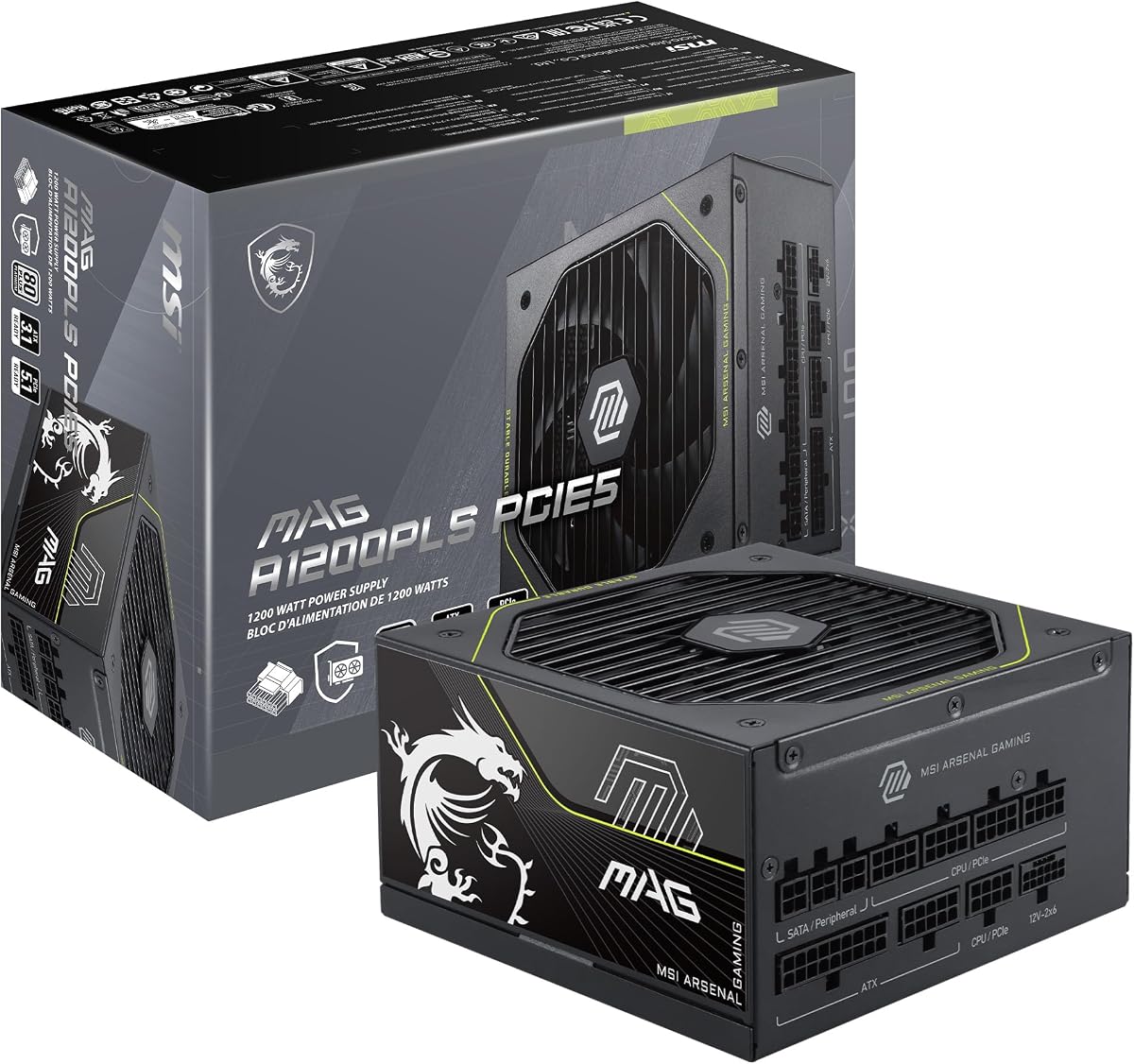
The MSI MAG A1200PLS PCIE5 is the feature-focused premium entry in this lineup. Its 1200W capacity, 5.0 rating, ATX 3.1 compliance, PCIe 5.1 readiness, and native 12V-2×6 connection make it a strong match for an RTX 5080 build where substantial headroom is desired.
We may earn a commission when you buy through this link, at no additional cost to you.
GPU Safeguard is the standout addition. It provides real-time monitoring of 12V-2×6 current and can issue an early warning when abnormal conditions are detected. The supply also uses 80 PLUS Platinum certification for up to 92% efficiency, a 135mm fluid dynamic bearing fan, UL-embossed modular cables, and premium copper alloy connectors.
Its compact 150mm length and 150mm width are valuable in modern cases where larger power supplies can interfere with airflow or cable routing. The included cable assortment covers the motherboard, CPU, 12V-2×6, PCIe, SATA, and peripheral connections, including a PCIe-to-dual-PCIe lead.
This model is best suited to ambitious RTX 5080 configurations, extensive cooling systems, or builders who deliberately want more capacity than the immediate components require. For a simpler or smaller build, an 850W model may be more proportionate, but for maximum expansion and premium protection features, the A1200PLS PCIE5 leads the field.
GPU Safeguard checks 12V-2×6 current in real time and provides an early alert when behavior is abnormal. That protection-focused approach is especially relevant in systems built around a high-power modern graphics card.
The 150mm-by-150mm ATX dimensions can make installation easier in tight cases. A shorter enclosure also leaves more room for cable bends, fan clearance, and airflow around the power supply.
We may earn a commission when you buy through this link, at no additional cost to you.
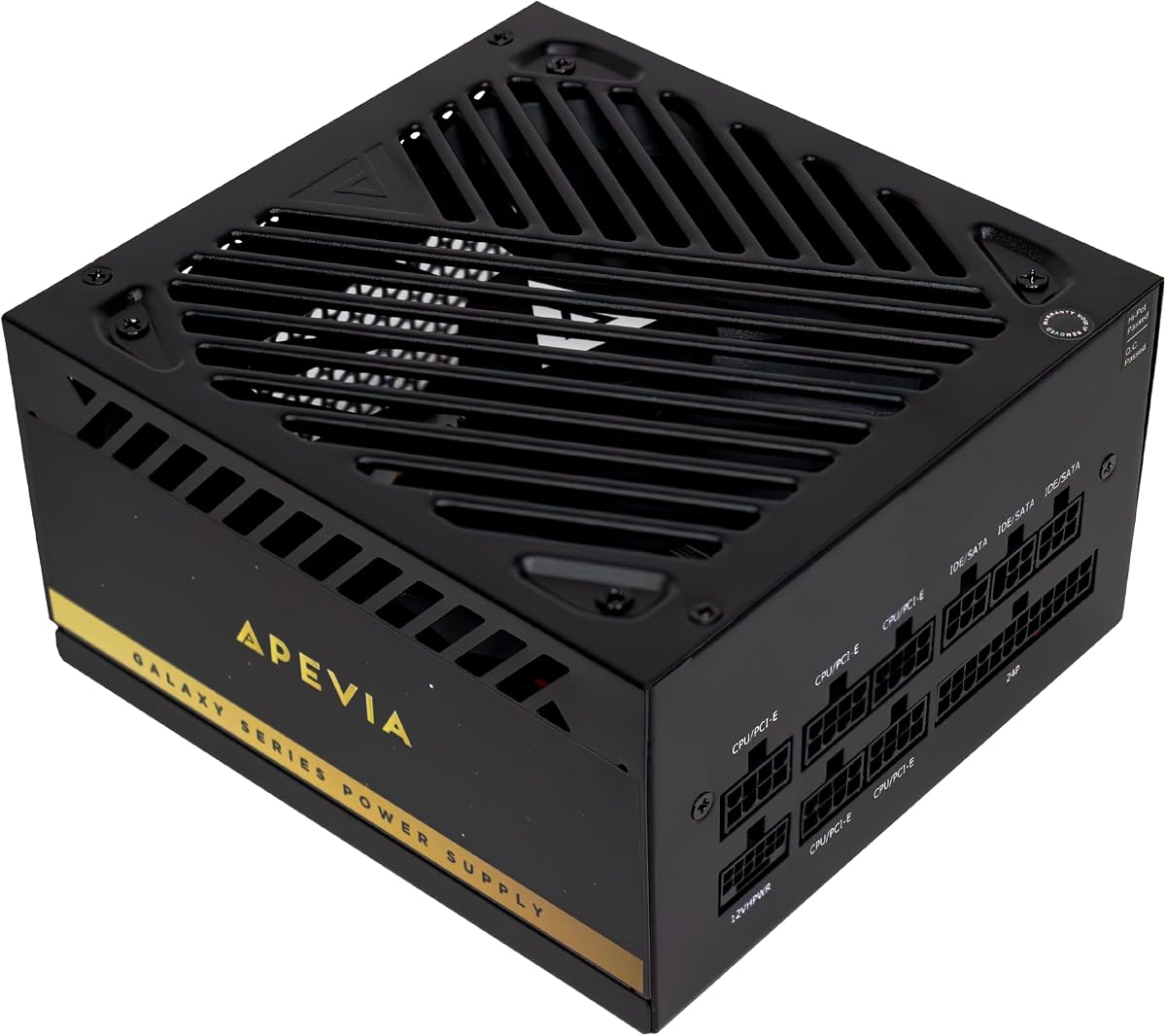
The Apevia Galaxy 1000W combines substantial capacity with explicit support for the RTX 5080, RTX 5090, RTX 5070, and RTX 40-series graphics cards. Its 3.9 rating is the lowest among the ten products, but the listed specifications cover a wide range of practical requirements for modern high-end systems.
We may earn a commission when you buy through this link, at no additional cost to you.
A native 12VHPWR cable is specified for delivery up to 600W, and the unit is presented as ATX 3.1 and PCIe 5.1 ready. Japanese capacitors, active PFC, full-bridge architecture, and DC-to-DC conversion form the stated internal approach. Fully modular flat cables support airflow and cleaner routing, while a 135mm fluid dynamic bearing fan handles cooling.
The protection suite is extensive, listing short-circuit, over-voltage, over-power, under-voltage, and over-temperature safeguards. However, the listing also notes ATX 12V 2.3 support, and its lower aggregate rating gives prospective buyers more reason to review independent customer feedback, warranty terms, and manufacturer documentation before committing.
For a builder who values capacity, Japanese capacitors, a broad protection list, and a native high-current GPU cable, this model deserves consideration. It is less compelling as an effortless recommendation because of the lower rating and mixed standards language in the supplied description, so compatibility details should be confirmed before installation.
The 1000W output and 600W-class native cable give the Galaxy considerable flexibility for high-end graphics cards. It is also listed for dual-GPU builds, although each installed device's requirements must still be checked carefully.
Protection against short circuit, over-voltage, over-power, under-voltage, and over-temperature conditions is a notable part of the specification. These safeguards complement the Japanese capacitors and stated voltage-stability features.
We may earn a commission when you buy through this link, at no additional cost to you.
The MSI MAG A750GL PCIE5 is a compact 750W option for RTX 5080 builders working within a carefully balanced component budget. It carries a 4.6 rating, ATX 3.1 and PCIe 5.1 readiness, a native dual-color 12V-2×6 cable, 80 PLUS Gold efficiency, and fully modular cabling.
We may earn a commission when you buy through this link, at no additional cost to you.
The 10-year limited warranty is another meaningful point for a long-term gaming-system investment. Modularity lets users reduce visual clutter and improve airflow, while the dual-color connector cable is intended to coordinate more readily with a wider range of build themes than a single-color lead would.
Capacity is the main constraint. A 750W unit leaves less margin than the 850W, 1000W, and 1200W alternatives in this guide. The system must be evaluated as a whole, including processor demand, motherboard features, expansion devices, and the operating profile of the graphics card. Buying unnecessary headroom has drawbacks too, but buying too little can be limiting.
The MAG A750GL is best for a compact, efficient build whose other components leave sufficient headroom. It may suit builders seeking modern standards and modular wiring in a smaller package, while those running a power-hungry processor alongside the RTX 5080 should consider a higher-capacity model for more flexibility.
The compact 750W format is attractive when case space and cable management matter. Gold certification and a fully modular layout make it a practical match for a focused gaming build that does not need excessive power.
The native dual-color 12V-2×6 cable allows a direct connection to a compatible RTX 5080 and adds visual coordination inside the case. That avoids the extra cable bulk associated with some adapter-based arrangements.
We may earn a commission when you buy through this link, at no additional cost to you.
The CORSAIR HX1000i Shift is the ecosystem-focused option, combining 1000W capacity with an integrated iCUE LINK System Hub. Its 4.1 rating is lower than those of the other CORSAIR models in the list, but its appeal is clear for builders who want integrated lighting control and a particularly accessible modular connection system.
We may earn a commission when you buy through this link, at no additional cost to you.
The built-in hub can control and synchronize a total of 24 iCUE LINK devices, removing the need to mount a separate hub and route additional power to it. Side-mounted SHIFT connectors place the modular connections on the side of the unit, improving access during installation and cable routing.
For basic performance needs, the native 12V-2×6 cable and ATX 3.1 compliance provide the expected modern foundation. Cybenetics Platinum certification is listed at up to 91% efficiency, supporting lower energy consumption, reduced heat, and cooler operation relative to less efficient designs.
The integrated hub is most valuable when the build already uses multiple compatible iCUE LINK cooling devices. Users without that ecosystem can still benefit from the native connector and 1000W capacity, but they may not receive full value from the defining feature. This is a specialized choice for polished, synchronized builds rather than a strictly essential RTX 5080 upgrade.
The integrated iCUE LINK System Hub can directly support up to 24 compatible devices. This can simplify cable routing and reduce the need for an additional in-case controller.
Placing connectors on the side of the power supply makes them easier to reach during assembly. The arrangement supports a cleaner fully modular build and reduces the awkwardness of routing leads around a tightly packed enclosure.
We may earn a commission when you buy through this link, at no additional cost to you.
The CORSAIR RM850x combines an 850W capacity with a 4.7 rating, placing it among the strongest-rated products in this comparison. It targets modern RTX 5080 systems through ATX 3.1 compliance, PCIe 5.1 support, and a native 12V-2×6 connector.
We may earn a commission when you buy through this link, at no additional cost to you.
Its fully modular design lets builders connect only the cables required by the system. Cybenetics Gold certification is rated at up to 91% efficiency, which can contribute to lower heat and energy use. The low-noise positioning is reinforced by the ability to omit unused cables and reduce unnecessary cable clutter.
The embossed, ultra-flexible cables and low-profile combs are practical installation details, particularly in cases where routing space is limited. Unlike some competing listings, the supplied information does not state the warranty length for this model. Buyers who place equal importance on warranty duration should verify that detail in the current listing and manufacturer documentation.
The RM850x is an excellent general-purpose recommendation for an RTX 5080 build that wants modern connector support, modular wiring, and strong customer feedback without moving to a specialized ecosystem. It is especially attractive when a full 1000W or 1200W supply would be unnecessary.
ATX 3.1 compliance is especially relevant for high-current graphics cards because the standard is designed to handle transient power spikes. Native 12V-2×6 support complements that platform-level protection.
A fully modular layout removes unused leads from the case, improving both appearance and airflow. Flexible embossed cables and low-profile combs help builders create a neat installation without forcing rigid bundles into tight pathways.
We may earn a commission when you buy through this link, at no additional cost to you.
The CORSAIR RM850e (2025) offers an economical route to an 850W modern power supply for an RTX 5080 build. Its 4.6 rating is backed by Intel ATX 3.1 certification, PCIe 5.1 readiness, full modularity, a 120mm rifle bearing fan, and 105°C-rated capacitors.
We may earn a commission when you buy through this link, at no additional cost to you.
The stated ability to withstand two transient power excursions from the GPU is a relevant advantage for modern graphics-card platforms. Modern Standby compatibility promises fast wake-from-sleep behavior and improved low-load efficiency, while the calculated fan curve is intended to keep noise down even at full load.
The supplied description does not explicitly mention a native 12V-2×6 cable, an efficiency certification, or the exact cable inventory. Those omissions matter for an RTX 5080 build because buyers should confirm which GPU connector is included and whether an adapter is necessary. Full modularity still improves the installation experience regardless of the connector arrangement.
The RM850e is a sensible value-oriented selection for builders who want ATX 3.1 readiness and an 850W unit without paying for specialized features. It is most suitable when the graphics card's included power connection works with the supplied cable or when the required adapter is clearly supported and safely installed.
Intel ATX 3.1 certification and support for two GPU transient excursions address a central requirement of modern high-power graphics platforms. This makes the unit more relevant to an RTX 5080 than older ATX 2.x alternatives.
The 120mm rifle bearing fan uses a specially calculated fan curve to limit audible operation. Full modularity reduces unused cable clutter, while modern standby support improves low-load behavior and wake performance.
We may earn a commission when you buy through this link, at no additional cost to you.
Choosing a power supply for an RTX 5080 involves balancing usable capacity, modern connector support, electrical standards, efficiency, thermals, physical fit, and cable management. The best choice is the model that meets the complete system demand without creating unnecessary installation constraints.
Aim for a balanced build rather than selecting capacity in isolation. More watts do not guarantee better performance, but insufficient headroom can limit comfortable operation with demanding components.
Choose an ATX 3.1-ready model for an RTX 5080 build and verify that its protection and transient-handling details align with the manufacturer's documentation.
Prioritize a native 12V-2×6 lead and verify that the connector reaches the GPU socket without tight bends near the plug.
Look for a reputable efficiency certification and treat it as part of the overall thermal and operating-efficiency picture rather than the sole selection criterion.
Fully modular cabling is easiest to manage, but check connector quantities, cable length, and the available space for bends behind the tray.
Favor a documented fan curve, substantial fan size, and a bearing design intended for sustained use, then consider whether the rest of the chassis is acoustically compatible.
Look for documented protection functions, reputable capacitor specifications, and model-specific safeguards when working with expensive high-current components.
Measure the chassis, check connector orientation and bend clearance, and confirm the current warranty terms before completing the purchase.
Install the PSU with the fan and ventilation openings oriented toward the case's intake area, and use the screws and mounting hardware specified for the chassis. Connect the motherboard's 24-pin and CPU power leads with the system powered off and the wall outlet disconnected. Route cables behind the motherboard tray where possible, avoid forcing plugs, and keep the PSU's ventilation openings unobstructed.
Connect the RTX 5080 using the native 12V-2×6 cable where one is supplied and compatible. Fully seat the connector without twisting it, then check that the cable can leave the socket in a natural curve without being pressed against a sharp edge. Do not tightly bend the cable immediately beside the plug. If the graphics card uses a different connector arrangement, follow its power instructions and verify compatibility before energizing the system.
After installation, power on the system and confirm that the PSU starts correctly, the graphics card is recognized, and the display appears. Listen for unexpected clicking, buzzing, or repeated startup behavior, and keep an eye on temperatures under sustained load. A PSU should have unobstructed airflow, and its modular connections should remain firmly seated. Periodically inspect for loose cables, damaged insulation, unusual noise, or excessive heat, and power down before touching any connection.
An 850W PSU is the most common capacity in this guide and can suit many RTX 5080 builds when the rest of the system is reasonably balanced. A 1000W or 1200W model offers additional headroom for power-hungry processors, extensive cooling, and future expansion. The correct choice depends on the complete component list rather than the graphics card alone.
A native 12V-2×6 connection is the preferred arrangement for compatible modern graphics cards because it supports a direct PSU-to-GPU route and aligns with ATX 3.1 design practices. Some builds can work with an appropriate adapter, but the cable and connector must match the GPU and be fully seated. Check the graphics card's included documentation and the PSU's cable inventory.
ATX 3.1 is a power-supply and system platform standard that addresses modern high-current components and transient loads. PCIe 5.1 refers to the PCI Express generation and its associated connector and power capabilities. For an RTX 5080, a PSU explicitly listing both standards gives the clearest indication that it was designed for current graphics hardware.
A 750W unit can work if the processor and the rest of the system keep total demand within a sensible margin. The MSI MAG A750GL PCIE5 includes modern standards and a native dual-color 12V-2×6 cable, but 850W or more gives builders greater flexibility. Compare the full component draw and consider whether additional hardware may be added later.
A higher-wattage PSU does not automatically make a gaming system faster. Its benefit is additional capacity, flexibility, and room to operate within the unit's intended load range. Performance depends on the complete hardware configuration, and a suitably sized efficient supply remains the practical goal rather than buying the largest option available.
A fully modular PSU provides dedicated sockets for each cable type, allowing unused leads to remain off the supply rather than hanging inside the case. This can improve airflow and make the build look cleaner. It does not change the unit's power capacity, so the system still needs adequate wattage and compatible connectors.
Route the cable away from sharp case edges and avoid a tight bend immediately beside the connector. A natural curve helps reduce mechanical stress on the plug and cable. Confirm that the connector is fully inserted, that the latch is secure, and that no part of the cable is pinched by the case or another component.
Both are efficient choices for an RTX 5080 system, but Platinum models generally provide a higher stated conversion efficiency. The practical difference will depend on the workload, cooling, and overall system design. Confirm the certification on the exact model and consider its efficiency alongside capacity, protections, fan behavior, warranty, and connector support.
The Seasonic CORE GX-850 stands out as a balanced Editor's Choice for its 4.8 rating, native 12V-2×6 connection, and combination of 80 PLUS Gold and Cybenetics Platinum efficiency. The Seasonic Focus GX-850 offers a similarly capable established option, while the MSI MAG A1200PLS PCIE5 is the premium choice for buyers who prioritize maximum capacity, GPU Safeguard monitoring, and a compact high-output design.
For most builds, prioritize the complete system demand, ATX 3.1 support, a native and properly routed 12V-2×6 cable, reliable protection features, and a case-compatible physical design. Efficiency, modularity, acoustics, and warranty can then distinguish between models with similar capacity. Avoid choosing from the graphics card alone, because processor and expansion hardware materially affect the required headroom.
Finally, confirm the current product listing, included cables, dimensions, warranty terms, and connector compatibility before ordering. Ratings and product packages can evolve over time, and pricing also changes. Rechecking those details helps ensure that the selected PSU integrates cleanly with the RTX 5080 and the rest of the finished system.