
GE Attic Mount Digital TV Antenna
4.3Editor score
Up to 60-mile reception
VHF and UHF support
Attic or outdoor mounting
NextGen TV compatible
Attic Antennas for Digital TV guide comparing range, signal gain, filtering, installation, multi-TV support, and key design features.
Attic antennas for digital TV can deliver local broadcast channels without a monthly cable or satellite subscription, while keeping most equipment out of sight. A strong model balances VHF and UHF reception, manageable installation, durable construction, and compatibility with modern televisions, converter boxes, and NextGen TV systems.
We compared ten leading antennas across the most important buying factors, including advertised reception range, supported frequencies, amplification, directional capability, filtering, mounting options, and household connection needs. The list includes compact attic models, amplified antennas, multidirectional arrays, and more specialized outdoor-capable designs.
Each review explains the antenna's standout features, practical limitations, and likely buyer, helping you match equipment to your tower distance and local obstructions. Product availability and pricing change over time, so confirm current details and compatibility before purchasing.
4.3Editor score

4.4Editor score
4.4Editor score
The comparison below summarizes each antenna's design, reception coverage, installation requirements, and household features. Advertised range is only one consideration: tower distance, foliage, roofing materials, signal congestion, and antenna direction can have a greater effect on real-world reception.



The GE Outdoor HD Digital TV Antenna, Long Range Smart TV Antenna earns a 4.4 rating and stands out as a balanced all-around option for households seeking local digital television without visible equipment. Its advertised 70+ mile range, support for VHF and UHF signals, and compatibility with NextGen TV make it a versatile choice for many broadcast environments.
We may earn a commission when you buy through this link, at no additional cost to you.
Its greatest advantage is installation flexibility. GE explicitly supports hidden attic placement while also weather-resistant outdoor mounting on a roof or mast. That means you can begin discreetly in the attic and relocate the antenna if the home's roofing materials or surrounding obstructions create a reception problem. A standard coax connection provides broad compatibility with television brands and converter boxes.
The product is not perfect for everyone. Its stated range depends on distance to transmitters, terrain, foliage, and the building materials around the installation site. It also does not provide cable television channels, and NextGen TV reception depends on broadcaster availability and compatible tuner support. Outdoor installation requires attention to mounting security and cable routing.
This is a strong recommendation for most buyers who want a recognizable brand, straightforward connections, and freedom to mount the antenna in or outside the home. Choose it over a highly specialized model if you want long-range reception without motorized controls, complex filtering, or a multi-output distribution kit.
Attic mounting keeps the antenna out of sight while preserving access to its connections. If roofing materials weaken signals, the same weather-resistant design can be used outdoors on a roof or mast, giving you a practical second option.
Support for ATSC 3.0 where available prepares the antenna for newer over-the-air broadcasts. Its standard coax output also makes it suitable for televisions and converter boxes that accept conventional antenna connections.
We may earn a commission when you buy through this link, at no additional cost to you.
This compact GE attic antenna carries a 4.3 rating and provides a straightforward, economical route to local digital television. It receives VHF and UHF channels over an advertised distance of up to 60 miles and is ready for 4K Ultra HD broadcasts, making it a sensible first antenna for many homes.
We may earn a commission when you buy through this link, at no additional cost to you.
The included mounting hardware and instructions simplify installation. More importantly, the antenna is explicitly designed for a concealed attic location, where it can remain out of sight without taking up room in a living area. It can also be mounted outdoors, which gives buyers flexibility when the attic introduces excessive attenuation.
The main compromise is its 60-mile advertised range, which is lower than the figure presented by several long-range models. Real performance still depends on tower proximity and obstructions, so the raw number should not be treated as a promise. The product also cannot supply cable channels, and NextGen TV requires local availability and a compatible tuner.
Buyers who prioritize an uncomplicated antenna designed explicitly for attic use will find this model particularly approachable. It is best for readers who do not need motorized rotation, multiple outputs, or advanced cellular filtering and simply want a durable VHF/UHF antenna with straightforward mounting.
The compact construction is intended to fit unnoticed above the living area. For households concerned about exterior appearance, this is a more attractive starting point than a conspicuous rooftop installation.
VHF and UHF coverage addresses the two primary terrestrial television bands. Supplied mounting hardware and instructions reduce the number of separate items needed for a basic attic setup.
We may earn a commission when you buy through this link, at no additional cost to you.
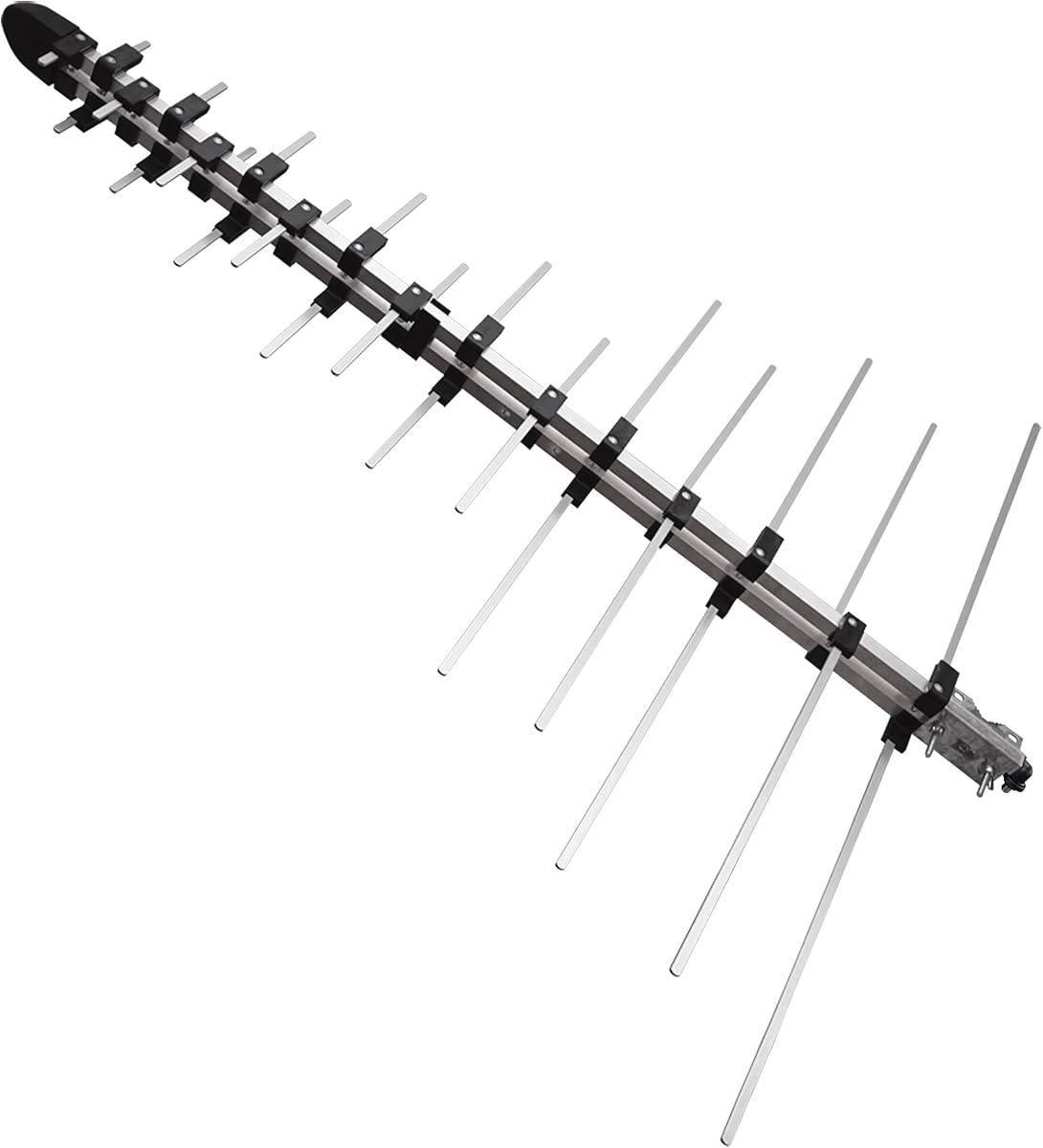
The Five Star Yagi Satellite HD TV Antenna receives a 4.3 rating and combines an ambitious advertised range with a complete multi-TV installation kit. Its Yagi-style elements are designed for VHF and UHF broadcast signals, and the package includes a 40-foot coax cable, four-way splitter, mounting pole, and cable clips.
We may earn a commission when you buy through this link, at no additional cost to you.
The most appealing feature for shared households is its four-way distribution capability. One antenna can serve several televisions when paired with the included splitter, although cable quality and the number of connected devices can influence signal strength. The long, large receiving elements are intended to improve directional gain and stability.
This is not a completely plug-and-play product. Some elements must be assembled, and its directional form means accurate positioning toward broadcast towers is important. The advertised 200-mile reach also depends heavily on geography and the path between the home and transmitters, so it should not be interpreted as guaranteed performance in every location.
The model is a good fit for buyers who want a single outdoor-capable antenna to serve several TVs and prefer having the principal mounting hardware included in one package. It is less suitable for renters unable to assemble or mount a larger directional antenna.
The supplied four-way splitter and long coax cable reduce the need for additional distribution hardware. This makes the package especially relevant to homes with multiple televisions or separate viewing areas.
Extended Yagi elements are designed to concentrate reception toward broadcast sources. Directional performance can be valuable in rural areas, but trees, hills, and other obstructions still limit the signal that reaches the antenna.
We may earn a commission when you buy through this link, at no additional cost to you.
The Antennas Direct 8-Element Bowtie earns a 4.3 rating and brings a large, multidirectional UHF array to buyers who want flexible positioning. Its patented bowtie elements can be rotated to face different transmitter groups, helping it serve markets where towers are scattered around the horizon.
We may earn a commission when you buy through this link, at no additional cost to you.
The antenna's technical specifications are unusually clear for this category. It lists 17.4 dB gain, a 470 to 608 MHz frequency range, and support for NEXTGEN TV, 4K, and 8K UHD broadcasts. Reflectors focus incoming energy and help protect the signal from interference, while all-weather hardware supports secure outdoor or attic installation.
Its limitations come from both design and coverage. The listed operating range is UHF-focused, so it is not the most obviously balanced choice for a household that needs high-VHF reception. At 36.8 by 50 by 10 inches, the antenna is also sizable, and multidirectionality can be less efficient than a precisely aimed array in some locations.
This antenna is worth considering when broadcast towers are in several directions, especially where heavy foliage or roofing materials challenge weaker designs. It is best for UHF-focused markets and buyers willing to position each element to favor the strongest tower direction.
The adjustable multidirectional brackets allow individual elements to target different transmitter clusters. This flexibility can be useful where signals arrive from separate directions rather than one concentrated line of sight.
A listed gain of 17.4 dB and a 470 to 608 MHz range target the UHF television band. Buyers should verify which networks operate in their area and consider a VHF-capable alternative if high-VHF stations are essential.
We may earn a commission when you buy through this link, at no additional cost to you.
The PBD Amplified Outdoor TV Antenna has a 4.3 rating and distinguishes itself with 360-degree motorized rotation. Instead of climbing a roof or ladder to adjust a directional antenna, users can turn the array with a wireless remote to find stronger broadcast signals.
We may earn a commission when you buy through this link, at no additional cost to you.
Its built-in high-gain, low-noise amplifier is designed to improve weak reception over an advertised range of up to 150 miles. The unit also provides two television outputs, allowing two screens to be connected without requiring a separate splitter. A 40-foot RG6 cable, mounting hardware, and a detailed guide support installation.
The motorized and amplified design introduces practical considerations. It needs suitable power and control connections, and more complex hardware can create additional installation points. As with every antenna, the advertised range remains conditional on transmitter distance, terrain, trees, buildings, and interference in the area.
This antenna is best for households that want easy directional adjustment after installation or need two direct television connections. Choose it when convenience and remote positioning outweigh the desire for a completely simple, self-contained passive setup.
Wireless remote control makes it possible to scan different directions from indoors. This is especially helpful when transmitters lie in separate directions and the optimum orientation is not obvious at installation.
Dual television outputs simplify a two-TV arrangement without requiring the buyer to add a splitter immediately. Long interior coax runs may still be necessary to reach both rooms.
We may earn a commission when you buy through this link, at no additional cost to you.
This GE Outdoor HD Digital TV Antenna carries a 4.4 rating and offers an advertised reception range of up to 80 miles. It supports VHF and UHF channels, 4K Ultra HD broadcasts, and ATSC 3.0 where available, combining broad compatibility with flexible placement.
We may earn a commission when you buy through this link, at no additional cost to you.
The supplied mounting bracket, mast clamp, and J-mount provide several installation paths. You can keep the antenna hidden in the attic, attach it to a wall or roof, or use an existing standard mast. Rugged construction is intended to withstand outdoor conditions while preserving an indoor option for homeowners who prioritize appearance.
The key trade-off is that installation quality remains crucial. A securely mounted outdoor antenna may avoid the signal loss associated with roofing materials, while attic placement can be more convenient. No advertised range guarantees a particular channel lineup because local geography, foliage, and transmitter proximity vary considerably.
This is a strong recommendation for buyers who trust GE's support and want an antenna that can grow from an attic installation into an outdoor setup. It is especially attractive when both VHF and UHF stations are needed and the home has access to a suitable roof or mast location.
A weather-resistant bracket, mast clamp, and J-mount allow the antenna to fit several outdoor arrangements. The attic option remains available when exterior visibility or installation restrictions matter more.
Compatibility with ATSC 3.0 means the design can support NextGen TV systems in areas where those broadcasts are available. An appropriate ATSC 3.0 tuner is still required at the television or converter box.
We may earn a commission when you buy through this link, at no additional cost to you.
The TV Outdoor Yagi Antenna has a 4.3 rating and offers a relatively approachable way to install a directional broadcast antenna. Most components arrive preassembled, leaving only a small number of elements to combine, and the product is designed for either attic or roof placement.
We may earn a commission when you buy through this link, at no additional cost to you.
Its frequency coverage includes VHF from 170 to 230 MHz and UHF from 470 to 860 MHz. The listed reception support includes 720p, 1080i, 1080p, and 4K formats. The product data describes a 150-mile total range or up to 70+ miles from broadcast towers, giving buyers two ways to interpret its coverage claim.
Like other Yagi antennas, it needs correct directional placement. The product emphasizes sturdy, lightning-protected construction and resistance to changing weather conditions, but it does not advertise sophisticated filtering for cellular or FM interference. Its most useful advantage is reduced assembly complexity rather than advanced signal management.
This is a good match for first-time antenna installers who want a traditional Yagi design without assembling every element from scratch. It is less suited to buyers who need automatic direction control, dual outputs, or strong filtering in a congested metropolitan environment.
Most of the antenna is preassembled, so installation focuses on joining a few elements and positioning the completed unit. That makes it less intimidating than a kit requiring extensive construction.
The design supports common HDTV resolutions through 4K across VHF and UHF bands. Actual channel availability still depends on local transmitters, terrain, and signal conditions around the installation.
We may earn a commission when you buy through this link, at no additional cost to you.
The Antennas Direct Element has a 4.6 rating, the highest listed rating in this guide, and presents a focused alternative to broad, multidirectional arrays. Its uni-directional form is intended for homes where broadcast towers are clustered in one general direction and precise aiming can produce stronger results.
We may earn a commission when you buy through this link, at no additional cost to you.
The antenna handles both Hi-VHF and UHF signals. Listed peak gain is 6.7 dBi for Hi-VHF and 9.2 dBi for UHF, with operating frequencies of 174 to 216 MHz and 470 to 608 MHz. Those specifications make it easier to evaluate than a vague directional claim alone, while NEXTGEN TV, 4K, 8K UHD, and 1080p compatibility cover modern broadcast formats.
The trade-off is clear: a uni-directional antenna must be aimed, and obstacles or transmitters in another direction can weaken reception. Fold-out elements make assembly convenient, but the product still needs correct positioning and a secure mast or attic attachment. It cannot provide cable television channels.
This antenna is a strong choice for buyers who know their towers lie in a common direction and want focused gain without motorized controls. It is less suitable for locations with several widely separated transmitter groups or for people unable to adjust the antenna's orientation.
A uni-directional pattern concentrates reception toward one general area. In areas where all desired stations originate from a similar direction, that focus can be more useful than multidirectional coverage.
Separate Hi-VHF and UHF gain figures offer a clear view of the antenna's band performance. Buyers can compare these numbers with their local broadcast map before deciding how much mounting precision the installation will require.
We may earn a commission when you buy through this link, at no additional cost to you.
The Five Star HDTV Antenna Upgraded Version carries a 4.1 rating and offers a long-range Yagi package advertised for reception up to 200 miles. It supports VHF and UHF signals, 4K and 1080p broadcasts, and ATSC 3.0, making it relevant for buyers building a modern over-the-air system.
We may earn a commission when you buy through this link, at no additional cost to you.
Extended and enlarged elements form the core of the design, with the stated goal of stable, robust reception. The package includes the antenna, mounting bracket, J-pole, a 40-foot RG6 coaxial cable, and an optional splitter. Roof, attic, chimney, eave, and mast placements are all listed as possible mounting locations.
The product emphasizes potential range, but channel count and quality remain location-dependent. Its 4.1 rating is lower than those of the leading products, and the mention of an optional splitter means buyers wanting multiple televisions may need to confirm whether it is included in the package they receive. Assembly also requires some work.
This antenna makes sense for rural or suburban households seeking a powerful directional option and a generous accessory bundle. It is less compelling for users who want the simplest possible setup, the highest listed rating, or a clearly confirmed multi-TV splitter in the box.
The enlarged element structure is intended to improve stability and signal capture. Directional placement remains important, particularly when broadcast towers are far away or partially blocked by terrain.
A mounting bracket, J-pole, and long RG6 cable cover several common installation needs. The attic is a useful concealed option, while outdoor placement can reduce losses caused by roofing materials.
We may earn a commission when you buy through this link, at no additional cost to you.
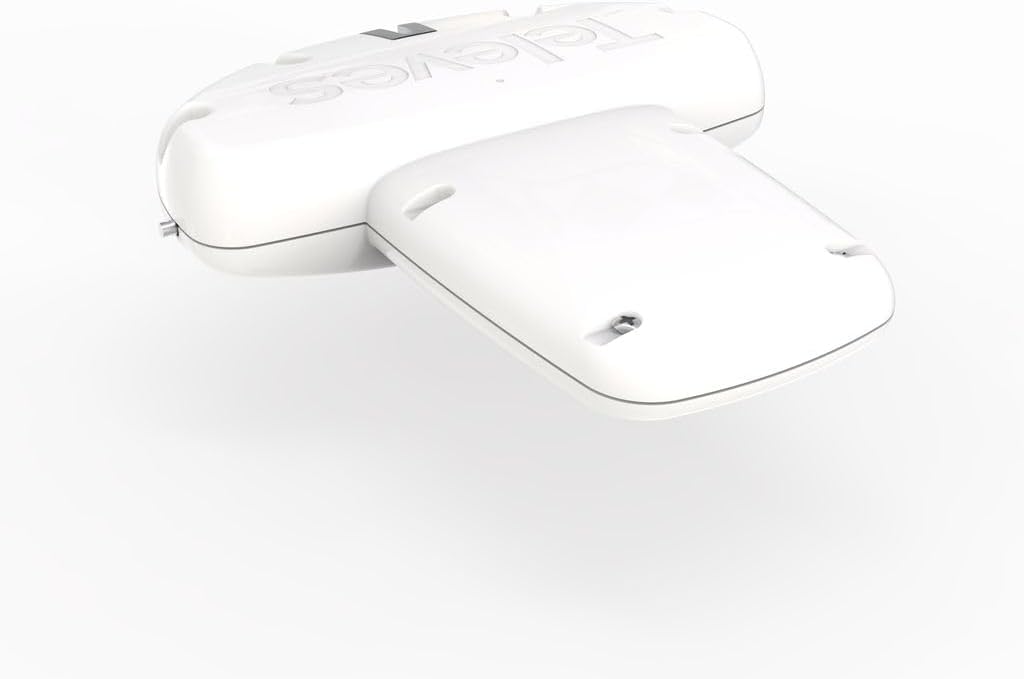
The Televes DiNova Boss Mix earns a 4.4 rating and is the most technically sophisticated antenna in the guide. Its built-in preamplifier, automatic per-band gain control, and filtering against FM, LTE, 4G, and 5G interference target difficult reception environments where a basic amplified antenna may struggle.
We may earn a commission when you buy through this link, at no additional cost to you.
Its BOSS-Tech system adjusts amplification independently by band, with listed figures of 29 dBi for High VHF and 34 dBi for UHF. The goal is to strengthen weak signals while avoiding overload when conditions fluctuate. A seven-element UHF microstrip array and dedicated High VHF elements focus reception toward towers, while the low-profile ABS radome and Zamak components suit outdoor exposure.
The premium feature set comes with practical trade-offs. Mounting fasteners are not included because they vary by surface, and a 12V dual-output power inserter must be placed correctly in the coax run. Its 50-mile figure is lower than the headline ranges of several competing products, making tower distance an important consideration despite its advanced gain management.
This antenna is best for homes near cellular infrastructure, FM transmitters, or variable signal zones where filtering and controlled amplification are more valuable than maximum headline range. It is also a refined choice for homeowners who want a discreet, ready-to-install directional unit and can provide power to its integrated electronics.
Independent band adjustment helps preserve usable output as reception conditions change. The system can boost weaker channels while limiting overload, a benefit in areas combining distant towers with nearby interference sources.
Integrated filters for LTE, 4G, 5G, and FM sources can improve clarity in areas where cellular equipment operates near the antenna. This filtering is one of the model's clearest advantages over less specialized designs.
We may earn a commission when you buy through this link, at no additional cost to you.
Selecting an attic antenna requires balancing broadcast frequencies, tower distance, obstructions, available space, and the number of televisions you want to connect. The largest advertised range is not automatically the best choice, because antenna pattern, gain, filtering, and correct placement often matter more in daily use.
Compare the map with each antenna's advertised coverage, but treat the maximum number as a comparative figure rather than a guarantee. Terrain, foliage, and local interference can reduce effective range.
Choose broad VHF/UHF support unless your confirmed stations fall entirely within one band. Directional and frequency specifications should match the stations you actually want to receive.
Prioritize realistic coverage for your location, not the largest number. Direction, gain, and a clear installation path are more dependable indicators of performance.
Use a directional model for concentrated towers and a multidirectional model for scattered coverage. Include remote rotation only when changing direction after installation is likely to be useful.
Look for controlled amplification and relevant filtering in difficult environments. In strong-signal areas, a well-positioned passive directional antenna may be sufficient.
Confirm the included hardware before scheduling installation. Never drill or mount without checking roof, attic, and local requirements, and avoid creating entry points that could admit water.
Verify included splitters, outputs, and cable length before buying. Use quality RG6 coax and keep connections secure for a stable household distribution system.
Standard coax connectivity provides broad compatibility. Confirm ATSC 3.0 tuner support and any converter requirements when NextGen TV matters to you.
Begin by identifying every station you want and comparing the channel list with your local broadcast map. Assemble the antenna according to its instructions, connect the appropriate coax run, and position the unit in the intended direction. For attic installations, avoid placing the antenna directly beneath thick metal roofing, radiant barriers, heavy insulation, or dense obstructions when an alternative location is possible.
Connect the antenna to the television's coaxial input or a compatible converter box, then run the television's channel scan. If reception is uneven, try small adjustments to the antenna's direction and rescan. Outdoor antennas should be mounted securely with weather-resistant connections, while powered models require the correct power inserter and supply connected without overloading the circuit.
For ongoing care, periodically inspect outdoor mounting hardware, cable entry points, and visible connectors for looseness, corrosion, water intrusion, or damage. Keep attic cabling supported and away from shifting structures or pests. Clean removable outdoor surfaces as the manufacturer directs, and avoid opening powered or weather-sealed housings. If channels disappear, check connections and rescan before assuming the antenna itself has failed.
An attic antenna can receive the same available broadcast stations, but surrounding construction may reduce signal quality. Metal roofing, radiant barriers, foil-backed insulation, wiring, and other obstructions can weaken reception. If scanning in the attic produces missing or unstable channels, try a higher position, change the antenna's direction, or move the unit outdoors on a suitable mast.
There is no single distance that guarantees reception because terrain, antenna design, tree cover, and interference all matter. The listed ranges are maximum advertised estimates rather than promises. Use a broadcast map to determine your distance and direction, then choose an antenna whose frequency coverage and pattern match the stations available in your area.
Not always. A well-positioned passive antenna can deliver excellent reception when towers are nearby and signals are unobstructed. Amplification is more useful for weak or variable signals, although an overly aggressive amplifier can cause overload. Intelligent gain control and strong filtering are valuable in areas with nearby cellular or FM interference.
Yes, but the antenna must have suitable outputs or be paired with an appropriate splitter. A four-way splitter can support several displays, while some models offer two integrated outputs. Use quality RG6 coax, minimize unnecessary cable length, and make sure the antenna and distribution system can preserve adequate signal quality across every connected television.
No. The antenna may support ATSC 3.0 signals, but the television or converter box must also include a compatible ATSC 3.0 tuner. NextGen TV service must also be available from a broadcaster in your area. A compatible antenna alone does not make an older television capable of receiving the new broadcast format.
Choose a directional antenna when your desired towers are clustered in one general direction and you can aim the unit toward them. A multidirectional antenna is more forgiving when towers are scattered or the direction is uncertain. Remote motorized rotation adds convenience when signal alignment may change or multiple direction scans are expected.
VHF and UHF are separate broadcast frequency bands used by digital television stations. A suitable antenna should support both if your local lineup includes stations from each band. Some products emphasize UHF performance, so compare their listed frequency ranges with your local stations before purchasing to avoid missing important channels.
Channel scans capture what the antenna can receive at that moment, so antenna direction, nearby interference, cable connections, and placement can affect the results. Rescan after moving or rotating the antenna, inspect all coax connections, and compare the station list with the local broadcast map. Keep the same orientation when comparing scans for a meaningful test.
The GE Outdoor HD Digital TV Antenna in first place offers the strongest overall balance of range, universal connections, NextGen TV support, and flexible placement. The GE Attic Mount model is a compelling budget-oriented choice for a straightforward concealed installation, while the Televes DiNova Boss Mix provides the most sophisticated amplification, gain control, and cellular filtering.
Most buyers should prioritize local tower direction, VHF and UHF coverage, and a realistic installation location before focusing on maximum advertised range. A multi-TV household should also verify outputs, splitters, and coax requirements. Those details will usually have a greater effect on daily satisfaction than the largest mileage claim.
Product availability and pricing can change, so confirm the current listing, package contents, specifications, and compatibility before buying. Checking the local broadcast map, preparing the installation site, and choosing the correct antenna pattern can prevent most avoidable reception disappointments.