
U UNNI Wireless Pool Thermometer
4.5Editor score
Patented wireless transmission
Dual-sided temperature display
IPX8 waterproof protection
Four-and-a-half-inch LCD
Our Cold Plunge Thermometer guide compares 10 top models for accuracy, waterproofing, timers, wireless range, readability, and easier cold-therapy monitoring.
A cold plunge thermometer helps you measure water temperature and time cold exposure with greater consistency. A useful model should be accurate, easy to read, completely suited to wet environments, and simple to operate despite cold or numb hands. Digital screens, waterproof seals, and floating construction are especially useful.
We compared all ten thermometers across temperature accuracy, measurement range, waterproofing, display visibility, timing functions, wireless capabilities, power options, and cold-plunge compatibility. The list includes direct floating thermometers, timer-equipped models, wireless pool sensors, and app-connected systems so readers can compare formats rather than relying on one type.
Each review identifies the product's most useful qualities and any practical limitations. Our top recommendations range from a straightforward budget thermometer to advanced wireless and smart-monitoring systems. Product specifications may change, and prices and availability can fluctuate, so always confirm the current listing before purchasing.
4.5Editor score

4.6Editor score
5.0Editor score
The comparison below covers direct thermometers, timer-equipped models, and wireless monitoring systems. The key differences include accuracy, water resistance, remote range, power requirements, display features, and the presence or absence of session timing.


The Suoimk Silicone-Cover Thermometer is a direct cold-plunge device that combines live temperature monitoring with a countdown timer. Its listed rating is 3.9, but the feature set is notably focused: a floating body, a readable digital display, Celsius and Fahrenheit switching, and timing up to 20 minutes make it practical for users who want both measurements from one device.
We may earn a commission when you buy through this link, at no additional cost to you.
Its silicone outer layer is intended to improve grip and add drop resistance while the thermometer remains in water. The IPX6 waterproof construction and buoyant design allow it to remain visible at the surface. Readings typically stabilize about one minute after immersion, and the timer eliminates the need to rely on an external phone or clock during a cold session.
The trade-offs are that this is not a remote monitoring system, and its published rating is lower than those of several wireless competitors. It also lacks some of the advanced accuracy specifications and historical tracking offered by premium options. Those limitations are most relevant if you want to monitor temperatures from indoors or analyze long-term trends.
This thermometer makes sense for a straightforward plunge setup where the display must be readable at the tub edge and session timing is essential. It is especially attractive for users who want one compact device for temperature, elapsed-session management, and durable floating operation without setting up a separate receiver or gateway.
Live readings are complemented by a timer that can run for as long as 20 minutes. That combination helps establish a repeatable cold-exposure routine while keeping the most relevant information on a single screen.
The floating body and silicone cover improve visibility, grip, and resistance to drops. An IPX6 waterproof rating also makes the design more appropriate for ice-bath use than a conventional indoor temperature display.
We may earn a commission when you buy through this link, at no additional cost to you.
The Keystone Peak Ice Bath Thermometer and Timer is built for users who want a simple instrument without an indoor receiver or complicated setup. It carries a 4.1 rating and provides the two functions most often needed during a plunge: current water temperature and a countdown for immersion time.
We may earn a commission when you buy through this link, at no additional cost to you.
The floating waterproof design allows it to remain at the surface, while the large display is intended to be easy to check when hands are cold or attention is focused on the session itself. It also works in swimming pools, making it a versatile option for households that alternate between recovery and recreational use.
The supplied information does not state a numerical accuracy tolerance, sensor range, ingress-protection rating, or update interval. Those omissions make it harder to compare with the more technically specified wireless models. It also cannot send readings to another room or retain a meaningful temperature history.
For someone beginning a cold-plunge routine, the combination of temperature and timing can still provide excellent practical value. Choose it when simplicity and an immediately readable display matter more than remote monitoring, smart alerts, app-based history, or detailed accuracy claims.
There is no gateway, paired receiver, or app to configure. The thermometer can simply be floated in the water and checked directly, which keeps the process approachable for beginners.
The countdown timer supports repeatable routines by reducing reliance on a separate clock. This is especially helpful when establishing a personal cold-exposure protocol.
We may earn a commission when you buy through this link, at no additional cost to you.
The TempPro TempAir Wireless offers an effective compromise between precision and remote access. Its 4.2 rating is supported by a stated accuracy of plus or minus 0.9°F, or plus or minus 0.5°C, across 32°F to 140°F. The sensor itself covers a much broader range and is suitable for ice baths, cold plunges, hot tubs, ponds, and other water environments.
We may earn a commission when you buy through this link, at no additional cost to you.
RF technology provides a stated transmission range of up to 500 feet, allowing the included receiver to display water temperature from indoors. The large backlit screen improves nighttime visibility, while 24-hour minimum and maximum memory helps show recent changes. Because the sensor and receiver arrive pre-paired, installation requires little more than adding the four included AAA batteries.
Wireless performance depends on the environment, so walls and other obstructions may reduce the effective distance. The product is also designed around water measurement rather than ambient outdoor-air accuracy, making the receiver's indoor temperature function more relevant than using the floating sensor as an outdoor weather device.
This is a strong choice for a garage, home gym, or indoor recovery area where checking the plunge from inside is convenient. It combines a reputable level of measurement detail with an easy display, broad cold-water compatibility, and useful recent-temperature memory without requiring a smart-home platform.
A 500-foot open-area range gives the receiver considerable flexibility. You can monitor the tub before changing clothes, during recovery periods, or while preparing other equipment.
The stated plus or minus 0.9°F tolerance in the principal operating range supports close tracking. The broad sensor range also covers temperatures encountered in properly prepared cold plunges.
We may earn a commission when you buy through this link, at no additional cost to you.
The second Keystone Peak offering in this list uses the same broad approach as the rank-two model: a waterproof floating thermometer with a large display and an integrated countdown timer. Its 3.8 rating is the lowest published rating among the ten products, so buyers should weigh its straightforward design carefully against the alternatives.
We may earn a commission when you buy through this link, at no additional cost to you.
The product is described as suitable for both ice baths and swimming pools. That versatility may appeal to households that want one simple instrument for several water environments. Temperature and timer information appear together, reducing the need to alternate between separate devices during a session.
No specific accuracy tolerance, temperature range, waterproof code, or measurement update rate is supplied. There is also no wireless receiver, app, alert system, or historical data function. As a result, it is better viewed as a simple session aid than a sophisticated monitoring platform.
Its low published rating does not automatically make it a poor product, but it does reduce the margin for uncertainty. Consider it when direct reading, floating visibility, and built-in timing are the essential requirements and your setup does not demand remote access or detailed specifications.
The same floating design can serve an ice bath or a pool. This makes it practical for homes where the cold plunge shares equipment with more general water recreation.
The display and countdown approach is intuitive from the outset. That simplicity is valuable when the goal is straightforward temperature checks and repeatable immersion timing.
We may earn a commission when you buy through this link, at no additional cost to you.
The Wireless Floating Water Monitor combines a 5.0 rating with broad environmental flexibility. It measures water temperature from -40°F to 158°F, reports indoor temperature and humidity, and is listed for cold plunges, hot tubs, pools, ponds, aquariums, and lakes. Its transmission range reaches up to 300 feet in open areas.
We may earn a commission when you buy through this link, at no additional cost to you.
Water protection is handled with an IPX8 rating and a double rubber gasket. The package includes two wrenches intended to help users open and reseal the sensor, which is important because the compartment must be closed correctly to preserve its waterproof protection. The display includes Celsius and Fahrenheit switching, maximum and minimum memory, and a low-battery warning.
Accuracy is stated at plus or minus 2°F, or plus or minus 1°C. That is less precise than the plus or minus 0.5°F and plus or minus 0.9°F figures offered by several competitors, although it remains practical for general water-temperature tracking. The sensor needs two AA batteries, while the receiver needs two AAA batteries, and neither set is included.
This is a compelling option for users who want one system to monitor both cold-plunge water and indoor recovery-space conditions. Its wide compatibility and 5.0 rating are strong points, while the extra battery types and lower stated precision are manageable trade-offs for many homes.
The receiver adds indoor temperature and humidity information, while the sensor supports many types of water environments. This makes the system more versatile than a plunge-only thermometer.
The included wrenches support a controlled reassembly process. Aligning the sealed parts correctly is important because a poorly closed compartment can undermine the stated IPX8 protection.
We may earn a commission when you buy through this link, at no additional cost to you.
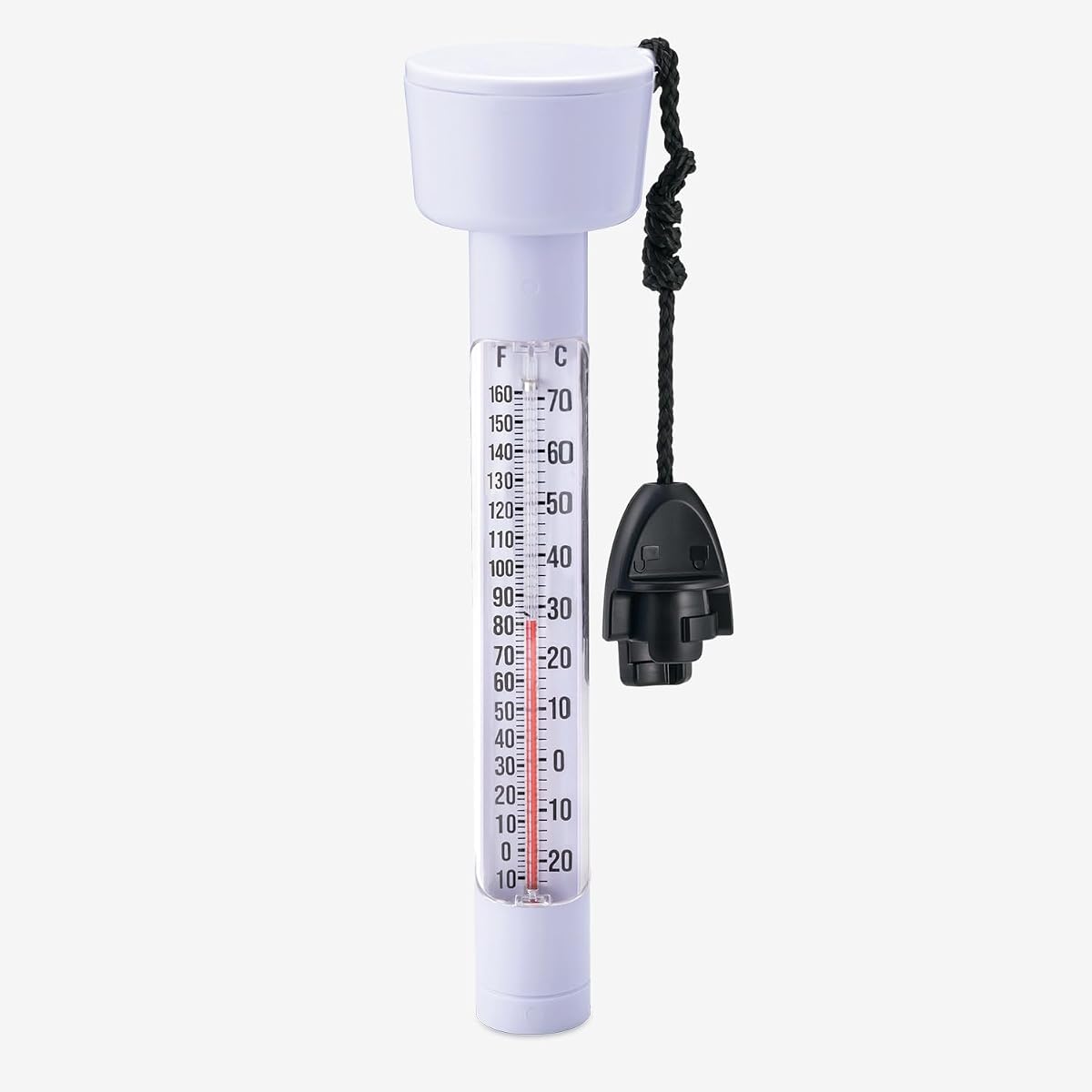
The Funsicle Floating Thermometer is the most stripped-down recommendation, but it addresses the essential need well. It has a 5.0 rating, displays water temperature in both Fahrenheit and Celsius, and floats at the surface where the reading remains easy to locate during a plunge.
We may earn a commission when you buy through this link, at no additional cost to you.
A tie is included for attaching the device to an ice-well plunge, which reduces the chance that it will drift away. The interface is designed for immediate use, making it suitable for beginners and seasoned cold-therapy users who do not want to manage a receiver, app, or complicated setup.
There is no integrated timer, wireless monitoring, temperature history, or remote display. The supplied information also does not provide a numerical accuracy tolerance or an ingress-protection rating. Consequently, it offers less evidence-based specification detail than the higher-end wireless models.
Choose this product when the objective is a dependable, uncomplicated way to see the plunge temperature without extra features. Its floating design and securing tie are particularly thoughtful for cold-plunge use, and they make it a sensible budget-oriented centerpiece for a minimal recovery setup.
Floating keeps the device near the surface and away from the bottom of the tub. The included tie adds another layer of control by reducing unwanted movement.
There is nothing to pair and no gateway to install. A glance at the dual-unit display is enough for routine temperature checks, which may be preferable for users who value simplicity.
We may earn a commission when you buy through this link, at no additional cost to you.
The GoveeLife Smart Wireless Pool Thermometer P2 is the most feature-rich cold-plunge option here. Its 4.2 rating accompanies a strong smart-home proposition: real-time app charts, temperature exports, comparisons from 24 hours through one year, customizable alerts, and support for Alexa-based temperature queries.
We may earn a commission when you buy through this link, at no additional cost to you.
The floating sensor has an IP68 waterproof and dustproof rating, a two-second refresh rate, and stated accuracy of plus or minus 0.9°F from -4°F to 158°F. The pre-paired gateway supports connections up to 1082 feet in an open area, although walls can reduce that distance. The system includes two AAA batteries and a securing string.
It uses 2.4 GHz Wi-Fi rather than the 5 GHz band, which is an important compatibility consideration. The extended-range gateway and app dependency also create a more involved setup than a direct display or basic wireless receiver. Smart features add value only if you intend to review trends and respond to alerts.
This product is best for cold-plunge owners who want long-term records, remote notifications, and integration with a connected home. It is less compelling for someone who only wants a tub-side number, but it delivers the deepest monitoring and alerting toolkit in this comparison.
Charts, min/max comparisons, exports, and notifications help turn individual readings into useful records. These features are valuable when temperature changes over time or when an alert matters.
The two-second refresh rate offers quick feedback through the app. The stated extended gateway range provides flexibility when the plunge is separated from the main living area.
We may earn a commission when you buy through this link, at no additional cost to you.
The U UNNI Wireless Thermometer stands out for precision and display quality. It has a 4.5 rating, a stated temperature accuracy of plus or minus 0.5°F, and a four-and-a-half-inch LCD with a ten-second backlight. That combination makes it particularly attractive when the receiver needs to be read quickly from several feet away.
We may earn a commission when you buy through this link, at no additional cost to you.
Its patented transmission technology sends data within a 230-foot radius every 60 seconds. The floating sensor has IPX8 protection backed by an integrated sealing ring and double waterproof-ring design. UV-resistant, corrosion-resistant materials are also specified, and the body can serve ice baths, cold plunges, hot tubs, ponds, aquariums, and other water settings.
Its wireless range is shorter than the 300-, 500-, and 1082-foot figures offered by other systems, and readings update once per minute rather than every few seconds. There is no app, temperature-history export, or built-in immersion timer, so advanced users who need continuous engagement may prefer a smart option.
This thermometer is best for users who prioritize precise readings, a highly visible screen, and a polished direct-monitoring setup. It combines strong technical specifications with a practical display and is a particularly compelling premium option when remote access is needed but full smart-home automation is not.
The large screen and brief backlight make the receiver easy to consult in low light. Dual-sided temperature readings also allow convenient viewing from different positions around the tub.
A plus or minus 0.5°F stated accuracy is the narrowest tolerance listed in this guide. The corrosion-resistant, UV-resistant housing also supports dependable outdoor use.
We may earn a commission when you buy through this link, at no additional cost to you.
The TempPro TempAir Solar is our Editor's Choice because it balances several capabilities unusually well. Its 4.6 rating is the highest among the thermometers with a wireless receiver, while its floating sensor combines solar charging, IPX8 waterproofing, five-second updates, and a stated accuracy of plus or minus 0.9°F.
We may earn a commission when you buy through this link, at no additional cost to you.
RF technology delivers a stable signal up to 500 feet, so the indoor receiver can show the water temperature without requiring someone to go outside. The receiver has a large screen and big digits with backlighting for daytime and nighttime visibility. The floating sensor uses UV-resistant ABS material and ultrasonic sealing designed to limit water ingress and lens fogging.
Solar charging helps reduce battery replacements, but actual performance depends on adequate exposure. The receiver still needs two AAA batteries, which are included according to the supplied data, and there is no integrated cold-session countdown timer. Its broad sensor range of -40°F to 158°F comfortably covers cold plunge conditions.
This thermometer is ideal for a cold plunge located outdoors or in a nearby recovery area where frequent remote checks are desirable. It offers a refined balance of accuracy, fast updates, remote access, solar convenience, and readable indoor monitoring without the complexity of a full app ecosystem.
The built-in rechargeable battery and solar charging reduce the need for routine battery changes. Keeping the floating unit in suitable sunlight helps support continuous outdoor operation.
Five-second refreshes make the receiver responsive to changing water temperature. The 500-foot range allows monitoring from indoors before and after each immersion.
We may earn a commission when you buy through this link, at no additional cost to you.
The Floating Wireless Water Monitor delivers a 4.4 rating and a broad set of monitoring and placement features. It combines water temperature, indoor temperature, and humidity on one LCD while providing a 500-foot wireless transmission range. The floating sensor has its own display, allowing water-temperature checks even without looking at the receiver.
We may earn a commission when you buy through this link, at no additional cost to you.
The receiver includes a 20-second backlight and three mounting methods: a foldable tabletop stand, a wall-mount hole, and built-in magnets. It also tracks maximum and minimum temperatures. Both sensor and receiver support Celsius and Fahrenheit, which is helpful for households that switch units or share equipment with different preferences.
The stated water accuracy is plus or minus 1.8°F, or plus or minus 1°C, from -40°F to 140°F, which is less precise than the leading models. The floating sensor and receiver each require two AAA batteries, and batteries are not included. Readings are sent every 60 seconds, so this system is less reactive than the five-second TempPro TempAir Solar.
Despite those limitations, the flexible installation options and dual-display design make this a practical choice. It works especially well when the receiver should sit on a wall, stand on a counter, or attach magnetically to a convenient surface while the sensor remains in the cold plunge.
The sensor's own screen provides immediate water readings, while the receiver adds remote access. This dual-readout arrangement is convenient for both poolside and indoor checks.
The stand, wall hole, and magnets let you position the receiver according to your space. That flexibility is more useful than fixing the receiver to a single type of surface.
We may earn a commission when you buy through this link, at no additional cost to you.
The right cold plunge thermometer depends on how you use the tub, where the receiver or display will sit, and whether you value timing, remote access, detailed records, or simple operation. The following factors help separate the most useful features from options that merely add complexity.
Accuracy determines how confidently you can interpret the water reading. Among the supplied products, stated tolerances range from plus or minus 0.5°F to plus or minus 2°F, although several listings do not provide a numerical figure. A tighter tolerance is useful if you are tracking subtle changes, comparing routines, or operating near a preferred temperature. Always consider the accuracy range as well as the sensor's overall measurement range, since the stated accuracy may apply only within a narrower interval.
A plunge thermometer must tolerate prolonged water exposure and remain easy to retrieve. IPX8 appears on several wireless sensors, while the Suoimk model uses IPX6 protection, and other products are described more generally as waterproof. Floating construction keeps the device visible at the surface, and an included tie or string can prevent it from drifting into filtration equipment. For sealed electronic compartments, align the parts correctly and follow the manufacturer's closure instructions.
A direct thermometer is fast and uncomplicated: float it in the water and read the screen. A wireless system adds an indoor receiver and is valuable when the plunge is outdoors or separated from your living space. Direct models suit users who remain beside the tub, while wireless products suit those who want to check conditions before entering, monitor during recovery, or keep the receiver in a convenient room.
Published wireless ranges in this guide range from 230 feet to 1082 feet, but each figure represents an open-area maximum rather than a guaranteed result indoors. Walls, garages, floors, doors, and the placement of the gateway can materially reduce effective range. The 230-foot model may be sufficient for a nearby tub, while 500-foot options provide more flexibility. The GoveeLife system extends farther but depends on a 2.4 GHz Wi-Fi network and app-compatible gateway.
A large screen with large digits is valuable when you are preparing to enter cold water or checking the reading through a small window. Backlighting helps during early mornings, evening sessions, and dim garage environments. Dual-sided readings are also useful because they allow access to the sensor display from different positions. The GoveeLife system prioritizes app charts, while the U UNNI model and several TempPro receivers prioritize large physical displays.
A timer can help make cold exposure repeatable without repeatedly checking a phone. The Suoimk and Keystone Peak products combine temperature readings with countdown timing, with the Suoimk timer reaching 20 minutes. Wireless systems generally omit this feature but may provide recent minimum and maximum records. Decide whether active timing is more important than remote monitoring before choosing between these categories.
Battery requirements affect long-term convenience. Some systems include batteries, while the Wireless Floating Water Monitor and the rank-five model require batteries that are not included. The solar-powered TempPro TempAir Solar reduces sensor battery replacement, although its receiver still uses AAA batteries. The smart GoveeLife system states a battery duration of up to 500 days in standard mode or three years in extended mode. Check the required battery type, availability, and compartment seal before installation.
App-connected thermometers can retain charts, compare min/max values, export records, and send customizable alerts. These tools are most valuable for long-term monitoring rather than a single plunge. The GoveeLife P2 offers the most extensive data and alert features, while the direct and basic wireless models provide little or no stored history. App systems also require compatible Wi-Fi and a stable connection to the gateway.
Before use, read the product instructions and verify that any sealed sensor compartment is properly closed, aligned, and tightened. Install the specified batteries or charge the solar unit as directed, select the preferred temperature unit, and test the receiver or display before the plunge. Confirm that the sensor floats securely and that the reading appears plausible for the prepared water.
Place the thermometer in the water where it can float freely without being trapped beneath ice, towels, or the tub edge. If a tie or string is included, attach it to a suitable point while leaving enough slack for water movement. For wireless systems, position the receiver or gateway where the screen remains visible and the signal is reliable. Allow the sensor to stabilize before treating the reading as the final water temperature.
After each session, remove the floating sensor, rinse it with clean fresh water, and dry it before storage. Never charge a wet unit unless the manufacturer specifically permits it. Open sealed compartments only when necessary, replace gaskets as directed, and confirm that all parts are dry and correctly aligned before reassembly. Remove batteries from long-term storage devices to prevent leakage, and check the battery and seal condition before each new session.
A floating design is usually the most convenient because the display stays near the surface and is easy to retrieve. It also works well when the plunge contains an ice layer or has a sloping bottom. Some models include a tie so the thermometer cannot drift toward a filter or skimmer. A wired or remotely positioned system may be preferable if the water contains a lot of floating ice that could obscure the display.
The closer the stated accuracy is to zero, the more confidence you can have in small temperature differences. Products in this guide list tolerances ranging from plus or minus 0.5°F to plus or minus 2°F, and some do not publish a tolerance at all. For routine tracking, a clearly specified range is important, while those maintaining strict protocols should pay close attention to the operating range over which that accuracy applies.
Most floating pool thermometers in this guide are also listed for cold plunges, ice baths, hot tubs, or other water environments. Check the minimum operating temperature and whether the sensor must remain submerged to maintain its stated waterproof seal. Very low ambient temperatures can shorten battery life, so cold-rated batteries and regular inspections are advisable.
A wireless model is worth it when the tub is outdoors, in a garage, or otherwise inconvenient to check directly. It lets you see the water temperature before changing and monitor it from another room. If you spend most of your session beside the plunge, a direct floating model is simpler and may meet your needs while avoiding receiver setup and battery maintenance.
A timer is helpful for consistent session timing, but it is not necessary for temperature monitoring. The Suoimk and Keystone Peak models include countdowns, while most wireless systems focus on remote readings, memory, and alerts. Choose based on whether you use a separate phone or kitchen timer for cold exposure. If not, an integrated countdown may improve routine consistency.
Yes, because every product in this list is designed for water measurement and most explicitly support pools, hot tubs, spas, cold plunges, or related environments. Check the specified operating range and accuracy interval before high-temperature use. For a hot tub, select a mode designed for that setting when the product provides one.
Remove the unit from the water, rinse away salt or treatment chemicals, and dry it completely before storing it. Keep the battery compartment closed when the product is not being used, and remove batteries during extended storage to reduce leak risk. Store the thermometer away from direct heat, sharp objects, and extreme cold, and inspect the seals before returning it to the tub.
Begin by checking whether the floating sensor is fully submerged as directed, since the receiver cannot correct for an improperly positioned probe. Low batteries, poor sealing, radio interference, or excessive distance can also affect performance. Compare the receiver with the sensor's own display when available, confirm that all parts are paired, and move the receiver closer to the tub if walls are weakening the signal.
The TempPro TempAir Solar stands out as the Editor's Choice for its balance of fast five-second updates, 500-foot transmission, solar charging, strong stated accuracy, and a readable indoor receiver. The U UNNI Wireless Thermometer is the premium precision pick, offering the narrowest stated tolerance and a particularly large display, while the Funsicle Floating Thermometer delivers the most approachable direct-reading experience.
Prioritize the features your routine actually requires. Choose a direct thermometer with a timer when consistency at the tub is the goal, a wireless receiver when the plunge is in a separate area, and an app-connected model when charts, alerts, and historical data add practical value. Waterproof construction, readable digits, battery requirements, and the accuracy range deserve careful attention before checkout.
Always review the current product listing for specifications, compatibility, included accessories, and availability. Prices and product details can change, so confirm the latest information on the retailer's page. With that final check, you can select a cold plunge thermometer that fits both your recovery routine and your monitoring style.