FAFCO Solar Cub Starter Kit
5.0Editor score
Space-saving collector footprint
Simple above-ground installation
Works with existing pool pump
A DIY solar pool heating kit can extend your swimming season by circulating pool water through solar collectors, but the best results depend on thoughtful design and installation. Important considerations include collector area, mounting requirements, freeze resistance, flow efficiency, compatibility with your pump, and the completeness of the included hardware.
This guide compares ten available products using their stated specifications, construction, installation requirements, supplied components, and suitability for inground or above-ground pools. It includes complete heating kits, panel-based systems, dome systems, and a mounting accessory so readers can distinguish a ready-to-install project from a more involved custom setup.
Each review explains the product's strongest benefits, practical limitations, ideal pool setup, and distinguishing features. Ratings and availability can change, and current product details should be verified before ordering, especially for solar equipment whose performance varies with sunlight, orientation, water temperature, and local climate.
5.0Editor score
4.7Editor score

4.5Editor score
As an Amazon Associate we earn from qualifying purchases.
The table below compares all ten listings by system type, construction, mounting approach, pool compatibility, and important installation considerations, while distinguishing complete heating systems from panel accessories and incomplete data entries.



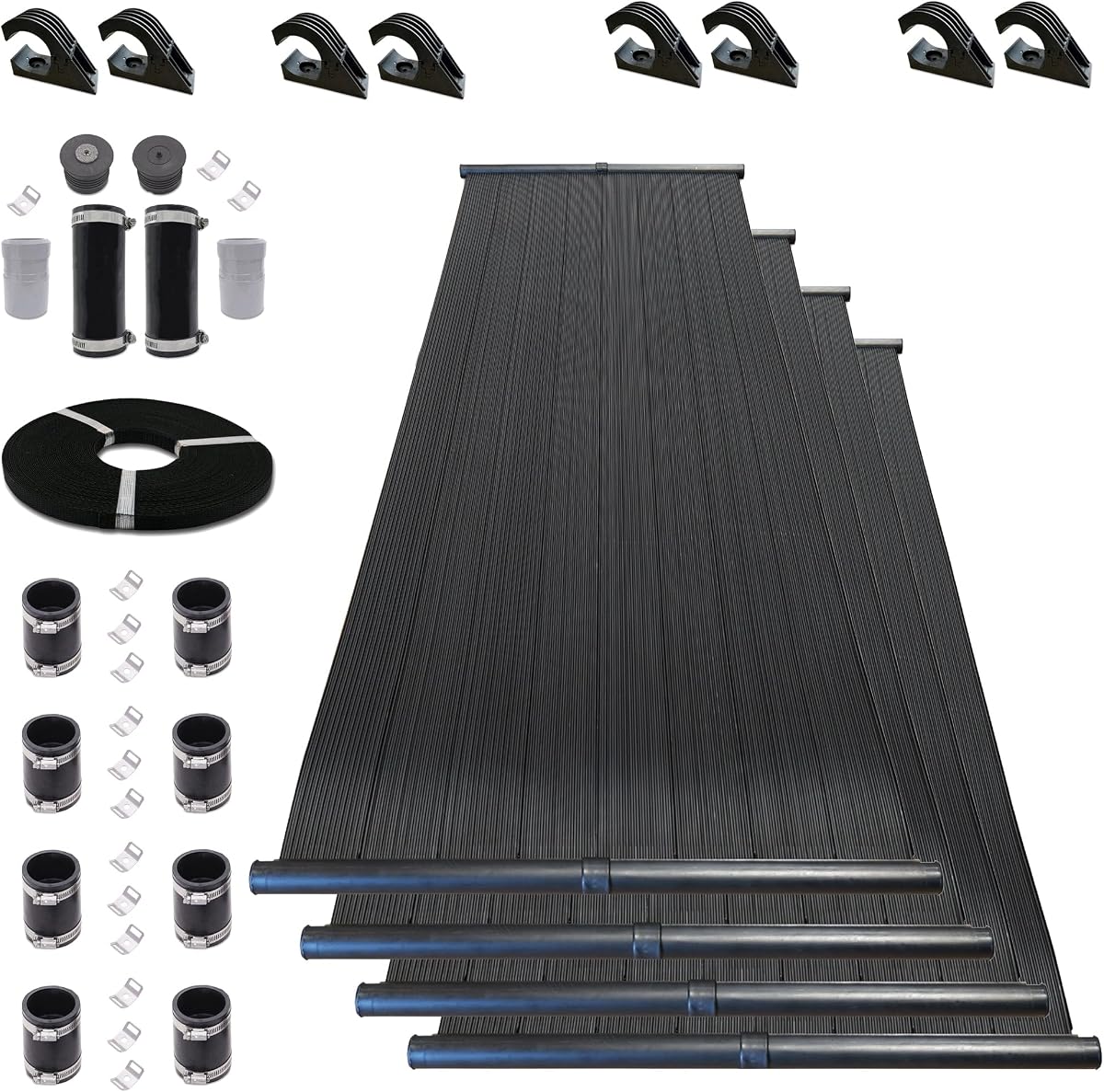
The SwimEasy Solar Pool Heater Kit receives a 4.7 rating and stands out as the most complete, performance-oriented option in this guide. Its four full-size panels use a molded header designed to remove flow barriers, while the supplied hardware covers mounting, panel interconnection, tie-downs, and connection to existing supply and return plumbing. The result is a package organized around a genuinely complete DIY installation rather than a basic collector alone.
We may earn a commission when you buy through this link, at no additional cost to you.
Its most important technical advantage is the relationship between absorber technology and unrestricted water movement. The one-piece header is molded around the absorber tubes, helping water enter each tube without the obstruction associated with less efficient manifold designs. When adequate flow passes through the collectors, more captured solar energy can reach the pool. The product is also described as manufactured in the United States with high-grade materials and ultraviolet stabilizers intended for prolonged outdoor exposure.
The tradeoff is project scale. This is a substantial rooftop installation with four 4-by-12-foot panels, and the buyer must provide suitable space, correctly orient the collectors, and connect the system to an existing pump and filtration setup. Installation support and a comprehensive manual are helpful, but the system still demands more care than a small above-ground collector. The stated 15-to-20-year life expectancy is also a manufacturer claim rather than a guarantee for every installation.
This kit is the strongest general recommendation for a homeowner with an inground pool, dependable pump capacity, and adequate mounting space who wants substantial collector area and a well-developed flow path. It may be excessive for a small above-ground pool, but for a larger residential installation, its combination of complete hardware, thoughtful header design, and expert assistance makes it the strongest all-around pick in the roundup.
The molded manifold is the defining feature because it removes barriers between the header and individual absorber tubes. More effective circulation allows the collector to transfer more captured heat into the pool, subject to pump capacity, sun exposure, and proper plumbing.
The kit includes the stated mounting hardware, inter-panel connection pieces, tie-down straps, and supply-and-return connection hardware. That breadth helps reduce separate purchases, although roof work, local codes, and individual site preparation still need attention.
We may earn a commission when you buy through this link, at no additional cost to you.
The SwimJoy Industrial Grade Solar Pool Heater DIY Kit earns a 4.5 rating and is the premium option for buyers who value installation simplicity, low maintenance, and resistance to storm-related mounting problems. At 52 square feet, it offers a meaningful collector area while using a more compact panel arrangement than the largest full-roof kits in the guide. The patented solid-piece construction is designed to reduce seams and welds that might weaken over time.
We may earn a commission when you buy through this link, at no additional cost to you.
Flow performance is another major strength. Its specialized square header, open-flow layout, and low-head-loss riser tubes are intended to maximize circulation and minimize backpressure. That matters for solar heating because the collector should not create unnecessary resistance that causes the pump to deliver less water than intended. Patented panel clamps connect the panels to PVC plumbing without the rubber hoses and metal clamps that can demand inspection, retightening, or replacement.
The mounting proposition is unusually distinctive. The strapless flush system is described as certified to withstand violent storm winds and is designed for virtually any roof type. It avoids protruding tie-down straps, potentially improving the appearance of the installation and reducing the number of exposed components. The 52-square-foot footprint is also easier to accommodate than a multi-panel system, although it may require a longer roof or a careful layout on a constrained property.
This kit suits owners with a medium or smaller residential pool who want premium construction and minimal ongoing maintenance. It is also a sensible choice for anyone reluctant to drill through roofing or use traditional tie-down systems. The buyer should still verify roof conditions, local requirements, pump capacity, and the exact configuration included with the selected listing before beginning the installation.
The patented clamp system avoids rubber hoses and replaceable metal clamps at the panel connections. Fewer consumable connection parts can mean less routine rooftop maintenance, provided the clamps are installed according to the manufacturer's instructions.
A strapless flush mounting design is intended to remain secure in high winds and integrate neatly with the roof. Site-specific structural conditions and applicable roofing guidance remain the installer's responsibility.
We may earn a commission when you buy through this link, at no additional cost to you.
SunLink Pro is a newer four-panel kit designed around unusually simple connections, and it has no current customer rating in the supplied listing. Its Integrated Link System places threaded union connections directly into each panel, allowing the units to be joined by hand without separate clamps, hoses, glue, or extra couplers. For DIY builders, that reduces both the number of components and the opportunities for installation mistakes.
We may earn a commission when you buy through this link, at no additional cost to you.
The panels are precision injection molded from high-grade UV-stabilized polymer as a seamless one-piece design. That construction removes welds and seams from the panel body, while thick circular wall tubes are intended to resist damage from birds and other wildlife. Materials and craftsmanship are backed by a 15-year factory limited warranty, giving buyers some long-term reassurance even though the product does not yet have an established customer-rating history.
A major practical feature is flexible sizing. The product family covers collector areas from 60 to 500 square feet through four panel lengths and nine kit sizes, allowing the layout to follow the available roof or mounting area. The system can operate with an existing pool pump or as an independent dedicated-pump system. Its expected seasonal benefit depends on climate, sunlight, pool size, insulation, and usage, so the stated six-to-ten-month season should be treated as a goal rather than an automatic result.
SunLink Pro is a strong choice for buyers who value clean installation and minimal plumbing hardware, especially when the available space does not suit a large conventional kit. The lack of a current rating means buyers should review the warranty, installation manual, included pieces, and current customer feedback carefully. Its connection design makes it particularly appealing for first-time solar heating projects.
Threaded union connections molded directly into the panels eliminate separate couplers and maintenance-sensitive external clamps. Buyers should verify that the selected kit includes the links and fittings needed to connect the full array to the pool's plumbing.
Multiple lengths and kit sizes make it possible to plan around complex roofs and limited mounting areas. Collector area, pool volume, and available sunlight should be considered together when selecting the configuration.
We may earn a commission when you buy through this link, at no additional cost to you.
The listing associated with ASIN B00BL5FLES cannot be evaluated normally because the supplied data contains no product title, description, rating, image, or specification. It appears in the comparison only to represent all ten products supplied for this keyword roundup and preserve the complete listing set. Nothing in the available record supports claims about heating capacity, construction, installation, or pool compatibility.
We may earn a commission when you buy through this link, at no additional cost to you.
A responsible buyer should not treat the existence of an ASIN as evidence that the product is a complete solar heating kit. The live listing would need to be opened and checked for the current title, manufacturer, component count, collector dimensions, mounting hardware, plumbing requirements, warranty, and compatibility information. Reviews and seller support could also help identify whether it is a collector, replacement component, installation accessory, or full kit.
There is no practical way to weigh this entry against the other products without potentially fabricating details. Its rating is represented as zero in the structured fields solely because no numeric rating was supplied. That convention should not be interpreted as a customer score. The image is likewise blank because the source data did not provide one.
This recommendation is therefore to defer a buying decision until the listing is independently verified. If the page proves to be a complete, well-supported kit with current feedback, it may deserve consideration. If it is an accessory, discontinued product, or incomplete system, moving to one of the fully documented options will offer a more transparent and reliable path to a completed DIY installation.
Confirm whether the package includes collectors, plumbing pieces, mounting hardware, and a diverter valve. A complete heating kit and a single panel are not interchangeable products, even when both appear for the same search term.
Because no factual listing details are available here, current product information should come from the live Amazon page and its seller. Review warranty coverage and installation documentation before committing to a project.
We may earn a commission when you buy through this link, at no additional cost to you.
The vidaXL Curved Pool Solar Heating Panels set provides two compact 43.3-by-25.6-inch collectors and receives a 3.6 rating. It is designed primarily for above-ground pools and offers a less involved installation than a full rooftop array. The black finish gives the units a discrete appearance, while the curved shape and broad surface are intended to collect solar energy and raise pool water temperature by as much as five degrees under suitable conditions.
We may earn a commission when you buy through this link, at no additional cost to you.
Installation flexibility is the clearest advantage. Adjustable aluminum legs extend from 8.9 to 14.2 inches, allowing the panels to be positioned for better sun exposure. They can sit on the ground, be mounted on a roof, or rest on a rack. The included package contains two heaters, two hoses, four hose clamps, four connectors, four seals, and four screw caps, providing a relatively complete connection set for this class of collector.
The main limitation is scale. Two small panels are far less likely to match the heating performance of a large roof-mounted array on a substantial pool. The stated five-degree increase is also sensitive to ambient conditions, pool volume, starting temperature, sun exposure, cover use, and circulation rate. Its 3.6 rating suggests that some buyers may have been less satisfied, so examining the live customer feedback is advisable.
This set works best for a small above-ground pool, a rental property, or a homeowner seeking a simple project without roof work. It also serves as a supplemental system rather than a comprehensive answer for a large inground pool. Buyers should confirm that the provided hose and connection sizes match their existing pump and pool plumbing before installation.
The adjustable legs make it possible to tune the collector angle and height without a permanent roof structure. Place the panels where they receive unobstructed sunlight and where runoff and foot traffic will not create problems.
The supplied hoses, clamps, connectors, seals, and caps cover the visible connection points for a straightforward setup. Its two-panel format remains best matched to smaller pools or supplementary heating needs.
We may earn a commission when you buy through this link, at no additional cost to you.
The SunValue Ultimate Solar Pool Heater DIY Kit has a 4.0 rating and offers an appealing middle ground between compact above-ground collectors and large premium systems. Its two 4-by-12-foot panels provide 96 square feet of collector area, giving it enough scale to support a meaningful seasonal heating project while keeping the number of panels relatively manageable.
We may earn a commission when you buy through this link, at no additional cost to you.
SunValue is designed to integrate with an existing filtration pump rather than introduce a separate heating appliance. It is described as compatible with both inground and above-ground pools, making it a versatile choice for households that may move, renovate, or want one installation approach to work across different pool types. The lighter-weight construction is intended to simplify installation without sacrificing the efficiency and durability associated with more substantial panels.
The manufacturer states that the panels can provide up to 20-plus years of use when properly installed, while also emphasizing a quick return relative to recurring gas or electricity heating costs. The actual return and seasonal results will depend on location, pool insulation, weather, system sizing, and energy prices, so those statements should be considered general expectations rather than personal guarantees. The claimed nine-to-ten-month season also requires favorable conditions and effective operation.
This is the best-value choice in the guide for a homeowner who wants substantial collector area without paying for the most extensive installation. Easy-to-follow instructions and compatibility with existing equipment reduce the technical barrier, although a sound roof, safe access, and competent plumbing work are still required. It may also be the most balanced recommendation for readers comparing overall practicality rather than purely the lowest entry cost.
Ninety-six square feet of collection creates a substantial system while using only two primary panels. That balance can make the installation less demanding than a four-panel array.
Because the kit ties into the current filtration setup, it avoids the need for a separate heater or extensive independent plumbing. Pump compatibility, flow rate, and correct diverter placement remain essential.
We may earn a commission when you buy through this link, at no additional cost to you.
Doheny's Solar Grid Pool Heating Solar System is a compact solution designed around a space-saving footprint and a contoured clear cover. The cover creates a greenhouse effect intended to maximize solar collection, while sturdy legs hold the unit at an angle for better exposure. The product is especially relevant to above-ground pool owners who want more heating support without installing a large roof array.
We may earn a commission when you buy through this link, at no additional cost to you.
The included adapters for Intex pools make the system more convenient for that specific pool category. Its stated ability to increase pool temperature by up to five degrees in four days provides a clear performance target, though actual results will depend on weather, pool size, circulation, cover use, and starting conditions. The system is designed to use free solar energy without gas or electric heater connections.
The most important installation condition is the bypass requirement for inground pools and pumps rated 1.5 HP or greater. A bypass allows the pump and filter to keep operating appropriately while directing water through the solar collector. Buyers should not assume that the visible system can be connected directly without the correct control and plumbing arrangement.
This system is a practical pick for owners of compatible above-ground pools who value compactness and straightforward solar collection. It may also suit an Intex setup because of the included adapters. It is less appropriate for a large residential pool or a buyer who wants detailed, independently verified performance data, particularly because the supplied listing has no current customer rating.
The transparent contoured cover traps additional solar warmth around the collector's dark absorbing area. This compact approach can be useful where a broad roof-mounted system would not fit.
A qualifying inground or 1.5-HP pump setup requires a bypass for proper circulation and control. Confirm the full plumbing configuration before ordering so the collector can be integrated correctly.
We may earn a commission when you buy through this link, at no additional cost to you.
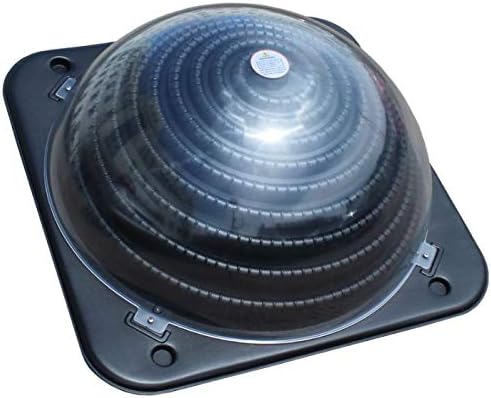
Doheny's Solar Heating Systems for Above Ground Swimming Pools combines a solar dome option with larger flat collector configurations. The dome measures 28 inches long, 28 inches wide, and 12 inches high, and the listing states that it can raise pool temperature by as much as ten degrees in approximately seven days. Multiple collectors can be linked in series, allowing owners to expand the system as their pool and mounting space permit.
We may earn a commission when you buy through this link, at no additional cost to you.
The panel choices include 2.5-by-20-foot and 5-by-20-foot arrangements, with some 5-by-10-foot configurations supplied as pairs. A sizing chart links common round and oval above-ground pool dimensions with collector combinations and stated BTU ratings. That guidance is useful for narrowing the project, but buyers still need to evaluate sunlight, climate, pool volume, and pump capacity.
Several important exclusions prevent this from being a completely self-contained kit. The systems do not include PVC or flexible pipe. A bypass is required when connecting two or more heaters or pools with pumps of 1 HP or greater. A roof or rack mounting kit is also required for panel systems. These additional needs can make the final project more involved than the product's solar-heating concept initially suggests.
The dome and panel options give this listing broad flexibility, but its 3.3 rating calls for careful review of current customer feedback. It is most suitable for an above-ground pool owner who understands the required plumbing, has room for the selected collector, and wants a larger system than a compact solar mat. Checking every excluded component before purchase can prevent an installation surprise.
The listing provides a useful sizing chart for common above-ground pool dimensions. Use it as a starting point, then consider available roof area and how much sunlight the selected placement receives.
PVC or flexible pipe, bypass equipment, and roof or rack mounting hardware may need to be sourced separately. These connections are essential, so include them in the installation plan and verify compatible sizing before work begins.
We may earn a commission when you buy through this link, at no additional cost to you.
Doheny's Roof/Rack Mounting Kit is an installation accessory rather than a complete solar pool heater, and that distinction is essential when comparing it with the other listings. It provides the hardware needed to mount Doheny's above-ground solar collector panels on a roof or on a sloped sheet of plywood. Buyers still need to purchase the solar heating panels, necessary piping, and any required bypass equipment.
We may earn a commission when you buy through this link, at no additional cost to you.
The kit contains five six-foot straps, 15 stainless steel mounting brackets, 15 number 14 stainless steel screws, a two-way diverter valve, and a spacer. The diverter can be plumbed into the filter and solar-heating system as an on-and-off control. That component is especially useful because it allows the owner to direct water through the solar collectors during suitable conditions without dismantling the entire setup.
Although the listing discusses a 28-by-28-by-12-inch dome and several panel dimensions, its core focus is mounting and flow control. The roof/rack configuration is particularly relevant to a DIY builder planning to construct a plywood platform, as the brackets and straps can secure the collector on an angled surface. Safe attachment, waterproofing, and structural support still need to be handled carefully.
This product is best for a homeowner who has already selected Doheny's panels or is assembling a compatible above-ground solar system. It should not be purchased as a stand-alone heating solution. For those needing a single package, the SunValue or SunLink Pro kits are more complete choices, while this accessory makes sense when the collector is already owned or when a custom plywood installation is preferred.
The included brackets and straps are designed to secure collectors to a sloped plywood surface. A level, weather-resistant platform with adequate structural support can provide a practical ground-based alternative to permanent roof mounting.
The included two-way diverter valve serves as an on-and-off control for the filter and solar-heating circuit. Correct plumbing and the required bypass depend on the collector configuration and pump size.
We may earn a commission when you buy through this link, at no additional cost to you.
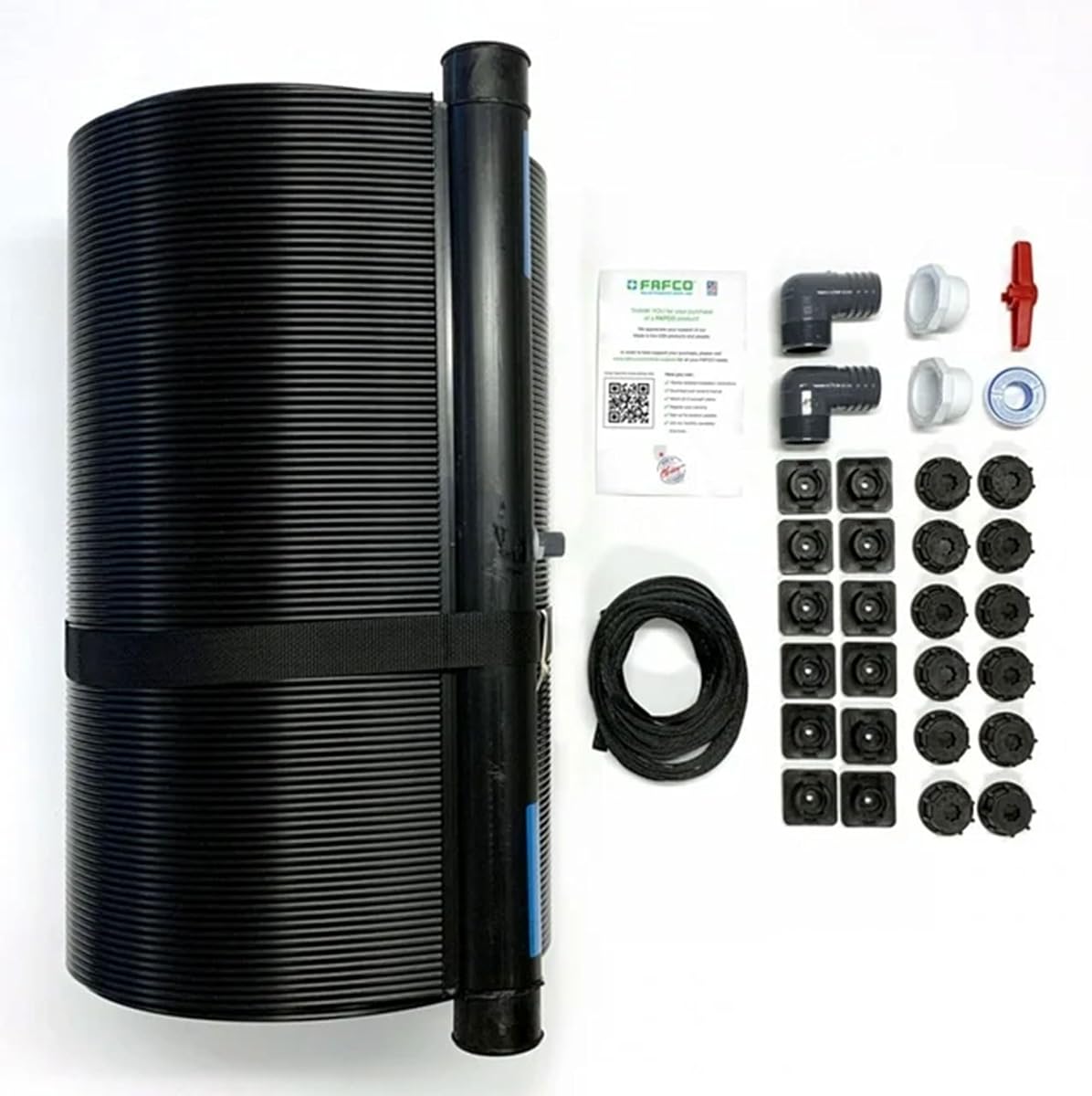
The FAFCO Solar Cub Starter Kit has a 5.0 rating and is the simplest concept in the roundup: a long, narrow solar collector that the existing pool pump circulates through. At two feet wide by 20 feet long, it is designed for above-ground pools and offers a practical alternative to installing multiple conventional panels. The system uses sunlight rather than gas or electric heating connections.
We may earn a commission when you buy through this link, at no additional cost to you.
Its installation can be adapted to a ground location or a rack. Performance is described as strongest when the collector is tilted between 10 and 30 degrees toward the south, which helps it receive direct sunlight throughout the day. This guidance matters more than it might first appear because orientation, shading, and the angle of incidence strongly influence how much useful heat a fixed collector can absorb.
The starter kit includes one two-by-twenty-foot Solar Cub heating system and its installation kit. Since the product is focused on self-installation, buyers should confirm that the supplied pieces cover the connection to their pump and pool, or be prepared to obtain compatible hoses, clamps, adapters, and bypass components as needed. The existing pump must provide sufficient flow for the collector.
This is a good choice for an owner of a compact above-ground pool who wants an uncomplicated solar project, a modest footprint, and a highly rated product. It is less suitable for a large inground pool or a site with limited direct sun. As with every solar collector, the pool cover, local weather, filtration run time, and correct orientation will have a large influence on actual heating results.
Tilting the Solar Cub between 10 and 30 degrees toward the south is the stated ideal. Choose the orientation that provides the longest period of unobstructed sunlight rather than following the instruction without considering local obstructions.
The existing pool pump moves water through the collector and back into the pool, so the installation does not require a separate heating appliance. Confirm flow rate, connection sizes, and whether a diverter or bypass is required.
We may earn a commission when you buy through this link, at no additional cost to you.
The right DIY solar pool heating kit depends on pool type, available mounting space, local sunlight, existing pump capacity, and how much installation work you are prepared to undertake. Collector area and connection design matter, but compatibility and realistic performance are more important than any single specification.
Collector area determines how much sunlight the system can absorb, but more area is not automatically better for every property. Small above-ground pools may be served adequately by a compact collector, while a larger inground pool usually benefits from a broad roof-mounted array. Compare the panel dimensions with the pool's surface area, volume, climate, and expected use. A pool that is frequently covered may also require less collector area than one left open. Consider whether the proposed system is intended for supplemental heating or a larger share of seasonal heating, because the required scale can differ substantially.
The kit must support the pool's plumbing and circulation equipment. Most systems use the existing filtration pump, but some require a dedicated pump, a diverter valve, a bypass, or specific adapter hoses. Above-ground pools also vary greatly in fitting size and connection style, while inground systems may need a more permanent bypass arrangement. Check the pump's rated horsepower, maximum flow rate, and compatibility with the manufacturer's recommended plumbing configuration. A collector that restricts flow or forces frequent filter changes may be less effective than a simpler system that circulates water smoothly.
Solar performance depends on water moving through the absorber tubes at an appropriate rate. Molded headers, open-flow designs, and low-head-loss risers can reduce obstructions and backpressure. This is especially valuable when connecting several panels because additional fittings and bends can increase resistance. Look for systems that remove barriers between the header and tubes and that connect to the pool without unnecessary restrictive components. The stated design is only as useful as the actual installation, so avoid adding sharp bends or undersized supply and return lines that undermine the collector's intended flow.
A roof is the traditional location because it receives strong, unobstructed sunlight, but it is not the only option. Ground-mounted collectors can work beside a pool if they are tilted toward the sun, while a plywood platform may offer a useful custom installation. The chosen location should receive direct exposure for most of the day and avoid trees, buildings, and other shadows. Check roof condition, access, drainage, and the structural suitability of any platform. Mounting systems range from conventional straps to flush strapless designs, so compare hardware, appearance, and local weather requirements rather than assuming one method suits every roof.
A listing labeled as a kit may not contain everything required for operation. Complete systems often include panels, inter-panel connections, hoses or clamps, a diverter valve, mounting hardware, and instructions. Some products exclude PVC, flexible pipe, a bypass, or a roof and rack kit. Make a written list of the components you already own and compare it with the package contents. This prevents discovering a missing essential item midway through the installation and helps distinguish a true complete kit from a collector-only product or mounting accessory.
Solar collectors are exposed to ultraviolet radiation, weather, wildlife, and repeated thermal cycling. One-piece molded construction can reduce weak seams and welds, while UV-stabilized materials help protect against sunlight degradation. Long-term durability also depends on the connection method. Hoses and metal clamps can require inspection or replacement, whereas integrated threaded links or patented clamps are designed to reduce routine maintenance. Review material descriptions, expected service life, warranty terms, and any freeze-resistance features, but also consider local climate and whether the system will remain connected during freezing conditions.
Even a straightforward collector requires safe plumbing, correct pump settings, and a controlled way to bypass the solar loop when it is not needed. Roof installations may involve drilling, flashing, fall hazards, and local building or electrical considerations even though the system itself uses no electricity. A ground or plywood installation can be simpler but still requires secure supports and protection from weather. Buyers who are not comfortable with plumbing or roof work should obtain qualified help. Manufacturer instructions and expert support are useful, but they do not replace site-specific judgment or compliance with local rules.
Solar heating is a supplemental strategy whose results are governed by weather, sunlight, water temperature, pool volume, insulation, cover use, and flow. Manufacturer claims about degrees gained, season length, payback, or service life are useful general guidance, but they are not guarantees for every location. A pool with a solar cover, good insulation, and consistent circulation usually responds differently from an uncovered pool. Evaluate products by their construction, design, compatibility, and warranty, then use stated performance figures as a framework rather than a promise.
Begin by confirming that the collector, pump, filter, and pool plumbing are compatible, then install the panels in the sunniest available location. Follow the manufacturer's orientation, spacing, and mounting instructions, taking care not to obstruct headers or create unnecessary bends in the supply and return lines. For roof installations, use appropriate safety equipment and consider having the work completed or checked by a qualified professional. If the kit requires a diverter or bypass, install and test that arrangement before relying on the solar loop.
Operate the solar system with the pool pump running so water can circulate through the absorbers. Use the supplied control to direct water toward the collectors when sunlight and outdoor temperatures favor heating, and bypass the loop when conditions are poor or the pool filter requires service. Keep the collector clean, remove accumulated debris, and inspect visible connections for leaks, looseness, wear, or damage. Check that flow is steady and that the pool chemistry remains balanced, particularly if the collector is connected to the filtration circuit.
Before the colder season, review the manufacturer's winterization guidance and determine whether the system is designed to remain plumbed in freezing conditions or must be drained and disconnected. Never assume that freeze resistance applies to every hose, seal, valve, or fitting. Inspect the mounting points after severe weather, renew any deteriorated straps or seals with approved parts, and keep the array free of snow accumulation where appropriate. Periodic maintenance and prompt leak repairs are the best ways to preserve flow efficiency and extend the useful life of the system.
Yes, if the kit is designed for inground pools and the existing pump can support the required flow. The SunLink Pro, SunValue Ultimate, and full-size SwimEasy systems are described as suitable for inground installations, while some compact products focus on above-ground pools. The system also needs compatible plumbing and, depending on its design, a diverter or bypass. Confirm pool fittings, pump capacity, and local installation requirements before purchasing.
Solar heating can be used with above-ground pools when the collector and plumbing match the pool's size and fittings. The vidaXL set, SunLink Pro, SunValue Ultimate, Doheny's products, and FAFCO Solar Cub are all positioned to some degree for above-ground use. A pool cover can help retain the heat after the water returns. Proper circulation and adequate sunlight remain just as important for smaller pools as for larger installations.
The collector should receive several hours of direct, unobstructed sunlight for meaningful heating. Trees, fences, buildings, and roof overhangs can reduce performance, while a south-facing orientation is especially useful in the Northern Hemisphere. Seasonal temperature, cloud cover, and the angle of the panels also affect results. Ground-mounted and roof-mounted systems should be positioned to minimize shade throughout the day rather than only at midday.
Many systems use the existing filtration pump, avoiding the need for another pump and separate circulation loop. Some configurations can operate with a dedicated pump, and some require a bypass to maintain appropriate circulation and filtration. Check the product instructions and pump horsepower before ordering. A pump that is too small may reduce flow, while an unsuitable bypass arrangement can interfere with filtration or make the collector difficult to isolate.
Difficulty depends on the product and site. A compact above-ground collector may require only basic hose connections and a support frame, while a full rooftop array involves more panels, roof anchoring, and plumbing. Kits with integrated threaded connections or all-in-one mounting hardware are generally simpler to assemble. Plumbing experience, safe roof access, and code requirements can make professional assistance worthwhile even when the manufacturer describes the product as easy to install.
Only if the specific product and the complete connected system are designed for those conditions. Some panels have freeze-resistant construction, but hoses, seals, valves, and exposed plumbing can still be vulnerable. A bypass can help isolate the collector, and draining the system may be necessary in cold climates. Follow the manufacturer's winterization instructions and never assume that a panel's freeze-resistant material protects every part of the installation.
Routine maintenance is generally modest but should not be ignored. Keep the collector surfaces clean, inspect hoses, clamps, seals, and threaded connections, and check for leaks or restricted flow. Confirm that the diverter and bypass operate correctly, and remove debris or snow that could interfere with sunlight. Address damaged components promptly using compatible replacement parts and maintain normal pool chemistry and filtration performance.
Service life depends heavily on the material, construction, UV exposure, climate, and installation quality. Some products in this guide state expected lives ranging from 15 years to more than 20 years, and certain components carry factory warranty coverage. Those figures are not guarantees for every installation. Durable materials, sound mounting, leak-free connections, and regular maintenance are more meaningful indicators than a lifespan claim alone.
The SwimEasy Solar Pool Heater Kit is the strongest overall choice for a larger project because it combines substantial collector area, a flow-focused molded header, broad installation hardware, and expert support. The SunValue Ultimate Kit is an especially balanced option for residential buyers who want good coverage and integration with existing filtration equipment. For a compact above-ground pool, the FAFCO Solar Cub Starter Kit provides a more straightforward path with a simple, space-saving collector.
Prioritize compatibility before every other feature. Confirm the pool type, pump capacity, connection sizes, bypass requirements, mounting location, and available sunlight. A complete package can simplify the build, but missing pipe, clamps, or control hardware can still derail the project. For a premium installation with minimal exposed mounting components, the SwimJoy Industrial Grade Kit is worth close consideration, while SunLink Pro is appealing for its integrated hand-threaded connections.
Finally, verify current product details, customer feedback, warranty terms, and availability before ordering. Product configurations and ratings can change, and prices also vary between sellers and over time. Compare the current listing with the site conditions and pool goals, then select the kit that offers the most appropriate balance of collector area, connection design, installation complexity, and long-term maintenance.