
LiftMaster LOOPDETLM Plug-In Vehicle Exit and Safety Loop Detector
5.0Editor score
Genuine LiftMaster replacement
Three configurable loop modes
Fail-safe obstruction handling
Our Gate Loop Detector guide compares ten options for compatibility, sensitivity, diagnostics, outputs, and setup, helping you choose a model with confidence.
Gate loop detectors provide dependable vehicle detection by monitoring the electromagnetic signal of a buried induction loop. A capable unit helps gates, parking entrances, traffic controls, and access systems recognize vehicles accurately while reducing missed activations, unnecessary openings, and unsafe attempts to close an occupied entrance.
The products in this guide were compared using their published specifications, compatibility information, detection features, controls, diagnostic functions, operating modes, and user ratings. The list covers universal detectors, LiftMaster plug-in models, low-power access-control units, and options designed for specialized traffic-control or battery-powered installations.
Each review explains the strongest reason to consider the detector, along with installation and compatibility trade-offs. The top selections highlight broad versatility, genuine LiftMaster integration, and compact low-power operation, while the remaining products serve a range of specialized residential, commercial, and traffic-control needs. Prices can change.
5.0Editor score

4.3Editor score

4.8Editor score
This side-by-side comparison highlights each detector's compatibility, configuration options, diagnostic support, and practical strengths so buyers can narrow the field before checking the operator and installation requirements.


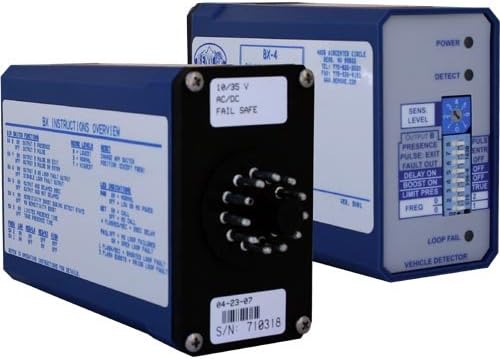


This universal loop detector offers the broadest mix of application support in the group, earning the Editor's Choice distinction for buyers who need one detector to serve several common access environments. It works with LiftMaster and universal gate systems, accepts 12/24V AC or DC power, and is intended for gates, driveways, traffic signals, and garage-door control applications. Its 4.3 rating reflects generally favorable customer reception, although the product should still be matched carefully to the equipment it will control.
We may earn a commission when you buy through this link, at no additional cost to you.
Automatic sensitivity adjustment is the feature that most directly improves day-to-day usability. The detector's dip-switch settings and auto-boost behavior are designed to accommodate changes in vehicle height and composition, including cars, trucks, and motorcycles. That is valuable at gates where a fixed setting could miss a compact vehicle or over-trigger around a larger one. On-unit visual and audible feedback also makes initial setup less uncertain by confirming when the loop is detecting a vehicle and when the installer is actively testing the system.
The main trade-off is that no universal specification can replace an operator-specific compatibility check. The product claims compatibility with LiftMaster and most universal systems, but a successful installation still depends on control-board voltage, wiring access, relay behavior, and the required safety functions. It is also important to distinguish the detector itself from the buried induction loop, controller, and any required safety edges; a detector cannot compensate for a poorly formed or damaged loop.
This is the strongest recommendation for a homeowner, installer, or small commercial operator seeking flexible voltage support, automatic sensitivity, and clear setup feedback. It is especially suitable when the equipment is not covered by the more restrictive model lists attached to several genuine LiftMaster options. Choose it after confirming the control board's power and input requirements, and use the audible and visual indicators to validate every operating mode before finalizing the installation.
Auto-boost and adjustable sensitivity help the detector respond consistently when vehicle size, metal content, or approach conditions change. This reduces the need for repeated manual recalibration during normal operation.
The combination of visual and audible indicators gives installers immediate confirmation during loop testing. That feedback helps isolate power, detection, and configuration issues before the gate is placed into daily service.
We may earn a commission when you buy through this link, at no additional cost to you.
The LiftMaster LOOPDETLM is the most focused premium choice for installers maintaining compatible LiftMaster slide or swing gate systems. It carries a 5.0 rating and is described as a genuine LiftMaster replacement part. Rather than attempting to cover every control platform, it targets a clearly listed group of operator models and offers the operating functions expected in a dedicated gate-loop safety detector.
We may earn a commission when you buy through this link, at no additional cost to you.
Its most valuable feature is fail-safe obstruction behavior. When a vehicle occupies the protected path, the detector can keep the gate open rather than allowing a closing command to create a hazardous situation. The same module can be assigned as a Shadow Loop, Interrupt Loop, or Exit Loop, allowing one system to support entrance detection, free-safety monitoring, and departure control. That flexibility makes it useful for residential driveways as well as commercial gates handling frequent traffic.
The long compatibility list includes several LA400, LA412, and LA500PKGU models, CSL and CSW families, RSL and RSW models, multiple SL585 and SL595 configurations, SL3000 units, CSW200 variants, and the HCTDCU. Even with that extensive list, buyers should verify the exact suffix and control board of their operator. A similar model name does not automatically guarantee that the plug-in module, wiring, or output configuration will be identical.
Choose the LOOPDETLM when the existing equipment is a listed LiftMaster model and the installation requires a known replacement or a safety loop with defined operating modes. It is less appropriate for mixed-brand systems or operators without a compatible control-board receptacle. The premium designation reflects the brand-specific integration and the dedicated safety functions, not simply a stronger physical enclosure.
The fail-safe configuration is intended to prevent the gate from closing while a vehicle is obstructing the protected area. It adds an important layer of protection to properly designed access systems.
Shadow, interrupt, and exit modes allow the detector to serve different traffic-control functions. The correct mode depends on the loop's location and the intended behavior of the connected operator.
We may earn a commission when you buy through this link, at no additional cost to you.
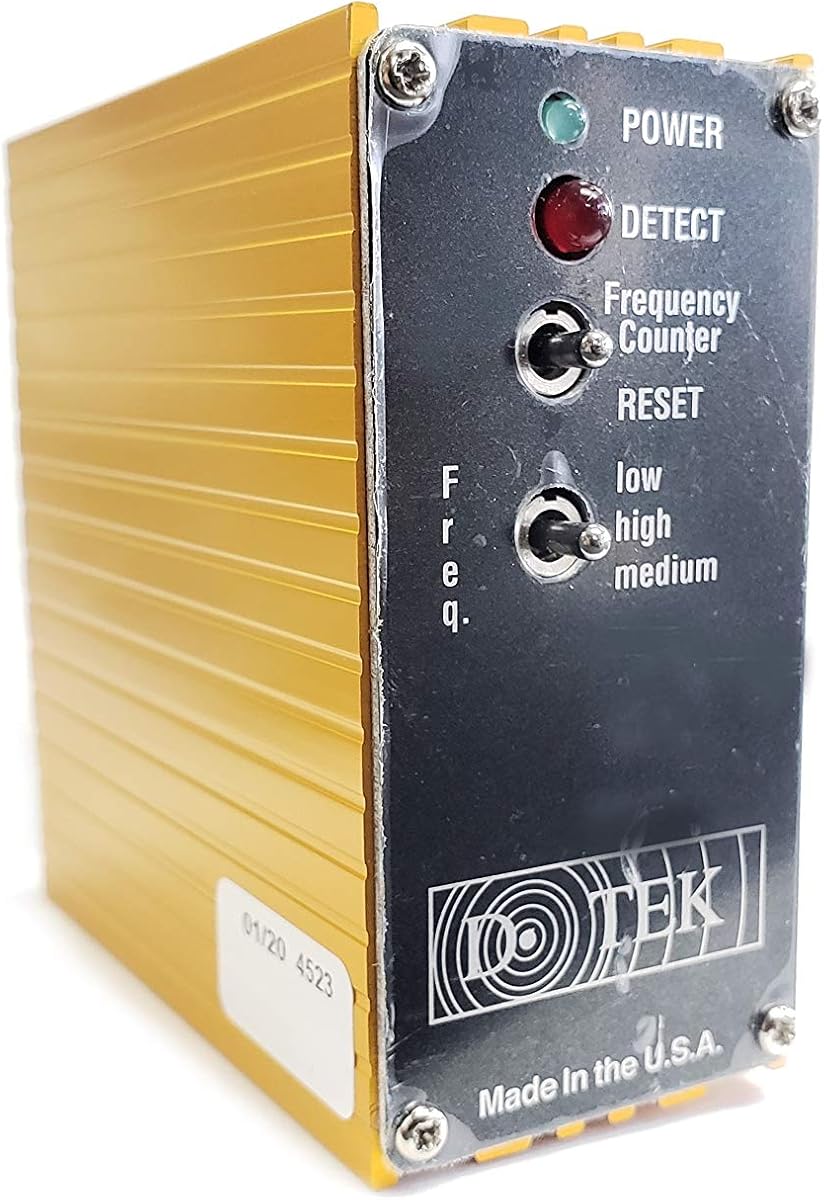
The EMX Ultra II DTEK stands out as the best budget-oriented universal detector because it combines a strong 4.8 rating with a generous set of professional controls. It is designed for gates and traffic-control applications, with ten sensitivity settings, four operating frequencies, a frequency counter, a count-and-reset switch, loop diagnostics, and fail-safe operation. Those features give an installer more ways to manage different loops and electrical environments.
We may earn a commission when you buy through this link, at no additional cost to you.
Multiple operating frequencies are especially important where several detection zones are installed near one another. Changing the frequency can help reduce interference between adjacent loops, while the frequency counter and reset controls assist with setup. The ten sensitivity levels offer finer adjustment than a basic two-position control, making this detector more adaptable to different loop sizes, traffic patterns, and site conditions.
Protection from lightning and surge events is another practical strength in outdoor gate installations. Detection electronics are connected to buried loops and often exposed to long cable runs, so surge protection can reduce vulnerability. The detector's fail-safe operation adds an operational safeguard, although installers must still understand how the connected control board reacts when a fault is reported.
This model is a good value for buyers who want advanced configuration without moving to a brand-specific replacement module. It is especially compelling for traffic-control work, multi-loop sites, or installations that may encounter changing environmental conditions. Budget buyers should still budget time for proper commissioning, verify the operator's voltage and output requirements, and use the diagnostics rather than assuming the default sensitivity is correct.
Four operating frequencies and a built-in frequency counter provide useful tools for separating detection zones. These controls can be valuable where nearby loops, changing traffic, or complex site layouts complicate tuning.
Ten sensitivity levels and loop diagnostics give installers a more methodical way to establish reliable detection. The wider adjustment range can accommodate different vehicle types and loop configurations.
We may earn a commission when you buy through this link, at no additional cost to you.
The EMX D-TEK MVP is a universal vehicle loop detector whose defining feature is multi-voltage power support. It is built for access-control and traffic applications where a single detector format may need to work across more than one type of control environment. Its 4.3 rating places it solidly within the group without suggesting an outright category-leading user response.
We may earn a commission when you buy through this link, at no additional cost to you.
The multi-voltage approach is useful because gate operators and control boards do not all present the same power arrangement. A detector that can accommodate a broader voltage range can simplify replacement and spare-part strategy, provided the operator's input method remains compatible. The MVP designation also points toward a detector intended to fit general loop-detection roles rather than only one proprietary model family.
The supplied product information is limited, so buyers should request the current manual and confirm exact voltage ranges, output behavior, terminal arrangement, and failure mode before ordering. A universal label alone does not guarantee drop-in compatibility. Loops must still meet the manufacturer's inductance, lead-length, burial, and separation requirements, and the detector should be installed in a protected location.
This is a sensible option for installers maintaining varied gate equipment who value a universal, multi-voltage format. It is less suitable for someone who needs a complete list of sensitivity controls or specialized traffic functions from the published description. The best approach is to treat it as a flexible platform, then verify every electrical and functional requirement against the current documentation.
Multi-voltage support can make maintenance more consistent across properties with different operators and control systems. It does not remove the need to confirm the output and connector requirements.
The MVP is best evaluated as a straightforward universal detector. Buyers should prioritize confirmed voltage, relay, and wiring compatibility rather than assuming every feature of more specialized models.
We may earn a commission when you buy through this link, at no additional cost to you.
The EMX ULT-PLG is the most specialized choice in the group, using detect-on-stop operation to prevent cross traffic from triggering a gate when vehicles merely pass beside the loop. It supports center, reverse, and exit positions in automatic gates, overhead doors, and access-control systems. Its detect-on-stop function only recognizes a vehicle after it stops, making it useful in tight layouts where passing traffic would otherwise create false requests.
We may earn a commission when you buy through this link, at no additional cost to you.
The ULTRA METER display and ten sensitivity levels are designed to simplify setup and provide fine adjustment. Output B can be configured for presence, loop fault, pulse on entry, or pulse on exit, while Output A handles presence. That dual-output design can make one module more useful in a complex control sequence without requiring every function to share a single relay.
The detector accepts 12–24V DC and offers four frequency settings with a stated loop inductance range of 20–2000 µH. Its operating range of -40°F to 180°F is broad for an access-control component. It also supports ASB and fail-safe or fail-secure operation, providing additional ways to align the detector with a site's safety policy.
This is a strong recommendation for installers who specifically need stop detection or need to ignore cross traffic near a gate. It is less suitable for AC-powered equipment without suitable conversion and less compelling for buyers who prioritize a long history of published customer feedback. Confirm the output wiring, operator input voltage, and open-collector interface before installation.
Detect-on-stop makes the detector wait for a vehicle to occupy the loop rather than react to a vehicle passing through the detection area. This can be valuable where nearby lanes generate unwanted requests.
Output A and configurable Output B can represent different events, including presence, faults, and entry or exit pulses. This supports more elaborate access-control sequences.
We may earn a commission when you buy through this link, at no additional cost to you.
The Sentex/Chamberlain Brands O2-LOOPDETLM is a plug-in loop detector for LiftMaster gate operator applications. Its 5.0 rating makes it one of the most positively reviewed products in this guide, although a small customer pool should not be confused with a broad laboratory evaluation. The product's strongest appeal is its direct fit-oriented format for systems that use this style of detection module.
We may earn a commission when you buy through this link, at no additional cost to you.
A plug-in detector can substantially simplify replacement because it avoids designing and fabricating a separate enclosure or control interface. It is likely to appeal to maintenance technicians who already know the LOOPDETLM installation pattern and need a module for a compatible control board. The detector remains part of a complete vehicle-detection system, so the operator's existing receptacle, wiring, and loop configuration still need to match.
Compared with the more detailed listing for the LiftMaster LOOPDETLM, the supplied information for this version is minimal. Buyers should check the current packaging, part number, electrical ratings, operating modes, and compatibility before purchase. It would be unwise to infer from the shared family name that it offers exactly the same failure mode, sensitivity controls, or listed operator coverage as every other LOOPDETLM variant.
Choose this detector when the original module is a Sentex/Chamberlain O2-LOOPDETLM or the control board explicitly accepts it. It is a focused maintenance solution rather than a broad universal recommendation. Confirming the part number is essential because similar names can conceal differences in voltage, connector layout, or programmable functions.
The plug-in approach is valuable where the matching operator already provides a suitable receptacle. It reduces installation complexity compared with building a standalone detector circuit.
Compatible part names do not always guarantee identical functionality. Checking the complete part number and operator requirements prevents an incorrect replacement from reaching the installation.
We may earn a commission when you buy through this link, at no additional cost to you.
The LiftMaster AELD is a straightforward plug-in loop detector built around clear setup feedback and compatibility with LiftMaster CSW200 and SL3000 gate operators using the Omni Control Board. Its 4.3 rating suggests satisfactory performance among users, while the diagnostic LED provides more transparency during installation and troubleshooting than a detector with no visible status indication.
We may earn a commission when you buy through this link, at no additional cost to you.
Its diagnostic indicator identifies detection, an open loop, a loop failure, and power status. Those four states are particularly useful because they help separate a wiring or loop problem from a normal vehicle-detection event. Two sensitivity settings with boost offer a middle ground between a single fixed control and detectors with as many as ten adjustment levels. Four frequency settings help manage interactions between multiple loops.
The strongest limitation is the explicitly narrow operator list. Even within the CSW200 family, installers should confirm the model and control-board configuration before ordering. The plug-in connector is convenient, but convenience cannot overcome an unsupported electrical interface. Because the detector installs into an operator's control area, protection from moisture and access to the relevant terminals remain necessary.
This AELD is a good recommendation for technicians servicing one of the specified LiftMaster systems who values recognizable diagnostics over a large sensitivity range. It is less appropriate for universal installations or operators with different control boards. Use the LED states during commissioning to confirm that each loop responds and that wiring faults are not being mistaken for normal traffic.
Separate LED indications for detection, open loops, loop failures, and power help narrow down commissioning issues. They provide a quick way to distinguish normal operation from a wiring fault.
For supported CSW200 and SL3000 installations, the plug-in design and four frequency settings make this a straightforward maintenance choice. Confirm the model before ordering.
We may earn a commission when you buy through this link, at no additional cost to you.
The RENO A&E BX3 is a 110VDC vehicle detector built around flexible output control. It offers dual relay outputs, delay outputs A and B with a two-second duration, sensitivity boost, and four loop frequencies. Its 4.2 rating is the lowest among the products with numeric feedback, but the specification set targets specialized traffic-control applications rather than simple residential replacement.
We may earn a commission when you buy through this link, at no additional cost to you.
Dual relays can control separate functions or stages in a gate or traffic system. The timed delay outputs add another layer of sequencing, allowing a controller to react after a short interval instead of switching instantly. Sensitivity boost helps maintain detection performance when a vehicle is only partly over the loop or when the loop geometry requires additional signal margin.
Fail-safe and fail-secure versions are available, giving installers a choice about how the system behaves during a detector or loop failure. The correct choice should reflect the safety strategy of the entire installation rather than being made in isolation. This is also important because the detector's 110VDC requirement is substantially different from the 12/24V units elsewhere in the comparison.
Choose the BX3 when the connected equipment accepts 110VDC and the site benefits from dual relays, timed outputs, and selectable failure behavior. It is a less convenient match for modern low-voltage gate controls unless appropriate power and interface equipment already exists. Its 4.2 rating does not disqualify it, but the specialized power requirement makes exact electrical matching more important than the average customer score.
Dual relay outputs and two timed delay channels support multi-stage traffic behavior. These controls are useful when a gate system needs separate signals for different operating steps.
Fail-safe and fail-secure versions allow the site's safety policy to determine behavior during a fault. The correct mode must align with the entire operator and access-control system.
We may earn a commission when you buy through this link, at no additional cost to you.
The Diablo DSP-6LP is a micro-sized detector created for solar-powered gate applications and other battery-powered or low-consumption access installations. It runs from 10 to 30V AC or DC and draws approximately one milliampere while waiting for a car. That low idle demand is its defining advantage, helping a small power system devote more available energy to operating the gate.
We may earn a commission when you buy through this link, at no additional cost to you.
The detector uses automatic tuning to find a suitable operating frequency and is described as virtually crosstalk-free in most applications. It also automatically adjusts sensitivity for different-sized loops. These self-adjusting behaviors reduce the amount of manual commissioning required when environmental conditions change, an important advantage in remote locations where routine technician visits may be difficult.
A continuously blinking power LED indicates low-power mode, providing a simple operational check. Current consumption is approximately one milliampere with no vehicle present and less than 25 milliamps with a car on the loop. The detector is preset to a normal sensitivity level commonly used in parking and access-control installations, so installers should still verify response in the actual traffic environment.
The DSP-6LP is a compelling recommendation for solar gates, battery-powered entrances, and access systems where standby power is constrained. Its 5.0 rating adds confidence, though buyers should confirm that their controller can work with the detector's output interface. It is less compelling where mains power is abundant and the priority is instead a large manual tuning range or multiple configurable outputs.
The approximately one-milliampere waiting draw reduces standby demand on solar or battery systems. That makes the detector especially relevant where continuous access power is limited.
Automatic frequency selection, environmental compensation, and sensitivity adjustment for different loop sizes reduce manual tuning. These features are especially useful in remote or variable installations.
We may earn a commission when you buy through this link, at no additional cost to you.
The Northstar NP2 combines a 5.0 rating with a well-rounded control set for general vehicle detection. It accepts 12–24V AC or DC power, offers ten selectable sensitivities and four selectable frequencies, and includes wrong-voltage protection. Separate power, detect, and fault indicators make its operating status easy to observe during setup and routine checks.
We may earn a commission when you buy through this link, at no additional cost to you.
Its timing controls are particularly useful for installers who need more than a basic presence output. Extend and delay behavior, selectable presence times, and selectable pulse lengths allow the detector's response to be aligned with the connected gate or access controller. Automatic sensitivity boost helps maintain reliable detection as vehicle characteristics and approach conditions change.
Wrong-voltage protection adds a practical layer of safety during installation, particularly on systems where a technician may be uncertain about the available supply. It does not replace correct wiring, but it can reduce the consequences of an incorrect connection. The three separate indicators also help distinguish a live detector from one that is not detecting or is reporting a loop problem.
The NP2 is a strong general recommendation for new installations or replacements where the operator accepts 12–24V AC or DC and the installer needs flexible timing. It may be less convenient where only a proprietary plug-in module will fit. Before purchase, verify the output relay or contact behavior and confirm that the requested delay and pulse settings are appropriate for the gate's safety sequence.
Extend, delay, presence, and pulse controls allow the detector's response to be tailored to the operator. This flexibility is useful when a gate needs to remain open for a defined period or react to particular events.
Separate power, detection, and fault indicators simplify commissioning and troubleshooting. Wrong-voltage protection further reduces installation risk when supply details are unclear.
We may earn a commission when you buy through this link, at no additional cost to you.
The right gate loop detector depends on electrical compatibility, operator functions, loop geometry, traffic patterns, and installation environment. Use the following factors to narrow the options before making a final purchase.
Begin with the gate operator or access-control board rather than with the detector's broader category. Some products are universal, but a universal label may still impose voltage limits, connector requirements, output differences, and compatibility restrictions. Genuine LiftMaster plug-in models are most appropriate for the specifically listed operator families, while general-purpose detectors may fit a wider range of systems if their electrical interface matches. Review the operator manual, locate the loop-detector receptacle if present, and record the available power. If the documentation is unavailable, obtain the exact operator model and control-board revision before ordering. This verification prevents a mismatch that could prevent operation, disable a required safety function, or complicate future maintenance.
Loop detectors use relatively little power compared with gate motors, but their supply must still meet the manufacturer's specifications. Several options accept 12/24V AC or DC, while the RENO A&E BX3 is specified for 110VDC. The Diablo DSP-6LP works across 10–30V AC or DC and is particularly attractive for solar-powered gates because its waiting consumption is extremely low. AC and DC compatibility does not automatically mean every polarity or terminal arrangement is identical, so follow the wiring guide carefully. Wrong-voltage protection, as offered by the Northstar NP2, is helpful but should not be treated as permission to guess. A detector with the wrong power input may fail, behave unpredictably, or create an unsafe installation.
A detector should recognize the range of vehicles expected at the entrance without creating unwanted activations. Fixed or dual-position sensitivity may be sufficient for a simple, consistent residential loop, while ten sensitivity levels offer finer control for sites with different vehicle sizes or changing traffic. Automatic boost is useful when a vehicle only partially overlaps the detection zone or when its metal content changes the loop response. The Diablo DSP-6LP automatically adapts to different loop sizes, and the Northstar NP2 combines selectable sensitivity with automatic boost. Ultimately, sensitivity is only one part of the system: a properly formed, sealed, and undamaged loop is equally important to consistent performance.
Determine what the detector must tell the connected controller. A standard presence output is suitable for many gates, while exit, interrupt, or shadow loops serve different traffic sequences. The LiftMaster LOOPDETLM supports Shadow, Interrupt, and Exit functions and can hold the gate open when a vehicle obstructs the path. The EMX ULT-PLG provides dual open-collector outputs and configurable entry, exit, presence, and fault behavior. Other models offer delay or pulse timing through dual relays. These functions should be selected to support the site design rather than added for their own sake. More configurable outputs can simplify a complex installation, but they also require careful wiring and programming.
Useful diagnostic feedback reduces troubleshooting time and helps distinguish normal detection from wiring faults. The LiftMaster AELD identifies detection, open-loop, loop-failure, and power states. The Northstar NP2 uses separate power, detect, and fault indicators, while the EMX Ultra II DTEK includes loop diagnostics and a frequency counter. Audible and visual feedback on the rank-one detector also assists commissioning. Diagnostic features do not replace an ohmmeter, wiring inspection, or loop-continuity test, but they make the process more systematic. For remote sites, a clear fault indication can be especially valuable because a technician may need to identify the failed component before traveling to the property.
The detector must support the intended loop's inductance, size, and environment. The EMX ULT-PLG states a 20–2000 µH inductance range, while the DSP-6LP automatically adapts its sensitivity to different-sized loops. Multiple operating frequencies can reduce crosstalk when loops are installed close together, a concern at busy entrances with entrance, exit, and safety zones. Weather, nearby metal, driveway slopes, and burial depth can also influence performance. Confirm the manufacturer's loop-construction requirements, including coil proportions, burial depth, lead length, and separation from interference sources. Installing the correct detector cannot rescue a loop with a break, water intrusion, poor joints, or excessive cable length.
Outdoor gate equipment may operate in locations with limited power or extreme temperature changes. The DSP-6LP is designed for solar-powered gate applications and has a low standby draw, making it a natural match for remote entrances. The EMX ULT-PLG specifies operation from -40°F to 180°F, which is useful in harsh climates. When using solar or battery power, estimate both idle and active consumption, including the current used while a vehicle occupies the loop. Provide the detector with suitable protection from moisture and condensation, even if its operating temperature range is broad. Low power is valuable only when the available energy source can reliably support the detector, controller, and gate operator together.
The best detector is one that can be installed correctly and serviced efficiently. Plug-in modules are attractive for supported LiftMaster systems because they simplify replacement and reduce the need for a separate enclosure. Universal units may require more careful enclosure, terminal, and wiring work but can provide broader equipment flexibility. Consider whether status indicators remain visible, whether settings are understandable, and whether the module is protected from weather and accidental adjustment. A detector with ten sensitivity levels or multiple outputs should also be paired with clear documentation and labeling. Record the final configuration so a future technician can restore it after servicing or replacement.
Install the detector only after identifying the operator's power requirements, output interface, and supported operating mode. Disconnect the gate operator, use correct wire gauge and protection, and follow the detector and controller manuals. The buried loop should meet the specified size, shape, burial depth, and separation requirements, with all connections protected from moisture. Leave enough service slack at the control box, secure the cable away from sharp edges, and avoid extending loop leads beyond the manufacturer's stated limits.
Commission the unit systematically. Check power first, inspect the loop for continuity and shorts, and use the detector's diagnostic indicators to confirm that a vehicle causes the expected response. Then adjust sensitivity in small steps and test with several vehicle types, including a compact vehicle, a larger vehicle, and a motorcycle if the site expects one. For systems with multiple loops, set operating frequencies thoughtfully and verify that simultaneous or adjacent loops do not interfere with one another.
For ongoing care, inspect the visible wiring and detector enclosure periodically for moisture, corrosion, loose terminals, or physical damage. Keep documentation and settings labels current. If a fault appears, first test the detector's diagnostic indications and inspect the loop for water intrusion, damaged cable, or a poor splice before replacing the module. Never adjust sensitivity continuously to compensate for a failing loop, and use qualified assistance when high voltage or unfamiliar control wiring is involved.
A gate loop detector is an electronic controller that senses the electromagnetic change caused by a vehicle over a buried induction loop. It converts that change into an output signal for a gate operator, access controller, or traffic-control system. The detector, loop cable, operator inputs, and physical safety devices all work together; a detector alone cannot provide complete vehicle safety.
No. Compatibility depends on power, connector type, output voltage or contact arrangement, and the functions required by the operator. Universal detectors may fit many systems, while plug-in modules are normally limited to listed models and control boards. Always compare the operator manual with the detector specifications before ordering or connecting a replacement.
Common causes include a damaged or water-filled loop, nearby electrical interference, incorrect frequency settings, excessive sensitivity, or a control-board fault. Begin by checking whether the detector reports a fault or permanent detection, then inspect the loop and connections. If the problem persists, have an installer test the controller input and verify that the operator is not seeing another valid activation source.
Some sites use separate entrance, exit, and safety loops, but one detector can sometimes control different loop functions if the model supports the required configuration. A multi-zone installation may also use one multi-channel detector rather than several single-channel units. The appropriate arrangement depends on traffic flow, safety requirements, operator inputs, and whether cross traffic must be ignored.
A presence loop reports a vehicle while it occupies the detection zone and may hold the gate open until the area clears. An exit loop is placed beyond the gate and is used to recognize a departing vehicle, often allowing the gate to close after the vehicle leaves. Correct placement is essential so one zone does not accidentally perform the other's function.
Basic installation may be approachable for a homeowner, but correct loop construction, low-voltage wiring, operator programming, and safety testing require care. Never work on energized operator circuits or open the control enclosure unless you understand the equipment and applicable safety requirements. A qualified gate technician is advisable when the installation involves 110V power, unfamiliar fail-safe logic, or integrated safety edges.
Start with the physical loop, because a broken conductor, poor splice, moisture intrusion, or excessive lead length can imitate or cause unstable signals. Then verify the detector's operating mode, sensitivity, and frequency against nearby loops and electrical sources. Avoid raising sensitivity indiscriminately, and confirm that the controller is not responding to another input. A systematic diagnostic check is more reliable than repeated adjustment.
Outdoor detectors and long buried cable runs can be exposed to lightning and electrical transients, so surge or lightning protection is a meaningful consideration. The EMX Ultra II DTEK specifically lists lightning and surge protection, while other models may offer different forms of fault handling. Protection should complement proper grounding, cable routing, secure connections, and a correctly sealed installation.
The loop detector vehicle sensor for gates is the strongest all-around recommendation because it combines broad system compatibility, automatic sensitivity boost, and useful audible and visual setup feedback. The LiftMaster LOOPDETLM is the premium choice for supported LiftMaster systems that need fail-safe obstruction handling and selectable shadow, interrupt, or exit functions. For a capable general-purpose detector with excellent customer feedback, the EMX Ultra II DTEK offers ten sensitivity levels, four frequencies, and built-in diagnostics.
Prioritize exact operator compatibility, power requirements, and the intended output function before considering advanced settings. Low-power installations should pay particular attention to the Diablo DSP-6LP, while sites with cross traffic may benefit from the EMX ULT-PLG's detect-on-stop mode. Regardless of model, use a correctly formed loop, protect the wiring, and test the complete gate system under realistic traffic conditions.
Finally, check current product listings, operator compatibility notes, and prices before ordering, since availability and pricing can change. Match the detector to the installed control system, confirm the part number or model requirement, and retain the installation documentation. The most capable detector is the one that works correctly with its loop, power source, and connected operator—not simply the one with the largest list of features.