
HP Chromebook 14 N4120
4.3Editor score
14-inch anti-glare display
Quad-core Intel processor
Sixty-four gigabyte storage
Up to 14-hour battery
Fast Charge support
Finding a laptop for an 8 year old means balancing school needs, entertainment, durability, and easy adult supervision. The right device should handle documents, browsing, video calls, educational apps, and child-safe entertainment without becoming intimidating. Screen size, keyboard quality, battery life, and parental controls all influence how comfortably a child can use it every day.
We compared 10 Chromebook, compact Windows-style, Android-based, and dedicated children's learning laptops using their published specifications. The list covers options for classroom work, remote learning, media, games, creative projects, and offline activities. We considered processing power, memory, storage, display quality, touch support, connectivity, portability, included accessories, and the value offered by each configuration.
Each pick shows which age and use case it best serves, from a dedicated bilingual learning computer to full-size Chromebooks with touchscreens and faster wireless connections. Ratings and specifications can change over time, and product availability also varies. Check the current listing, warranty terms, and compatibility of required school apps before making a final purchase.
4.3Editor score

4.5Editor score

4.3Editor score
As an Amazon Associate we earn from qualifying purchases.
The comparison covers conventional Chromebooks, compact general-purpose laptops, renewed models, and a dedicated children's learning computer. It highlights the differences most relevant to an 8 year old: operating system, display, memory, storage, connectivity, portability, and intended learning experience.


The HP Chromebook 14 N4000 is a straightforward, well-rounded computer for an 8 year old who needs schoolwork, web access, entertainment, and video communication. It holds a 4.4 rating and stands out for its large anti-glare display, long stated wireless streaming battery life, and portable 3.24-pound design. ChromeOS also gives younger users a relatively simple environment built around web apps and Android applications.
We may earn a commission when you buy through this link, at no additional cost to you.
Its Intel Celeron N4000 processor and Intel UHD Graphics 600 are appropriate for browsing, Google Docs, videos, music, and light educational games. Four gigabytes of RAM helps the system handle ordinary multitasking, while 32 GB of eMMC provides enough room for applications and locally stored school files. The 1366 by 768 anti-glare display is comfortable for prolonged use and helps reduce distracting reflections.
There are clear limitations. The 32 GB storage capacity is modest by current standards, so an adult may need to manage cloud storage carefully, and the HD panel does not offer the sharpness of a Full HD display. The Celeron processor is not intended for demanding games or intensive creative software. These constraints are reasonable for a child's primary school and entertainment device when cloud-based tools are used appropriately.
This is a strong general recommendation for families seeking a traditional, full-size Chromebook without a premium price. It suits school assignments, browsing, YouTube, Google Classroom, and communication with relatives. Choose it when long stated battery life, portability, and a familiar ChromeOS experience matter more than a high-resolution screen or extensive local storage.
HP advertises up to 13 hours and 30 minutes of wireless streaming, depending on use. That makes the laptop easier to carry through a school day or use for several lessons without searching constantly for an outlet, although real battery results will vary with screen brightness, Wi-Fi use, and loaded applications.
The 14-inch screen provides enough room for a split view of a lesson and notes, while the Wide Vision HD camera and integrated dual microphones support video calls. The anti-glare finish is especially useful in classrooms and other brightly lit environments.
We may earn a commission when you buy through this link, at no additional cost to you.
The renewed Lenovo 300e Chromebook is a compact convertible option for children who prefer touch interaction to a conventional laptop. It has a 4.0 rating and combines an 11.6-inch 10-point multitouch IPS panel with a MediaTek 8173C quad-core processor. Its 2-in-1 form can support different positions for writing, browsing, and viewing a teacher's demonstration.
We may earn a commission when you buy through this link, at no additional cost to you.
ChromeOS supplies the apps and web-based tools commonly needed for school, while the MediaTek processor and 4 GB of LPDDR3 memory should be adequate for Google Classroom, educational websites, documents, and light media use. Dual-band Wi-Fi 802.11ac and Bluetooth 4.2 support everyday wireless accessories, and the touchscreen gives younger children another way to interact with diagrams and games.
Because this model is renewed, buyers should inspect its physical condition, battery health, display, ports, and included accessories. Its 32 GB of flash memory is also limited, and older processor specifications may not be ideal for demanding creative programs or games. Those concerns are manageable for supervised school use, but they deserve consideration if the laptop will also be used for intensive media creation.
The 300e is best for families seeking a flexible, smaller-format Chromebook with touch support at a restrained cost. It may be especially useful for a child who learns more effectively by tapping, drawing, or using a tablet-like interface. Confirm the renewed condition and storage needs before purchase, and maintain consistent backups for important schoolwork.
The ten-point multitouch screen supports more natural interaction with educational apps, diagrams, and games. Its convertible design also gives an 8 year old more ways to place the device, which can make reading, drawing, and watching lessons more comfortable.
A renewed Chromebook can provide useful performance at a lower cost, but cosmetic wear and battery condition may differ from a new unit. Review the seller's condition details, check the display and ports, and keep important files synchronized because local storage is only 32 GB.
We may earn a commission when you buy through this link, at no additional cost to you.
The Samsung Galaxy Chromebook Go is designed for children and families who value a polished, portable computer. It carries a 4.3 rating, a slim profile, and 64 GB of storage, which gives it more room for locally saved applications and files than several lower-storage alternatives. The silver finish and streamlined construction also make it visually appropriate for a school setting.
We may earn a commission when you buy through this link, at no additional cost to you.
ChromeOS includes Google tools such as Gmail, Docs, Photos, YouTube, and Gemini, along with access to the Google Play Store. The stated 12-hour battery supports a full school day, and Samsung highlights integration with a phone for file transfer and phone control. Its Intel Celeron N4500 is suitable for web-based learning, homework, communication, and ordinary Android applications.
The device does not deliver high-end performance, and its 1366 by 768 HD display is less sharp than Full HD alternatives. Storage is still limited for a modern device, especially if a child downloads large games or keeps many video files locally. A physical case or sleeve would also remain sensible despite the stated durability because an active 8 year old can exceed a manufacturer's intended handling conditions.
This premium-style Chromebook is a good fit for a child who needs a conventional notebook but values portability and refined construction. It is particularly useful for students moving between classrooms, home, and relatives' homes. Its practical battery life and phone connectivity improve daily convenience, while the included Google software makes it approachable for school-aged children.
The slim design and stated 12-hour battery make this a convenient traveling computer. ChromeOS opens directly into a familiar browser-centered workflow, reducing the number of complicated desktop settings a young learner needs to manage.
Samsung highlights easy file transfer and the ability to control a phone from the Chromebook. These features can simplify communication between a parent and child while reducing the need to move between a full-size keyboard and a small phone screen.
We may earn a commission when you buy through this link, at no additional cost to you.
The 10.1-inch Android Mini Laptop is a small, inexpensive-feeling alternative for children who want the familiarity of a laptop keyboard without carrying a larger notebook. It has a 3.4 rating, a 0.75-kilogram stated weight, and a 1280 by 800 IPS display. Android 12 provides access to Google Docs, Google Drive, and the Play Store for learning and entertainment.
We may earn a commission when you buy through this link, at no additional cost to you.
The configuration includes an AllWinner A133plus 64-bit quad-core processor, 2 GB of RAM, and 64 GB of eMMC storage. A keyboard and trackpad create a more conventional computing experience than a tablet, while two USB ports, a USB-C charging connection, and a TF card slot add practical flexibility. The package also includes a charger, user manual, mouse, and carrying bag.
The biggest limitation is the 2 GB of memory. It may feel slow when several Android applications or browser-based services are active, and it is not an ideal choice for memory-heavy learning software. Its 5-to-7-hour stated battery is shorter than that of the leading Chromebooks, and the 1280 by 800 panel is modest. Adult supervision remains important because Android application access differs from the more controlled Chromebook environment.
Choose this model for a child who primarily needs light browsing, Google-based learning tools, simple games, and a highly portable keyboard device. It can serve as a secondary travel or entertainment laptop rather than a primary machine for demanding coursework. Its included accessories make it convenient for travel, while its low rating and modest specifications should be weighed carefully.
At a stated 0.75 kilograms, the mini laptop is easy to place in a small backpack. Its keyboard, trackpad, and included mouse provide a more complete computer experience for typing assignments or using desktop web pages without buying a separate tablet keyboard.
Two USB connections, USB-C charging, and a TF card slot provide more options than many similarly compact Android devices. The included bag and mouse improve the out-of-box experience, although buyers should verify that peripherals and school applications are compatible with Android.
We may earn a commission when you buy through this link, at no additional cost to you.
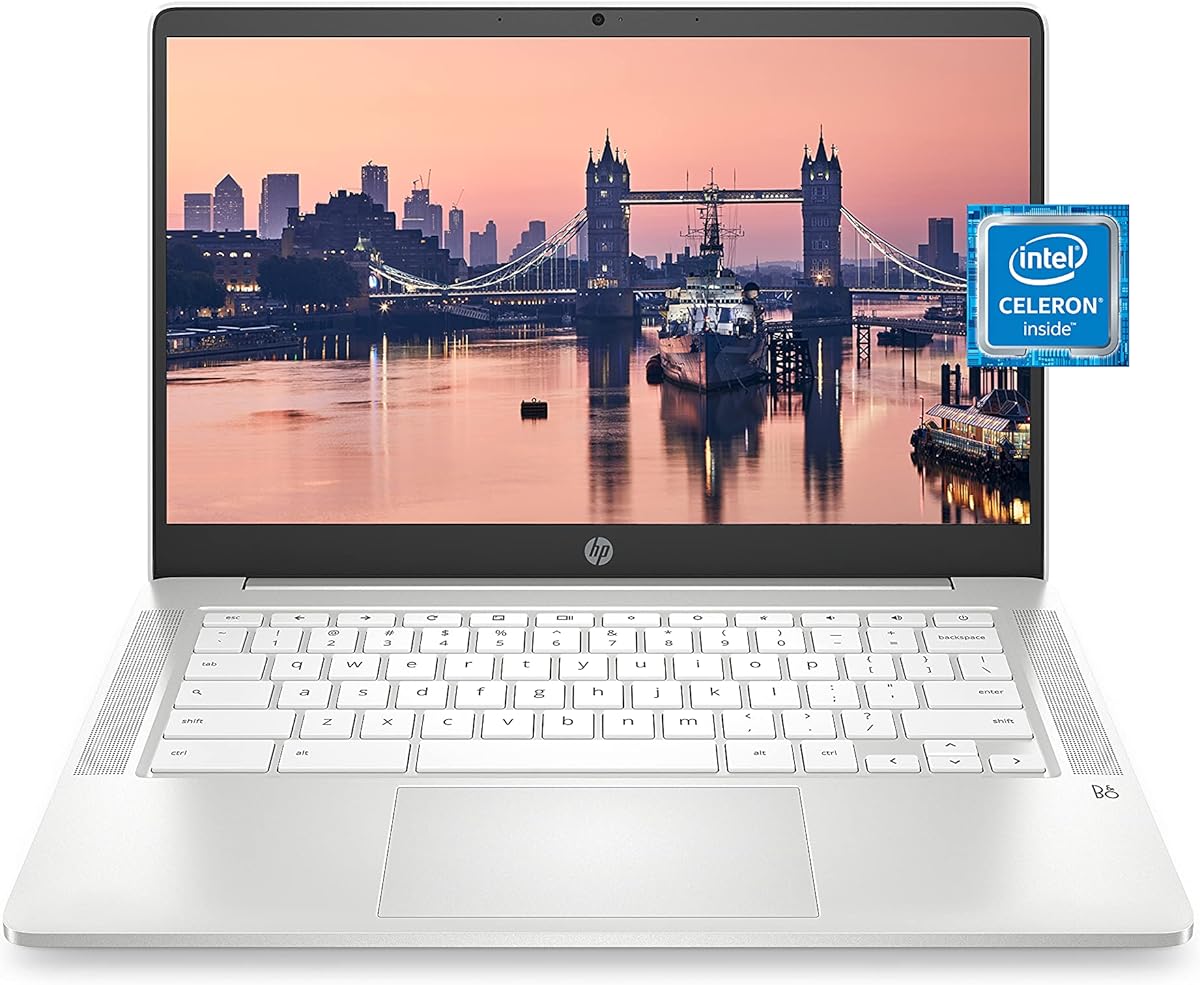
The HP Chromebook 14 N4120 is a strong value-focused choice for an 8 year old who will spend substantial time on school websites, Google Workspace, videos, and light games. It has a 4.3 rating, a quad-core Intel Celeron N4120 processor, 4 GB of RAM, and 64 GB of eMMC storage. The larger storage figure makes it more practical than many similarly positioned entry Chromebooks.
We may earn a commission when you buy through this link, at no additional cost to you.
Its 14-inch 1366 by 768 anti-glare display has micro-edge styling and is intended to show homework clearly in ordinary indoor environments. Intel UHD Graphics 600 supports smooth 4K content streaming according to the product information. HP advertises up to 14 hours of battery life and Fast Charge that can reach approximately 50 percent in around 45 minutes, both valuable features for a child who cannot easily plug in during the day.
The Celeron N4120 remains an entry-level processor, so demanding games, advanced video editing, and large creative projects are outside its strongest use cases. The HD display also has fewer pixels than Full HD alternatives. Actual battery duration depends on workload and settings, and the 4 GB of RAM means parents may need to discourage excessive accumulation of browser tabs.
This Chromebook is a practical recommendation for families that prioritize battery life, storage, familiar ChromeOS software, and a low-friction full-size form factor. It is particularly suitable for a child moving from tablet use to a conventional computer because the keyboard and trackpad encourage typing and document work. It delivers the core functions without reaching premium specifications.
The 64 GB eMMC drive provides twice the storage listed for the N4000 model. While still modest, it leaves more space for downloaded educational applications, locally saved documents, images, and offline activity material. Google cloud synchronization can extend that practical capacity.
HP Fast Charge is useful for a child moving between school, activities, and home. The stated ability to reach approximately 50 percent in 45 minutes offers a practical way to add several hours of use during a break, though the charger should remain accessible.
We may earn a commission when you buy through this link, at no additional cost to you.
The Lenovo IdeaPad 3i Chromebook is an attractive option when display quality and touch interaction matter. It holds a 4.4 rating and pairs a 14-inch 1920 by 1080 anti-glare touchscreen with 300 nits, 100% sRGB color, and wide viewing angles. That screen is a meaningful upgrade from a standard 1366 by 768 panel for reading, drawing, and viewing detailed school content.
We may earn a commission when you buy through this link, at no additional cost to you.
The eight-core MediaTek Kompanio 520 processor, 4 GB of soldered LPDDR4x memory, and 64 GB of eMMC storage create a capable everyday Chromebook platform. Total stated storage reaches 128 GB through the included 64 GB SD card. Wi-Fi 6, Bluetooth 5.1, a USB-C port, a USB-A port, a microSD reader, and a headphone-microphone jack offer practical connectivity.
The fixed 4 GB of memory cannot be upgraded, so users should expect the Chromebook model to be used primarily for browsing, Google applications, video calls, and educational Android apps rather than intensive multitasking. The included SD card provides space, but expandable media should not be confused with faster internal storage. Battery life is stated at up to 13 hours and will vary according to use.
Families choosing among full-size Chromebooks should consider this model when a crisp touchscreen, privacy shutter, modern wireless standard, and useful port selection justify the step up. It is well suited to an 8 year old who enjoys drawing, interactive lessons, or watching educational media. For advanced applications, look beyond 4 GB of memory, but for normal school use this is a balanced and well-equipped choice.
The Full HD panel provides noticeably more working and viewing space than a standard HD laptop. Its anti-glare finish, 300-nit brightness, and 100% sRGB coverage make it a practical fit for text-heavy lessons, educational illustrations, and shared classroom use.
The integrated 720p camera includes a physical privacy shutter, giving parents and teachers a simple way to prevent accidental video capture. Wi-Fi 6 and Bluetooth 5.1 are useful for current home and school networks, while the varied ports reduce the need for adapters.
We may earn a commission when you buy through this link, at no additional cost to you.
The HP Chromebook 11 is a compact school companion for children who benefit from a smaller touchscreen and full-size keyboard. It has a 4.4 rating and an 11.6-inch anti-glare HD touchscreen with wide viewing angles. That combination makes it practical for browsing, Google Classroom, video calls, and lightweight games in a backpack or at a shared family computer.
We may earn a commission when you buy through this link, at no additional cost to you.
Its MediaTek MT8183 mobile processor includes octa-core CPU and GPU processing, while 4 GB of RAM and 32 GB of eMMC storage target everyday cloud-focused use. ChromeOS provides a secure, straightforward environment with access to Google applications and the Play Store. A True Vision camera, dual microphones, custom-tuned speakers, Wi-Fi 5, and Bluetooth 4.2 cover common communication and accessory needs.
The main limitation is local storage. Families should plan on cloud storage or an external drive for larger files, and the model should not be selected for offline-heavy use. As a 2020 model, its processor and wireless capabilities are also older than newer alternatives, although the listed 4.4 rating indicates strong overall satisfaction. A protective case would help with normal school-bag use.
This is a sensible option for an 8 year old who needs a conventional keyboard but wants a smaller, more portable touchscreen device. It also works well as a shared family computer in areas where a 14-inch screen would be cumbersome. Choose it for simplicity and portability, while looking to newer models when maximum storage, faster charging, or modern wireless standards are priorities.
The 11.6-inch touchscreen reduces bulk while the full-size keyboard supports proper typing practice. It offers a useful middle ground between a shared tablet and a full-size laptop for children who are still developing keyboard confidence.
The camera, dual microphones, speakers, Wi-Fi 5, and Bluetooth 4.2 make the Chromebook ready for classes and family calls. USB Type-A, USB Type-C, and a headphone-microphone combo provide enough connectivity for common school accessories.
We may earn a commission when you buy through this link, at no additional cost to you.
The Lenovo Slim 3 Chromebook stands out as the most balanced general-purpose option in this guide. It has a 4.5 rating, a 14-inch 1920 by 1080 IPS touchscreen, and an eight-core MediaTek Kompanio 520 processor. For an 8 year old, it combines a comfortable full-size form factor, sharp visuals, modern connectivity, and enough performance for school applications, browsing, video calls, and entertainment.
We may earn a commission when you buy through this link, at no additional cost to you.
ChromeOS provides built-in protection, cloud backup options, and access to a wide collection of web and Android applications. The Full HD touchscreen supports interactive lessons, drawing, and finger navigation, while the 720p webcam has a privacy shutter and a dual-array microphone for online classes. Wi-Fi 6, Bluetooth 5.1, USB-A, USB-C, a microSD reader, and a 3.5 mm audio jack create a well-rounded connection setup.
The fixed 4 GB of RAM is the principal constraint. It is adequate for typical school use, but many simultaneous browser tabs and demanding applications can reach its limits. Storage of 64 GB is also modest, making cloud synchronization or carefully managed downloads important. The listed bundle includes an HDMI cable, USB extension cord, and mouse pad, which add useful setup flexibility.
This is the strongest recommendation for a child who needs a real laptop for school, remote learning, creative browsing, and light media. Its Full HD touchscreen gives it an advantage over entry-level HD Chromebooks, while the Kompanio 520 and Wi-Fi 6 should support a longer useful life. For families balancing features, size, and everyday value, it offers the most convincing package here.
The 1920 by 1080 IPS panel has enough resolution for detailed text, diagrams, and videos. Touch input can make quizzes, drawing tools, and interactive classroom activities more engaging, while the wider 14-inch format provides room for comfortable typing and document work.
Wi-Fi 6 support is useful in homes and schools that have upgraded their routers. The included USB-A and USB-C ports, microSD reader, audio jack, HDMI cable, and USB extension cord give families more ways to connect a monitor, storage media, or classroom peripherals.
We may earn a commission when you buy through this link, at no additional cost to you.
The VTech Genio Bilingual JuniorBook is a dedicated learning toy rather than a general-purpose computer. It has a 4.5 rating and is designed for children age five and older, making it suitable for an 8 year old who needs a simple introduction to typing and computer navigation. A full-size QWERTY keyboard and cursor controller help develop basic computer skills in a controlled environment.
We may earn a commission when you buy through this link, at no additional cost to you.
More than 80 preloaded activities cover math, science, language arts, music, and Spanish. Every activity can be used in English or Spanish, creating useful language exposure without online subscriptions or web browsing. The weekly calendar, notebook, music player, and games offer a broader range of experiences, and the device works entirely offline. That makes it dependable for travel or areas with unreliable internet access.
This is not a substitute for a Chromebook used for remote classes, Google Docs, or standard school applications. It requires four AA batteries, and the included batteries are intended only for demonstration, so fresh batteries are recommended for regular use. The absence of a general operating system also limits future growth as a child becomes more demanding.
The JuniorBook works best as an early-learning, travel, or supplemental educational device. It is ideal when the priority is safe offline practice, basic keyboard familiarity, and bilingual activities rather than modern applications. For a child entering third grade with regular digital homework, a real Chromebook is the more practical primary computer, but this device can still provide a low-pressure learning experience.
Because every activity is preloaded, the JuniorBook avoids advertisements, web content, and the open-ended risks of a general computer. That makes it suitable for independent practice in math, science, reading, music, and language while preserving an intentionally limited experience.
The complete English-and-Spanish option adds meaningful language variety without a subscription or internet connection. A child can move between languages within the same activities, which may be especially appealing for multilingual households or learners building foundational vocabulary.
We may earn a commission when you buy through this link, at no additional cost to you.
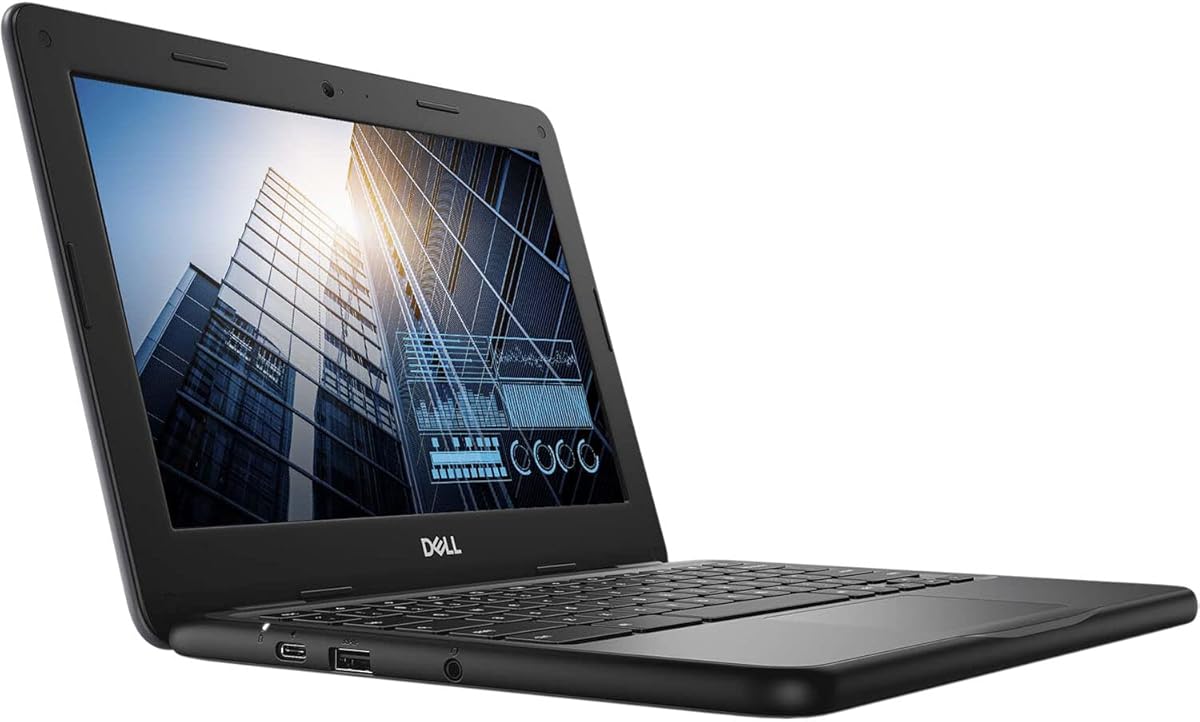
The renewed Dell Chromebook 11 3100 is a straightforward option for a basic, cloud-centered school computer. It has a 4.2 rating, an 11.6-inch 1366 by 768 display, an Intel Celeron N4020 processor, 4 GB of RAM, and 16 GB of flash storage. It is best suited to light web use, Google Workspace, demonstrations, and shared access rather than a large locally stored media library.
We may earn a commission when you buy through this link, at no additional cost to you.
ChromeOS supports the familiar collection of Google applications, Android apps, and browser-based services. The included Bluetooth and full-size laptop layout make it convenient for peripherals, while the compact display helps with space-saving school desks. Its specifications are sufficient for assignments, research, video calls, and carefully controlled entertainment when cloud storage handles files.
Sixteen gigabytes is the most restrictive storage figure among the Chromebooks in the list, and buyers should not expect much room after installing applications and saving media offline. The renewed designation also means the device's cosmetic condition, battery life, keyboard response, and included accessories may vary. The Celeron N4020 is suitable for routine tasks but not demanding games or advanced editing.
Choose this model when affordability and a familiar Dell Chromebook design are the main goals, particularly for occasional homework or a shared household computer. It is less attractive as a child's only device if the child works offline, downloads many applications, or handles large multimedia files. Inspecting the renewed unit and using cloud storage carefully are essential parts of a sound purchase.
ChromeOS is designed around web applications and cloud synchronization, making this small Chromebook practical for Google Docs, Classroom, web research, and communication. Local storage remains available, but a child should be taught to work primarily from synced files to avoid filling the 16 GB drive.
A renewed device may offer useful savings, provided the screen, ports, battery, and keyboard are in good working order. Review the listing carefully, test all functions after delivery, and document any existing damage before setting up the child's account.
We may earn a commission when you buy through this link, at no additional cost to you.
A useful child laptop should be understandable, durable enough for daily use, and capable of meeting school requirements without overwhelming the child. The right balance depends on whether the device is intended for basic skill building, ordinary homework, remote classes, or more advanced creative work.
Choose the operating system by matching the device to the child's real workload. Confirm that the school uses ChromeOS or web-based tools before purchasing, and avoid choosing a specialized toy if remote video classes or standard documents are required.
For an 8 year old doing normal online lessons, 4 GB is generally sufficient. Choose based on expected multitasking, and avoid buying a 2 GB device as the sole computer for demanding schoolwork.
Aim for at least 64 GB when the laptop must hold school projects or downloaded media. With smaller drives, enable cloud synchronization and teach the child to manage downloads and folders.
Prioritize a 14-inch Full HD anti-glare touchscreen for regular schoolwork. Choose a smaller screen only when portability matters more than document space and visual detail.
Look for a stated full-school-day battery and keep the charger in the backpack. For renewed devices, ask about battery condition and avoid assuming advertised new-device figures still apply.
Choose a size the child can carry comfortably and add protective accessories. Check that required classroom peripherals connect without several adapters.
For web-based schoolwork, entry-level processing is adequate. Investigate dedicated applications or advanced projects separately and choose more memory and faster processing if those needs are central.
Configure supervision before the child begins using the device, and keep an adult backup routine. Favor current specifications when the laptop is expected to remain in use for several school years.
Begin with a calm setup session. Sign into the child's supervised account, connect it to the home network, install required school applications, and review browser history, app permissions, content filters, location settings, and purchase permissions together. Arrange the display, keyboard, mouse or touchpad, and charging cable so daily use feels predictable. Show the child where to save assignments, how to recognize a low-battery warning, and how to tell a trusted adult if an unexpected message or request appears.
Create separate folders for schoolwork, creative projects, and downloaded entertainment, and keep cloud synchronization enabled for important documents. Explain that web results are not automatically reliable and that personal information should never be shared without permission. Parents can review installed applications and active accounts periodically rather than relying entirely on initial settings. For a dedicated VTech JuniorBook, focus on balanced activity sessions and regular battery replacement; for a Chromebook, keep the operating system and apps updated and use a supervised profile appropriate to the child's age.
Physical care matters as much as software control. Keep food and drinks away from the keyboard, clean the screen with a soft dry cloth, and avoid abrasive cleaners. Use a padded sleeve or protective case for transport, and never leave the laptop in a hot car or stacked under heavy objects. Keep the charger with the child, use compatible outlets, and give the battery some downtime by unplugging when a full charge is no longer needed. Promptly back up important projects and document any hardware damage while the warranty remains active.
The Lenovo Slim 3 Chromebook offers the strongest overall balance for ordinary school use because it combines a Full HD touchscreen, a capable eight-core processor, modern Wi-Fi, useful ports, and a 4.5 rating. The best choice still depends on the child's workload, screen-size preference, and local storage needs. A less demanding user may get better value from the HP Chromebook 14 N4120, while a child focused on offline skills may prefer the VTech JuniorBook.
A Chromebook is usually easier to manage for web-based schoolwork, Google Classroom, Docs, and Android applications. It also tends to require less maintenance and provides a more consistent learning environment for a child. A Windows laptop may be necessary if the school requires specific Windows-only software, but it generally offers more settings and vulnerabilities that require stronger parental supervision.
Four gigabytes is generally sufficient for a child using browser-based lessons, Google applications, video calls, and a modest number of simultaneous tabs. It is not especially comfortable for heavy multitasking, demanding games, or advanced creative software. Parents should encourage regular tab management and keep educational work in cloud-based applications.
Sixty-four gigabytes is a practical minimum for a Chromebook that may hold applications, downloaded media, and offline lesson materials. A 32 GB model can work when storage is managed carefully and cloud synchronization is used, while a 16 GB drive is best limited to light web use. An SD card can hold documents, but it does not replace internal storage for operating-system performance.
A touchscreen can make drawing, interactive activities, and navigating educational apps more intuitive for a younger learner. It also provides flexibility for using a convertible or tablet-like position. A conventional keyboard remains important for developing typing skills, so the best design combines touch input with a stable, full-size keyboard.
Safety depends on supervision and configuration as much as hardware. The VTech JuniorBook offers the most restricted experience because it runs preloaded offline activities without general web access, while Chromebooks provide stronger account and application controls. Parents should use a child account, set content and purchase restrictions, review permissions, and establish rules for communication and screen time.
A renewed Chromebook can be suitable for ordinary schoolwork if its display, keyboard, ports, battery, and operating system function properly. Its condition may vary, and advertised new-device battery specifications may no longer apply. Inspect the unit promptly, document existing damage, and use cloud backups because some renewed models have very limited local storage.
A dedicated kids' learning laptop is better for offline activities, basic computer skills, and a tightly controlled first experience. A Chromebook is better for real schoolwork, remote learning, Google applications, browsing, communication, and future educational needs. An 8 year old who already handles basic typing and regularly completes digital homework will generally benefit more from a Chromebook.
The Lenovo Slim 3 Chromebook is the most complete all-around pick because its Full HD touchscreen, Kompanio 520 processor, Wi-Fi 6, privacy shutter, and 4.5 rating create a capable learning environment without unnecessary complexity. The HP Chromebook 14 N4120 is a compelling budget-focused option with 64 GB of storage, a long stated battery life, and fast charging, while the slim Samsung Galaxy Chromebook Go is the premium-style choice for families prioritizing portability and phone integration.
Do not choose solely by screen size or processor label. Consider the child's actual lessons, required applications, local-storage habits, tolerance for touchscreens, and the likelihood that the device will support more advanced work next year. Four gigabytes of RAM, 64 GB of storage, a 14-inch Full HD display, modern Wi-Fi, a protective case, and dependable adult supervision form a strong long-term baseline. A dedicated VTech JuniorBook remains useful for offline and bilingual early learning rather than serving as a general school computer.
Ratings, configurations, warranty coverage, and product availability can change, and the same model may be sold in different conditions. Before purchasing, verify the exact processor, memory, storage, display, operating system version, included accessories, and school-app requirements. Compare the current listing carefully, read recent customer feedback, and confirm that the device is configured correctly before the child begins using it.