
GIGASTONE 128GB Micro SD
4.6Editor score
Up to 100MB/s read
Up to 50MB/s write
U3 and V30 ratings
A2 app performance
Explore and compare the best microSD card for DJI Osmo Action 6 4K recording, covering speed, capacity, durability, compatibility, and everyday use.
A microSD card for DJI Osmo Action 6 4K recording must sustain fast video writes, provide enough capacity for extended adventures, and withstand the conditions an action camera is likely to encounter. Capacity, video speed class, read speed, write speed, and durability all influence whether recording remains smooth and dependable.
The products in this guide were compared using the supplied specifications, including U3 and V30 video ratings, stated read and write speeds, capacity, A2 performance, physical protection, and stated device compatibility. The list covers SanDisk Extreme and GIGASTONE options at capacities from 128GB to 1TB, with each review explaining where that balance fits.
The selections show that the most suitable card is rarely determined by headline speed alone. A 128GB model may suit short sessions, while 256GB, 512GB, or 1TB choices reduce the need to change cards during longer trips. Product details and prices can change, so confirm the current camera requirements, listing, and card specifications before purchasing.
4.6Editor score

4.7Editor score
4.8Editor score
This side-by-side comparison organizes all ten cards by capacity, stated performance, video class, and notable features. It makes it easier to distinguish a compact 128GB option from higher-capacity choices built for longer 4K recording sessions.



The SANDISK 256GB Extreme combines one of the strongest speed specifications in this guide with the U3 and V30 video classes sought for action-camera recording. Its 4.7 rating reflects a broadly favorable customer reception, while the stated read speed of up to 245MB/s and write speed of up to 170MB/s position it as a high-performance option for 4K workflows and rapid file transfers.
We may earn a commission when you buy through this link, at no additional cost to you.
The most important attribute for continuous capture is the card's write capability. This model is stated to reach up to 170MB/s at the 256GB capacity, providing useful headroom for demanding video files. Its U3 and V30 markings indicate a minimum sustained video rate of 30MB/s under compatible host conditions. The included adapter also simplifies moving files to a compatible computer or card reader.
Physical protection matters for an action camera used outdoors, during travel, or around active participants. The supplied information describes the card as temperature proof, humidity proof, waterproof, shock proof, drop proof, magnet proof, X-ray proof, and wear-out proof. SANDISK Memory Zone support adds a convenient option for organizing, backing up, and transferring content on compatible desktop or Android systems.
This is the strongest all-around recommendation for users who want generous 4K recording capacity without moving to a 512GB or 1TB card. It may not be necessary for every project, and its headline transfer speed will not be reached by every reader, but the combination of video ratings, write performance, durability, and included adapter makes it well rounded for an Osmo Action 6.
The stated 245MB/s read speed can shorten transfers when the receiving device supports it, while the 170MB/s write figure gives the camera room for high-bitrate 4K files. Actual results depend on the camera, reader, interface, file attributes, and other conditions.
The broad protection claims are especially relevant for skiing, biking, water activities, and travel. Keeping the card seated correctly and protecting the camera remains essential even when the card itself is designed to resist harsh conditions.
We may earn a commission when you buy through this link, at no additional cost to you.
The GIGASTONE 128GB Micro SD is a practical value-oriented option for DJI Osmo Action 6 users who want essential 4K video capability without carrying an oversized-capacity card. Its 4.6 rating indicates favorable customer feedback, and the U3, V30, A2, and Class 10 markings provide a clear specification set for modern action-camera and mobile use.
We may earn a commission when you buy through this link, at no additional cost to you.
Stated read and write speeds reach up to 100MB/s and 50MB/s. The 50MB/s write figure sits above the 30MB/s sustained rate associated with V30, giving the card some headroom for 4K recording. A2 performance can also help with app loading and general responsiveness when a compatible phone or tablet uses the card for expandable storage.
The main compromise is capacity. At 128GB, the card is best suited to shorter recording sessions or creators who regularly transfer and clear footage. Its write speed is also lower than the 130MB/s and 170MB/s figures advertised by several SanDisk Extreme options, making it less compelling for users who consistently create large, high-bitrate files.
Despite those limitations, the stated DJI, GoPro, action-camera, and drone compatibility, combined with five years of free data recovery support, makes this a sensible starting point. Choose it when storage convenience matters more than maximum capacity or the fastest possible offload.
The V30 rating and up-to-50MB/s write speed align well with the sustained demands of 4K workflows. Capacity remains the deciding factor because lengthy events can fill 128GB even when the card maintains steady performance.
The A2 rating benefits compatible devices that place applications or active files on removable storage. Users should still confirm application and device support before relying on the card for that purpose.
We may earn a commission when you buy through this link, at no additional cost to you.
This SANDISK 256GB Extreme is a particularly attractive premium pick for continuous 4K action footage. It holds a 4.8 rating, the highest among the listed SanDisk models that are not part of the newest 128GB bundle, and pairs that reception with up to 190MB/s read and 130MB/s write specifications.
We may earn a commission when you buy through this link, at no additional cost to you.
Its U3 and V30 ratings make it suitable for demanding UHD workflows, while the 130MB/s stated write speed provides a useful buffer for recording high-resolution video. QuickFlow technology is intended to improve media offloads from compatible devices, and pairing the card with a compatible SanDisk Professional PRO-READER can provide access to its full stated performance.
There are two useful speed ratings here. U3 indicates a performance option designed to support real-time video recording, while V30 identifies a sustained video capture rate of 30MB/s. The A2 specification, offering 4,000 read IOPS and 2,000 write IOPS, is aimed at improved application responsiveness rather than being a direct measure of video bitrate.
This 256GB card is a strong choice for editors who value high transfer performance, a strong customer rating, and a balanced capacity. It is not the newest listing, and maximum read speed still depends on a compatible host, but its combination of write speed, 4K and 5K readiness, and A2 performance makes it a well-rounded premium recommendation.
QuickFlow is designed to take advantage of compatible host interfaces for faster media transfer. Users should avoid treating the 190MB/s figure as guaranteed and instead use a reader that supports the card's advertised performance.
U3, V30, and A2 create a versatile specification profile. The video ratings support compatible high-resolution capture, while A2 can benefit applications and active files on supported mobile devices.
We may earn a commission when you buy through this link, at no additional cost to you.
The SANDISK 128GB Extreme is a compact, high-rated choice for creators who want quick transfers without carrying a large-capacity card. Its 4.8 rating is among the strongest in this guide, and the advertised read speed of up to 190MB/s can improve offloading when paired with a compatible host device.
We may earn a commission when you buy through this link, at no additional cost to you.
For recording, the card carries U3 and V30 ratings and is stated to deliver write speeds of up to 90MB/s. That is comfortably above the 30MB/s benchmark associated with V30, making it suitable for 4K and 5K UHD-ready workflows when the camera and file settings are compatible. A2 performance adds value for supported smartphone and tablet applications.
Capacity is the main limitation. A 128GB card may fill during a full day of active shooting, particularly if high-bitrate 4K is used consistently. Compared with the 256GB version, this card also has a lower stated write speed, although its read performance remains identical in the supplied specifications.
It is best for day trips, lightweight travel kits, and users who transfer footage frequently. The strong rating, QuickFlow support, and U3 and V30 video profile make it a capable compact option, provided that its storage limit is acceptable.
The QuickFlow-equipped card can accelerate compatible media offloads, particularly when the reader and computer also support high transfer rates. Its performance will be more modest when connected through a slower interface.
This capacity is easy to manage and less costly than many larger cards, while the write speed remains suitable for demanding video classes. Frequent backup and file deletion become more important during extended sessions.
We may earn a commission when you buy through this link, at no additional cost to you.
The SanDisk 512GB Extreme is built for users who want to record for long periods before changing cards. Its 4.7 rating and specifications for 4K UHD and 5.3K video align it with high-resolution action-camera use, while the 512GB capacity gives creators more freedom during trips and events.
We may earn a commission when you buy through this link, at no additional cost to you.
It offers the same headline performance as the 256GB card: up to 245MB/s read and 170MB/s write for the applicable capacity range. U3 and V30 ratings support sustained 4K workflows, and the stated write performance provides comfortable headroom for high-bitrate clips and rapid bursts of still images.
The card's protection profile includes resistance to temperature, humidity, water, shock, drops, magnets, X-rays, and wear-out. That makes it a sensible choice for demanding outdoor recordings where an action camera is exposed to dust, moisture, vibration, and changing temperatures. Memory Zone software is available for desktop or Android content management.
This is the preferred option for a creator who regularly fills smaller cards or dislikes changing media in the field. It may be unnecessary for casual recording, and a larger card takes more time to back up, but the capacity and speed combination supports long, high-resolution production workflows.
Doubling capacity reduces the frequency of card swaps during a long ride, hike, vacation, or event. It also creates a convenient single location for photos, 4K clips, and related media.
The card combines high stated read and write speeds with extensive environmental protections. Compatible host hardware remains necessary to realize the advertised transfer performance.
We may earn a commission when you buy through this link, at no additional cost to you.
The GIGASTONE 512GB Micro SD offers a large-capacity, performance-focused alternative for multi-day recording. Its 4.6 rating reflects solid customer feedback, while the U3, V30, A2, and Class 10 specifications make it suitable for action cameras, drones, phones, tablets, and other compatible devices.
We may earn a commission when you buy through this link, at no additional cost to you.
Stated read and write performance reaches up to 150MB/s and 120MB/s. The write figure is particularly relevant for 4K UHD recording, providing more than enough stated throughput to exceed the 30MB/s sustained rate represented by V30. A2 performance can also improve application loading on compatible mobile systems.
The supplied information highlights broad compatibility with cameras, DSLRs, dash cams, drones, gaming devices, and numerous phones and tablets. An adapter is included, while a five-year limited warranty and free data recovery service add support beyond the card's basic specifications.
Compared with newer SanDisk listings, its maximum read speed is lower, so it may take longer to offload large libraries. For users prioritizing capacity and strong write performance rather than the fastest possible transfer, however, the 512GB format is compelling and practical.
A 512GB card is well suited to travel days, long events, and creators who batch footage before editing. It also provides room for high-resolution stills alongside video files.
The broad compatibility list makes the card useful beyond the Osmo Action 6. Device support varies, so check the camera's manual and card requirements before use.
We may earn a commission when you buy through this link, at no additional cost to you.
The SanDisk 128GB Extreme is a durable, highly rated option for everyday Osmo Action 6 use. Its 4.8 rating is among the best in this guide, and the U3, V30, A2, and Class 10 markings make its intended high-resolution and mobile-storage roles clear.
We may earn a commission when you buy through this link, at no additional cost to you.
The card is stated to read at up to 160MB/s and write at up to 90MB/s when connected to compatible devices. That write speed gives 4K UHD workflows more than the minimum associated with V30, while the 160MB/s read figure can still make offloading reasonably quick on suitable hardware.
Its protection against temperature, water, shock, and X-rays is important for action-camera work. The supplied specifications also mention Memory Zone for file management, although the experience depends on the compatible device and app version. The included SD adapter makes it easier to use the microSD format with compatible full-size equipment.
The best fit is a creator who wants a recognizable, well-reviewed card for short-to-medium sessions. Those making long trips should consider 256GB or 512GB options, and anyone chasing the fastest offload should review newer cards with higher advertised read speeds.
U3 and V30 indicate suitability for compatible high-resolution recording, while the 90MB/s stated write speed offers useful margin. File bitrate and camera settings still determine actual recording demands.
Water, shock, temperature, and X-ray resistance support use in demanding environments. Protective cases and careful card handling remain sensible complementary precautions.
We may earn a commission when you buy through this link, at no additional cost to you.
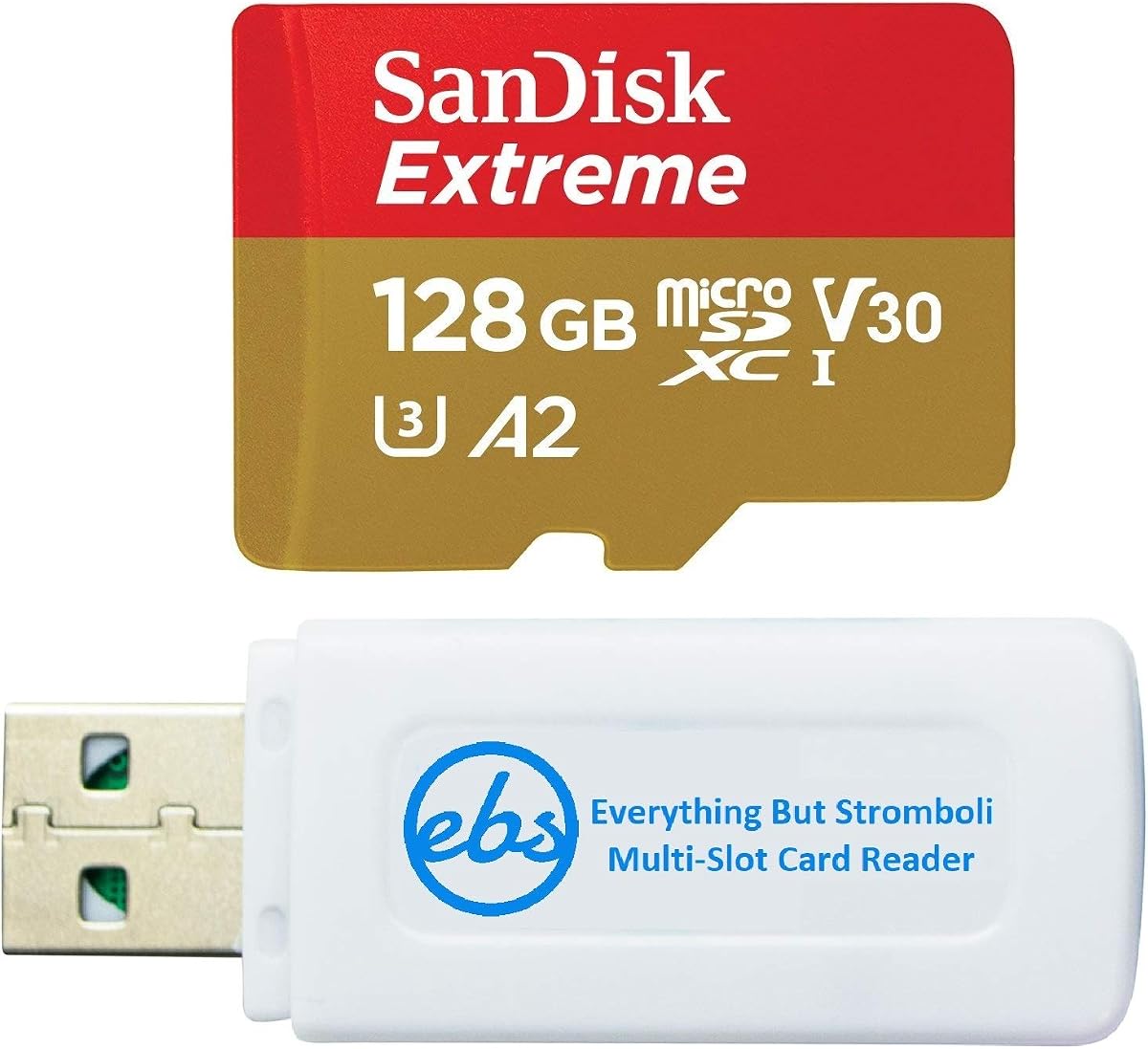
The SanDisk 128GB MicroSDXC Extreme bundle stands out because its supplied description explicitly states compatibility with the DJI Osmo Action 6. It also holds a 5.0 rating, the highest numeric rating in the guide, and includes an Everything But Stromboli memory card reader for a more complete transfer setup.
We may earn a commission when you buy through this link, at no additional cost to you.
The card is described as supporting smooth 4K UHD video recording, Full HD capture, and quick file transfers through high-speed read and write performance. Although the listing does not provide exact read or write figures, the 128GB capacity, Class 10 designation, and 4K UHD focus make it a relevant match for the intended camera category.
Explicit compatibility is valuable because it removes much of the guesswork involved in choosing removable storage. The same listing also names the Pocket 3, Pocket 2, and Osmo Nano, giving users who move between several DJI devices a card that can potentially serve more than one camera.
The bundle is best for users who value a simple, ready-to-use package and want clear confirmation of Osmo Action 6 compatibility. Its limited 128GB capacity and lack of exact speed figures make it harder to compare with the more precisely specified alternatives, but the included reader is a meaningful convenience for immediate offloading.
The explicit compatibility list includes the Osmo Action 6, Pocket 3, Pocket 2, and Osmo Nano. This makes the card convenient for creators who switch between handheld and action-camera formats.
A bundled reader removes the need to purchase one separately for basic offloading. Reader performance and host-device connections will determine how quickly large video files can be moved.
We may earn a commission when you buy through this link, at no additional cost to you.
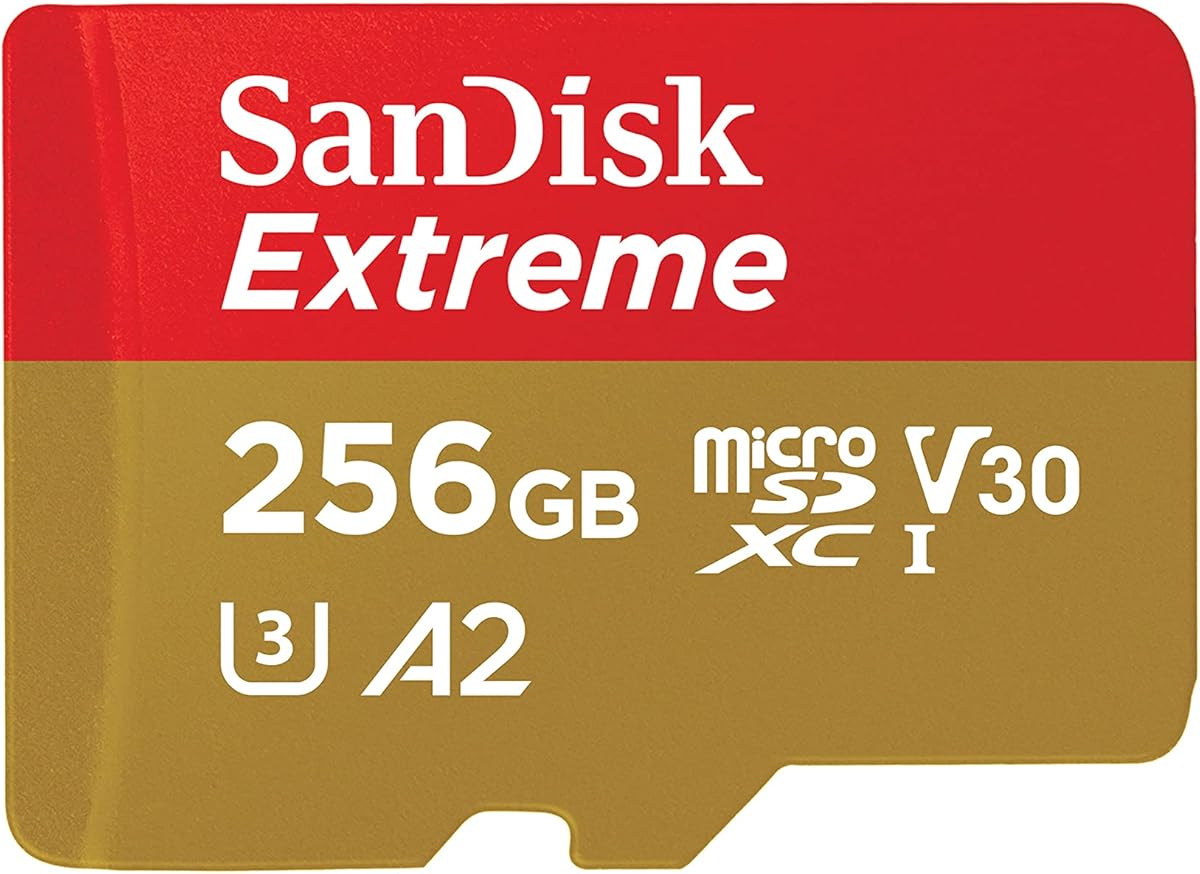
The SanDisk 256GB Extreme is a balanced selection for creators who want strong performance without moving to a 512GB or 1TB card. Its 4.8 rating supports its reputation as a popular action-camera and smartphone card, while 256GB offers a practical balance between recording room and portability.
We may earn a commission when you buy through this link, at no additional cost to you.
The card is stated to read at up to 190MB/s and write at up to 130MB/s. These figures make it well suited to fast-action shooting and 4K UHD capture, particularly with the U3 and V30 video ratings. A2 performance adds responsiveness for supported mobile applications and active files.
QuickFlow technology is designed to optimize media offloads on compatible devices, although the professional PRO-READER is sold separately. The card is also described as shockproof, temperature-proof, waterproof, and X-ray-proof, providing useful environmental resilience for outdoor recording.
This is an excellent general recommendation for an Osmo Action 6 owner who records regularly and wants reliable 4K classes, solid write performance, and moderate capacity. It may not be the first choice for extended unattended recording, but it offers one of the strongest overall balances in the guide.
The 130MB/s stated write speed offers ample margin for compatible high-resolution recording. Its 190MB/s read specification also helps when moving footage from a suitable reader to a computer.
At 256GB, the card is large enough for many full recording days yet easier to back up than a 1TB option. It is a useful middle ground for mixed photo and video workflows.
We may earn a commission when you buy through this link, at no additional cost to you.
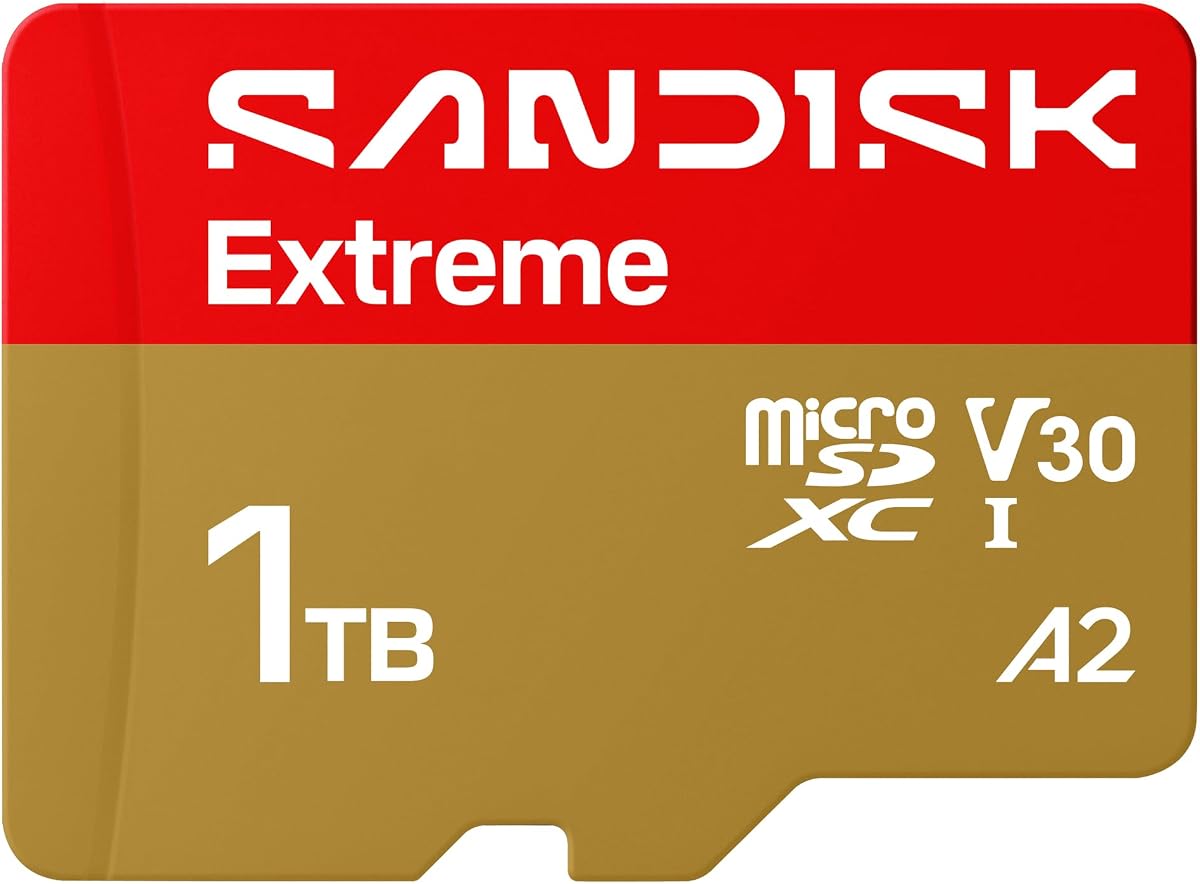
The SanDisk 1TB Extreme is the maximum-capacity selection in this guide and is intended for creators who record extensively without wanting to stop and change cards. Its 4.7 rating is solid, and the combination of one terabyte of storage with high stated read and write speeds is unusually well balanced for professional workflows.
We may earn a commission when you buy through this link, at no additional cost to you.
Read speeds reach up to 245MB/s, while write speeds reach up to 170MB/s for the stated capacity range. U3 and V30 ratings support 4K UHD and other high-resolution video workflows, and the product description is oriented toward action cameras, drones, and Android devices.
The card offers the same broad protection profile as the newer 256GB and 512GB listings, including resistance to temperature, humidity, water, shock, drops, magnets, X-rays, and wear-out. Memory Zone support provides file organization and backup options for compatible desktop and Android environments.
The primary drawback is the practical cost of managing a very large media library. A 1TB card requires sufficient reader and drive capacity, and valuable footage still deserves regular backups. For travel-heavy professionals, event recorders, and creators producing sustained 4K footage, however, the convenience of minimal card changes is difficult to overstate.
A one-terabyte capacity is well suited to long expeditions, frequent event work, and creators who batch media transfers. It reduces the risk of running out of space during a lengthy session.
The 245MB/s read and 170MB/s write specifications keep the card aligned with demanding workflows. A compatible high-speed reader and a drive with sufficient throughput are needed to make the most of those figures.
We may earn a commission when you buy through this link, at no additional cost to you.
The right card must meet the camera's recording requirements while fitting the user's session length, transfer setup, and environmental conditions. Capacity, sustained video performance, write speed, durability, and reader compatibility deserve more attention than any one headline number.
For 4K recording, look for a card that explicitly carries U3 and V30 markings. U3 identifies a performance option designed to support real-time video recording on UHS-enabled hosts, while V30 represents a sustained video capture rate of 30MB/s. These ratings are more relevant to recording continuity than a card's maximum read speed, which primarily affects how quickly files can be transferred after capture. Compatibility between the camera, card, and selected recording mode remains essential, and the card's full stated capabilities may not apply in every setting.
Write speed determines whether the card can accept large video files quickly enough to keep recording without dropped frames, recording errors, or interrupted clips. The guide includes stated write figures ranging from 50MB/s to 170MB/s. These are maximum specifications, not guaranteed camera-level results, and actual performance also depends on file size, bitrate, host behavior, and card condition. A write speed comfortably above the video class minimum provides more headroom when the camera is recording high-bitrate 4K files or still images alongside video.
Capacity affects how long you can record before changing cards. A 128GB card is convenient for short trips and frequent transfers, while 256GB suits many regular recording days. A 512GB or 1TB card reduces interruptions during long trips, events, and professional shoots, but creates a larger backup and file-management commitment. Estimate space by considering your selected resolution, frame rate, bitrate, and how often you already create still images. More capacity does not improve recording speed, so it should be chosen for workflow needs rather than treated as a substitute for performance.
Read speed matters most when transferring large video libraries to a computer. Cards advertised at up to 190MB/s or 245MB/s can shorten offloading when connected through a compatible card reader and a host interface that supports those rates. The speed is not guaranteed across every reader, cable, operating system, or file set, and smaller files may not benefit from the highest headline figure. If most footage is edited on a computer rather than viewed directly from the card, faster reads can improve workflow efficiency. A separate reader may be required, as some included adapters are primarily for convenient device compatibility rather than maximum transfer rates.
Action cameras are commonly used around water, dust, vibration, extreme temperatures, and accidental knocks. Many cards in this guide are described as waterproof, shockproof, temperature-proof, X-ray-proof, or resistant to humidity, magnetic fields, and wear. These protections make a card more suitable for mobile recording, but they do not make the camera waterproof or eliminate the need for careful handling. Keep the card seated correctly, avoid removing it while the camera is writing, and use protective cases. A dry, organized storage routine remains more valuable than any single durability claim.
One product in the guide explicitly states compatibility with the DJI Osmo Action 6, Pocket 3, Pocket 2, and Osmo Nano. The other listings focus on action cameras, DJI devices, drones, and related equipment, but availability and camera requirements can change. Check the camera manual for supported capacity limits, card formats, speed classes, and firmware considerations. If the same card will be used in a phone, drone, game console, or card reader, verify that device's requirements too. A card can meet video specifications and still face restrictions in another device.
A2 performance can be useful when compatible smartphones or tablets run applications or active files from a microSD card. The specification represents random read and write performance rather than a direct video bitrate rating, and results vary by host, application, and workload. For an Osmo Action 6, U3 and V30 remain the more important video considerations. A2 becomes valuable if the card also serves as expandable mobile storage, allowing the user to gain a more useful specification profile from a single card.
An SD adapter makes a microSD card easier to move between compatible devices, but it may not provide maximum read performance. If your workflow depends on fast offloading, a dedicated UHS-I microSD reader and a host with a compatible interface may be preferable. The 128GB SanDisk bundle includes a reader, and several GIGASTONE listings mention free data recovery support. These extras can add convenience, but they do not replace routine backups. Important footage should be copied to a separate drive or cloud service, with the original card retained until the backup has been verified.
Begin with a compatible, properly formatted card and confirm that the camera recognizes it before a critical shoot. Power the camera down before inserting or removing the card, and avoid touching the gold contacts. Format the card in the camera or through a compatible device when appropriate, following the camera manual's instructions. A fresh format helps organize files and reduces the chance that a previous interruption has left the filesystem in an undesirable state.
During recording, use the highest capacity and speed class permitted by the camera, and monitor storage warnings. Do not remove the card while an indicator shows that it is writing, and do not switch cards in the middle of a continuous session without allowing the camera to finalize the previous files. Keep spare cards available for long recordings, and label them if multiple capacities or models are in the same kit.
After the shoot, power down the camera before changing media and transfer files to a compatible computer or reader. Compare file counts and sizes with the camera's displayed totals, preview important clips, and keep at least one verified backup. Reformat cards only after confirming that their contents are safely stored, and replace a card that produces recording errors, unusual performance declines, corrupted files, or physical damage.
A U3 and V30 microSD card is the most relevant starting point for compatible 4K workflows. V30 identifies a sustained video rate of 30MB/s, while U3 supports real-time recording on compatible UHS-enabled hosts. A card with a higher stated write speed can provide useful headroom for demanding bitrates, although the actual recording mode and camera requirements take priority over maximum transfer figures.
It can be enough for shorter sessions, and 128GB cards in this guide carry U3, V30, and A2 ratings suited to high-resolution capture. Long trips, high-bitrate recordings, and frequent still images can fill that capacity quickly. Consider 256GB, 512GB, or 1TB when minimizing card changes is more important than a smaller and easier-to-back-up media library.
Not directly. Read speed mainly influences how quickly files can be offloaded from the card to a compatible computer or reader. Recording continuity is more closely related to write performance and the card's video speed class, so prioritize a suitable sustained write specification and U3 and V30 ratings for capture.
It depends on the length of the trip, selected bitrate, and how often you can transfer footage. A larger card prevents interruptions caused by full storage, while a smaller card makes daily backups easier. Estimate your usage before ordering and carry a second compatible card when uninterrupted recording is important.
An included adapter may work well for basic file access, but it does not always support the card's maximum advertised read speed. For frequent editing or large offloads, use a compatible dedicated microSD reader and a host interface that can sustain the required throughput. Actual results also depend on the computer, connection, and files being transferred.
A2 indicates a specified level of random read and write performance intended to improve application and active-file performance in compatible devices. It is most useful for supported phones and tablets. For Osmo Action 6 recording, U3 and V30 are the more directly relevant markings, while write speed should match the demands of the chosen video mode.
A card's waterproof rating protects the card under its stated test conditions, but the camera body, battery door, ports, and card slot still require care. Dry the camera and card compartment before opening it after exposure to water, and do not handle a wet card in ways that could transfer moisture to the contacts. Using a suitable housing and keeping replacements available adds further protection.
Formatting after backups can keep the filesystem clean and make storage management easier. Replacement becomes more important if the card shows physical cracks, connector damage, corrupted files, recording errors, or a notable change in performance. A card is a consumable storage device, so preserving verified backups is more important than trying to prolong a questionable card indefinitely.
The SANDISK 256GB Extreme stands out as the strongest overall choice, combining up to 245MB/s read speed, up to 170MB/s write speed, U3 and V30 ratings, strong durability protections, and an included adapter. The GIGASTONE 128GB card serves as a value-focused alternative, while the SANDISK 256GB Extreme QuickFlow model offers a well-reviewed premium specification set with up to 190MB/s reads and 130MB/s writes.
Prioritize confirmed camera compatibility, the U3 and V30 video classes, and enough sustained write speed for your selected recording mode. Then choose capacity according to session length and backup habits. A 128GB card is convenient for short shoots, 256GB is a versatile middle ground, and 512GB or 1TB options are attractive for extended recording where changing cards is inconvenient.
Finally, review the current listing, product specifications, camera support notes, and price before ordering. Specifications and prices can change, and the included reader or adapter may also vary. A sound purchase is one that matches the camera's requirements, has enough capacity for your real workflow, and receives regular backups rather than relying on a single card for irreplaceable footage.