
galphi 4K Dash Cam Front
4.4Editor score
4K UHD recording
32GB card included
Screen-free compact design
A dash cam should simplify the process of protecting your journeys, not introduce another complicated gadget. The easiest models combine a compact camera, straightforward mounting, clear controls, automatic recording, and a simple way to save important clips without requiring advanced technical knowledge.
We compared ten dash cams based on the details that most affect everyday usability, including installation, screen design, Wi-Fi and app operation, included storage, resolution, night performance, parking mode, and the availability of local controls. The list includes front-only and dual-camera systems across several feature levels.
Each review explains who benefits most from that particular model and where compromises may appear. Ratings and product details reflect the supplied information, while features and accessories can vary by vehicle and package. Prices change over time, so check the current listing before purchasing.
4.4Editor score
4.9Editor score

4.4Editor score
As an Amazon Associate we earn from qualifying purchases.
This side-by-side comparison highlights the most relevant differences among ten dash cams, including recording configuration, resolution, storage, display access, wireless controls, and parking surveillance.




The galphi 4K Dash Cam Front combines high-resolution recording with a genuinely straightforward setup. Its supplied rating is 4.4, and its most useful features are easy to appreciate: 4K UHD capture, a 160-degree lens, 5GHz Wi-Fi, and a 32GB memory card already installed. The screen-free body also keeps the windshield relatively uncluttered.
We may earn a commission when you buy through this link, at no additional cost to you.
The included card makes this model ready for use without an immediate storage purchase. Loop recording replaces older files, while the G-sensor locks clips after a detected impact so important evidence is less likely to be overwritten. Fast 5GHz transfer speeds can make a major difference when saving lengthy recordings to a phone, reducing the wait associated with copying files over a slower wireless connection.
There are two meaningful compromises. Because the camera has no display, clips must be reviewed through the phone app rather than on the camera itself. Parking surveillance also requires a separate Type-C hardwire kit. These limitations do not undermine everyday recording, but drivers who want immediate local playback or unattended operation without buying another accessory should account for them.
This is our top overall choice for simple use because it balances capable image quality, included storage, fast wireless transfers, and a compact screen-free design. It suits new drivers, commuters, rideshare drivers, and anyone who wants a front-facing camera that can be installed and configured with minimal fuss.
The app combines live viewing, clip playback, and downloads over 5GHz Wi-Fi. That faster band is especially helpful for moving high-resolution recordings, while a screen-free camera keeps the physical controls and dashboard presentation exceptionally simple.
A 32GB card arrives preinstalled, removing a common source of confusion for first-time owners. Loop recording and G-sensor locking then handle routine storage management automatically, although a compatible Class 10, U3, V30 or higher card is recommended for expanded capacity.
We may earn a commission when you buy through this link, at no additional cost to you.
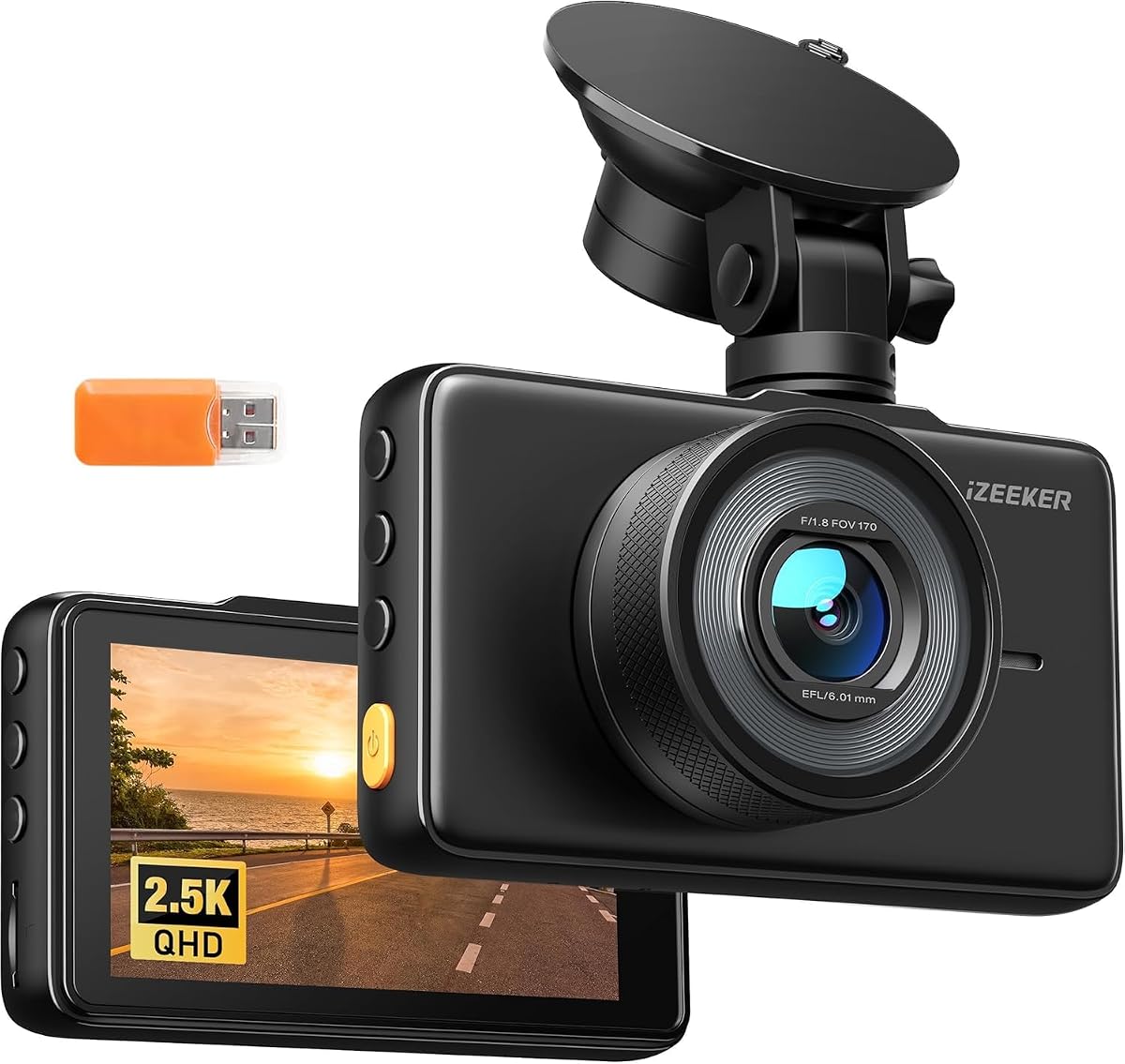
The iZEEKER 2.5K Dash Cam is one of the most approachable choices for drivers who prefer physical buttons and a visible screen. It holds a 4.2 rating and records at 2560 by 1440 pixels through a 170-degree lens. The 3-inch IPS display makes it possible to check the view, review footage, and change settings without opening a phone app.
We may earn a commission when you buy through this link, at no additional cost to you.
The physical interface is a major advantage for simple operation. Buttons provide direct access to key functions, while the suction mount and included instructions are designed to make installation approachable for beginners. A detachable car charger also allows the included cigarette-lighter adapter or a USB connection to be used according to what is convenient in your vehicle.
The trade-off is that a microSD card is not supplied. Users must add a compatible card between 16GB and 128GB before recording. Parking monitoring similarly calls for a separate hardware kit. For someone comfortable with one inexpensive accessory and who values on-camera playback, these are understandable requirements rather than serious shortcomings.
The iZEEKER is a strong choice for first-time owners, students, daily commuters, and drivers who dislike fiddling with wireless connections. Its combination of a large screen, physical buttons, QHD recording, and simple mounting makes it especially approachable.
The 3-inch IPS screen gives immediate visual feedback, while physical buttons make core actions predictable and easy to learn. This local-first approach is ideal if transferring every recording to a phone feels unnecessary.
A 170-degree lens captures a broad view of surrounding lanes, while the F1.8 aperture and WDR help balance bright headlights against darker portions of the scene. The G-sensor locks clips following a sudden vibration or collision.
We may earn a commission when you buy through this link, at no additional cost to you.
The ROVE R2-4K Dual is the most complete premium system in this group, with a rating of 4.4 and separate cameras for the front and rear. It records 2.5K footage in the front camera and upscales it to 4K for playback, while the rear camera captures at 1080P. A 128GB microSD card is included, making the package notably more complete than many competitors.
We may earn a commission when you buy through this link, at no additional cost to you.
The front camera uses a Sony STARVIS 2 IMX675 sensor, an F1.5 aperture, and HDR to support low-light recording. ROVE's app provides live viewing, recording management, settings, firmware updates, and downloads at speeds stated as high as 20MB/s over the 5.8GHz band. Built-in GPS adds speed, direction, location, and route information to the recordings, while the 3-inch IPS screen provides a local view of speed and compass data.
The front recording is upscaled rather than native 4K, so buyers should not interpret the headline resolution as a full 4K capture from the front sensor. The rear camera is also limited to 1080P. Continuous parking mode requires a separately sold hardwire kit. These are important details, but they remain reasonable compromises for a dual-camera package with high-end sensors and extensive included equipment.
Choose this ROVE model if you want comprehensive evidence from both directions, roomy storage, excellent night capabilities, and polished app management without buying a memory card separately. It is a particularly good match for frequent drivers, long-distance commuters, and anyone who values route metadata.
Recording both directions gives useful context during lane changes, sudden stops, and rear-end incidents. The front and rear cameras work together, so buyers do not need to assemble a second unit and figure out separate storage or viewing routines.
The STARVIS 2 IMX675 sensor is designed to gather useful light in demanding conditions. Combined with a fast dual-band connection, the ROVE app makes it easier to inspect, download, share, and update recordings using a phone.
We may earn a commission when you buy through this link, at no additional cost to you.
The E-YEEGER S50 combines a 2.5K front camera with a wired 1080P rear camera in a package designed to remain easy to operate. Its 4.2 rating reflects a balanced approach, and the 2-inch IPS display gives drivers direct access to recording status, saved clips, card formatting, and settings.
We may earn a commission when you buy through this link, at no additional cost to you.
The wide front and rear lenses provide useful context during ordinary driving and incidents. WDR, an F1.6 aperture, a six-layer lens, and a starlight sensor help the system manage bright headlights and low-light areas. Loop intervals can be set to one, three, or five minutes, while the G-sensor locks a clip after a collision or abrupt braking.
You must provide a compatible microSD card, and the camera supports cards up to 256GB. For parking mode, the specifically named V5F three-core hardwire kit is required and sold separately. The screen saver is useful because it reduces visual distraction while recording continues, but some users may still prefer the screen switched off completely.
This dash cam is a good option for buyers who want both front and rear coverage but do not want to manage a complex app. Its straightforward physical interface, useful screen saver, and adjustable recording options make it particularly suitable for commuters and first-time owners.
The wired rear camera adds evidence of what happens behind the vehicle, which is particularly valuable during lane changes and following-vehicle incidents. The front camera retains more resolution for signs, plates, and immediate road details.
A selectable screen saver lowers display brightness while continuous recording continues. Physical buttons still provide straightforward access to playback, formatting, and recording settings when the camera is safely parked.
We may earn a commission when you buy through this link, at no additional cost to you.
The Garmin Dash Cam Mini 3 is built around a remarkably small, unobtrusive footprint. Its 4.0 rating is supported by a straightforward 1080p recording format, a 140-degree field of view, and a built-in Clarity polarizer that helps reduce windshield glare. It is one of the easiest models to install discreetly because it occupies very little space near the windshield.
We may earn a commission when you buy through this link, at no additional cost to you.
Voice control makes routine actions less distracting. You can ask the camera to save a clip or begin and stop audio recording in English, German, French, Spanish, Italian, or Swedish. The Garmin Drive app organizes important videos and can display synchronized footage from as many as four compatible cameras, each purchased separately.
The strongest Garmin cloud features depend on a paid Vault subscription, an active Wi-Fi network, and appropriate app access. Parking Guard notifications and remote live view also require continuous power. The Mini 3 is front-only, so it will not document the road behind your vehicle unless another compatible unit is added.
This is a strong recommendation for drivers who value a clean windshield, recognizable automotive software, and voice-operated controls more than maximum recording resolution. It is especially suited to people using a dash cam for incident documentation while keeping the dashboard visually uncluttered.
The key-sized body mounts close to the windshield and draws little attention. That makes the Mini 3 a comfortable option for drivers who dislike a large camera hanging below the rearview mirror.
Saving a video or controlling audio can be done with spoken commands, which is safer than reaching toward the device while moving. The compatible Garmin app then provides a more detailed way to review and share saved footage.
We may earn a commission when you buy through this link, at no additional cost to you.
The Veement V300 is designed around compact dimensions, app-based control, and a broad field of view. It has a 4.1 rating and records at 2304 by 1296 pixels, offering more detail than standard 1080p without moving into the demands of a 4K system. A 170-degree lens helps capture adjacent lanes and a broad portion of the road.
We may earn a commission when you buy through this link, at no additional cost to you.
Built-in Wi-Fi connects to the VeeCar app for live preview, playback, downloads, editing, and sharing. Because this is a local connection rather than an internet service, the camera remains a personal recording tool. Its TS stream technology supports storage management, while cards up to 256GB, loop recording, and parking mode provide the core protection features expected from a modern dash cam.
The V300 does not include an SD card and requires continuous USB-C power. The absence of a traditional internal lithium battery is intended to reduce overheating concerns and makes the design suitable for vehicles that remain parked in hot conditions. On the other hand, users who want to review footage on a built-in screen will need to rely on the app.
Choose the V300 for simple phone-based operation, wide coverage, and a compact front camera. It is a good fit for drivers who already manage camera files through apps and prefer not to deal with a large dashboard unit.
The VeeCar app provides the core controls expected from a wireless dash cam: previewing, playing back, downloading, and sharing. First-time users can work with a familiar phone interface instead of learning a dense set of on-device menus.
The RTC circuit and removal of a traditional lithium battery are intended to improve reliability and reduce overheating concerns. Continuous USB-C power keeps the camera ready to record whenever the vehicle supplies power.
We may earn a commission when you buy through this link, at no additional cost to you.
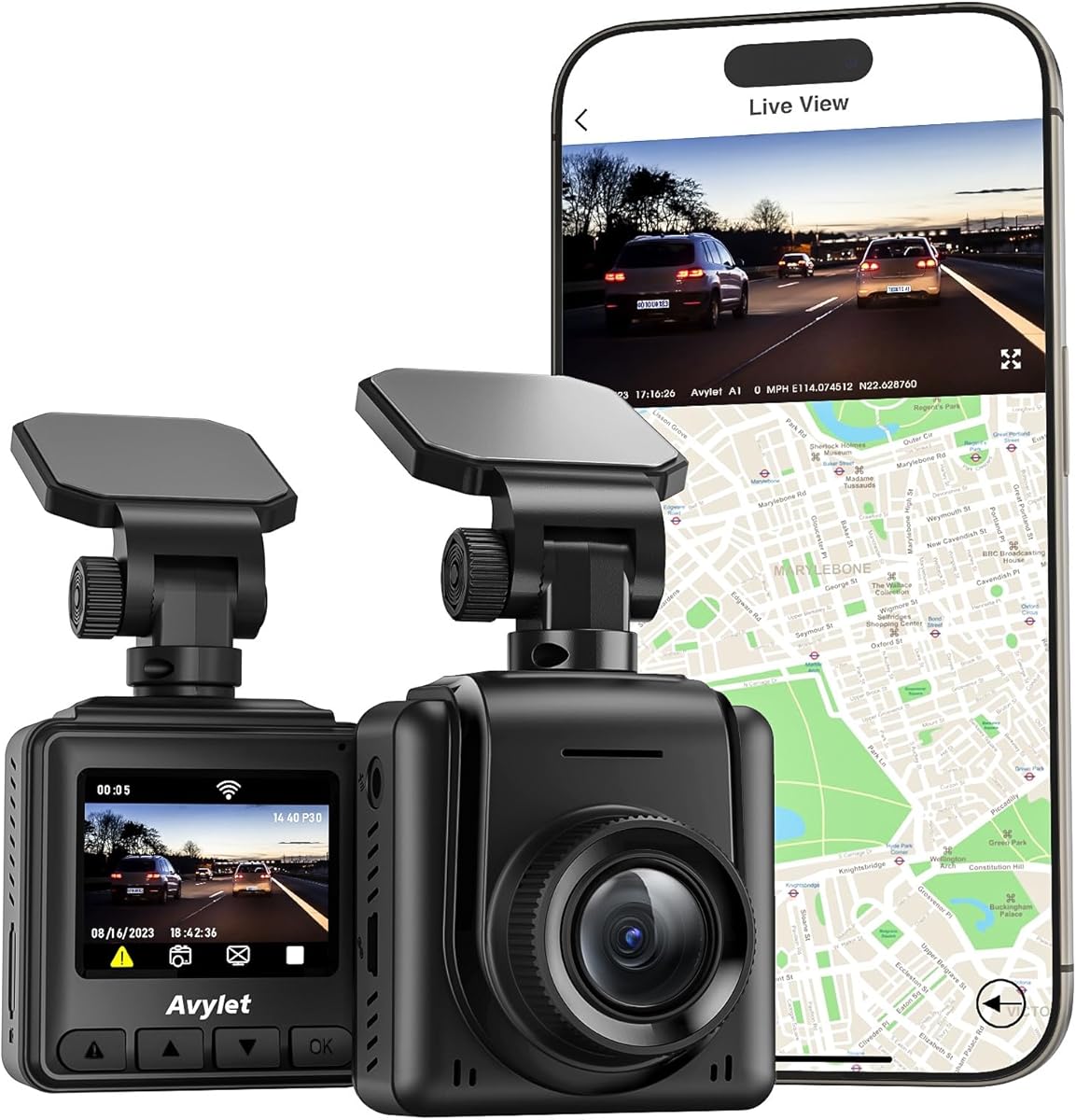
The Avylet 2K combines a small IPS display with app-based control, making it easy to switch between local checks and phone management. Its 4.4 rating reflects a capable feature set, including 2560 by 1440 recording, WDR, night vision, a G-sensor, loop recording, and parking surveillance.
We may earn a commission when you buy through this link, at no additional cost to you.
The 170-degree lens offers broad coverage, and the F1.6 aperture and six-layer lens support low-light capture. Through the Avylet app, you can download and share clips, adjust settings, view a live stream, play back footage, and install over-the-air firmware updates. Importantly, the supplied information states that these app features do not require a subscription.
The memory card is not included, and the optional external GPS module is also sold separately. Parking mode requires a hardwire kit. Before installation, remove the lens protective film, as leaving it in place can make footage appear blurry. These are minor setup considerations, but they should be handled before judging image quality.
The Avylet is a good match for drivers who want more control than a basic screen-free camera without carrying a large unit. Its compact dimensions, 2K image quality, and free app management make it an approachable middle ground for daily driving and occasional incident review.
The 1.5-inch display provides a quick status check, while the app expands that access into live viewing, playback, downloads, and settings changes. This combination is useful when you need immediate confirmation but also want to manage longer recordings later.
The 2K sensor provides a practical level of detail for signs, plates, and traffic. WDR helps balance changing light conditions, and the app supports over-the-air updates without a computer or cable.
We may earn a commission when you buy through this link, at no additional cost to you.
The S60 focuses on uncomplicated dual-camera operation. It has a 4.2 rating and combines 2.5K front recording with a 1080P rear camera. The 2-inch IPS display allows basic checks and setting changes directly on the unit, while the 360-degree suction mount makes it particularly easy to adjust the angle or remove the camera.
We may earn a commission when you buy through this link, at no additional cost to you.
The front 170-degree lens covers a broad section of the road. A starlight sensor, six-layer lens, and WDR work together to improve visibility at night and in changing conditions such as tunnels and parking lots. Loop recording replaces older unprotected clips, while the G-sensor locks footage when it detects an impact, hard braking, or collision.
A compatible SD card must be purchased separately, and the system supports cards up to 256GB. The 24-hour parking monitor requires a compatible Type-C hardwire kit that is not included. One-year warranty coverage and customer support offer some reassurance, but they do not remove the need to plan for accessories before enabling parking surveillance.
The S60 is an attractive option for drivers who want rear coverage and an adjustable mounting position but do not need a complicated app ecosystem. It should appeal particularly to families and commuters who appreciate a visible screen and straightforward physical operation.
The 360-degree suction mount rotates to fit different windshield positions and viewing preferences. It also allows the unit to be removed easily, which can make temporary repositioning or cleaning the glass less frustrating.
The front camera offers the higher 2.5K resolution for immediate road details, while the rear camera records at 1080P for surrounding context. Automatic loop management and event locking reduce the need for manual file upkeep.
We may earn a commission when you buy through this link, at no additional cost to you.
The ROVE R2-4K is a strong option for drivers who want true 4K UHD recording without buying a dual-camera system. Its 4.3 rating is backed by an 8MP Sony IMX415 sensor, an F1.5 aperture, and a six-layer lens. The camera records at up to 2160p and also offers a 150-degree wide-angle view.
We may earn a commission when you buy through this link, at no additional cost to you.
Built-in Wi-Fi 6 supports connections to the ROVE app, where recordings can be viewed and managed from an iPhone or Android device. The stated download rate reaches up to 6MB/s, and over-the-air firmware updates are available. GPS records route, speed, and location information that can be viewed in the app or through the supplied GPS player.
The memory card is not included. A Class 10, U3 card up to 512GB is supported, and ROVE recommends its own compatible card offerings. Since this is a front-only model, it does not capture the road behind the vehicle. Those considerations matter most to buyers who value image quality and navigation metadata over complete two-direction coverage.
Choose this ROVE for high-resolution front footage, excellent low-light hardware, and GPS information in a single unit. It fits drivers who want a capable premium camera and are comfortable selecting their own memory card.
Unlike a system that upscales a lower-resolution recording, this model records natively at up to 4K UHD. The larger Sony sensor and wide aperture provide a useful foundation for reading signs and plates or examining fine details after an incident.
GPS adds route, speed, and position information without requiring an external module. That context can make a saved recording easier to organize and provide additional information when reviewing a journey.
We may earn a commission when you buy through this link, at no additional cost to you.
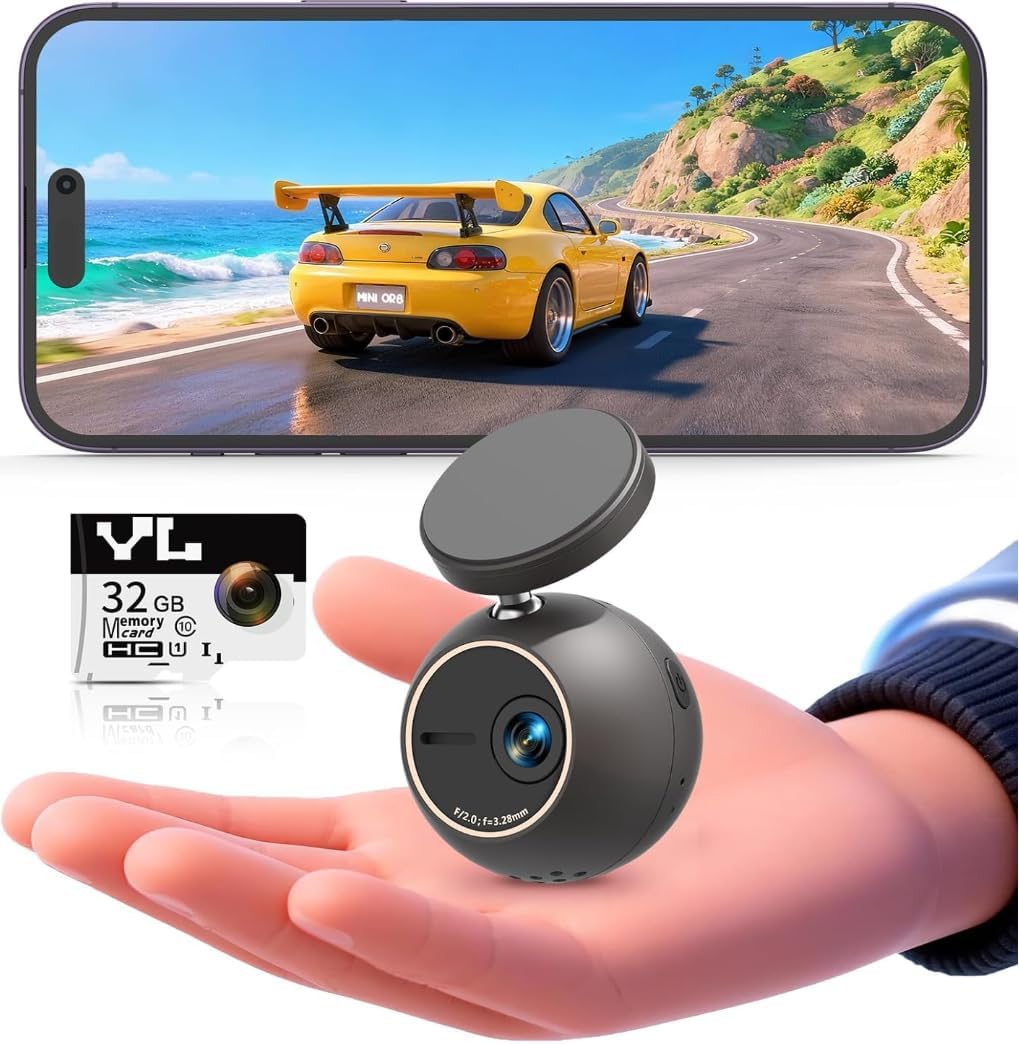
The KAWA Dash Cam 2K stands out with a 4.9 rating, a compact spherical body, and one of the simplest ways to manage recordings: voice commands. You can ask it to take a photo, start recording, or lock an emergency video without navigating menus while the vehicle is moving.
We may earn a commission when you buy through this link, at no additional cost to you.
Its 360-degree rotatable mount allows the camera to point forward, toward the side, or inside the cabin. The mount also supports 180-degree image flip and mirror mode, making it unusually flexible for different vehicle layouts. Built-in Wi-Fi provides live viewing and downloads through the phone app, while the NightEagle engine controls exposure to preserve useful detail in darker scenes.
First use requires pairing through the app, although later disconnection does not interrupt video recording. Optional 24-hour time-lapse parking protection requires a separately sold hardwire kit. The manufacturer also advises using only the original car charger and cable because incompatible accessories may cause power loss, reboots, or mainboard damage.
With the highest supplied rating in the group and an approachable combination of voice control, flexible positioning, and phone management, the KAWA is an excellent choice for drivers who want simple operation and a distinctive, unobtrusive camera.
Voice commands reduce the need to touch the camera while driving. Saving a clip or locking an important moment can be handled verbally, which is faster and less distracting than searching through physical controls.
The rotating spherical mount makes it possible to change the camera's orientation without replacing the mount. That flexibility is useful for vehicles with unusual windshield layouts or for drivers who want interior coverage as well as forward-facing footage.
We may earn a commission when you buy through this link, at no additional cost to you.
The easiest dash cam is not necessarily the one with the longest specification list. Focus on the controls you will actually use, whether storage is included, how the camera fits your vehicle, and which recording features match your daily routine.
A simple dash cam should mount securely without blocking your view or requiring permanent alterations to the vehicle. Suction mounts are easy to reposition and remove, while adhesive mounts can feel more stable but may be less forgiving if the mounting angle is wrong. Consider windshield tint, heating lines, local rules, the camera's dimensions, and the location of the rearview mirror before choosing. A compact body is often easiest to accommodate because it leaves more open space around the mirror and reduces the chance that the lens points into a shaded or obstructed area.
A built-in screen provides quick local playback and lets you format a card or confirm a setting without a phone. It is particularly useful for drivers who want minimal dependence on wireless connections. A screen-free camera generally looks cleaner above the dashboard and avoids any additional display brightness, but clips must be reviewed through an app or computer. Neither approach is universally easier, so think about which one matches your habits. If you regularly inspect recordings while parked, favor a screen; if you want the least visual distraction, consider the screen-free galphi model.
Dash cam footage consumes storage quickly, so supported card capacity and write performance matter. Some cameras arrive with a card already installed, which is the most beginner-friendly arrangement because the system can be used immediately. If a card is not included, verify the supported capacity, speed class, physical size, and formatting instructions before buying. Loop recording is standard across most modern systems, but a G-sensor or equivalent event lock is important because it protects significant clips from routine deletion. Choose enough capacity for your driving schedule without paying for storage you will never use.
Wi-Fi makes it possible to preview the camera, download clips, change settings, and sometimes update firmware from a phone. Faster bands such as 5GHz or 5.8GHz can reduce transfer times for high-resolution files, while Wi-Fi 6 may improve efficiency on compatible devices. Check whether app features require a subscription, whether the camera needs an internet connection, and whether first-time pairing is part of the setup. The KAWA's later-disconnection behavior is worth noting because recording continues even if the phone is not connected.
A front-only camera is smaller, usually easier to install, and can be less distracting. It is adequate for documenting the road ahead and is often the simplest choice for a first dash cam. A dual-camera system adds a rear view for surrounding context, which can be helpful during lane changes, following traffic, and parking incidents. It also means more cables, more installation decisions, and potentially another file stream to manage. Choose dual coverage when you regularly want evidence from both directions; stay with a front-only model when simplicity and a compact installation matter more.
Higher resolution can preserve more detail, but lens quality, aperture, sensor behavior, HDR, and WDR also influence how useful the footage looks. Look for a stated native resolution rather than an upscaled label. A wide aperture can gather more light at night, while WDR helps balance headlights and dark areas. Models such as the ROVE R2-4K Dual use advanced sensors for low-light recording, while less expensive systems can still perform adequately with a good aperture and lens. Choose based on the lighting conditions you actually drive in rather than focusing on resolution alone.
Parking mode can provide time-lapse surveillance or event-triggered recording while your vehicle is unattended, but most systems require a hardwire kit to maintain power after ignition is switched off. The kit must be compatible with the camera and installed safely according to the manufacturer's instructions. Without it, the camera normally records only while receiving power through the standard car adapter. Budget for that accessory and consider the electrical demands of a vehicle that is used for ride delivery, commuting, or frequent overnight parking.
Convenience features can make a dash cam easier to live with. Voice control allows important actions without touching the device. GPS can add route, speed, and location data to recordings, while parking-guard notifications can alert you to an incident after you return. These tools should support rather than replace a simple automatic recording workflow. The most important baseline remains reliable power, continuous loop recording, automatic incident locking, and a dependable way to retrieve the footage.
Begin by reading the camera's instructions and checking the supplied components before mounting anything. Identify the front and rear units if the model includes both, install a compatible memory card when required, and remove any protective film from the lens. Clean the inside of the windshield with an appropriate glass cleaner, allow it to dry, and position the mount where it does not obstruct your view. Route cables away from airbags and moving trim, then connect the correct power adapter.
After installation, verify that the date, time, recording resolution, and loop settings are correct. Format the card in the camera when that option is available, and make sure the camera begins recording when the vehicle receives power. Test the front and rear views, download a sample clip through the app if applicable, and confirm that playback works. For a dual system, check that the rear cable is secure and that both cameras appear correctly on the device or app.
Review important clips promptly and save them outside the loop-recording folder when necessary. Keep the lens clean, protect the camera from extreme heat when possible, and inspect mounts and cables for looseness or damage. If parking mode is enabled, confirm that the compatible hardwire kit is installed correctly and that the battery remains in good condition. Use only the manufacturer-recommended charger, cable, and storage media, as incompatible accessories may cause unreliable operation.
A screen is easier for quick local checks because you can confirm the camera angle, review clips, format the card, and adjust basic settings without a phone. A screen-free model is better for drivers who prefer a cleaner dashboard and do not need immediate playback. Consider how often you expect to inspect recordings before choosing between these approaches.
No, because some models include a compatible card while others do not. The galphi comes with a 32GB card, the ROVE R2-4K Dual includes a 128GB card, and several other models require separate storage. Always check the package contents and confirm the card capacity, speed class, and physical format before purchasing.
Many models offer a parking mode, but almost all require a compatible hardwire kit to retain power after the ignition is switched off. A standard car adapter may stop supplying power with the engine. Installation should follow the manufacturer’s instructions, particularly around the vehicle's fuse box and electrical systems.
No. A good 2K or 2.5K front camera can provide useful detail while producing smaller files and potentially simplifying transfers. Resolution is only one part of image quality; sensor, lens, aperture, HDR, and night processing also matter. Choose 4K when higher detail or more aggressive cropping is important to you.
They generally do because a rear camera must be mounted and connected with an additional cable. The ROVE R2-4K Dual includes mounting accessories and a rear-camera cable, while the E-YEEGER S50 and S60 also use wired rear cameras. Extra setup is worthwhile when you want evidence from behind the vehicle, but a front-only model remains easier to position.
Usually, the local connection between your phone and camera does not provide internet access. You can generally preview and download recordings while connected to the camera's own network. Cloud storage, remote live view, or other online services may need internet access, and certain Garmin Vault features require a paid subscription.
Save incident clips to your phone or computer before the loop recorder replaces them, and keep important files in a separate folder that will not be erased during routine operation. Event-locked files are protected automatically, but manual backups are still sensible when footage could be needed for an insurance claim or dispute.
Place it high enough to obtain a clear view without blocking your sightline, usually near the rearview mirror or central upper windshield. Confirm that the view is not blocked by tint bands, roof sensors, or other equipment. Clean the glass before mounting and check the angle again after a few drives.
The KAWA 2K Spherical Dash Cam leads for voice control, flexible positioning, and the highest supplied rating. The galphi 4K Dash Cam Front is the strongest all-around budget-oriented option because it combines 4K recording, fast 5GHz transfers, and included storage in a discreet screen-free body. For comprehensive premium coverage, the ROVE R2-4K Dual adds front-and-rear cameras, a 128GB card, GPS, and excellent low-light hardware.
Prioritize the workflow you will actually use. Choose an included memory card if you want the least setup, a visible screen if you want local review, voice control if you want hands-free operation, and a dual-camera system if rear evidence matters. If parking surveillance is important, include a compatible hardwire kit in your planning rather than treating it as an optional afterthought.
Finally, check the current listing for package contents, supported storage, accessory requirements, and pricing before buying. Product configurations can change, and current details are more reliable than an older buying guide. With the right match between features and driving habits, a simple to use dash cam can become a quiet, dependable layer of protection.