
WonVon 5-Inch CarPlay GPS
4.3Editor score
Wireless smartphone navigation
Five-inch anti-glare display
Dual Bluetooth connectivity
Best Small GPS for Motorcycle Navigation and Tracking guide compares ten rugged GPS, CarPlay, tracker, and navigation systems for safer, better-connected rides.
Small GPS systems for motorcycles must balance compact construction, readable guidance, secure mounting, and dependable performance in vibration, rain, wind, and changing light. Whether riders want dedicated route planning, smartphone integration, ride recording, or discreet asset location, the best choice depends on how the motorcycle is used and where navigation is most needed.
This guide compares ten navigation displays, CarPlay-style systems, handheld units, and compact trackers using the supplied specifications, ratings, intended features, display size, connectivity, weather resistance, mounting approach, and tracking functions. It covers purpose-built motorcycle equipment, phone-dependent displays, standalone trackers, and one compact handheld navigator for riders who need more than a single category.
Each review identifies the strongest reasons to consider the product, along with practical limitations and better-suited riders. The list also explains the differences between turn-by-turn navigation, connected smartphone functions, asset tracking, and multi-camera recording systems. Product availability, features, plans, and prices can change, so confirm current specifications and costs before purchasing.
4.3Editor score

4.0Editor score

4.0Editor score
The table below compares all ten products by their core hardware, navigation approach, connectivity, tracking features, and outdoor suitability, making it easier to separate dedicated motorcycle navigators from smartphone displays and compact asset trackers.


The Garmin zūmo XT3 4.7-inch is a purpose-built motorcycle navigator with a 4.0 rating, combining a compact high-definition screen with maps and ride data designed specifically for two-wheel travel. It is a particularly logical choice for riders who want dependable guidance without placing a phone in the center of the cockpit. The IP67 rating also gives it a more purpose-built feel than a conventional consumer navigation screen.
We may earn a commission when you buy through this link, at no additional cost to you.
The strongest feature is the combination of preloaded detailed street maps, topographic maps, downloadable satellite imagery, and the visual route planner. Adventurous Routing can favor curvy roads, while the Great Rides database and popular motorcycle paths help riders discover routes recommended or used by other motorcyclists. A live lean-angle gauge adds a motorcycle-specific reason to choose the device, and ride summaries in the Tread app can report G-force, maximum speed, acceleration, and deceleration.
The zūmo XT3 does not provide every advanced feature without qualification. Track statistics require an active Garmin Performance Package plan, group-ride locations require pairing with the Tread app and an active cellular connection, and premium map layers require Outdoor Maps+. The 4.7-inch screen is intentionally compact, so riders who want to inspect a complex map at a stop may prefer the larger 6-inch version.
This is the strongest recommendation for riders seeking a dedicated, vibration-resistant navigation device with useful performance data. It is particularly attractive for touring riders, adventure motorcyclists, and anyone who prefers reliable onboard maps over complete dependence on smartphone reception. Riders should verify their preferred subscription features before purchase, but the core navigation experience is already motorcycle-focused.
The live lean-angle gauge is more than a decorative readout: it gives riders immediate feedback about cornering posture. Combined with Tread app summaries for G-force, speed, acceleration, and deceleration, the device adds a useful performance dimension to ordinary route guidance.
Preloaded maps, downloadable satellite imagery, visual route planning, Adventurous Routing, and highlighted Michelin scenic routes give riders several ways to build a trip. That variety is valuable when cellular coverage is unreliable or when the route should be finalized before departure.
We may earn a commission when you buy through this link, at no additional cost to you.
The WonVon 5-inch CarPlay GPS is a connected motorcycle display with a 4.3 rating and an emphasis on straightforward smartphone integration. Wireless CarPlay and Android Auto bring familiar mapping, music, calls, and voice-command functions to a dedicated handlebar screen. For riders who already rely on their phone, this is a practical alternative to stopping at every junction or handling a small phone while riding.
We may earn a commission when you buy through this link, at no additional cost to you.
Its 5-inch IPS display offers 854-by-480 resolution, anti-glare treatment, sunlight readability, glove-friendly operation, and a night mode. The listed 11-language support, 12-to-24-volt input, and compatibility with multiple motorcycles make the system broadly adaptable. Dual Bluetooth supports audio and hands-free communication, while the quick-lock bracket, wiring harness, BMW-style connector, mounting tools, and instructions support installation.
There are important distinctions between a smartphone interface and a standalone navigator. CarPlay, Android Auto, Siri, and Google Assistant require a compatible phone and the availability of the associated apps. The product title also makes clear that TPMS is not included, so riders expecting tire-pressure monitoring through this display should not assume that function is present.
The WonVon is best for budget-conscious riders who want a sizable, readable connected display and motorcycle-specific installation hardware. It is less appropriate for someone seeking a fully independent topo device, built-in lean-angle data, or a native motorcycle routing database. Within the CarPlay-style category, however, its screen size, connectivity, installation kit, and support package make it a compelling option.
Wireless CarPlay and Android Auto allow navigation, calls, music, and app access without treating the motorcycle screen as a completely separate system. Voice assistance is particularly useful because it reduces the need to reach for controls while moving.
The vibration-conscious body, secure clamp, wide-angle view, wide voltage range, and included wiring hardware are more motorcycle-specific than a tablet placed loosely in a handlebar pouch. The supplied connector and instructions can simplify the initial installation.
We may earn a commission when you buy through this link, at no additional cost to you.
This magnetic tracker has a 3.8 rating and offers a different purpose from the larger navigation systems. Measuring 1.3 inches and weighing 0.4 ounces, it is designed to attach discreetly to a motorcycle, car, trailer, or other metal surface. It uses the Apple Find My network to provide location updates without a SIM card or subscription service.
We may earn a commission when you buy through this link, at no additional cost to you.
The no-fee tracking model makes it attractive for riders who want to locate a parked motorcycle, follow an asset during transport, or keep tabs on luggage and other belongings. Its upgraded strong magnet allows quick placement without a complex bracket, while the tiny housing leaves little visual evidence that a tracker is attached. The same compact form can also serve pet, bag, suitcase, or child-location use cases.
The main limitation is platform dependence. It must be paired with an iOS device through Apple Find My, so Android-only users should consider a cross-platform alternative. It also is not a road navigation device: it provides location history through the Find My ecosystem rather than turn-by-turn guidance, weather-resistant map displays, or voice-controlled route planning.
Choose this tracker when discreet location updates matter more than visible navigation. It is especially relevant to owners concerned about parking security, long-distance transport, or recovering a motorcycle that has been moved. For route guidance on the handlebars, choose a dedicated GPS or connected display instead.
Because location reporting uses nearby Apple devices participating in the Find My network, the tracker does not require its own cellular plan. That can simplify ownership, although update timing and precision depend on the availability of participating devices.
The small size and integrated magnet make the unit easy to conceal on a metal motorcycle surface or install inside a suitable protected location. Riders should choose a position that is secure, accessible for pairing, and not exposed to excessive heat or moisture.
We may earn a commission when you buy through this link, at no additional cost to you.
The 6-inch Garmin zūmo XT3 shares the motorcycle-specific strengths of the smaller model while offering a larger high-definition display. It carries a 4.0 rating and retains the IP67 construction intended to handle handlebar vibration, harsh weather, and rough roads. The larger screen is particularly useful for complex route review, larger map details, and frequent stops.
We may earn a commission when you buy through this link, at no additional cost to you.
Preloaded detailed street and topographic maps, high-resolution satellite imagery, a visual route planner, Adventurous Routing, Great Rides, and popular motorcycle paths make this a capable dedicated navigator. The live lean-angle gauge, Tread app ride summaries, and optional track statistics also appeal to riders interested in performance. Group locations can appear directly on the display when the required app pairing and cellular connection are available.
The tradeoff is physical size. A 6-inch screen is less compact than the 4.7-inch zūmo XT3 and may occupy more handlebar space, particularly on motorcycles with smaller cockpits. It also shares the need for active plans for performance data and premium outdoor maps. Riders should consider whether the extra display area improves their route review enough to justify the bulk.
This model suits touring riders, adventure riders, and anyone who prefers a larger dedicated screen. It is also a strong option for groups using connected location features when cellular service is dependable. For the smallest dedicated Garmin display, the 4.7-inch version offers the same core platform in a more compact package.
The six-inch panel gives maps, route instructions, and ride metrics more room to breathe. It remains a self-contained navigation system with onboard street and topographic maps, making it useful where smartphone data or reception is inconsistent.
Lean-angle information, acceleration and deceleration summaries, and optional track data extend the device beyond basic directions. With appropriate connectivity, group-ride locations add another layer of awareness for riders traveling together.
We may earn a commission when you buy through this link, at no additional cost to you.
This compact vehicle tracker has a 4.7 rating, the highest listed rating in the group, and supports both Apple Find My and Google Find Hub. At 1.14 inches and 0.25 ounces, it is designed for discreet placement in vehicles, on bikes, or with luggage and other belongings. The absence of a SIM card and recurring subscription makes ownership comparatively straightforward.
We may earn a commission when you buy through this link, at no additional cost to you.
Its IP68 waterproof rating is notable for motorcycle use because it is intended to withstand rain, snow, and outdoor conditions. A CR2032 battery is advertised to last up to 12 months, reducing the need for frequent replacement. Setup involves pressing the button to pair with the relevant phone application, after which location information appears through the familiar Find My interface.
This is still a locator rather than a motorcycle navigator. It cannot display a route, offer turn-by-turn prompts, record dash-cam footage, or show lean-angle data. Location updates are based on the connected Find My network, and its small removable battery format differs from a hardwired vehicle tracker. Riders who need continuous power or a high-frequency fleet-tracking feed should investigate that different category.
For owners seeking a discreet tracker that works with either iPhone or Android, this is the most flexible and highly rated option in the group. It is especially useful for monitoring a parked motorcycle, locating luggage, or tracking an asset during transport. It complements rather than replaces a handlebar GPS.
Supporting both Apple Find My and Google Find Hub removes the need to buy a separate tracker when switching phone ecosystems. Pairing takes place through built-in applications, and no separate cellular contract is required.
The IP68 housing and replaceable coin-cell battery target motorcycles, cars, trucks, luggage, and other outdoor assets. Placement should still be chosen carefully, especially where the device could be exposed to crushing impacts or extreme heat.
We may earn a commission when you buy through this link, at no additional cost to you.
The 8.1-inch 4K CarPlay Screen is a large connected motorcycle display with a 4.1 rating. It supports wireless CarPlay and Android Auto, allowing riders to view maps, directions, audiobooks, calls, music, and messages while using Siri or Google Assistant. Its defining addition is dual-camera recording, with a 4K front lens and 1080P rear lens.
We may earn a commission when you buy through this link, at no additional cost to you.
The large IPS touchscreen is designed to make calls, playlists, and navigation easier to inspect than on a phone. Split-screen presentation can display front and rear camera views at the same time, while recorded videos can be viewed or shared through Wi-Fi. Bluetooth connection to a helmet or headphones adds hands-free calling, audio streaming, and voice-command operation.
Its size is the main concern. An 8.1-inch display is far larger than a compact GPS and may dominate the cockpit, interfere with wind protection, or be difficult to position on a small handlebar. The IPX7 rating supports use in wet conditions, but mounting, wiring, and screen visibility still require care. Like other CarPlay-style products, its navigation capability depends on a paired smartphone and compatible applications.
The system is best for riders who want navigation, phone functions, and video recording in one large package. It may suit touring riders, content creators, and commuters who value front-and-rear documentation. Buyers should verify their motorcycle's mounting space, power arrangement, and local recording expectations before installation.
The integrated cameras turn a familiar connected display into a riding recorder. Riders can preserve front and rear footage while retaining phone-based navigation, calls, and media functions on a single large touchscreen.
Pairing a Bluetooth helmet or headset supports clearer hands-free communication and voice control. This is especially relevant when the large display is mounted in a position that is easy to see but not ideal for frequent touch interaction.
We may earn a commission when you buy through this link, at no additional cost to you.
The LandAirSea 54 is a dedicated global GPS tracker with a 4.1 rating, created for vehicles, motorcycles, ATVs, golf carts, and other assets. Unlike compact Find My trackers that depend on nearby consumer devices, it provides real-time positioning, geofencing, and alerts through web-based software or the SilverCloud app. Historical playback can cover up to one year.
We may earn a commission when you buy through this link, at no additional cost to you.
Location updates can arrive as quickly as every three seconds, making it more relevant for active movement monitoring and rapid boundary alerts. A motion-activated design puts the tracker to sleep when the asset is not moving, which conserves power during storage. The internal magnet and compact form allow secure, discreet attachment to compatible metal surfaces.
The essential trade-off is the required subscription. A plan is needed for each device, so buyers should consider the long-term service cost before purchasing. The product also has no visible map or directional interface, meaning it complements rather than replaces a motorcycle navigation unit. Coverage and update availability depend on the active service and local network conditions.
This tracker is best for owners who want frequent, dedicated GPS monitoring and geofencing rather than a simple crowd-based location tag. It is well suited to motorcycle security, trip monitoring, and asset oversight, particularly when rapid position updates are valuable. Riders seeking turn-by-turn guidance should add a separate GPS or connected display.
Updates as fast as every three seconds are more suitable for active tracking than infrequent network pings. Real-time alerts and geofencing can help owners react when a motorcycle or other asset moves beyond a designated area.
Automatic sleep during periods without motion reduces unnecessary drain. The system is still intended to be used with its service plan, so the complete ownership cost should be considered alongside installation and mounting needs.
We may earn a commission when you buy through this link, at no additional cost to you.
The A-ONE Pro combines a 6.1-inch QLED touchscreen, wireless CarPlay and Android Auto, dual cameras, and GPS ride-data recording. Its 4.0 rating reflects a broad feature set aimed at riders who want more than a simple navigation display. The high-brightness QLED panel is designed to remain detailed and vivid in direct daylight without requiring a separate sunshade.
We may earn a commission when you buy through this link, at no additional cost to you.
The front and rear waterproof 1080P cameras can record continuously and appear alongside navigation in split-screen mode. A GPS module logs speed, route, altitude, location, and compass information together with video, making the system useful for reviewing a ride after the fact. The aluminum handlebar mount is intended to remain stable, and additional inserts broaden compatibility with different handlebar sizes.
Installation requires more consideration than a simple tracker. The camera system, GPS module, display, and power connections create a larger setup, and the aluminum mount must be positioned without obstructing controls. Wireless smartphone functions remain dependent on CarPlay or Android Auto compatibility, while the recorded ride features depend on the included GPS module and app workflow.
The A-ONE Pro is the most compelling premium choice for riders who want bright navigation, connected phone functions, video, and telemetry in one system. It is particularly useful for scenic touring, documenting long rides, and reviewing routes with added environmental data. Riders seeking simplicity may find a dedicated GPS or smaller tracker easier to manage.
The ultra-bright QLED panel provides strong outdoor visibility and vivid color. Its 6.1-inch size balances more visible detail with a less bulky footprint than the largest CarPlay screens in this comparison.
Synchronizing GPS information with front and rear footage creates a more complete record than a basic dash camera. Speed, route, altitude, location, and compass data can make post-ride review more informative.
We may earn a commission when you buy through this link, at no additional cost to you.
The 7-inch Waterproof CarPlay GPS combines a large high-brightness IPS display with integrated tire-pressure and temperature monitoring. It has a 4.6 rating and is one of the strongest alternatives for riders who want a connected display with motorcycle-specific safety information. The sealed IP67 housing is designed for rain, splashes, dust, and changing outdoor conditions.
We may earn a commission when you buy through this link, at no additional cost to you.
Its most distinctive feature is TPMS, with real-time tire pressure and temperature visible through the display. The listed blind-spot detection system provides side-vehicle alerts intended to improve awareness in highway and city riding. Front and rear camera recording, dual-band Wi-Fi, Bluetooth 4.2, and a handlebar remote broaden the system's entertainment, recording, and control functions.
The seven-inch screen is substantial and may be less suitable for compact cockpits. The product description also lists dual-lens recording, but its exact recording format, storage method, and night performance should be confirmed with the seller before purchase. A full hardwire installation kit is included, yet setup may take more planning than attaching a compact battery-powered tracker.
This model is best for riders who prioritize TPMS, visibility, and safety alerts in a large connected interface. It is also a strong all-weather option for commuting and touring, provided the handlebar has sufficient room. Those wanting lean-angle data or completely independent maps should look to a dedicated zūmo unit instead.
Integrated TPMS places tire pressure and temperature directly into the riding interface, making problems easier to notice. The blind-spot warning feature adds another layer of awareness, although its real-world usefulness depends on correct installation and compatible motorcycle sensors.
The anti-glare, sunlight-readable panel is designed for outdoor use, while responsive touch control allows interaction with gloves. The handlebar remote adds an alternative for controlling connected functions without reaching toward the screen.
We may earn a commission when you buy through this link, at no additional cost to you.
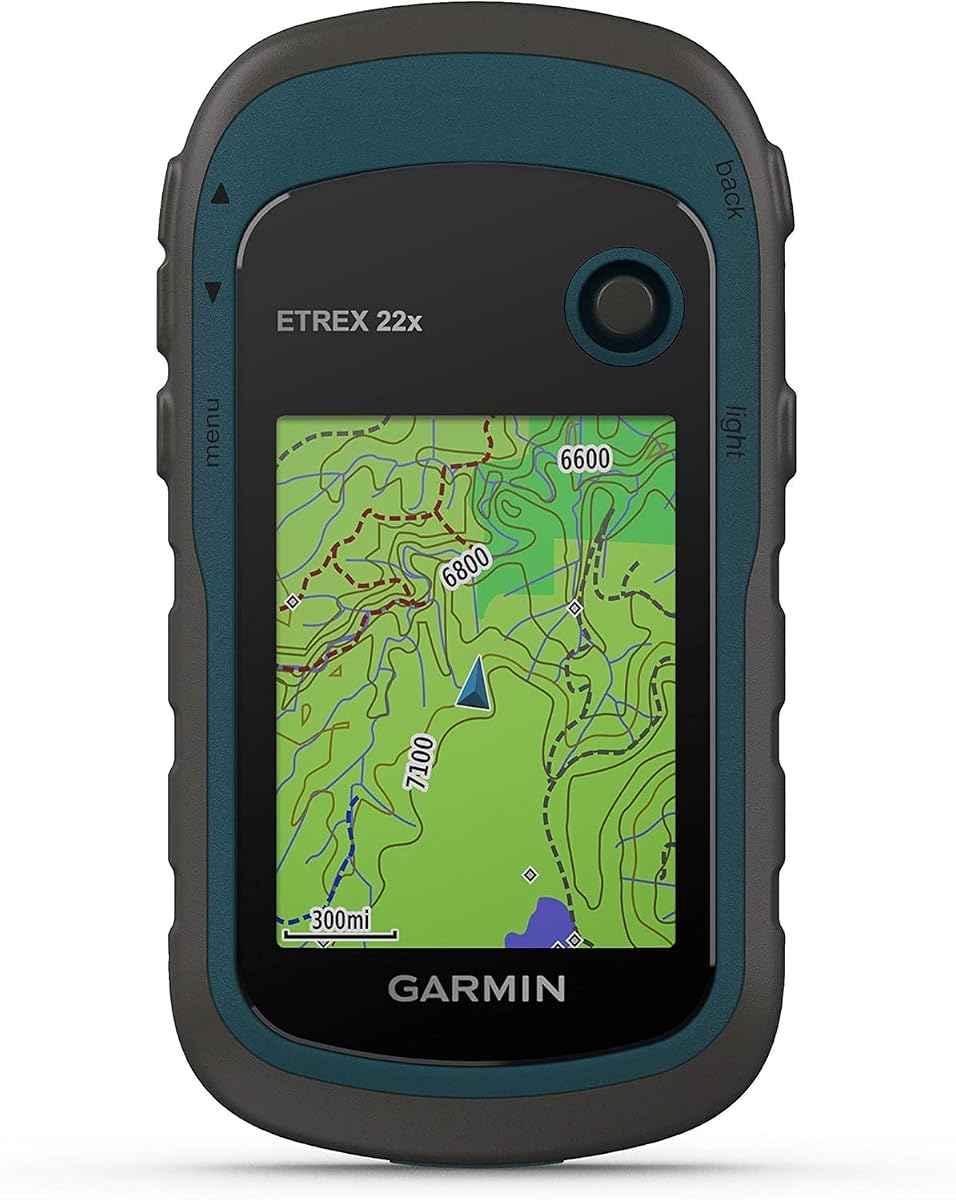
The Garmin eTrex 22x is the smallest dedicated navigator in this group, with a 2.2-inch sunlight-readable color display and a 4.3 rating. Its 240-by-320 resolution and portable design make it appealing for riders who prefer a minimal device or need a separate navigator for camping, hiking, and cycling. It is not a motorcycle-specific model, but its compact dimensions suit a handlebar or pocket mount.
We may earn a commission when you buy through this link, at no additional cost to you.
Topo Active maps with routable roads and trails are preloaded, and 8 GB of internal memory provides space for map downloads. A microSD card slot adds further storage flexibility. Support for both GPS and GLONASS satellite systems can improve positioning in challenging surroundings, while two AA batteries deliver up to 25 hours in GPS mode.
The primary limitation is the small, relatively low-resolution screen. Detailed map review and menu navigation will not match the roomier Garmin zūmo or large CarPlay displays. It also lacks motorcycle-specific features such as lean-angle data, G-force summaries, performance packages, and group-ride location displays. A secure motorcycle-specific mount may need to be sourced separately.
The eTrex 22x is best for minimalist riders, off-road travelers, and anyone seeking a durable independent navigator that can move between a motorcycle, backpack, and campsite. It offers a convincing combination of low size, long battery life, and multi-constellation positioning. Riders who need an intuitive large-screen cockpit system should choose a more specialized unit.
Preloaded maps and support for GPS and GLONASS mean the eTrex 22x does not depend on a phone connection for basic navigation. Dual-constellation support can be useful around steep terrain, dense vegetation, or other locations where satellite visibility is less than ideal.
The 2.2-inch display and AA-battery power make the unit simple to carry between uses. Up to 25 hours of GPS runtime and a microSD slot suit riders who download maps in advance and travel beyond reliable charging opportunities.
We may earn a commission when you buy through this link, at no additional cost to you.
The right motorcycle GPS depends on whether the primary need is route guidance, smartphone integration, ride recording, or asset location. Screen size, mounting security, weather resistance, power requirements, connectivity, and ongoing service costs should all be considered before installation.
A dedicated GPS stores maps and calculates routes on the device, making it a strong choice for long-distance riders, off-road travel, and areas with inconsistent cellular service. Products such as the Garmin zūmo XT3 provide motorcycle-oriented routing, lean-angle data, and onboard topographic maps. A CarPlay or Android Auto display, by contrast, places familiar phone navigation on a larger handlebar screen and can add calls, music, messages, and app access. It generally requires a compatible phone, suitable mounting, and power at the handlebars.
Choose a dedicated navigator for independence, and choose a connected display for phone-based flexibility. The best solution is the one whose operating requirements match the rider's routes and phone habits.
Compact screens can reduce cockpit clutter and may feel more natural on a small motorcycle, while larger panels make maps, calls, and recording controls easier to inspect. A 4.7-inch Garmin zūmo screen occupies less space than a seven- or eight-inch CarPlay display, and the 2.2-inch eTrex is smaller still. Readability outdoors matters more than raw size: look for sunlight-readable brightness, anti-glare treatment, glove-friendly touch response, and a night mode.
Match the display to the cockpit and rider. Choose a small screen for minimalism and a larger one when map detail, media controls, or split-screen camera views are frequent priorities.
Motorcycle electronics encounter constant vibration, wind-driven rain, dust, temperature changes, and occasional impacts. An IP67 rating indicates resistance to dust and temporary immersion, while IP68 indicates a higher level of water protection. These ratings do not make every installation immune to damage, so secure wiring, protected connectors, and a stable mount remain important. Purpose-built zūmo units and rugged trackers may be better choices for rough routes than a generic tablet-style display.
Prioritize a documented water-resistance rating and motorcycle-focused vibration tolerance. Also ensure the screen and mount can withstand the actual movement of the motorcycle rather than relying on a pocket or pouch alone.
A display that is difficult to read or vibrate on its bracket can be more distracting than having no screen at all. Look for a clamp or handlebar mount that fits the motorcycle's bar diameter, provides a stable viewing angle, and does not block instruments, switches, ignition access, or the windscreen. Products with aluminum mounts or multiple insert sizes offer useful compatibility options, but riders should verify dimensions before ordering.
Check the full assembly, including the screen, mount, wiring, and camera positions. A secure, slightly lower placement is usually more practical than a large display mounted at the highest point.
Compact trackers fall into several distinct categories. Apple Find My and Google Find Hub devices use nearby consumer devices and phones to relay positions, which is inexpensive and discreet but does not guarantee rapid updates. Dedicated GPS services can provide more frequent positioning, geofencing, historical playback, and real-time alerts, usually through a required subscription. These trackers monitor an asset rather than presenting turn-by-turn directions on the motorcycle.
Choose a network-based tracker for simple ownership and concealed placement. Choose a dedicated GPS service when geofencing, rapid movement alerts, or longer tracking histories justify the recurring service.
Battery-powered trackers are simple to move between vehicles and belongings, while handlebar displays usually need reliable power. The WonVon system supports a 12-to-24-volt input, the A-ONE Pro supports USB and direct 12-volt connection, and the seven-inch system includes a hardwire kit. Connected displays also need stable wireless or Bluetooth links to a phone, helmet, or headset. Check connector type, voltage tolerance, cable routing, and fuse requirements before installation.
Use a properly fused connection for permanently installed equipment and keep charging cables from interfering with steering or the throttle. For phone-based displays, confirm that the rider's phone, operating system, and apps support the required wireless connection.
The most useful navigation features differ by category. Dedicated Garmin units offer street and topographic maps, satellite imagery, scenic routing, popular motorcycle paths, visual route planning, and live lean-angle information. Connected displays may offer familiar turn-by-turn guidance plus calls, messages, music, and voice assistants. Larger camera-equipped systems can also record video, synchronize ride telemetry, or display tire pressure and temperature, making them more useful for documenting rides than basic wayfinding alone.
List the features used on every ride before buying. Avoid paying for advanced displays when the actual need is a simple map, and choose a dedicated GPS when lean-angle, group, or track data matters more than phone apps.
Some products are fully usable after purchase, while others depend on an optional map plan, performance plan, cellular connection, or a dedicated tracking subscription. The two Find My trackers operate without a monthly fee, while LandAirSea requires a service plan. Garmin's performance and premium map features likewise require active plans. Apple's Find My network requires an iOS device, whereas the dual-network tracker supports both Apple and Google environments. These operating requirements determine long-term usability.
Verify platform support, connectivity needs, and service costs before checkout. A product can fit the mount perfectly but still be unsuitable if its subscription, phone, or network requirements do not match the rider's setup.
Before installation, read the included instructions and confirm that the device supports the motorcycle's handlebar diameter, electrical system, and mounting points. For a connected display, pair and test CarPlay or Android Auto before the ride, update the phone applications, and confirm GPS permission. For a tracker, complete the network pairing and test location reporting while the device is in your hand before hiding it on the motorcycle.
Mount the unit securely, position it within the rider's natural line of sight, and keep cables restrained away from bars, levers, suspension, chain, exhaust, and the front wheel. Route power through an appropriate fused connection when hardwiring. After a short low-speed test, check for vibration, screen glare, blocked controls, loose connectors, and interfering cables. Take another short ride in darkness to confirm that brightness and night settings remain readable.
Care for the device according to its rating and instructions. Clean the screen with a soft damp cloth, keep the charging port and connectors dry, and avoid directing high-pressure water at sealed components. Check the mount and wiring periodically, especially after rough roads. Trackers should be checked for battery condition and secure attachment, while cameras and screens should be inspected for mud, condensation, or damage that could affect visibility and recordings.
A dedicated GPS is usually better for dependable navigation because maps and routes are stored on the device. It does not depend on phone reception, data, battery level, or an app remaining open. A phone or CarPlay display can be more convenient for familiar search, calls, music, and automatic updates, but it needs a secure mount, reliable power, and compatible applications.
A 4.7- to 6-inch screen offers a practical balance of readable information and manageable cockpit size. Larger seven- and eight-inch displays are easier to inspect but can obstruct sightlines or clutter a compact handlebar. The smallest devices are excellent for portability and basic route finding, although detailed map review becomes more difficult.
A compatible tracker can provide location and movement history through the associated phone application or web-based service. Network-based Find My products are simple and discreet, while dedicated GPS services may provide faster updates, geofencing, and more detailed history. No tracker guarantees that a motorcycle will be recovered, and installation in a concealed, protected location is important.
Core navigation does not necessarily require a subscription. Dedicated trackers using Apple Find My or Google Find Hub can operate without a recurring tracking fee, while some dedicated GPS trackers require a plan. The Garmin zūmo XT3 also uses optional plans for premium map layers, performance statistics, and certain group features, so riders should check which capabilities they need.
The display can still appear and some locally stored functions may work, but most phone-based navigation, messaging, and live data depend on the paired phone's connection. Riders who frequently travel without cellular service should download offline maps on the phone or choose a dedicated GPS with onboard street and topographic maps.
IP67 is a common choice for motorcycle displays because it indicates dust protection and resistance to temporary immersion. IP68 offers stronger water protection, while IPX7 focuses on water resistance without a dust rating. A rating is only one consideration; secure mounting, protected connectors, and proper cable sealing are equally important in real riding conditions.
A magnetic tracker can work well on a metal motorcycle if the placement is secure and protected from excessive heat, crushing impacts, and moisture. The Find My and dual-network options in this guide are extremely small, while the LandAirSea model offers a dedicated service and faster updates. Riders should test movement reporting before relying on the tracker for security.
Those features are valuable for riders who record trips, want rearward awareness, or need visible tire-pressure and temperature information. They also increase screen size, installation complexity, power requirements, and cost. A rider whose main priority is dependable navigation can choose a dedicated GPS, while a connected multi-function system makes more sense for broader recording and monitoring needs.
The Garmin zūmo XT3 4.7-inch stands out as the most focused motorcycle navigation choice because it combines onboard maps, scenic routing, a lean-angle gauge, and rugged construction in a relatively compact display. The WonVon 5-inch system is a value-oriented option for riders who want wireless CarPlay, Android Auto, and familiar phone functions, while the A-ONE Pro offers the most complete premium combination of bright display, cameras, and recorded ride telemetry.
Prioritize the category that matches the need. Choose a dedicated navigator for remote travel and motorcycle-specific guidance, a CarPlay-style display for phone integration, a compact tracker for concealed asset monitoring, and a larger connected system when recording, TPMS, or multi-camera functions justify the added complexity. Screen visibility, mounting stability, power requirements, weather resistance, and platform limitations deserve as much attention as headline features.
Before purchasing, verify current specifications, compatibility, included accessories, plan costs, and the latest product listing. Features, connected services, and availability can change, and the supplied ratings may shift as more customers provide feedback. Checking those details at the time of purchase helps ensure the chosen small GPS for motorcycle navigation and tracking fits the bike, the rider, and the intended journeys.