As an Amazon Associate we earn from qualifying purchases. We may earn a commission when you buy through links on this page, at no additional cost to you.As an Amazon Associate we earn from qualifying purchases.Purchases through our links may earn us a commission, at no extra cost to you.
Choosing a camera for dental photography is more complicated than selecting a device with a sharp lens or a large sensor. Clinical images must be clear, well illuminated, easy to capture, and suitable for documentation, treatment planning, and patient communication across different practice environments.
This guide compares ten purpose-built intraoral cameras, conventional cameras, mirrorless bodies, compact creator cameras, and a dental lighting accessory. The evaluation focuses on image clarity, illumination, focus behavior, software compatibility, portability, close-up capability, and how each product could fit into a clinical workflow.
Each pick reveals what type of dental professional or practice may benefit from it, while also noting important trade-offs. Ratings and specifications can change over time, and product availability, bundled accessories, software requirements, and prices also shift, so buyers should verify current details before purchasing.
Top 3 Picks for Best Camera for Dental Photography
Best Budget
Dental Photography Aid, Oral Cell Phone Camera Fill Light Brightness Led Video Light Studio Lighting Kit for Home, Salon, Hospital
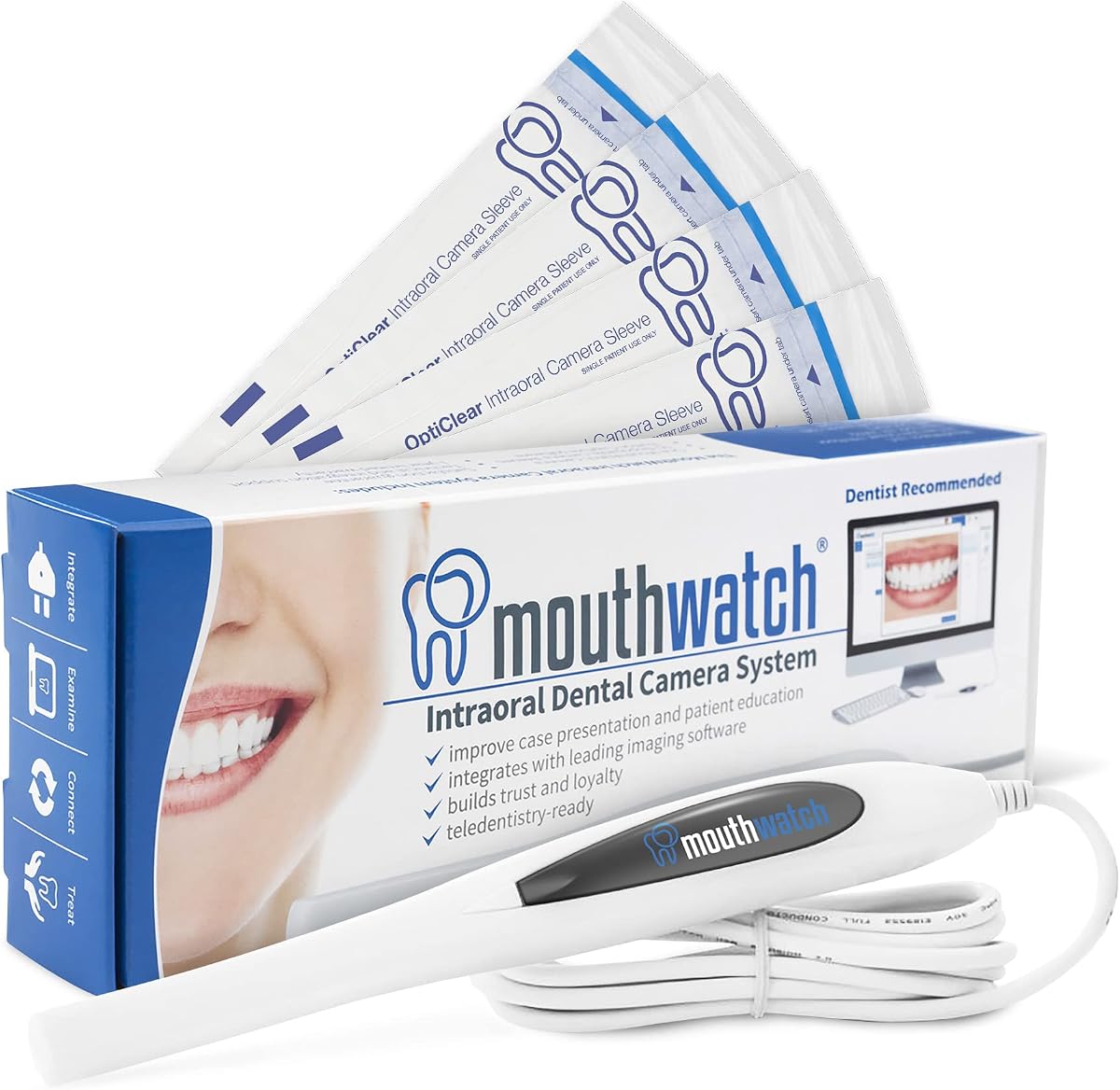
Intraoral Camera, Crystal Clear Images with an Easy to Use, Fast, Single Button Operation Dental Camera, Compatible with Over 50 Dental Imaging Suites, Lightweight and Ergonomic, 31 Grams
Top 10 Best Camera for Dental Photography in 2026 Compared
The comparison covers dedicated intraoral systems, general-purpose cameras, a compact creator camera, and a phone-based lighting aid, highlighting the distinct clinical and creative roles each option can serve.
The MouthWatch-style intraoral camera is the most complete clinical choice in this guide, combining a 31-gram handset, clear illumination, fast single-button capture, and compatibility with more than 50 dental imaging suites. Its 4.4 rating reflects a strong balance between clinical convenience and software flexibility, making it especially appropriate for practices that already depend on digital imaging.
Pros
Exceptionally lightweight handset
Fast one-button operation
Broad imaging-software support
Fixed-focus clinical convenience
Cons
Requires compatible dental software
Not a general-purpose camera
We may earn a commission when you buy through this link, at no additional cost to you.
Its most valuable feature is the direct path from capture to the patient chart. Pressing the single button saves an image without requiring a mouse or keyboard, which can reduce friction during examinations and treatment discussions. The fixed 4mm–45mm focal distance also avoids autofocus hunting, an important advantage when working at a variable distance in a tight and moisture-sensitive environment.
There are trade-offs. This is a purpose-built intraoral device rather than a general camera, and its usefulness depends on using one of the supported imaging platforms. The stated integration support includes Eaglesoft, Dexis, Schick, Apteryx, and many other solutions. Buyers should still have their technical team confirm the exact software version and workflow before committing.
The best choice is a practice seeking a fast, ergonomic image-capture device that can be integrated directly into an existing clinical system. It is less suitable for a dentist who wants full creative control over portraits, backgrounds, or studio-style before-and-after images. For routine chairside documentation and patient education, however, it offers the most focused and efficient design.
A Faster Path From Exam to Chart
Single-button capture removes several steps from the clinical workflow. Because images are saved directly to the chart, staff can spend less time operating menus, moving files, or naming images at the moment they are needed.
Comfort During Extended Use
At 31 grams, the handset is light enough to reduce fatigue compared with many conventional cameras. Its ergonomic form is particularly helpful during long appointments involving repeated documentation of different teeth and soft tissues.
The Oral Fill-Light Kit is the most approachable option for improving dental photographs made with a phone. It holds a 4.6 rating and provides adjustable LED illumination, an omni-directional support bar, and a removable bracket designed to position light inside the mouth. It is an accessory rather than a complete imaging system.
Pros
Low-cost way to improve lighting
Works with most smartphones
Adjustable brightness controls
Portable zippered case included
Cons
Does not include a camera
Limited to accessory-level control
We may earn a commission when you buy through this link, at no additional cost to you.
The primary benefit is control over harsh, uneven, or insufficient light. Users can adjust brightness from zero to 100 percent and reposition the light around the mouth for an improved view of teeth and treatment details. Because it supports most cell phones, it can upgrade an existing device without requiring a dedicated clinical camera or complex installation.
The limitations are significant for clinical buyers. This kit does not provide image capture, autofocus, file management, or direct integration with dental records. Its results will depend on the phone camera, the operator's technique, and the quality of the phone's native application. A high rating also does not establish that it is suitable for every diagnostic purpose.
This is a strong choice for dentists, hygienists, students, or cosmetic practices seeking a simple lighting upgrade for intraoral images and treatment-result discussions. It is best viewed as a flexible, inexpensive complement to a good smartphone rather than a replacement for a dedicated intraoral camera or a complete photography system.
Better Light Without Major Equipment
The adjustable LEDs help reveal tooth surfaces, contours, and restorative details that may be difficult to see under uneven room lighting. The support bar also permits omni-directional positioning around the oral cavity.
Simple Compatibility With Smartphones
The removable handpiece bracket and flexible light positions make the kit useful across more than one phone-based workflow. A zip case supports transport between treatment rooms, offices, or teaching environments.
The Canon EOS Rebel T7 DSLR Camera EF-S 18-55mm f/3.5-5.6 is II Lens Kit combines a 24.1-megapixel APS-C sensor with a familiar 18-55mm zoom lens and a 4.6 rating. It is a capable general-purpose camera for practices that want more control than a phone offers without moving to a dedicated clinical platform.
Pros
Recognizable 24.1MP sensor
Useful kit zoom lens
Optical viewfinder for framing
Wireless transfer convenience
Cons
No built-in clinical illumination
Not optimized for chart integration
We may earn a commission when you buy through this link, at no additional cost to you.
Its sensor provides enough resolution for detailed documentation, while the optical viewfinder and nine-point autofocus system support deliberate manual framing. Built-in Wi-Fi and NFC can simplify transfer to compatible mobile devices, and the camera can also serve as a webcam through the referenced Canon utility for appropriate computer workflows.
As a dental tool, the T7 needs additional accessories and deliberate setup. The kit lens is not a dedicated macro or intraoral lens, and the camera has no integrated oral lighting. It also cannot save images directly into most practice-management systems, so a separate transfer and storage process is required. Those limitations make it less convenient than a dedicated intraoral camera.
The Rebel T7 is best for a dental professional who wants one camera for clinical close-ups, staff portraits, practice marketing, events, and general photography. Buyers should add appropriate close-up optics and controlled lighting, but the camera body provides a dependable and accessible foundation for a broader visual program.
One Camera Beyond the Operatory
The Rebel T7 can document clinical work while also handling team portraits, office scenes, equipment, and educational content. That flexibility makes it appealing to practices building a consistent visual identity beyond patient records.
Reliable Detail and Familiar Controls
The 24.1MP APS-C sensor provides a strong base for detailed output, while the optical viewfinder supports stable composition. The included zoom offers more framing flexibility than a fixed-lens compact camera.
The Canon EOS R50 Mirrorless Camera with RF-S18-45mm F4.5-6.3 STM Lens Kit is the most premium conventional camera in the list. Its 24.2-megapixel APS-C sensor, advanced autofocus, vari-angle touchscreen, and 4.5 rating make it a strong option for practices producing both still images and detailed procedure video.
Pros
Excellent close-up potential
Advanced subject detection
Flexible vari-angle display
4K oversampled recording
Cons
Premium learning curve
Requires added lighting and lenses
We may earn a commission when you buy through this link, at no additional cost to you.
Dual Pixel CMOS AF II covers the frame with 651 zones and offers subject detection and tracking. The close-up demonstration focus mode can shift attention to the nearest subject, which is useful for hands-on demonstrations. Six-kilobyte oversampled uncropped 4K recording and a 2.36-million-dot electronic viewfinder add considerable production capability.
These strengths come with added complexity. The body and lens set do not include a dental light, macro lens, or record-system integration, and a general-purpose camera requires more deliberate setup for intraoral work. The compact zoom may not be the preferred final choice for every close-up composition. Users also need to follow proper clinical and privacy practices when filming patients.
The R50 is best for a practice that wants premium images, video, staff education, and marketing from a flexible system. It exceeds the specialized needs of routine chart documentation but offers a much broader creative toolkit than an intraoral camera or smartphone lighting kit.
Autofocus That Follows the Work
Wide autofocus coverage and subject detection help maintain focus when a clinician's hands or the treatment area moves through the frame. This makes the camera more practical for recorded procedures and educational demonstrations.
Shoot From More Angles
The vari-angle touchscreen allows the camera to be positioned above, below, or beside the subject. That flexibility is valuable for high-detail work where a fixed rear screen would make framing difficult.
The Sony ZV-1 Camera with 24-70mm Lens bundle is designed primarily for creators who want compact still-image and video production. Its 4.3 rating, 20.1-megapixel one-inch sensor, and fast ZEISS 24-70mm lens make it appealing for educational videos, short demonstrations, and patient-facing content.
Pros
Compact creator-oriented design
Fast broad-aperture zoom
Product-focused shooting modes
Useful accessory bundle
Cons
No dental imaging integration
Small sensor versus larger options
We may earn a commission when you buy through this link, at no additional cost to you.
The vari-angle screen is useful for framing close work, while product showcase and background-defocus controls simplify creator-oriented shooting. A three-capsule directional microphone system supports clearer spoken content, and the included 64GB card, reader, soft case, flexible tripod, and cleaning kit make the bundle more complete out of the box.
For dental use, it is less specialized than its features may initially suggest. There is no built-in oral illumination, dedicated clinical focus mode, or direct integration with dental records. The 20.1MP sensor is smaller than the sensors in the Canon DSLRs and mirrorless camera in this list, and the wide zoom can produce shallow depth of field when working very close to teeth.
The ZV-1 is best for a practice making polished short-form educational content, procedure explainers, or social media clips. It offers a strong balance of portability, lens capability, audio, and creator controls, but it should be paired with dedicated lighting and appropriate infection-control procedures before clinical use.
Creator Tools for Clinical Education
Product showcase mode and background defocus help presenters emphasize the object in front of the lens. These controls are useful for short educational clips in which the treatment or model should remain visually prominent.
A Complete Portable Bundle
The included memory card, reader, tripod, case, and cleaning kit cover several basic needs. A creator can organize files and set up a compact recording station without sourcing each accessory separately.
The 88MP Dual-Lens Digital Camera is a feature-packed entry-level camera marketed for travel, everyday photography, vlogging, and content creation. It carries a 4.0 rating and combines an advertised 88-megapixel sensor, 8K video, a touch display, dual lenses, and wireless transfer in one package.
Pros
Long feature list for the category
Dual lenses widen use cases
Large touchscreen simplifies framing
Two batteries and charger included
Cons
Brand-neutral product identity
Uncertain dental workflow fit
We may earn a commission when you buy through this link, at no additional cost to you.
Its autofocus system is designed to lock quickly, while the 3.2-inch IPS touchscreen allows users to tap to frame, focus, and shoot. A 360-degree mode dial provides direct access to portrait, landscape, slow-motion, timelapse, and other scenes. Two batteries, a charging stand, a 32GB card, and a lens hood add convenience for extended use.
The high-resolution and 8K claims require careful interpretation, particularly because the product has a generic identity and limited disclosed sensor information. A large on-paper pixel count does not by itself guarantee clinical-quality color, dynamic range, or close-focus performance. It also lacks dedicated oral lighting and any direct relationship with dental imaging software.
This camera is most appropriate for a budget-conscious creator who wants a touchscreen, several lenses, and high-resolution video in a single package. It can produce practice marketing and educational content, but a dedicated intraoral system is the more rational choice when accuracy, repeatability, and direct chart integration are the priorities.
Convenience Across Content Types
The dual-lens arrangement, selectable shooting modes, and large touchscreen make the camera approachable for users who want to move between still photos, vlogs, portraits, and demonstrations without navigating a complex pro interface.
Longer Sessions With Included Power
Two high-capacity batteries and a charging stand reduce downtime. The 32GB TF card provides immediate storage, while the lens hood offers some practical protection during ordinary shooting.
The DY-50 Intraoral Camera is a practical USB-connected clinical camera with a 4.5 rating. It produces 1600×1200 images, 640×480 video, and JPEG files, while its 34-gram handset and direct computer connection keep the physical setup relatively simple.
Pros
Extensive software compatibility list
No separate foot pedal needed
Lightweight 34-gram handset
Anti-fog lens design
Cons
Lower resolution than newer models
Older supported operating systems
We may earn a commission when you buy through this link, at no additional cost to you.
Its strongest advantage is compatibility. The supplied information lists numerous dental platforms, including DEXIS, Eaglesoft, Apteryx, Schick, Carestream, Dentrix Image, and Sidexis. A capture-button driver is included so the on-camera button can work with the listed software, avoiding the need for a separate foot pedal. Fifty sheaths and a two-meter USB cable are also included.
The specification list includes Windows 10, 8, 7, and XP, which may be relevant for practices running established clinical systems. However, buyers should not assume compatibility with every version, plugin, or workflow. The 1600×1200 still-image resolution is also modest by modern general-camera standards, even though it may be sufficient for documentation and patient communication.
The DY-50 is a good choice for a practice on a compatible Windows-based imaging platform that values direct software integration and a lightweight handset. It is less attractive for users seeking modern resolution, wireless transfer, or a polished video workflow. Confirming the practice's exact software and operating environment before purchase is essential.
Button Capture Without a Foot Pedal
The included capture-button driver supports the on-device shutter within compatible software. This can make image acquisition more fluid than relying on a separate trigger or computer-side controls.
Broad Software Choice
The extensive compatibility list gives practices more choice than many specialized devices. That breadth is valuable, but it should be treated as a starting point rather than a guarantee for every current software version.
The DARYOU DY-60 is a zoomable intraoral camera designed for practices that want more framing flexibility inside the mouth. Its 4.3 rating, 720p HD video, four-times zoom, and included capture-button driver distinguish it from simpler fixed-view devices.
Pros
Useful four-times zoom
720p HD video output
Works with many dental suites
No foot pedal required
Cons
Lower still-image detail
Wide software compatibility varies
We may earn a commission when you buy through this link, at no additional cost to you.
The zoom function can help users frame a wider area or inspect a specific site without changing the camera's physical distance. Direct USB connectivity and the included driver support operation within a broad list of dental platforms, including DEXIS, Apteryx, Schick, Carestream, Sopro, and numerous other named systems. No foot pedal is required.
The most important limitation is resolution. A 720p video specification is modest for polished procedure documentation, and the supplied data does not advertise a high-resolution still-image format comparable to the 1600×1200 DY-50. The listed software compatibility also varies, so unsupported packages may require use of the camera's own software or may not preserve the expected button operation.
The DY-60 suits a compatible practice seeking a straightforward, zoom-enabled USB camera for intraoral documentation and patient education. It is less suitable for a clinician prioritizing high-resolution stills, contemporary wireless transfer, or unrestricted integration across every imaging platform.
More Flexible Intraoral Framing
The four-times zoom provides a practical advantage in a confined oral environment. Operators can vary the view of a tooth or soft-tissue area without relying entirely on repositioning the probe.
Compatible Button-Controlled Workflow
The included driver enables the capture button within listed imaging programs. This keeps the acquisition process familiar for staff accustomed to software-based dental cameras.
The UNK Kime-X8S Elite is an all-in-one multimedia intraoral camera system built around a 17-inch touchscreen computer. Rather than competing as a small capture handset alone, it combines HD imaging, a large display, wireless photo transfer, and a presentation-oriented interface in one package.
Pros
Large integrated display
Before-and-after comparison views
Fast wireless QR transfer
Minimal plug-and-play setup
Cons
No published customer rating
Large footprint for operatory use
We may earn a commission when you buy through this link, at no additional cost to you.
The integrated screen supports full-screen and quad-split views, allowing multiple images or angles to be compared simultaneously. That is especially useful for reviewing before-and-after cases or examining several views during patient consultations. The optional 5mm ultra-slim camera is designed to improve access in confined spaces and support efficient clinical positioning.
Wi-Fi QR code transfer allows patient photos to move to a device without cables or complicated software, while the stated plug-and-play design aims to minimize setup time. The major trade-off is the 17-inch footprint, which requires more space than a conventional camera and may be better suited to a consultation area than every operatory. A customer rating is not provided, so buyer feedback is unavailable for comparison.
This system is best for a practice that values screen-based case review, a large visual display, and wireless transfer over a minimal footprint. It may be particularly attractive for consultations, treatment planning, and patient education. Confirm the complete included components, local support arrangements, and privacy practices before adopting it in a clinical setting.
Case Review on a Large Screen
The 17-inch touchscreen makes detailed images easier to inspect during a consultation. Quad-split views help compare different angles, conditions, or stages of care without moving between separate windows.
Wireless Image Handoff
QR-based Wi-Fi transfer provides a quick route for moving images to compatible devices. It can reduce cable management and simplify the handoff of patient photographs within a broader digital workflow.
The Oral Fill-Light Kit is a portable lighting accessory for intraoral phone photography, product work, food photography, cosmetology, and medical imagery. Its 4.6 rating, adjustable LEDs, removable bracket, and universal smartphone support make it an easy way to improve unevenly lit dental images.
Pros
Adjustable brightness for varied settings
Flexible light positioning
Useful beyond dental practices
Easy to transport and operate
Cons
Requires a separate camera
No patient-record integration
We may earn a commission when you buy through this link, at no additional cost to you.
Each light unit has a rear brightness control, allowing illumination to be matched to the environment. The support bar enables omni-directional positioning, and the non-slip handle offers a secure grip. USB charging supports convenient power, while the zip case makes the kit easy to carry between locations.
Because it is only a lighting aid, image quality still depends heavily on the connected phone and the user's technique. It offers no autofocus control, sensor specification, chart integration, or direct storage workflow. Users must also follow appropriate clinical privacy and infection-control procedures when using electronic devices in a treatment environment.
The kit is best for mobile practitioners, students, and clinics that already use smartphones for patient education or cosmetic documentation. It offers an inexpensive, flexible way to reduce dark or uneven oral images, while dedicated intraoral cameras remain the better choice for routine practice-management integration.
Adjust Illumination to the Scene
Brightness control from zero to 100 percent helps prevent a fixed light output from overpowering a close subject or disappearing in a bright room. This flexibility is useful when moving between offices or treatment spaces.
One Accessory, Several Applications
The same kit can support dental imaging, product photographs, cosmetic demonstrations, and food work. Its portability and universal phone support make it useful for users who do not want a dedicated camera body.
We may earn a commission when you buy through this link, at no additional cost to you.
Buying Guide – How to Choose the Best Camera for Dental Photography
The right dental camera depends on whether the priority is immediate chart integration, controlled clinical illumination, high-resolution stills, video, portability, or creative presentation. Start by documenting your software, workflow, and image-use requirements before comparing hardware.
Practice Software Compatibility
For practices that need images inside the patient chart, compatibility is more important than headline resolution. Dedicated intraoral cameras often include software or drivers designed to transfer images directly into Eaglesoft, Dexis, Schick, Apteryx, Carestream, and other platforms. The compatibility lists associated with the DY-50 and DY-60 are extensive, while the MouthWatch-style system states support for more than 50 imaging solutions.
Verify the exact product name, software version, Windows version, button driver, and intended image format with your practice's technical representative. A broad list does not guarantee that every plug-in, module, or update is supported. General-purpose Canon and Sony cameras are easier to use for marketing and education but normally require a separate transfer process.
Clinical Illumination
Intraoral photography depends heavily on even, close illumination. A dedicated intraoral camera normally has light positioned at the tip or near the lens, helping reduce shadows and uneven color. A general DSLR or mirrorless camera needs a separate ring light, twin light, dental lighting attachment, or another controlled setup to achieve comparable visibility inside the mouth.
The Oral Fill-Light Kit is a simple option for improving phone images, with adjustable brightness and an omni-directional support bar. It cannot, however, create the integrated workflow of a true intraoral system. Consider glare, moisture, heat, infection control, and the distance between the light source and the teeth when selecting an external lighting solution.
Image Resolution and Detail
Higher resolution can help preserve fine details, but pixel count is only one part of image quality. Sensor size, lens quality, focus accuracy, lighting, color response, and the distance between the camera and subject also influence the final result. The Canon EOS R50 provides a 24.2MP APS-C sensor, while the Rebel T7 options use a 24.1MP APS-C sensor.
Among dedicated intraoral options, the DY-50 advertises 1600×1200 still images and 640×480 video. The DY-60 focuses on 720p HD video and four-times zoom. A general camera may offer excellent stills but require more demanding close-focus accessories. Choose the resolution that matches your chart, printing, teaching, or video requirements rather than assuming the largest number is always necessary.
Focus and Close-Up Performance
The distance between the lens and a tooth is very short, making focus behavior critical. The MouthWatch-style camera uses a fixed 4mm–45mm focal distance to avoid autofocus hunting. The DY-50 specifies autofocus, while the DY-60 includes zoom, and conventional cameras depend on their chosen lens and the camera's focusing system.
A fixed-focus design can be highly efficient when the working distance is predictable. An autofocus or flexible-focus system may be more forgiving across different operators and clinical situations. Before buying a conventional camera, consider adding a lens suitable for close work rather than assuming the bundled zoom will handle every intraoral composition.
Ergonomics and Clinical Handling
The MouthWatch-style camera weighs 31 grams, and the DY-50 handset weighs 34 grams. Lightweight designs can reduce hand fatigue during repeated imaging and make the device easier to maneuver around cheeks, tongue, and instruments. Compactness is particularly helpful in tight working positions.
Ergonomics also involve grip shape, button placement, cable flexibility, and the user's ability to orient the image correctly. A bulky system can be excellent for consultation but inconvenient at chairside. A small probe can be highly maneuverable but may offer less direct control over framing. Consider the tasks and locations where the camera will actually be used.
Still Images Versus Video
Some practices primarily need standardized still images for charts, insurance documentation, and case tracking. Others want video for education, consultation, social media, or remote review. The DY-60 explicitly provides 720p HD video, the DY-50 includes a stated video size of 640×480, and the Canon EOS R50 supports advanced 4K recording.
The Sony ZV-1 is also video-oriented, with creator controls, a vari-angle screen, and a directional microphone system. If video is important, evaluate stabilization, focus behavior, audio, storage, and heat management in addition to image quality. If still documentation dominates, prioritize consistent focus, repeatable framing, and direct saving into the record system.
Transfer and Presentation Workflow
Image transfer determines how quickly photographs become useful. Wired USB devices can provide a stable, direct path into dental software, while Wi-Fi and NFC support convenient transfer to phones, tablets, or computers. The Kime-X8S Elite takes a presentation-focused approach with a 17-inch screen, quad-split views, and QR-based wireless transfer.
Think about the destination before choosing the camera. Will images go directly into a patient chart, to a presentation screen, to a cloud service, to social media, or to external storage? More connectivity options can improve flexibility, but they may also introduce security, setup, and workflow considerations. Choose the simplest method your team can use consistently.
Portability and Total Setup
A phone and lighting kit can travel in a small case, while the Kime-X8S Elite requires space for its integrated display. A DSLR or mirrorless camera benefits from accessories such as a close-up lens, light, spare battery, and storage card. A dedicated intraoral camera may arrive with the software, cable, button driver, and consumable sheaths needed for the basic workflow.
Compare the complete setup rather than the camera alone. A lower-cost accessory that solves a specific lighting problem may be more useful than an advanced body missing essential clinical accessories. Conversely, a specialized system that works directly with current software may be more economical over time than assembling several separate components.
How to Use and Care for Your Camera for Dental Photography
Begin with infection control and workflow preparation. Follow your practice's approved protocols for barriers, sheath use, surface disinfection, and device handling. Wash or sanitize the camera and accessories as directed by their manufacturers, and never allow cleaning fluid to enter vents, seams, connectors, or optical surfaces. For an intraoral probe, install a new sheath when required and confirm that the camera, cable, and software are ready before the patient enters the operatory.
For a photo session, position the patient comfortably, retract lips and cheeks as needed, and keep the lens away from soft tissue. Use diffuse, even illumination without letting the light source create harsh reflections. For dedicated cameras, follow the manufacturer's recommended focus distance. For conventional cameras, use a close-focus lens, steady framing, and manual settings when consistency matters. Capture a diagnostic view first, then add a wider context image or a treatment-result view if the software supports it.
Review every image for focus, color balance, glare, bubbles, saliva, and unintended anatomy before saving or presenting it. Use a consistent naming and file-transfer process, then confirm that images reach the correct patient record. Clean the lens with an approved soft cloth, store cables without sharp bends, protect the camera from impact and excessive heat, and schedule regular software and driver checks. Follow the manufacturer's instructions for calibration, updates, replacement sheaths, and battery care.
Frequently Asked Questions
Do I need a dedicated intraoral camera for dental photography?
A dedicated intraoral camera is usually the most efficient choice for routine charting because it combines close illumination, a maneuverable probe, and direct software capture. A DSLR, mirrorless camera, or phone can produce excellent images, but those setups generally require separate lighting, close-up lenses, and manual transfer steps. The best option depends on how often you image and how directly the files must enter patient records.
Which camera is easiest to integrate with dental software?
The MouthWatch-style intraoral camera, DY-50, and DY-60 are the clearest integration-focused choices because their descriptions specifically reference dental imaging suites and included button drivers. Compatibility still depends on the exact software product, version, and operating environment. A practice should have its vendor or technical support verify the current setup before buying.
Can I use a regular DSLR or mirrorless camera inside the mouth?
You can use a conventional camera for dental close-ups if you add appropriate close-focus equipment and controlled illumination. The bundled 18-55mm lenses on the Canon EOS Rebel T7 options are general-purpose zooms rather than dedicated intraoral lenses. For repeatable clinical documentation, a purpose-built camera is usually easier to position and more likely to integrate with the chart.
Is a phone-based dental lighting kit enough for clinical images?
It can be enough for dental education, cosmetic consultation, and many treatment-result images when the phone has a good camera and the lighting is positioned carefully. It does not provide autofocus control, dedicated depth-of-field handling, or direct record integration. Practices needing standardized diagnostic documentation will benefit from a more specialized system.
What matters more for dental photos: resolution or lighting?
Good lighting is often more important because the oral cavity is narrow, reflective, and prone to deep shadows. Even a high-resolution camera cannot recover detail that was not illuminated or focused clearly. Look for a combination of an appropriate sensor, dependable focus, controlled light, and smooth technique rather than choosing solely by megapixel count.
Are the Canon and Sony cameras suitable for dental video?
The Canon EOS R50 offers the strongest stated video capabilities in this group, including 6K oversampled uncropped 4K recording and close-up demonstration focus. The Sony ZV-1 is optimized for compact creator workflows, with a vari-angle screen, directional microphone system, and product-focused controls. Both need suitable lighting, appropriate close-focus accessories, privacy procedures, and attention to safe clinical positioning.
What should I check before buying a dental camera?
First confirm compatibility with your practice-management and imaging software, then check the operating system, connection method, and included driver. Next consider resolution, focus behavior, lighting, ergonomics, cable length, sheaths, image transfer, warranty, and technical support. For conventional cameras, calculate the additional cost of close-up lenses and dental lighting before making a decision.
How should dental camera images be stored and shared?
Use the practice's approved workflow, which may place images directly in the patient chart, on secured local storage, or in an authorized clinical system. When sharing externally, confirm that the method complies with privacy requirements and does not expose unrelated patient information. Clear naming conventions, regular backups, and a review of image consent or authorization are important parts of a reliable process.
Final Thoughts on Choosing the Best Camera for Dental Photography
The MouthWatch-style intraoral camera is the strongest all-around pick for practices seeking efficient clinical capture, broad software integration, and an exceptionally light handset. The Oral Fill-Light Kit offers the most accessible way to improve phone-based images, while the Canon EOS R50 provides the highest level of conventional imaging and video capability in this guide.
Prioritize your actual workflow. If images must enter patient records immediately, choose a compatible intraoral system. If you need lighting for an existing phone, the fill-light kit is the simplest option. If you want polished stills, procedure video, and broader practice content, a modern mirrorless camera offers more creative flexibility but requires additional lighting and close-up planning.
Finally, check current product availability, software compatibility, included accessories, ratings, and prices at the time of purchase. Technology and practice software can change, and the best camera is the one that your team can use consistently, maintain correctly, and integrate into a safe dental workflow.
Looking for a Laptop with Long Warranty? Compare 10 models for coverage, battery life, durability, performance, portability, and everyday usability for buyers.
Explore the best keyboard switch opener options in this expert comparison of compatibility, materials, included tools, portability, precision, and ease of use.