Razer Basilisk V3
4.6Editor score
26K precision optical sensor
11 programmable mouse buttons
HyperScroll tilt wheel
Wired responsive connection
Mouse for Lightroom buying guide comparing 10 top models for photo editing, with features, ergonomics, scrolling, precision, and workflow advice.
A Mouse for Lightroom should make precise adjustments feel natural rather than forcing you to fight limited tracking, awkward buttons, or a scroll wheel that cannot keep up with large image catalogs. The right choice depends on how you edit, whether you work on a calibrated tablet, and how much emphasis you place on comfort.
This guide compares ten gaming and productivity mice based on their supplied specifications, including sensor resolution, scrolling mechanisms, programmable controls, wireless connectivity, ergonomics, and battery life. It covers wired and wireless options for photo catalogs, retouching, color work, and general creative productivity without relying on personal testing claims.
Each review explains the mouse most suitable for a particular Lightroom workflow, while the comparison table makes key differences easier to scan. The top picks include budget, overall productivity, and premium performance choices. Product ratings reflect the supplied listing data, and current prices can change at any time.
4.6Editor score

4.6Editor score

4.6Editor score
This side-by-side comparison highlights the most important differences among the ten mice, including tracking resolution, control count, connection style, scrolling behavior, and intended workflow.


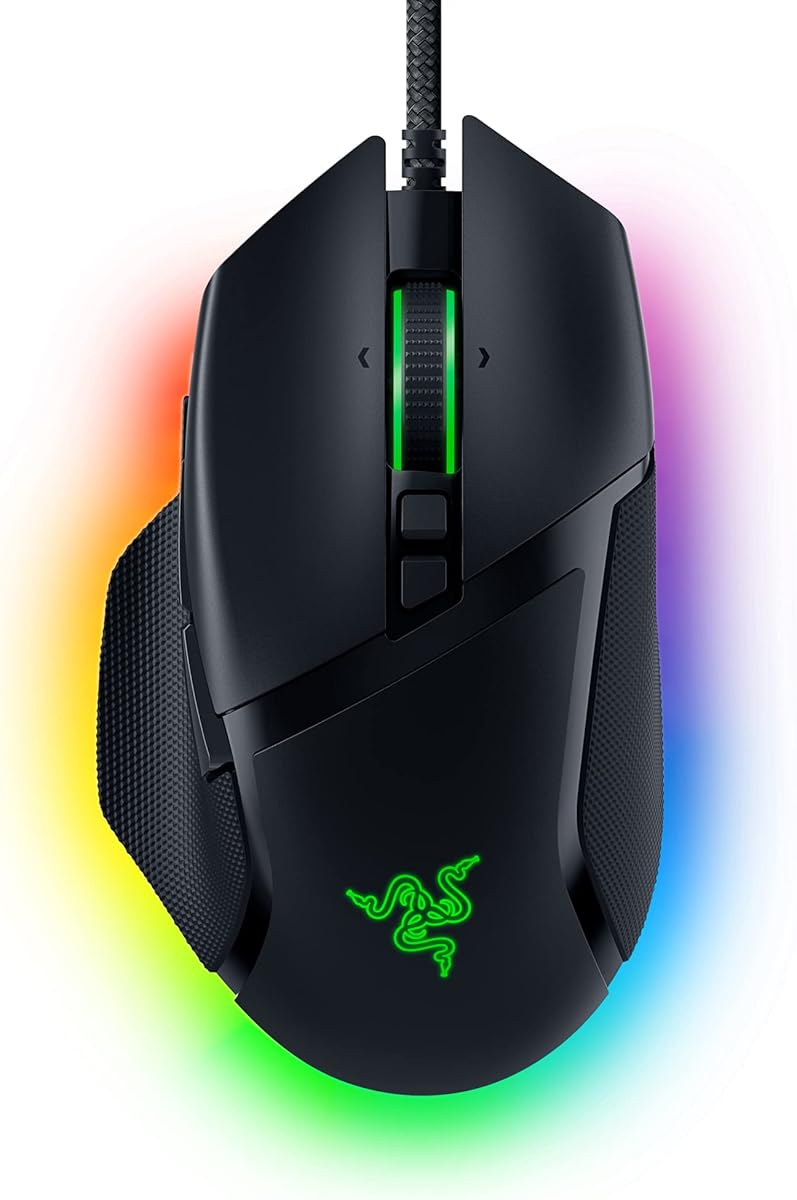
The Razer Basilisk V3 combines a 26K optical sensor, eleven programmable buttons, and an unusually versatile HyperScroll tilt wheel. Its supplied rating is 4.6, placing it among the strongest entries in this guide. For Lightroom, its combination of precise tracking and abundant controls makes it a particularly capable value-oriented choice.
We may earn a commission when you buy through this link, at no additional cost to you.
Its standout feature is the scroll wheel, which can free-spin for rapid catalog navigation or provide tactile feedback when fine adjustment matters. The wheel also tilts, potentially giving a Lightroom user extra controls without relying on awkward keyboard shortcuts. Eleven programmable buttons allow common actions such as rating, flagging, masking, zoom, or brush changes to be placed under your fingertips.
The 26K sensor supplies more than enough resolution for detailed selections, brushwork, and cursor placement, while the optical switches promise crisp activation. Razer also recommends disabling Windows Enhance Pointer Precision and using Synapse to optimize behavior. The ergonomic shape includes a thumb rest that can reduce hand strain during extended catalog sessions.
The main compromises are practical rather than performance-related. It is wired, so users who prefer a clean desk may prefer one of the wireless alternatives, and its RGB lighting and gaming styling may not suit every office. Even so, it delivers the controls, sensor, and scrolling performance that Lightroom increasingly rewards, making it our best budget recommendation.
The ability to switch between rapid free-spinning and precise tactile scrolling makes the Basilisk V3 useful for moving through long photo sequences and then inspecting individual images. Tilting the wheel creates another possible layer of navigation when assigned through Razer software.
The 26K optical sensor supports fine cursor placement for selections, masks, and brush edges. With operating-system pointer acceleration disabled, the mouse can provide a more consistent foundation for precise creative work.
We may earn a commission when you buy through this link, at no additional cost to you.
The Logitech G502 Lightspeed is a feature-heavy wireless mouse with a 4.6 supplied rating. Its 25,600 DPI sensor, eleven customizable buttons, and fast wheel make it suitable for photographers who want precise tracking, extensive shortcuts, and quick movement through large catalogs.
We may earn a commission when you buy through this link, at no additional cost to you.
The HERO 25K sensor is specified with one-to-one tracking and no smoothing, filtering, or acceleration, which are useful characteristics when consistency matters. Logitech G HUB allows button assignments and macro commands for individual games or applications, so Lightroom can receive its own configuration alongside other creative software.
Its wireless receiver removes cable clutter while retaining a gaming-focused control scheme. The optional PowerPlay system can keep compatible mice charged, although it requires a separate purchase and may not appeal to a photographer who simply prefers to recharge periodically.
For Lightroom, the G502 Lightspeed works particularly well for editors who rely on keyboard modifiers and want mouse buttons available for rating, comparing, or tool switching. It is less specialized toward photography than the MX series, but its sensor and control count provide a capable, flexible package.
Logitech G HUB supports assigning commands and macros to individual buttons for different games or applications. That makes it possible to keep the Basilisk-style control layout focused on Lightroom rather than dedicating the entire mouse to one task.
The hyperfast scroll wheel helps users move through menus, long web pages, and expansive image collections. It is particularly useful when quickly comparing broad sequences before slowing down for detailed retouching.
We may earn a commission when you buy through this link, at no additional cost to you.
The Logitech G PRO X2 SUPERSTRIKE is the premium performance option in this guide. Its supplied 4.6 rating accompanies standout specifications: a 44,000 DPI HERO 2 sensor, haptic actuation, eight-kilohertz wireless polling, and a stated battery life of 60 to 90 hours.
We may earn a commission when you buy through this link, at no additional cost to you.
Its Haptic Inductive Trigger System provides real-time feedback and allows trigger behavior to be customized through ten actuation points and five rapid-trigger reset levels. Although developed with esports athletes, these adjustable switches can give Lightroom editors a distinct tactile signal when a tool is selected or engaged.
The sensor tracks at over 888 IPS and up to 88 g-force while supporting up to 44,000 DPI. Such extreme specifications are unlikely to be necessary for every photo, but they create ample headroom for demanding selections, large displays, and exact cursor placement. The lightweight 0.7 mm thin-wall case and large UHMWPE feet also support smooth movement.
This is the choice for an editor who values immediate feedback, exceptional tracking, and a very high polling rate. The advanced features require Logitech G HUB, and some photographers may find the haptic triggers unnecessary. For those who want the highest-end control experience offered here, however, the specification set is hard to overlook.
Haptic feedback can make tool changes feel more definite without requiring the eyes to leave the image. Adjustable actuation and rapid-trigger settings let the user tune that feedback to suit a preference rather than accepting one fixed behavior.
The specified eight-kilohertz polling rate is intended to minimize the delay between movement and on-screen response. It can make fine cursor adjustments feel especially immediate, although advanced features still depend on compatible software and testing conditions.
We may earn a commission when you buy through this link, at no additional cost to you.
The Logitech G502 X Plus reimagines the established G502 design with updated wireless technology, hybrid optical-mechanical switches, and a 25,000 DPI HERO sensor. Its 4.4 supplied rating reflects a strong feature set, although it falls just below the leading products in this comparison.
We may earn a commission when you buy through this link, at no additional cost to you.
One particularly thoughtful design change is the reversible, removable DPI-shift button. Lightroom users can position it on the side or the opposite side depending on grip, which helps maintain access to sensitivity changes without forcing a particular hand posture.
The dual-mode scroll wheel can shift between hyperfast free spinning and precise ratcheting, while left and right tilts provide two additional customizable controls. This versatility supports both large catalog jumps and slow movements through Develop module settings. LIGHTSYNC RGB lighting can also react to startup, shutdown, and active play.
The mouse is best suited to photographers who appreciate a traditional gaming shape but want modern wireless performance and extensive remapping. PowerPlay compatibility is a bonus for users willing to buy the charging system. Otherwise, the G502 X Plus remains a flexible choice for detailed creative work and long editing sessions.
The removable DPI button can be relocated to suit the user's grip. That flexibility is useful when switching between broad cursor movement for catalog work and smaller adjustments for detailed selections.
Free-spinning mode covers rapid navigation, while the ratcheted mode gives tactile confirmation during slower adjustments. Tilt actions add further control without increasing the number of primary buttons.
We may earn a commission when you buy through this link, at no additional cost to you.
The Razer Basilisk V3 X brings the Basilisk approach to a wireless and Bluetooth mouse with a 4.4 supplied rating. Its 18,000 DPI sensor, nine customizable controls, and flexible connection options make it a practical choice for photographers seeking familiar ergonomics without a cable.
We may earn a commission when you buy through this link, at no additional cost to you.
Razer HyperSpeed supports low-latency wireless performance, while Bluetooth offers another connection path and multi-device support. The mouse can remain connected to a work computer while also pairing with a tablet or laptop, a useful arrangement for photographers moving between image review and editing.
Its sensor is more than capable for standard Lightroom work, including precise cursor placement and brush-based adjustments. Although it does not match the 26K or 30K sensors available in other Basilisk models, the difference is unlikely to dominate the experience for many editors. Nine customizable buttons provide a generous but manageable shortcut set.
The advertised battery life reaches up to 285 hours on HyperSpeed and up to 535 hours on Bluetooth, with actual results varying by use. The Basilisk V3 X is ideal for budget-conscious editors who want wireless freedom, long battery life, and an established ergonomic shape without moving to a premium model.
Switching between HyperSpeed and Bluetooth allows the mouse to serve as a dedicated wireless editing device or a broader multi-device peripheral. That flexibility suits editors who alternate between desktop work and tablet review.
The stated battery figures reduce the need for frequent charging during a demanding editing week. Since usage conditions affect results, the more conservative HyperSpeed figure is the more useful expectation for an active workflow.
We may earn a commission when you buy through this link, at no additional cost to you.
The Logitech MX Master 4 is designed around productivity rather than gaming, although its precision and customization also suit Lightroom. It has a 4.3 supplied rating and introduces a Haptic Sense Panel, a dynamic Actions Ring, and the ability to scroll through 1,000 lines per second.
We may earn a commission when you buy through this link, at no additional cost to you.
Its most Lightroom-relevant feature may be the Actions Ring, which can adapt to the active application and place frequently used filters, adjustments, and shortcuts near the cursor. For a photographer, that could mean quicker access to crop, masking, zoom, comparison, or grading tools without navigating nested menus.
The MagSpeed wheel is another significant advantage. It combines rapid movement with the ability to stop precisely, making it suitable for both long Lightroom catalogs and narrow parameter sliders. Quiet Clicks and customizable haptics are useful in a shared studio or during long sessions, while the thumb wheel supports fluid navigation.
Connectivity includes a USB-C dongle and Bluetooth, with the dongle option offering stronger, more consistent performance for demanding desktop work. This is the most software-centered mouse in the guide and may be the best choice for photographers who prioritize application-specific workflow tools over gaming aesthetics.
The dynamic Actions Ring changes with the active application, placing useful controls near the pointer. In Lightroom, that can streamline access to common filters, comparisons, and adjustments without forcing the user to remember where every command lives.
A stated capacity of 1,000 lines per second helps move through extensive collections quickly. The ability to stop on a precise position is equally important for adjusting a slider or navigating a long metadata list without overshooting.
We may earn a commission when you buy through this link, at no additional cost to you.
The Razer Basilisk V3 Pro is the premium wireless expression of the Basilisk line, offering a 30,000 DPI Focus Pro sensor, eleven programmable buttons, Gen-three optical switches, and 13-zone Chroma lighting. Its supplied rating is 4.4.
We may earn a commission when you buy through this link, at no additional cost to you.
The sensor supports tracking on a wide range of surfaces, including glass, which can be convenient when space is limited. Gen-three optical switches are specified with a 90-million-click lifecycle and 0.2 ms actuation, making the mouse well suited to users who value consistent buttons during extensive clicking.
The HyperScroll tilt wheel can alternate between free-spinning and tactile operation, while the additional controls provide a large shortcut palette. Razer HyperSpeed delivers responsive wireless performance, and optional Mouse Dock Pro or HyperPolling hardware is listed for an upgrade to a true eight-kilohertz polling rate.
This is a strong choice for a power user who wants premium responsiveness but does not necessarily need the haptics of the Logitech G PRO X2 SUPERSTRIKE. It is particularly appealing for editors who want a familiar ergonomic shell, excellent sensor, and abundant controls in a wireless configuration.
The Focus Pro 30K sensor is specified to track on glass as well as conventional surfaces. This expands placement options in compact studios where a dedicated mouse area may not be available.
Eleven programmable buttons and a tilting wheel can carry a dense Lightroom shortcut setup. Users can keep frequently used tools available while reserving keyboard shortcuts for commands that benefit from two-handed input.
We may earn a commission when you buy through this link, at no additional cost to you.
The Razer DeathAdder Essential is a simple ergonomic wired mouse with a 4.5 supplied rating. Its 6,400 DPI sensor, five programmable buttons, and ridged rubberized wheel offer the core tools needed for Lightroom without the complexity of a heavily featured gaming model.
We may earn a commission when you buy through this link, at no additional cost to you.
Dedicated DPI buttons provide on-the-fly sensitivity adjustment, and those controls can be reprogrammed through Razer Synapse. This lets a photographer switch between larger movements for navigating panels and finer movement for detailed selections, masks, or brush work.
The mechanical switches are rated for up to 10 million clicks, while the ridged scroll wheel offers grip and controlled movement. Five programmable buttons are sufficient for basic Lightroom shortcuts without placing dozens of controls under the hand.
The DeathAdder Essential is best for a straightforward desk setup, a user who dislikes wireless accessories, or an editor who wants reliable tracking without extensive configuration. Its 6,400 DPI sensor is the main limitation for demanding precision, but it remains entirely practical for standard photo editing.
The mouse avoids elaborate lighting and high-end features, concentrating on tracking, switches, and a proven ergonomic form. That simplicity can make it easier to learn and master a consistent Lightroom control layout.
Small ridges and a rubberized surface give the wheel more grip than a completely smooth wheel. This can help users control movement through long panels or image lists with greater consistency.
We may earn a commission when you buy through this link, at no additional cost to you.
The Logitech MX Master 3S Bluetooth Edition offers the strongest balance of productivity, precision, and comfort for most Lightroom workflows. It carries a 4.6 supplied rating and combines an 8,000 DPI sensor, quiet clicks, MagSpeed scrolling, and multi-device connectivity.
We may earn a commission when you buy through this link, at no additional cost to you.
Its tracking sensor is specified for use on any surface, including glass, while MagSpeed scrolling is claimed to be 90 percent faster, 87 percent more precise, and ultra quiet. In practical terms, the mouse can move rapidly through a large catalog and then stop at precise positions when navigating the Develop module.
Logi Options+ provides app-specific profiles for button customization. The side controls and thumb wheel can be assigned to Lightroom tasks such as changing tools, switching views, adjusting images, or comparing frames. FLOW also supports transferring text, images, and files between Windows and macOS systems.
The main limitation is that this specific Bluetooth Edition does not include a USB receiver or charging cable. That makes Logi Bolt compatibility relevant for buyers who want the receiver-based workflow, but it does not diminish the mouse for a clean Bluetooth setup. Overall, it is the most broadly suitable choice in this guide.
MagSpeed scrolling is particularly valuable in Lightroom because a photographer may need to move through thousands of images and then handle narrow controls. Its combination of speed, precision, and quiet operation suits both stages of the workflow.
App-specific profiles allow the mouse to behave differently in Lightroom and other programs. This reduces the need to repeatedly reset controls when moving between cataloging, editing, communication, and web research.
We may earn a commission when you buy through this link, at no additional cost to you.
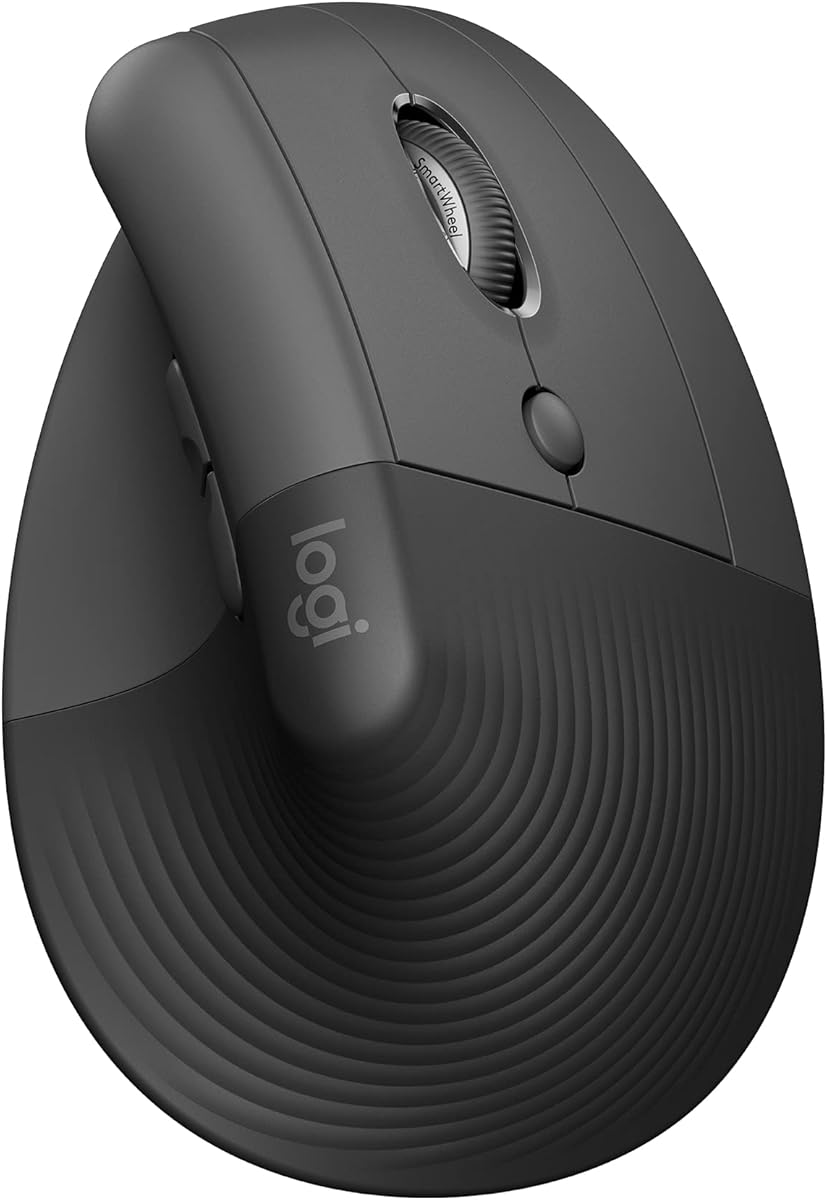
The Logitech Lift is designed for photographers who prefer a vertical mouse and smaller hands. It has a 4.4 supplied rating, a 57-degree vertical shape, a snug thumb rest, and a softly textured grip intended to support a more natural forearm position.
We may earn a commission when you buy through this link, at no additional cost to you.
Vertical orientation can reduce the degree of wrist bending compared with a conventional low-profile mouse. The SmartWheel shifts between smooth and ratcheted scrolling, allowing fast movement through a catalog and controlled movement through settings without requiring a separate wheel.
Customizable buttons, quiet clicks, and connection through Bluetooth Low Energy or Logi Bolt make it practical for a wireless office. Compatibility extends across Windows, macOS, iPadOS, Chrome OS, and Linux, while the stated battery life reaches up to two years depending on usage.
The important limitation is fit. Logitech describes Lift as best for small to medium right hands, and photographers with larger hands may find the narrower shape less comfortable. For the right user, however, its ergonomic emphasis can be more valuable in a long editing day than high gaming specifications.
The 57-degree shape positions the hand more upright than a traditional mouse. Photographers who feel wrist strain from flat, extended positioning may find this arrangement easier to maintain during long sessions.
The smaller footprint and thumb rest are intended specifically for small-to-medium right hands. Checking grip fit before buying is important because comfort advantages can reverse if the mouse feels cramped.
We may earn a commission when you buy through this link, at no additional cost to you.
The best mouse for Lightroom depends on your editing habits, display setup, hand size, and desired shortcuts. Sensor precision, scrolling, controls, comfort, connectivity, and software should be considered together rather than treated as isolated specifications.
A high-resolution sensor provides more available tracking information, which can help with tiny selections, precise brush placement, and smooth movement across large displays. The mice here range from a 6,400 DPI sensor to as high as 44,000 DPI, but the highest number does not automatically create the best image. Stable tracking, consistent behavior, surface compatibility, and suitable software settings are more meaningful in ordinary editing.
Choose a sensor with enough precision for your workspace and a mouse that tracks consistently on the surface you actually use. Higher resolution offers additional headroom, while a lower-resolution sensor can still be highly effective when paired with sensible pointer settings.
Lightroom contains two very different scrolling tasks: moving rapidly through long catalogs and making careful adjustments within panels. A high-speed wheel, whether it spins freely or uses a hyperfast ratchet, makes the first task quicker. A tactile wheel with clearly defined movement makes the second task easier to control. Dual-mode wheels and tilt functions offer the best of both approaches.
Prioritize a wheel that can transition between rapid and precise modes. For large collections, wheel speed can save meaningful time, while a controlled ratchet remains important when navigating history panels, masks, or slider values.
Programmable buttons can bring frequently used Lightroom commands under the cursor. Five buttons may be sufficient for a simple workflow, while nine, ten, or eleven controls provide room for tool switching, rating, flagging, comparing views, masking, zoom, and brush operations. The quality of the customization software matters as much as the raw button count.
Favor remapping that is easy to learn and supports application-specific profiles. A large shortcut set is useful only if you can remember it, so start with a few high-frequency commands and expand gradually.
A mouse that looks comfortable in a photograph may still feel wrong after several hours of use. Shape, palm support, thumb placement, finger reach, and hand size all influence fatigue. Conventional horizontal designs suit many users, while a vertical mouse can encourage a more neutral wrist angle for people who dislike flat positioning.
Choose a shape that supports your grip without squeezing or stretching your hand. If possible, compare hand size with the manufacturer’s fit guidance and give special attention to models clearly designated for small, medium, or large hands.
Wired mice offer a simple, always-connected path with no batteries or receivers to manage. Wireless mice reduce cable clutter and can make a multi-computer desk more pleasant, but connection quality, charging routines, and receiver compatibility become additional considerations. Bluetooth is convenient for switching among devices, while a dedicated receiver may provide stronger low-latency performance in a fixed workstation.
Choose wired if reliability and minimal setup are the priority. Choose wireless if mobility and a cleaner desk matter, then verify the connection method, battery expectations, and included accessories before purchasing.
Software turns programmable hardware into a useful creative tool. Logitech G HUB and Logi Options+ support application-aware configurations, while Razer Synapse handles button mapping and lighting for the relevant Razer models. Lightroom profiles should place useful commands on comfortable buttons rather than forcing awkward reaches.
Confirm that the required software works with your operating system and that the interface provides the profiles you need. If you prefer to avoid extensive setup, favor a mouse with a small number of clearly placed controls and simple remapping.
Some sensors are specified to work on glass as well as conventional materials, while others are designed primarily for a dedicated mouse surface. Large monitor arrays may also require more travel than a small laptop setup, making sensor quality and wheel speed more valuable. The usable area of the desk can determine whether a wireless receiver or charging dock is practical.
Check the surface under your intended setup and leave enough room to move without lifting the mouse. If you work on unusual surfaces, verify the tracking specifications or use a conventional mouse mat for consistency.
Battery figures can be impressive but may vary significantly with sensor settings, lighting, polling behavior, and usage patterns. A mouse with long advertised endurance may still require periodic charging, whereas a wired model eliminates that concern entirely. Some gaming mice support optional wireless charging systems, and those accessories are generally sold separately.
Compare real-world endurance expectations with the manufacturer’s stated maximum, and check whether a charging cable or receiver is included. Treat optional docks and adapters as additional purchases rather than assuming they come with the mouse.
Begin by installing the relevant configuration software and connecting the mouse using its intended method. Create a dedicated Lightroom profile, then assign a small set of controls to actions you use every day. Keep destructive or rarely used commands on the keyboard until the new layout becomes familiar.
For accurate movement, place the mouse on a clean, consistent surface and adjust the pointer speed and sensitivity to a level that allows controlled travel across the monitor. If using a very high sensor range, use a lower practical setting rather than assuming maximum resolution is necessary. Test the motion with a selection or brush before beginning a detailed edit.
Clean the mouse regularly by disconnecting it if wired or switching it off if wireless. Remove dust from the sensor and wipe the shell and wheel with a soft, lightly dampened cloth. Avoid abrasive cleaners, excessive moisture, and compressed air around buttons or openings, and recharge or replace the battery according to the manufacturer's guidance.
Yes, a gaming mouse can work very well for Lightroom because precise sensors, fast scrolling, and programmable buttons are all relevant to photo editing. The most useful features are accurate tracking, a controllable scroll wheel, comfortable ergonomics, and software that can save a dedicated Lightroom profile. Extra RGB lighting or gaming-focused switches may not improve editing results.
A high-DPI sensor can provide finer control, particularly with large displays or detailed selections. However, maximum DPI is not automatically beneficial, and many editors work more comfortably with a moderate sensitivity setting. Choose a mouse with reliable tracking and adjustable sensitivity rather than focusing only on the largest advertised number.
A mouse with a high-speed wheel and an easy transition to precise ratcheting mode is especially useful for large catalogs. The Logitech MX Master 3S, Logitech MX Master 4, and Razer Basilisk V3 models all offer rapid scrolling with a more controlled mode. Catalog size, personal preference, and the type of scrolling task should guide the final choice.
A vertical mouse may be more comfortable if prolonged conventional wrist positioning causes discomfort. The Logitech Lift uses a 57-degree shape and is intended for small to medium right hands, so fit is critical. Some users prefer horizontal designs for unrestricted movement or more complex button access.
Wireless is convenient for a clean desk and can support multi-computer workflows. Bluetooth models are easy to pair with several systems, while receiver-based options may offer stronger dedicated connectivity. Consider battery life, included accessories, and whether your editing computer has an available USB port before choosing.
Five buttons are enough for a simple setup, but eight to eleven can support tool switching, comparison views, zoom, rating, flagging, and other frequent Lightroom actions. More buttons are only beneficial if they are comfortably reachable and mapped to commands you can remember. Start with a small, practical set and add shortcuts gradually.
No, lighting is mainly decorative and does not improve tracking, scrolling, or editing accuracy. It may help identify device profiles or add visual appeal to a desk, but the relevant performance factors are sensor behavior, button layout, wheel control, connectivity, and ergonomics.
Yes, and several of the mice listed support application-specific profiles or configurable button assignments. You can create a Lightroom layout with editing shortcuts and a separate layout for gaming. Wired models also make this arrangement especially simple because no connection mode needs to be changed.
The Razer Basilisk V3 is the best budget choice for editors who want a precise 26K sensor, flexible HyperScroll wheel, and eleven programmable buttons at an accessible entry point. The Logitech MX Master 3S is the strongest overall option for most photographers because it combines an 8,000 DPI sensor, quiet fast scrolling, app-specific profiles, and cross-computer workflow tools.
For a premium purchase, the Logitech G PRO X2 SUPERSTRIKE stands apart with a 44,000 DPI sensor, adjustable haptic actuation, and eight-kilohertz wireless polling. Prioritize the features you will actually use: precise tracking for detailed work, a scroll wheel that suits both catalogs and controls, comfortable hand fit, and software that makes custom assignments easy to maintain.
Current prices and availability can change, so check the linked listing before purchasing and confirm that the included receiver, charging cable, software, and other accessories meet your setup. A mouse is a long-term editing tool, so also consider return policies and the time required to become comfortable with its controls.

