
Dell Latitude 5450
RTX 2050 discrete graphics
64GB DDR5 memory
Windows 11 Pro
Laptops for Pcdj Dex users should combine dependable performance, a clear display, sufficient memory, and convenient connectivity for music playback, planning, editing, or mobile production. The most useful model is not necessarily the most powerful one, but the one that matches your controller software, accessories, display requirements, and working style.
This guide compares ten laptops using the supplied specifications, including processor capability, graphics, memory, storage, screen size, ports, battery information, and intended workload. It covers general-purpose business systems, creator-focused machines, and higher-performance gaming hardware, while distinguishing dedicated graphics from integrated solutions.
Each review explains the most relevant strengths and compromises so you can judge practical fit rather than relying on a model name alone. Product configurations and deal terms can change, so verify the current listing and selected hardware options before ordering, particularly for customized systems.

4.9Editor score

5.0Editor score
As an Amazon Associate we earn from qualifying purchases.
The comparison highlights each laptop's processor, display, memory, graphics, and most useful connection features for Pcdj Dex workflows.




This HP 17 combines a large 17.3-inch Full HD anti-glare panel with an AMD Ryzen 5 7520U processor and 8GB of LPDDR5 memory. Its 4.4 rating reflects a practical package aimed at office work, streaming, video conferencing, and lighter editing. The full-size keyboard with numeric keypad also makes it useful for library, spreadsheet, and planning tasks connected to Pcdj Dex.
We may earn a commission when you buy through this link, at no additional cost to you.
The broad viewing area is the centerpiece. Narrow bezels help maximize usable space, while anti-glare treatment can make long study or editing sessions more comfortable than a highly reflective panel. The Ryzen 5 processor provides four cores and eight threads with boost speeds up to 4.3GHz, offering enough capability for browser-heavy music work, document preparation, and routine media handling.
Windows 11 Pro adds business-oriented security and management features, while the 720p camera includes a physical shutter for confidential calls. Wi-Fi 6, Bluetooth 5.3, USB Type-C, HDMI, and the included mouse and tablet stand cover essential mobile-workstation needs. The main limitation is 8GB of memory, which can become restrictive when many demanding applications remain open simultaneously.
This model is most appropriate for students, instructors, and mobile planners who value screen area, a numeric keypad, and secure everyday connectivity more than intensive graphics performance. It also makes sense for Pcdj Dex users who want the software, browser, library interface, and calls running together. Buyers who routinely edit long high-resolution projects should consider a system with more memory and stronger graphics.
The 17.3-inch 1920 x 1080 panel provides a comfortable area for browsing large music libraries, arranging tracks, viewing mixer assignments, and presenting during remote sessions.
Windows 11 Pro and the camera's physical privacy shutter are useful additions for users who handle private event plans, client lists, or confidential performance information.
We may earn a commission when you buy through this link, at no additional cost to you.
This second HP 17 configuration carries a 5.0 rating and largely mirrors the first model's core platform: a 17.3-inch Full HD anti-glare display, Ryzen 5 7520U, 8GB LPDDR5 memory, and a 512GB PCIe NVMe SSD. It is a well-rounded general-purpose machine for Pcdj Dex, browser-based planning, streaming preparation, and communication-heavy workflows.
We may earn a commission when you buy through this link, at no additional cost to you.
The supplied port list is particularly useful for a mobile production setup. It includes one USB-C 3.0 port, two USB-A 3.0 ports, and HDMI 1.4, allowing a controller, mouse, storage drive, and external display to be connected with fewer adapters. The included mouse and tablet stand help organize a temporary workstation, although an adjustable stand may be preferable for prolonged sessions.
The four-core, eight-thread processor is designed for efficient multitasking, and the 512GB NVMe drive provides fast access to music files, software installers, and project assets. The 8GB memory configuration is acceptable for focused work but leaves less headroom for numerous browser tabs, virtual instruments, and editing applications running together.
This laptop is a strong choice for a beginner or budget-conscious Pcdj Dex user who wants a large display, Pro features, and practical connectivity without a dedicated GPU. It is less suitable for intensive 4K editing, complex 3D work, or demanding games. Check that the selected package includes the required software and that 8GB of memory meets your typical workload.
USB-A, USB-C, and HDMI connectivity supports common Pcdj Dex peripherals while reducing dependence on adapters during mobile work.
The NVMe storage configuration helps music libraries load quickly, while the large display offers more space for browsing, cueing, and monitoring software.
We may earn a commission when you buy through this link, at no additional cost to you.
The Dell DC15250 is a mainstream 15.6-inch laptop built around an Intel Core i5 1334U and Windows 11 Home. Its 4.3 rating reflects a straightforward everyday-computing design aimed at learning, productivity, and general entertainment. For Pcdj Dex, it is most convincing as a clean, portable workstation for software practice and event preparation.
We may earn a commission when you buy through this link, at no additional cost to you.
Dell emphasizes energy-efficient batteries and Express Charge support, which suits students and mobile professionals who regularly move between venues. ComfortView software is included to reduce harmful blue-light emissions during extended viewing. The lifted hinges create a more ergonomic typing position, while the roomy keys, calculator hotkey, and separate numeric keypad support efficient data entry.
The listing does not provide a detailed memory or storage configuration, so buyers should confirm the exact selected variant before purchase. Windows 11 Home is suitable for standard Pcdj Dex use, but organizations requiring Pro-specific management or security capabilities may need another operating system. The 15.6-inch form factor is also more portable than the larger 17-inch alternatives.
Choose the DC15250 if you value straightforward productivity, service support, and familiar everyday features more than creator-grade graphics or extensive upgrade information. It is a sensible fit for learners, event staff, and general users who need a dependable laptop for browsing, software training, document work, and Pcdj Dex practice sessions.
Lifted hinges, a roomy keyboard, and a dedicated numeric keypad make the system practical for repetitive labeling, inventory, and event-planning work.
One Year Onsite Service can add convenience because covered hardware issues that cannot be solved remotely may be addressed at the user's location.
We may earn a commission when you buy through this link, at no additional cost to you.
The NIMO 15.6 Creator combines a Ryzen 7 8745HS processor, Radeon 780M graphics, 32GB of DDR5 memory, and a 1TB PCIe 4.0 SSD. Its 4.9 rating and unusually strong specifications make it the most versatile all-round choice in this guide for Pcdj Dex users who also create, edit, program, or manage large media libraries.
We may earn a commission when you buy through this link, at no additional cost to you.
Eight cores and sixteen threads provide substantial multitasking headroom for running Pcdj Dex alongside communication tools, browsers, audio applications, and productivity software. Radeon 780M integrated graphics can accelerate visual workflows and handle light editing without the heat and power demand of a dedicated GPU. The 32GB memory and 1TB storage are particularly valuable for large libraries and project files.
Connectivity is unusually strong. USB4 supports high-speed storage, external displays, and compatible eGPU solutions, while the full-function USB-C, HDMI 2.1, three USB-A ports, and microSD reader cover a wide range of accessories. A 180-degree lay-flat hinge makes screen sharing easier, and the built-in fingerprint reader, hardware fTPM 2.0, and Kensington lock slot support everyday security.
This is the best fit for creators and serious Pcdj Dex users who want desktop-class multitasking without a large gaming chassis. Its primary compromise is that Radeon 780M is still integrated graphics, so sustained professional rendering may trail systems with discrete graphics. For most music, planning, streaming, and light-to-moderate editing workloads, however, the balance is exceptionally attractive.
Thirty-two gigabytes of DDR5 memory allows the DJ application, browser-based research, recording software, and communication tools to coexist more comfortably.
Dual SODIMM and dual M.2 slots support future expansion, while USB4 and HDMI 2.1 simplify high-speed storage and multi-display desk arrangements.
We may earn a commission when you buy through this link, at no additional cost to you.
This NIMO 17.3 Creator earns a 5.0 rating by pairing a Ryzen 5 6600H processor with 32GB of DDR5 memory and a 1TB PCIe SSD. It is a roomy, well-equipped option for Pcdj Dex users who want to display a large library, keep several applications open, and move between planning, streaming, and light content creation.
We may earn a commission when you buy through this link, at no additional cost to you.
The six-core, twelve-thread processor offers useful performance headroom for office multitasking, coding, document handling, and sustained daily workloads. Radeon 660M graphics support media playback, light photo editing, and casual gaming, but they are not intended to replace a discrete GPU for intensive rendering. The generous memory is more immediately relevant to large browser and application workloads.
Dual SO-DIMM slots and an M.2 2280 design provide upgrade room to 64GB of RAM and 4TB of storage. Two full-function USB-C ports, HDMI 2.0, three USB-A ports, a microSD reader, and a 3.5mm audio jack make it easy to assemble a complete workstation. The 53.58Wh battery and included 100W PD charger support mobile schedules.
This model suits students, remote workers, and entry-level creators who want a large display and substantial memory without moving to a dedicated graphics laptop. It is also a good all-day platform for Pcdj Dex preparation when extensive 3D or high-resolution rendering is not required. The main limitation is graphics capability, so advanced visual work should be matched to a stronger GPU model.
The 17.3-inch 16:9 display is effective for split-screen software, browser research, spreadsheets, and event documentation without demanding a large desktop monitor.
A 100W USB-C PD charger gives the system flexible power options, reducing dependence on a dedicated wall adapter for a full working day.
We may earn a commission when you buy through this link, at no additional cost to you.
The Dell Latitude 5450 is the premium workstation in this roundup, combining a 14-inch Full HD IPS touchscreen, Intel Core Ultra 7 165H, NVIDIA GeForce RTX 2050, 64GB DDR5, and a 2TB PCIe NVMe SSD. It is intended for demanding Pcdj Dex work that overlaps with high-definition editing, programming, design, and visualization.
We may earn a commission when you buy through this link, at no additional cost to you.
The processor provides 16 cores and 22 threads, including six performance cores and ten efficient cores. Dedicated RTX 2050 graphics add a major advantage over integrated solutions when handling visual effects, rendering, graphics-heavy software, and HD video tasks. The 64GB memory and 2TB drive also make this a strong platform for large media libraries and many simultaneous applications.
Connectivity is a major strength. Two Thunderbolt 4 and USB4 ports support power delivery and DisplayPort 1.4, while HDMI 2.1, two USB-A ports, RJ-45 Ethernet, and an audio jack provide a comprehensive workstation setup. A fingerprint reader, backlit keyboard, Windows 11 Pro, Wi-Fi 6E, and Bluetooth 5.3 support professional and mobile use.
This is the right recommendation for users who need more graphics capability than an integrated system can provide while retaining a relatively portable 14-inch form factor. Its trade-offs are the 4GB of graphics memory, a 54Wh battery, and the absence of a supplied customer rating. It is a specialized premium choice rather than a necessity for basic DJ software operation.
The RTX 2050 is the key differentiator, providing a stronger path for GPU-accelerated editing, rendering, design, and graphics-heavy applications than integrated Radeon or Intel graphics.
A 3.09-pound chassis, Windows 11 Pro, fingerprint reader, Ethernet, Wi-Fi 6E, and dual Thunderbolt connectivity make it suitable for professional mobile workflows.
We may earn a commission when you buy through this link, at no additional cost to you.
The NIMO 15.6 AI Creator Laptop combines a Ryzen 5 6600H processor, 16GB of DDR5 memory, a 512GB PCIe SSD, and Radeon 660M graphics. Its 5.0 rating and well-rounded specification make it an appealing general-purpose choice for Pcdj Dex, remote work, study, media playback, and light editing.
We may earn a commission when you buy through this link, at no additional cost to you.
Six cores and twelve threads give the processor enough capacity for office applications, browser-based research, coding, content handling, and simultaneous communication tools. Radeon 660M supports smooth media playback, light photo editing, and casual gaming at 1080p. The 16GB memory configuration handles normal multitasking, while the expandable design leaves room for future memory and storage upgrades.
Its ports are particularly helpful for a working DJ setup. Two full-function USB-C ports, HDMI 2.0, three USB-A ports, a microSD reader, and a 3.5mm audio jack support controllers, drives, microphones, headphones, external displays, and camera media. A backlit keyboard helps during late-night preparation, and the touchpad fingerprint reader provides fast sign-in.
This is a strong selection for a Pcdj Dex user who wants capable everyday performance, good connectivity, and a manageable 15.6-inch form factor. The two-year manufacturer warranty also adds confidence. It is less appropriate for prolonged professional rendering, very large projects, or a high-end gaming library, but it covers mainstream DJ and content workflows well.
The mixture of USB-A, USB-C, HDMI, card reader, and audio connections makes it easier to connect a controller, microphone, headphones, and backup drive.
Dual SO-DIMM and M.2 support allow owners to increase memory or storage later, extending the usefulness of the initial configuration.
We may earn a commission when you buy through this link, at no additional cost to you.
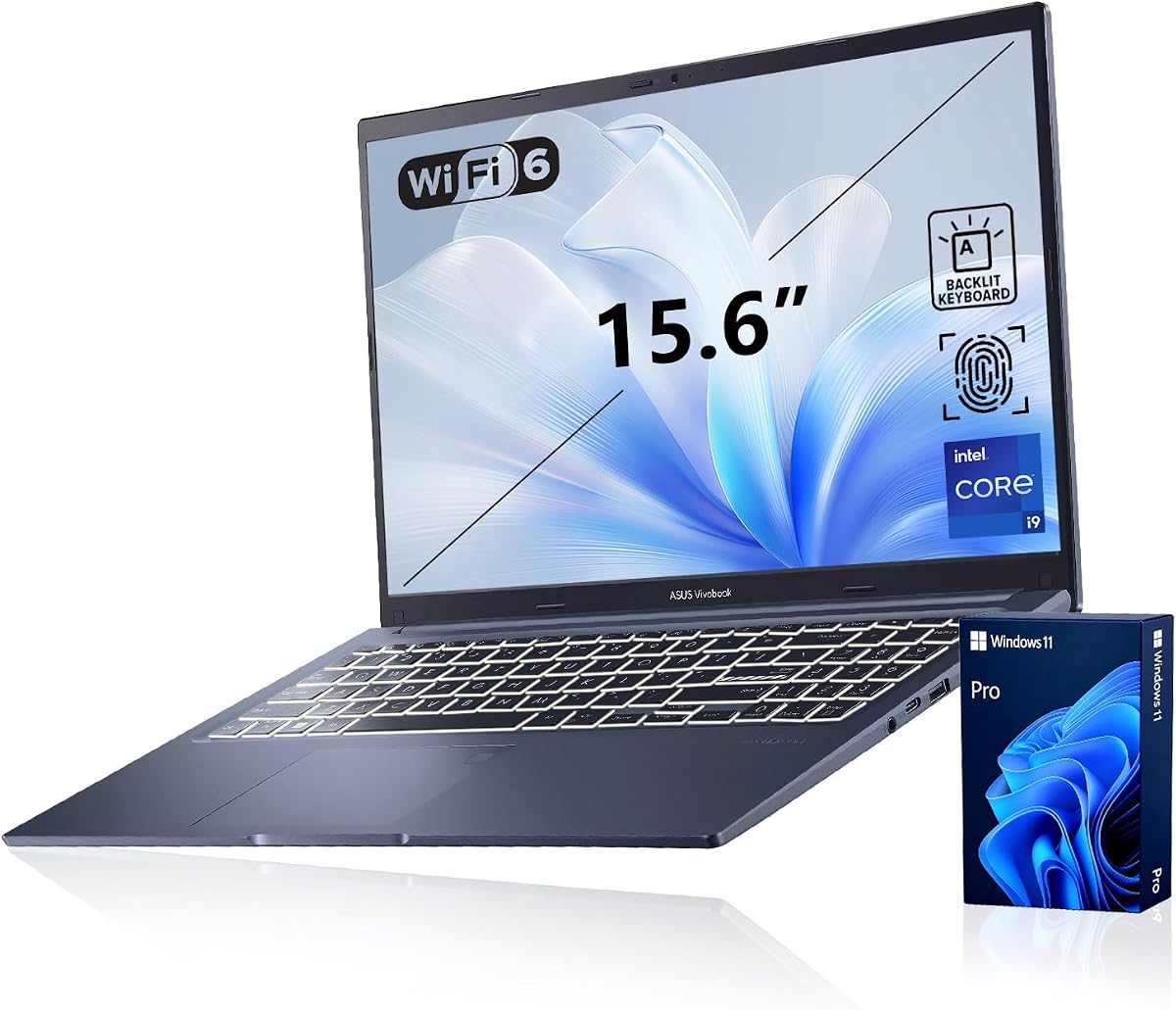
The ASUS Vivobook Core i9-13900H is a customizable 15.6-inch Windows 11 Pro laptop offered with 16GB, 32GB, or 48GB of memory and either a 1TB or 2TB SSD. Its 5.0 rating reflects strong owner satisfaction, while the Core i9 processor targets demanding multitasking and creative applications.
We may earn a commission when you buy through this link, at no additional cost to you.
Fourteen-core processing performance provides ample capacity for Pcdj Dex, browser-heavy research, complex creative software, simulations, and AI-enhanced workflows. The non-touch 1920 x 1080 display is described as crisp and glare-free, while a fingerprint reader, physical webcam shield, backlit keyboard, and numeric keypad support everyday professional use.
The port selection includes one USB Type-C port, two USB-A 3.x ports, one USB 2.0 port, HDMI for external displays, and a 3.5mm audio connection. This is enough for a controller, mouse, drive, and display, although a busy studio may require an additional hub depending on the chosen accessories.
PCOnline opens the original seal to upgrade RAM or storage, providing three-year coverage on those upgraded components while other parts retain the original one-year manufacturer coverage. Buyers should verify the exact configuration, warranty terms, and component choices. This laptop is best for users who want a high-performance, privacy-conscious system tailored to their storage and memory needs.
Selectable memory and storage capacities make it possible to align the laptop with software, music library, and project requirements rather than accepting one fixed configuration.
The physical webcam shield offers a straightforward way to block the camera during calls, planning sessions, or travel.
We may earn a commission when you buy through this link, at no additional cost to you.
The ASUS ROG Strix G16 is the performance-heavy option, with an Intel Core i7-14650HX processor, NVIDIA GeForce RTX 5060 laptop graphics, 16GB of DDR5-5600 memory, and a 1TB PCIe Gen 4 SSD. Its 4.4 rating suits a high-refresh display and enthusiast hardware focused on gaming, creation, and entertainment.
We may earn a commission when you buy through this link, at no additional cost to you.
The RTX 5060 provides the strongest discrete graphics capability in this guide. It gives Pcdj Dex users ample graphical headroom for visual effects, rendering, 3D work, high-resolution media, and gaming, although the DJ application itself does not require a GPU of this class. The 16-inch FHD+ 16:10 panel offers a large workspace and a fluid 165Hz refresh rate with 3ms response.
Cooling is a major strength. ROG's end-to-end vapor chamber, tri-fan arrangement, and Conductonaut extreme liquid metal on the chipset are designed to sustain performance during extended heavy workloads. A 360-degree RGB light bar adds visual customization, while Stealth Mode turns off lighting for more professional settings. Wi-Fi 7 supports modern high-speed wireless networks.
Choose the G16 when Pcdj Dex is only one part of a demanding workload that also includes gaming, intensive editing, or rendering. Its gaming identity, aggressive styling, and 16GB memory configuration make it less essential for DJ-only work. Those wanting the same strong processor but a more restrained business design can look to the Dell Latitude 5450 instead.
The RTX 5060 creates useful headroom for GPU-intensive effects, 3D visualization, rendering, and other tasks that integrated laptop graphics may struggle to sustain.
A vapor chamber, three fans, and liquid-metal chipset cooling are especially relevant during long editing, rendering, or gaming sessions.
We may earn a commission when you buy through this link, at no additional cost to you.
The Dell Pro 15.6 pairs an Intel Core 3 100U processor with 16GB of DDR5 memory, a 256GB NVMe SSD, and a distinctive 15.6-inch 120Hz IPS display. Its 4.5 rating indicates a well-received everyday system with particular strengths in fluid screen motion and standard productivity.
We may earn a commission when you buy through this link, at no additional cost to you.
The processor has six cores and boost speeds up to 4.7GHz, providing enough performance for browsing, office applications, communication, and everyday multitasking. The 120Hz Full HD anti-glare display, wide viewing angles, 250-nit brightness, 720p camera, and integrated microphone create a useful platform for remote sessions and media viewing.
Connectivity covers the essentials with Wi-Fi 6, Bluetooth, two USB-A ports, one USB 2.0 port, one USB-C port, HDMI 1.4, an audio jack, and an SD card slot. The card reader is helpful for moving media from a camera or other device. At 4.19 pounds, the laptop remains manageable for mobile use.
This Dell Pro is a good general recommendation for students, home users, and event workers who need a conventional, portable Windows laptop for Pcdj Dex and related productivity tools. The 256GB drive is the most obvious limitation for large music or video libraries, while the non-backlit keyboard may be less comfortable in dark environments.
The 120Hz panel can make menus, scrolling, and on-screen interaction feel smoother than a conventional 60Hz panel during everyday work.
A built-in SD card slot makes importing footage, images, or other removable media more convenient for event and creative workflows.
We may earn a commission when you buy through this link, at no additional cost to you.
The right laptop depends on the software, peripherals, projects, and mobility involved in your Pcdj Dex workflow. These factors help separate essential needs from optional power.
Summary: Prioritize a modern multi-core processor, but avoid paying for unnecessary power if your work is primarily DJ software, streaming, and browser-based planning.
Summary: Choose 16GB for serious daily multitasking, 32GB for demanding creative work, and more only when specialized applications justify it.
Summary: Favor at least 512GB for a substantial library, and check whether storage can be expanded before paying for a larger fixed configuration.
Summary: Integrated graphics are sufficient for most DJ work; choose a discrete GPU when the same laptop must handle demanding video, 3D, or gaming tasks.
Summary: Choose 15.6 inches for portability, 17.3 inches for maximum workspace, and a higher-refresh display when smooth motion matters most.
Summary: Match USB-A and USB-C availability to your existing gear, and plan for a hub if the laptop cannot support every accessory directly.
Summary: Check claimed battery figures, but carry a compatible charger and use battery-saving settings when reliability matters more than maximum screen brightness.
Summary: Prioritize Pro, fingerprint, privacy, and physical security features when your laptop travels or stores sensitive professional material.
Begin by installing the current Pcdj Dex release and the required device drivers, then update the operating system, controller firmware, and audio software. Create separate library, playlist, output, and backup folders rather than keeping every asset in one directory. Confirm that the controller is recognized, its MIDI mapping is active, and the correct audio output and sample rate are selected before a rehearsal or performance.
Test the entire signal chain before traveling. Route audio through the intended controller, interface, mixer, and monitoring system; check microphone permissions; play representative tracks; and confirm that recording or streaming works if required. Keep a second audio path available for troubleshooting, and do not depend on internet access for critical performance functions. Export a backup of the working configuration after major changes.
Protect performance by allowing ventilation space, keeping drinks away from the machine, and avoiding prolonged use on soft surfaces. Clean the display and vents with appropriate methods, use a surge-protected outlet where available, and carry the system in a padded case. Back up important libraries and playlists regularly, since neither a fast SSD nor a large drive prevents accidental deletion or device failure.
For standard DJ software, streaming, browsing, and music playback, modern integrated graphics are generally sufficient. A dedicated GPU becomes more valuable if the same laptop will run demanding video editing, 3D rendering, visual effects, or games. In that case, the Dell Latitude 5450 and ASUS ROG Strix G16 provide substantially stronger graphics options.
Eight gigabytes can handle a focused setup, while 16GB is a more comfortable minimum when running Pcdj Dex with browsers, messaging, streaming tools, and other applications together. Creators handling large projects should consider 32GB or more. Expandable NIMO configurations are particularly attractive because memory can be increased as workflow demands grow.
A 15.6-inch laptop is easier to carry and often works well for mobile DJ setups, rehearsal rooms, and cafés. A 17.3-inch model gives you more space for libraries, mixer views, spreadsheets, and split-screen work. The larger screen is beneficial for planning, but it adds bulk and may be less comfortable for long sessions away from a desk.
A modern Ryzen 5 is generally enough for Pcdj Dex, web research, audio playback, and typical productivity applications. Its six-core designs in the NIMO systems also provide useful multitasking headroom. Move to Ryzen 7, Core i7, Core i9, or Core Ultra 7 when coding, heavy editing, rendering, or other demanding applications share the machine.
Storage needs depend on audio quality, library size, and whether you keep original media, edited masters, videos, and backups. A 512GB drive is a practical starting point for many working libraries, while 1TB or 2TB provides more breathing room. Always maintain a separate backup and verify that a system offers expansion if space may become tight.
USB-A remains important for many existing controllers, drives, and microphones, while USB-C is useful for modern compact peripherals and charging. An audio jack supports headphones, HDMI supports an external display, and an SD card reader simplifies media transfer. Check your controller's connection requirements and whether it can operate over a USB-C-compatible cable or hub.
The 15.6-inch models are the most travel-friendly choices, while the 14-inch Dell Latitude combines a compact chassis with a strong battery and broad connectivity. For longer journeys, carry a compatible USB-C PD charger or the supplied 100W adapter where applicable. Test offline performance and keep a backup of critical software settings and media.
Both operating systems can run the core DJ and audio software required for ordinary Pcdj Dex use. Windows 11 Pro is preferable for business management, enhanced security, and centralized administration. Windows 11 Home is adequate for individual users, students, and straightforward event work that does not depend on managed organizational features.
The NIMO 15.6 Creator with Ryzen 7 8745HS stands out as the most balanced performance option, offering 32GB of memory, expandable storage, strong connectivity, and capable integrated graphics. The Dell Latitude 5450 is the premium choice for users who need dedicated RTX graphics and a compact professional chassis, while the NIMO 15.6 with Ryzen 5 6600H provides a practical, well-connected entry point.
Prioritize the features your workflow actually uses. Basic Pcdj Dex work needs reliable software performance, adequate memory, fast storage, and compatible connections rather than extreme graphics. Larger displays benefit planning and library management, upgradeability extends service life, and dedicated GPUs matter when the machine must also handle intensive creative workloads or games.
Before ordering, confirm the exact processor, memory, storage, operating system, graphics option, and included accessories for the selected listing. Product configurations, promotions, and availability can change, so check current details and compatibility directly before making a final purchase.