
Garmin inReach Mini 3 Plus
4.7Editor score
Interactive emergency coordination
Two-way satellite messaging
Color touchscreen interface
Our Personal Locator GPS Beacon guide compares ten emergency beacons and satellite communicators, covering positioning, SOS alerts, battery life, and portabilit
A personal locator GPS beacon can provide a vital communication link when a hiker, traveler, boater, or outdoor worker becomes stranded beyond cellular coverage. The most useful models combine satellite distress alerts, accurate positioning, long battery life, and simple activation controls that remain usable under pressure.
This guide compares ten emergency communication options selected from the supplied product range. It examines alert networks, location systems, visual signals, water resistance, power endurance, carrying methods, registration requirements, and the distinction between one-way PLBs and two-way satellite communicators.
The list shows why some users may prefer a compact, subscription-free rescue beacon while others need richer messaging, photo sharing, weather information, and interactive emergency coordination. Product ratings, features, and configuration options can change, so readers should verify current specifications, registration rules, and pricing before purchasing.
4.7Editor score

4.8Editor score
4.5Editor score
This side-by-side comparison covers the ten supplied devices, emphasizing emergency functions, positioning, visibility, battery endurance, and the practical differences between dedicated rescue beacons and subscription-based satellite communicators.



The ACR ResQLink View RLS PLB earns a 4.8 rating and stands out as a capable general-purpose emergency beacon. Its defining feature is Return Link Service, which confirms that Search and Rescue has received the distress signal. That confirmation does not replace communication, but it can offer valuable reassurance that the alert reached the appropriate rescue infrastructure.
We may earn a commission when you buy through this link, at no additional cost to you.
The beacon supports GPS, Galileo GNSS, and MEOSAR compatibility, giving it a modern positioning and satellite-response foundation. A digital display helps users review information, while the infrared strobe and visible display improve detection in emergency circumstances. Its multifunction clip makes it straightforward to carry on a belt, pack, or other outdoor attachment point.
Power availability is another strength. The supplied specifications list a five-year battery life and more than 28 hours of operational life, which supports long periods between adventures without regular charging. Built-in buoyancy adds confidence for marine use, although the device still needs careful handling and correct activation procedures.
This is a strong recommendation for hikers, travelers, boaters, and anyone who wants a dedicated SOS beacon without a subscription. Its main limitation is that Return Link Service confirms receipt rather than providing an ordinary two-way messaging channel. Even so, it combines useful location information, strobe signaling, global compatibility, and dependable battery provisions in a focused package.
Return Link Service provides a clearer emergency feedback loop than many basic PLBs because it confirms receipt of the distress signal. The beacon remains subscription-free, so the core rescue function does not depend on a recurring communications plan.
Support for GPS and Galileo GNSS improves positioning flexibility, while the digital display, visible strobe, and infrared strobe help with both information review and nighttime signaling. Built-in buoyancy and the multifunction clip also suit both land and water adventures.
We may earn a commission when you buy through this link, at no additional cost to you.
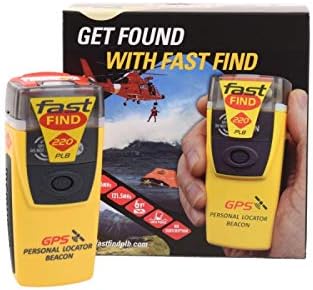
The McMurdo FastFind 220 is a focused personal locator beacon with a 4.5 rating. It is designed for people who want a direct satellite distress function without paying for a messaging plan. The operating sequence is refreshingly simple: deploy the antenna, pull the anti-tamper seal, and press the ON button.
We may earn a commission when you buy through this link, at no additional cost to you.
This listing is programmed for registration under the US country code. Although the beacon can function worldwide, the initial emergency contact will be the US Search and Rescue authorities associated with its registration. That distinction matters for international travelers, who should choose the appropriate country-programmed listing for their normal registration region.
Proper registration is essential. Contact details and travel information can help rescue teams understand who has activated the device and what may have happened. The beacon is intended only for grave and imminent danger to life because false alerts can divert search-and-rescue resources and create serious disruption.
The FastFind 220 is a sensible budget-oriented choice for hikers, backpackers, and domestic travelers who value simplicity and no subscription over two-way messaging or extensive connectivity. It may feel less versatile than a satellite communicator, but for its core emergency purpose, its uncomplicated activation process and global functionality make it a compelling dedicated PLB.
A deployed antenna, anti-tamper seal, and single ON button create an activation process that can be understood and practiced before an emergency. Simplicity is particularly valuable when a user is injured, cold, exhausted, or otherwise unable to manage a complex touchscreen.
The supplied model targets US registration, while international users are directed to an appropriate alternative listing with reprogramming. Correct registration improves the usefulness of the identity and emergency-contact information provided to Search and Rescue teams.
We may earn a commission when you buy through this link, at no additional cost to you.
The ACR ResQLink View PLB425 combines a readable position display with a buoyant, compact design and earns a 4.6 rating. It sends an SOS distress signal with GPS position through the 406 MHz emergency system and includes a 121.5 MHz homing signal for rescuers close to the incident.
We may earn a commission when you buy through this link, at no additional cost to you.
Its attachment system is unusually versatile. The supplied information identifies a belt clip, oral inflation tube clip, straps, and lanyards, making it possible to carry the PLB in configurations suited to hiking, boating, camping, climbing, and RV travel. The housing is buoyant, providing an important advantage for users who may end up in the water.
Bright LED and infrared strobes increase visibility in different conditions, while the local display provides positioning information without relying on an external phone. The beacon uses the COSPAS-SARSAT satellite system to reach Search and Rescue agencies worldwide, with no recurring subscription needed for that core function.
Optional 406Link subscription features add self-test and GPS test messaging, but they are not necessary for emergency distress transmission. This PLB is well suited to users who want a visual display, multiple carrying options, and marine-oriented buoyancy without depending on a monthly service. Its physical versatility is the feature that most clearly sets it apart.
Built-in buoyancy gives the PLB425 an advantage for boating and general outdoor use. Its included clip, straps, lanyard, and inflation-tube attachment options allow users to keep the device accessible across several activities.
The display shows local GPS positioning information while the beacon transmits a distress alert and homing signal through dedicated emergency frequencies. This combination gives the user more immediate information than an alert-only setup.
We may earn a commission when you buy through this link, at no additional cost to you.
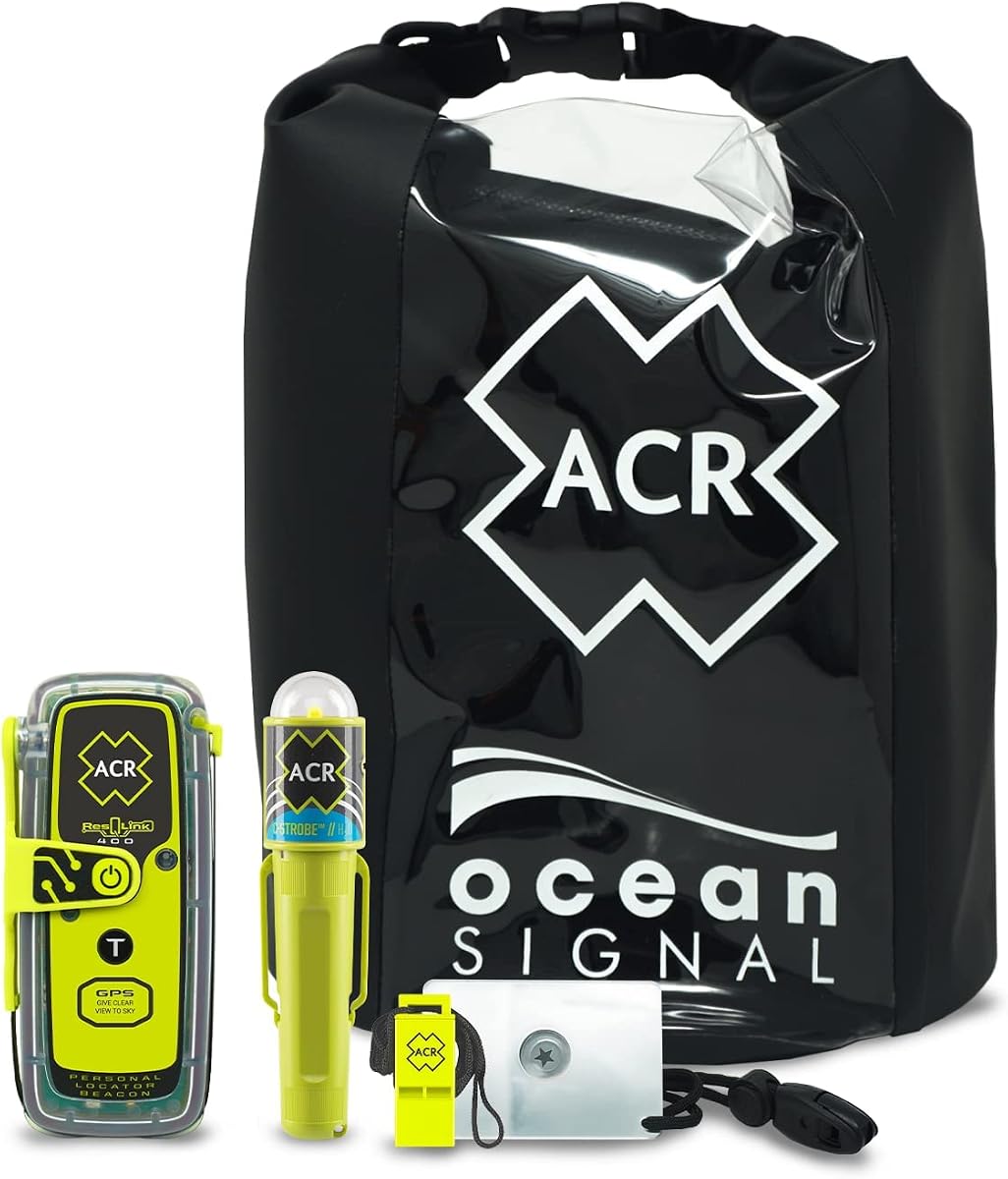
The ACR ResQLink 400 Survival Kit receives a 4.7 rating and combines the core ResQLink 400 GPS personal locator beacon with several complementary signaling and storage accessories. It is a broader emergency package for users who want more than a single distress device.
We may earn a commission when you buy through this link, at no additional cost to you.
The supplied C-Strobe H2O rescue light provides a bright waterproof LED signal for day or nighttime visibility. A Res-Q Whistle provides a separate audible way to attract attention, while the signal mirror can reflect sunlight over a distance. The RapidDitch drybag keeps essential gear protected from wet conditions and remains accessible during an emergency.
The beacon itself offers GPS tracking, a strobe, and rapid rescue capability in a compact form. Its inclusion alongside waterproof signaling gear is especially practical for hikers, campers, and paddlers who may need to attract attention before a satellite response reaches their location. None of the accessories should be treated as a replacement for the PLB's registered distress function.
This bundle is a strong pick for buyers who prefer a ready-made collection of emergency equipment rather than assembling individual items separately. Its trade-off is additional bulk and the possibility that users will not practice every accessory equally. Used with the beacon registered and routinely inspected, however, it offers a more versatile emergency setup.
The rescue light, whistle, and signal mirror cover visual, audible, and reflective signaling needs. This layered approach can help a nearby party notice a stranded user even before professional rescuers arrive.
The included RapidDitch drybag provides waterproof storage and easy access to essential equipment. It is particularly useful in wet climates or for water-based activities where keeping communications and survival supplies dry matters.
We may earn a commission when you buy through this link, at no additional cost to you.
The Ocean Signal rescueME PLB1 is built around portability and uncomplicated emergency use. At four ounces, it is among the smallest devices in this guide, yet it includes a 66-channel GPS receiver, a 1-candela high-intensity strobe, and more than 24 hours of operational life.
We may earn a commission when you buy through this link, at no additional cost to you.
One-handed operation is a particularly important design consideration. The device can be operated in difficult circumstances without navigating through menus or handling a complicated antenna sequence, which helps when a user has an injury or limited mobility. Its unique mounting clip attaches easily to a lifejacket, while the small housing takes up minimal backpack space.
Water resistance extends to 49 feet, making the PLB1 appealing for boating and other environments where water exposure is possible. A seven-year battery provides a long maintenance interval, and the core rescue function is supported by international government rescue satellites without a subscription requirement.
The PLB1 is best for users who prize size, weight, and simple activation more than messaging, weather data, or location sharing. Its dedicated design keeps the emergency workflow focused, while the high-intensity strobe adds another way to remain visible. For packers and marine travelers who carry every gram carefully, that trade-off is compelling.
At four ounces and 30 percent smaller than the maker's next-smallest beacon according to the supplied information, the PLB1 reduces the chance that emergency equipment will be left behind because it feels too bulky.
One-handed operation makes the device approachable in poor conditions. Users should still practice activation and understand that PLBs are reserved for grave and imminent danger rather than routine location checks.
We may earn a commission when you buy through this link, at no additional cost to you.
The ACR ResQLink 400 PLB provides a 4.7-rated combination of global distress capability and a straightforward, subscription-free emergency design. It sends a 406 MHz distress signal with a 121.5 MHz homing signal, using Cospas-Sarsat and MEOSAR compatibility for worldwide rescue support.
We may earn a commission when you buy through this link, at no additional cost to you.
Positioning comes from GPS and Galileo GNSS, providing flexibility in the satellite systems used to establish a position. The beacon also includes an LED strobe and an infrared strobe for visibility in low-light and nighttime situations. These features create useful layers of information and signaling without turning the product into a general communications device.
The absence of a subscription is central to its appeal. Users do not need to maintain a recurring messaging plan to access the advertised rescue function, and the device avoids the complexity of a color screen and menu-driven interface. That focus makes it suitable for backpackers, climbers, paddlers, and travelers who want an emergency tool rather than a satellite communicator.
The ResQLink 400 PLB is a strong all-purpose choice for people who want a compact beacon with broad satellite compatibility and multiple visual signals. Its trade-off is that it does not show position information on a built-in display and cannot exchange ordinary messages. For users focused on rescue activation rather than connectivity, those limitations are acceptable.
Compatibility with Cospas-Sarsat and MEOSAR gives the device a foundation for global emergency response. Users still need to register the beacon correctly and understand the registration requirements for the countries they visit.
Both LED and infrared strobes can help rescuers detect the beacon. The infrared output is especially useful in darkness, while the visible strobe supports signaling in daylight and other visible conditions.
We may earn a commission when you buy through this link, at no additional cost to you.
The ACR ResQLink View Survival Kit provides a 4.7-rated combination of position display, rapid rescue capability, and several familiar emergency signaling tools. Compared with a beacon-only purchase, it offers a broader package that can help users communicate visually, audibly, and by satellite distress alert.
We may earn a commission when you buy through this link, at no additional cost to you.
The C-Strobe H2O rescue light is waterproof and uses a bright LED strobe for day or night signaling. The Res-Q Whistle offers audible attraction, and the signal mirror provides a passive visual method for reflecting sunlight over long distances. A RapidDitch drybag adds waterproof protection for gear that must remain accessible.
The ResQLink View beacon itself includes a GPS display, a bright strobe, and a dedicated emergency workflow. Users can consult the display for positioning information, while the satellite beacon communicates an SOS message through the appropriate rescue system. The added accessories do not replace satellite activation but can help in the time before responders arrive.
This kit is most appropriate for campers, backpackers, and families building a practical emergency inventory. It may feel excessive for a traveler who wants the smallest possible dedicated beacon, and every item is more useful when practiced in advance. For broader self-sufficiency, however, the coordinated package is appealing.
The integrated display makes the ResQLink View more informative than a no-display PLB because users can review GPS positioning directly. The beacon retains the rapid rescue function expected of a dedicated SOS device.
The light, whistle, mirror, and drybag cover several practical needs. Layered tools can increase the chance of attracting attention while also protecting essential equipment from the environmental conditions encountered outdoors.
We may earn a commission when you buy through this link, at no additional cost to you.
The ACR ResQLink 410 RLS PLB combines dedicated emergency signaling with Return Link Service and holds a 4.5 rating. Its most notable feature is confirmation that Search and Rescue has received the distress signal, providing a clearer indication that the alert entered the rescue network.
We may earn a commission when you buy through this link, at no additional cost to you.
The beacon supports GPS, Galileo GNSS, and MEOSAR compatibility, and its rescue service does not require a subscription. A five-year battery life and more than 24 hours of operational life support dependable readiness, although these figures should be understood as supplied specifications rather than guarantees for every usage pattern.
Built-in buoyancy makes it appropriate for marine settings and outdoor activities where water exposure is possible. The multifunction clip supports versatile attachment, while the strobe and infrared strobe improve visibility during an emergency. The small, lightweight design also makes the device easier to include routinely in a pack or on a lifejacket.
The ResQLink 410 is a good fit for users who want the reassurance of receipt confirmation without a monthly service. Like the other dedicated PLBs, it does not serve as an everyday satellite messenger, so travelers who need check-ins, weather data, or two-way communication should look at a communicator instead. For focused emergency use, its balance of features is convincing.
Return Link Service adds a feedback element that is missing from many basic PLBs. It confirms that the distress signal reached Search and Rescue, which is particularly reassuring for users traveling in remote regions.
The buoyant housing and multifunction clip make the beacon adaptable to different environments. Visible and infrared strobes provide additional signaling options after an alert has been transmitted.
We may earn a commission when you buy through this link, at no additional cost to you.
The display-free ACR ResQLink 400 earns a 4.8 rating and represents a minimalist approach to personal emergency signaling. Its Amazon listing identifies the beacon as model 2921 and presents it as an authorized dealer product, with expert support and damaged-item return shipping also noted in the supplied information.
We may earn a commission when you buy through this link, at no additional cost to you.
Without a screen, the device focuses attention on its core emergency function. That simplicity can benefit users who do not need local positioning information, visual menus, or extra controls. There is less to interact with when the beacon is needed, and the housing avoids the additional bulk associated with a display-equipped model.
This distinction is important when comparing it with the more extensively described ResQLink 400 listing in this guide. Both use the same model family, but one listing emphasizes a package of rescue accessories while this entry highlights the no-display configuration. Buyers should compare the included contents and exact model rather than relying only on the family name.
The ResQLink 400 No Display is well suited to buyers who want a dedicated PLB and value simplicity. It lacks the immediate position visibility of a screen-equipped beacon, but that omission is reasonable for users who plan to carry it for emergencies rather than routine navigation. Its strong rating and authorized-dealer listing make it a notable alternative within the ACR range.
Eliminating the display creates a focused device for emergency activation. This can be attractive to users who prefer not to carry a screen-equipped unit or who want fewer visible interfaces on the device.
The listing identifies manufacturer part number 2921, but package contents can differ among ResQLink 400 listings. Comparing the model, included accessories, registration requirements, and warranty terms avoids choosing a different configuration unintentionally.
We may earn a commission when you buy through this link, at no additional cost to you.
The Garmin inReach Mini 3 Plus is the most feature-rich communicator in this guide and earns a 4.7 rating. Unlike a dedicated one-way PLB, it supports two-way satellite messaging, group messages, voice messages, and photo sharing through the Iridium network when paired with a compatible smartphone.
We may earn a commission when you buy through this link, at no additional cost to you.
Its interactive SOS feature contacts Garmin Response, a 24/7 staffed emergency coordination center. The center receives the user's location and maintains two-way communication during a crisis. That ability to exchange information can help responders understand changing conditions, although the product's broader communication functionality is what distinguishes it from conventional personal locator beacons.
The color touchscreen is scratch-resistant, and the housing carries an IP67 durability rating for impact, severe weather, and demanding terrain. The internal rechargeable battery can provide up to 350 hours with 10-minute tracking or up to 95 hours in performance messaging mode. This endurance is suitable for multi-day travel without constant recharging.
The Garmin Messenger and Garmin Explore apps add messaging, trip planning, weather forecasts, and LiveTrack sharing with distance, time, and elevation. Voice commands and preset messages streamline hands-free updates. The trade-off is that a subscription is associated with the service, and the interface is more complex than a dedicated rescue beacon, but for users who want one device to handle routine check-ins and emergencies, this is the premium all-around choice.
Interactive SOS gives the user an opportunity to communicate with a staffed response center rather than only transmitting a distress alert. Location details and follow-up updates can make emergency coordination more responsive when conditions and communications allow.
Satellite messaging, group communications, voice notes, photo sharing, weather, trip planning, and LiveTrack turn the Mini 3 Plus into an everyday connectivity tool. Those extras make it especially useful for expeditions, field work, and travelers who want regular updates beyond cellular coverage.
The IP67-rated body and scratch-resistant color touchscreen suit demanding outdoor environments. Long tracking and messaging runtimes provide ample endurance for multi-day trips, though actual performance depends on settings and use.
We may earn a commission when you buy through this link, at no additional cost to you.
Choosing a personal locator GPS beacon means balancing emergency functions with portability, durability, registration rules, and the type of communication required. A dedicated PLB is simple and subscription-free, while a satellite communicator adds messaging, tracking, and other connected features.
A dedicated personal locator beacon is built around sending an SOS distress alert and providing positioning information to Search and Rescue. Models such as the ACR ResQLink View RLS PLB, McMurdo FastFind 220, Ocean Signal rescueME PLB1, and related variants prioritize a limited emergency workflow. This makes them straightforward and dependable for serious backcountry travel. A satellite communicator such as the Garmin inReach Mini 3 Plus does considerably more: two-way text and voice messages, group communications, photo sharing, weather, tracking, and interactive SOS coordination. That broader functionality is useful for everyday updates and field work, but it also introduces greater complexity and an associated communications service.
Choose a dedicated PLB when rapid emergency activation and simple operation matter most. Choose a satellite communicator when routine communication, detailed check-ins, media, or two-way coordination with a response center are priorities.
Registration is required by law in most countries for a personal locator beacon. It links the device to an owner and emergency contacts, giving Search and Rescue teams information about who activated the alert and where a journey may have taken place. The McMurdo FastFind 220 listing is specifically programmed for US registration, while international users are directed toward the appropriate country-programmed version and a reprogramming service. Travelers should verify where a device must be registered, how to update contact details, and whether a given listing's country code matches their itinerary.
Register the beacon before departure, review the information for accuracy, and confirm the device is registered for every relevant country. Correct registration can materially improve the quality of an emergency response.
The satellite network behind a distress alert is central to a PLB's usefulness. Several ACR devices use the 406 MHz emergency distress signal with a 121.5 MHz homing signal and compatibility with Cospas-Sarsat and MEOSAR. GPS and Galileo GNSS support can improve positioning options. Return Link Service, available in the ResQLink View RLS and ResQLink 410 RLS models, confirms that Search and Rescue received the distress signal. The Garmin option takes a different route by connecting interactive SOS requests with a staffed response center and supporting two-way communication.
Look for internationally recognized satellite infrastructure and clear information about what feedback the device provides. A receipt confirmation is useful, but it is not the same feature as an ordinary messaging channel.
Battery specifications need two interpretations. Standby or service life indicates how long a device can remain ready between adventures, while operational life describes how long it can continue transmitting after activation. The ACR ResQLink View RLS PLB lists a five-year battery life and more than 28 hours of operational life, while the ResQLink 410 RLS lists a five-year battery and more than 24 hours. Ocean Signal advertises a seven-year battery and more than 24 hours of operating life for the rescueME PLB1. The Garmin Mini 3 Plus uses a rechargeable internal battery, with up to 350 hours of tracking and up to 95 hours in performance messaging mode.
For a dedicated PLB, prioritize long service life and adequate post-activation duration. For a rechargeable communicator, compare realistic tracking and messaging modes, charging access, and the length of the trip.
Water protection matters for boaters, kayakers, climbers near wet routes, and anyone whose plans can change quickly. The Ocean Signal rescueME PLB1 is specified as waterproof to 49 feet, while the ACR ResQLink View PLB425 and the RLS models include built-in buoyancy. A waterproof accessory such as the C-Strobe H2O in the survival-kit listings adds signaling durability but does not establish the water rating of the entire bundle. Buyers should evaluate each included device independently rather than assuming every item shares the same rating.
For marine use, prioritize a buoyantly housing and verified water-resistance specification. For land-based trips, these features remain useful but may matter less than display, messaging, or carrying convenience.
A beacon is most useful when it is actually carried. The rescueME PLB1 weighs four ounces and includes a mounting clip for lifejackets, making it attractive to travelers who minimize pack weight. The ACR models provide multifunction clips, while the PLB425 listing includes a belt clip, oral inflation tube clip, straps, and lanyards. A wrist, belt, pack, or lifejacket attachment should remain easy to reach and should not be likely to snag. Carrying choices also affect whether the antenna can be deployed correctly in an emergency.
Test the attachment with the clothing and equipment you actually use. A device that is comfortable and secure on a real hike is more valuable than a marginally smaller unit that is inconvenient to carry.
A digital display can show GPS position information directly on a dedicated PLB, while models without a display keep the emergency workflow minimal. Strobe lights provide another layer of visibility after activation; the ACR View RLS includes a digital display and infrared strobe, and the ResQLink 400 PLB provides LED and infrared strobes. The rescueME PLB1 uses a 1-candela high-intensity strobe. Survival kits add a waterproof C-Strobe H2O, whistle, and signal mirror. These accessories do not replace the beacon's satellite distress function, but they can help attract attention closer to the incident.
Choose a display if immediate position feedback is valuable to you. Choose additional strobes and signaling tools if rescuers may not arrive immediately or if you are traveling with a group.
A dedicated PLB normally provides a narrow emergency function without a recurring fee, making it easy to carry for years. Some ACR models also offer optional subscription-based testing and message features, but core distress transmission does not require them. The Garmin inReach Mini 3 Plus provides far more everyday functionality through satellite messaging, apps, weather, tracking, and interactive SOS. Its associated subscription is an important part of the ownership experience and should be evaluated before purchase rather than treated as an incidental feature.
Compare the full ownership model, including subscriptions, optional features, registration, accessories, and battery charging. The most advanced device is not necessarily the most suitable one, but it is the most versatile when regular off-grid communication is part of the trip.
Before traveling, register the device under the correct country program and verify that the owner, emergency contacts, and travel information are current. Read the manufacturer instructions for the exact activation sequence. For example, the FastFind 220 requires deploying the antenna, pulling the anti-tamper seal, and pressing the ON button. Practice the steps without initiating a false emergency alert, and make sure everyone who may carry the beacon knows how to operate it.
Carry the unit where it is accessible and secure, using a lifejacket clip, belt clip, strap, lanyard, or pack attachment suited to the activity. Confirm that the attachment will not block the antenna or prevent access to controls. Before departure, check the battery or charge status, inspect the housing, and review the trip plan. Learn how the emergency system works: a PLB generally sends a distress alert to Search and Rescue, while the Garmin communicator supports interactive coordination and two-way messaging.
After an outing, switch off the beacon as directed, remove any moisture or dirt, and inspect the casing and attachment points. Keep the device dry as directed, avoid opening the housing, and replace a damaged or expired unit through the appropriate service process. Do not transmit test signals except through an approved testing method, because false alerts can divert rescue resources and put other lives at risk.
Most dedicated PLBs in this guide, including the ACR ResQLink models and Ocean Signal rescueME PLB1, provide their core emergency distress function without a subscription. Some optional ACR testing or messaging features may use a 406Link subscription. The Garmin inReach Mini 3 Plus is different because its two-way satellite communication and interactive SOS services are associated with a service plan.
A PLB is primarily designed for emergency distress alerts and location transmission, often with simple activation and a longer standby life. A satellite communicator supports ongoing two-way messages, tracking, weather, and other functions beyond emergencies. The Garmin inReach Mini 3 Plus belongs to the communicator category, while the ACR and McMurdo devices are focused rescue beacons.
Yes, registration is required by law in most countries. It links the beacon to the owner and emergency contacts so responders have useful context when an alert is received. The McMurdo FastFind 220 offered here is programmed for US registration, while travelers outside the US should select the appropriate country-programmed listing and confirm local requirements.
Dedicated PLBs should generally be reserved for grave and imminent danger because false alerts can endanger lives and disrupt Search and Rescue operations. The Garmin inReach Mini 3 Plus is better suited to routine check-ins because it supports two-way messaging, group updates, tracking, and weather through its associated satellite service.
Return Link Service confirms that Search and Rescue has received the emergency distress signal transmitted by a compatible PLB. It is useful reassurance that the alert reached the rescue network. It is not a general messaging feature and should not be confused with the two-way conversation supported by a satellite communicator.
The Ocean Signal rescueME PLB1 stands out for portability because it weighs four ounces, has a compact housing, and includes a lifejacket mounting clip. The best choice still depends on the trip: ACR models offer more attachment options, while the Garmin Mini 3 Plus provides broader communications but has a touchscreen and app-based operation.
Practice the mechanical steps and read the manual, but do not transmit a live distress alert merely to test the device. Use only the manufacturer's approved test function or optional testing service where available. Learn the difference between a self-test, a GPS test, and a full distress activation before leaving for a remote trip.
Yes. Personal locator beacons use satellite-based distress systems rather than cellular networks, which is their primary advantage in remote areas. The Garmin Mini 3 Plus also communicates through the Iridium satellite network. Users should still verify registration, coverage, service requirements, and device compatibility before relying on a model during international travel.
The ACR ResQLink View RLS PLB is the most balanced dedicated rescue beacon in this group, combining Return Link Service confirmation, multiple positioning systems, visible and infrared signals, buoyancy, and long battery provisions without a recurring subscription. The Garmin inReach Mini 3 Plus takes the premium position for travelers who need two-way messaging, interactive emergency coordination, app-based planning, and regular tracking beyond cellular coverage.
For the most straightforward emergency-only approach, the McMurdo FastFind 220 offers an easy activation sequence and no subscription, although buyers must select the correct country program. The Ocean Signal rescueME PLB1 is particularly attractive when minimum weight and size are paramount. Other ACR options deserve attention for their displays, infrared strobes, buoyancy, RLS feedback, or bundled survival accessories.
Before buying, verify the exact model, registration country, satellite services, included accessories, battery expectations, and current subscription terms. Product configurations and pricing can change, so readers should check the current listing carefully. The right personal locator GPS beacon is the one that fits the trip, can be carried consistently, is registered correctly, and has been operated often enough that its emergency process feels familiar.