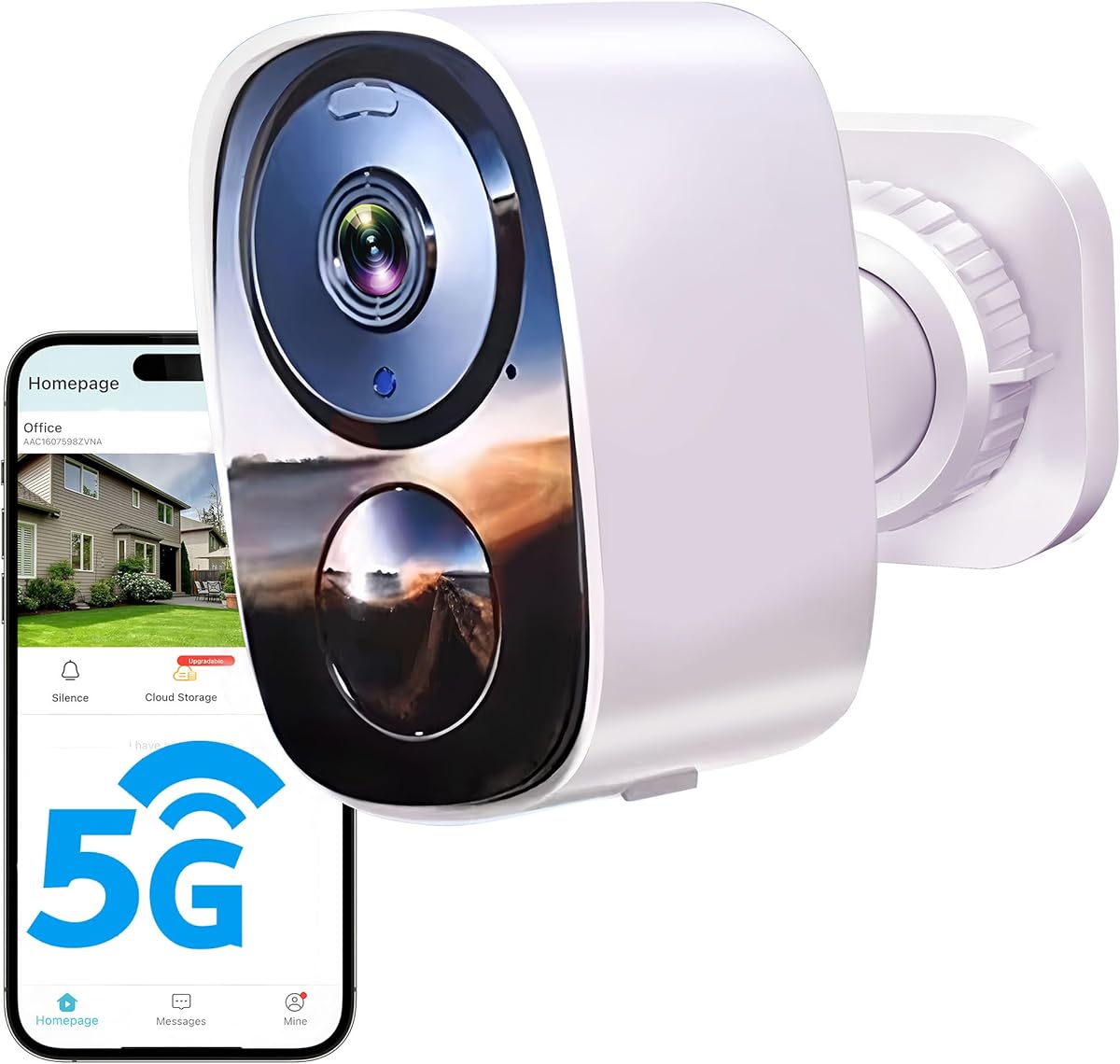
2026 Upgraded 2K Security Cameras
4.3Editor score
Free cloud storage
Dual-band Wi-Fi support
Extended battery operation
Our AI security cameras guide compares 10 leading models for video quality, AI detection, solar power, local storage, wide coverage, and easier home monitoring.
AI security cameras combine intelligent detection, automated subject tracking, and convenient app-based monitoring to make home surveillance easier to manage. The best models can distinguish people from common motion, recognize packages or vehicles, reduce irrelevant alerts, and help you review important activity without watching every stream continuously.
This guide compares ten AI security cameras based on resolution, night visibility, detection capabilities, tracking, power options, storage, connectivity, coverage, and practical deterrence features. It includes single-camera options, solar-powered models, complete outdoor kits, and expandable systems for homeowners, renters, and property managers.
Each review explains where a camera stands out, where compromises may appear, and which type of user is most likely to benefit. Ratings reflect the supplied customer feedback, while availability, bundle contents, features, and prices can change, so confirm the current listing before making a final purchasing decision.
4.3Editor score

4.3Editor score

4.1Editor score
This comparison highlights the resolution, AI functions, power design, storage approach, and coverage style of each camera. It helps reveal which models suit a single room, a focused outdoor viewpoint, or a complete property-wide security system.




The WYZE Cam v4 holds a 4.3 rating and stands out as the most flexible recommendation in this guide. It combines 2.5K QHD recording, a 120-degree field of view, enhanced color night vision, and on-device AI for people, packages, pets, and vehicles. That combination makes it suitable for a porch, driveway, garage, nursery, pet area, or indoor room.
We may earn a commission when you buy through this link, at no additional cost to you.
Its active features are particularly useful. A motion-activated 72-lumen spotlight and 100 dB siren can deter unwanted visitors, while two-way audio allows a homeowner to speak with a delivery driver or check on a child. Custom activity zones help concentrate alerts on meaningful areas, and the multi-camera dashboard keeps several Wyze feeds together. Storage can remain local on a microSD card up to 512GB without a recurring subscription.
There are a few constraints to consider. The camera connects only to 2.4GHz Wi-Fi, and the microSD card for local recording is not included. Optional cloud recording and back-to-back event recording are available through a separate subscription plan, so buyers who never want a cloud service should confirm that local storage meets their retention needs.
This is the strongest choice for someone who wants one camera to serve several everyday purposes without committing to a large system. It also makes sense for renters because the included magnetic base allows flexible placement, although screw mounting remains available. Overall, the Wyze Cam v4 offers the most balanced combination of image quality, intelligent alerts, deterrence, placement flexibility, and subscription-free operation in this roundup.
On-device AI can separate people, packages, pets, and vehicles from generic movement. Combined with activity zones, this helps concentrate notifications on the porch or driveway instead of every passing object.
The IP65 housing and operating range from -4°F to 113°F allow indoor or outdoor placement. Two-way audio also makes the camera useful as a baby or pet monitor when outdoor durability is unnecessary.
We may earn a commission when you buy through this link, at no additional cost to you.
The eufyCam S4 carries a 4.2 rating and offers the most advanced imaging arrangement in the list. Its triple-lens design combines an upper 4K bullet camera with a lower 2K dual-lens PTZ camera, allowing the system to preserve a broad view while also zooming toward a detected subject.
We may earn a commission when you buy through this link, at no additional cost to you.
Bullet-to-PTZ tracking is the defining feature. Once the bullet camera identifies activity, the PTZ unit locks on, tracks it, and zooms to capture details from as far as 164 feet away. If more subjects enter the scene, the camera widens its view to retain them. Radar and PIR sensing supports precise alerts, while red and blue warning lights and a 105 dB siren add a visible and audible deterrent.
The eufyCam S4 can operate independently with 32GB of built-in storage and optional microSD expansion up to 256GB. Using the specified HomeBase S380 unlocks further local storage and the ability to distinguish family members from strangers. That optional hub requirement adds complexity, and compatibility is specifically limited to the listed HomeBase models.
Choose the eufyCam S4 when image detail, long-range tracking, and sophisticated lens engineering justify a premium investment. It is particularly compelling for a driveway, yard, gate, or other large exterior area where one camera must handle both wide surveillance and close inspection. Buyers should verify HomeBase compatibility before adding accessories.
The fixed 130-degree 4K lens provides broad context while the lower PTZ assembly follows active subjects. This combination is useful when an alert should reveal both where an event occurred and what happened in detail.
The detachable 5.5W solar panel can maintain the camera with roughly one hour of direct sun daily. Because the panel separates from the camera, it can be positioned for light while the camera is mounted where coverage is needed.
We may earn a commission when you buy through this link, at no additional cost to you.
The eufy SoloCam E30 earns a 4.3 rating and presents a balanced single-camera option for yards, porches, and driveways. It delivers 2K day and night imagery through an f/1.6 aperture, while the 360-degree design reduces the need to aim a fixed camera toward one narrow direction.
We may earn a commission when you buy through this link, at no additional cost to you.
Built-in AI detects and tracks people, vehicles, and important events automatically. A removable SolarPlus panel uses two hours of daily sunlight to keep the camera charged, making it practical for locations without an outlet. For privacy-conscious recording, it supports microSD cards up to 128GB without requiring a subscription, although the card is not included.
Its limitations center on resolution and ecosystem expansion. The 2K sensor does not match the 4K output of several competitors, and support for 2.4GHz networks only may conflict with a dual-band router configuration. It can also work with HomeBase S380 or S280, but switching bases requires unbinding the device first.
This model is a strong fit for buyers who want a single solar camera with broad movement and less complexity than a multi-camera system. Choose the E30 for straightforward exterior monitoring, especially if you already use the compatible eufy ecosystem. For sharper recordings or a complete system, the E42 or another listed kit may offer a better fit.
The rotating platform lets the camera cover a wide area and follow detected people or vehicles. That reduces the chance that important movement will pass outside a tightly fixed field of view.
A supported microSD card keeps footage local without a mandatory cloud subscription. This makes the SoloCam E30 attractive for users who want more control over recording and retention.
We may earn a commission when you buy through this link, at no additional cost to you.
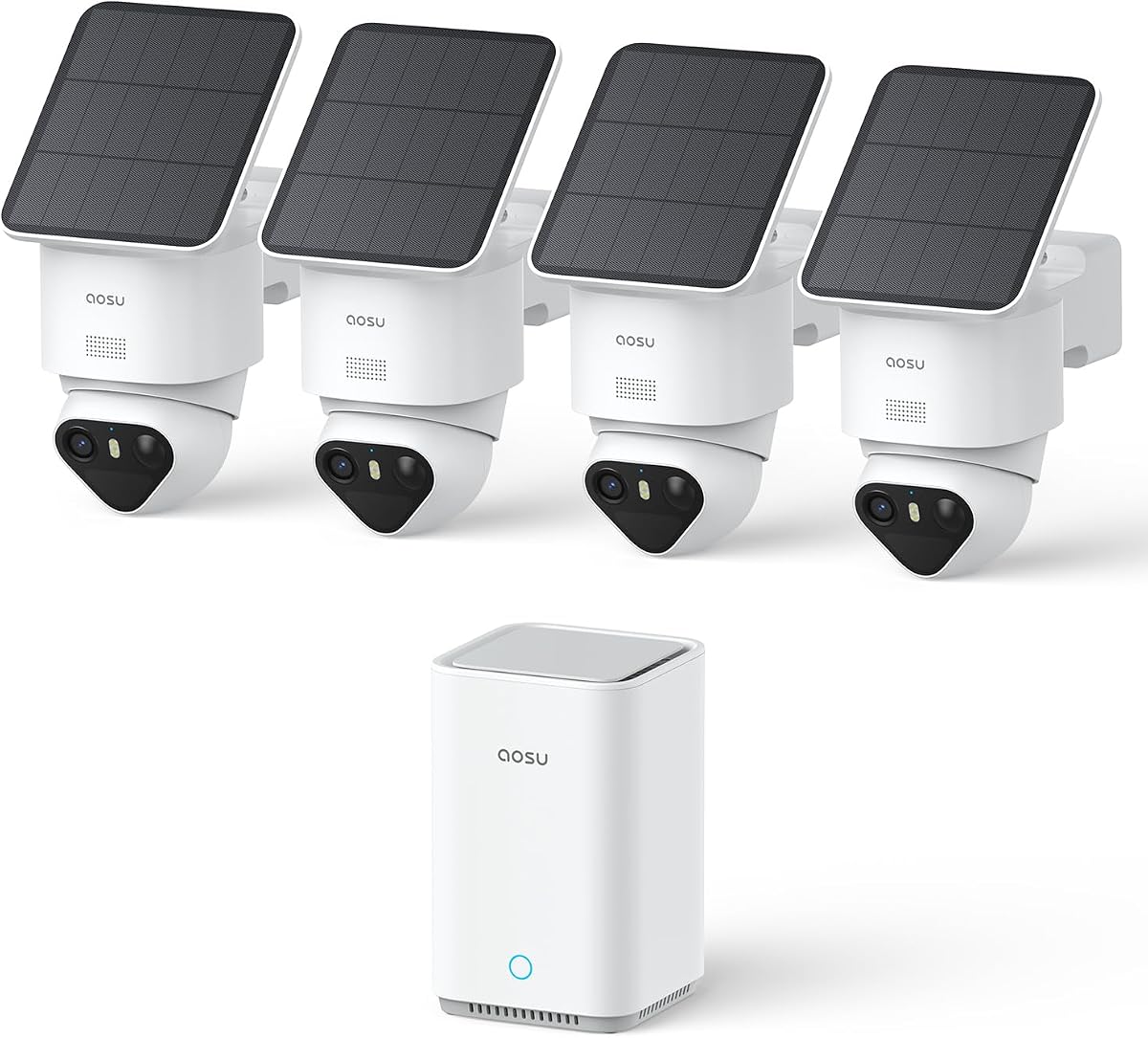
This four-pack holds the highest rating in the roundup at 4.4 and delivers a practical mix of features. It is designed for homeowners who want broad outdoor coverage without running power cables to several locations, with each camera using a detachable solar panel and backup battery.
We may earn a commission when you buy through this link, at no additional cost to you.
Each camera records in 2K and can switch to full-color night viewing through a built-in spotlight. Remote pan, tilt, and zoom functions broaden the useful viewing area, while PIR plus AI human detection is intended to filter out animals and other non-person movement. Two-way audio enables direct communication with visitors from the app.
Connectivity is a major strength because both 2.4GHz and 5GHz networks are supported. The 2.4GHz band offers longer reach through structures, while 5GHz can provide smoother live viewing when the signal conditions are favorable. Storage choices include microSD recording and optional cloud plans, with the microSD card sold separately.
This kit is a compelling option for covering a front yard, backyard, driveway, and side passage. The four-camera format is easier to start with than assembling separate cameras, and the solar design removes the need for nearby outlets. Compare the app, storage access, and compatibility with any existing smart-home setup before purchase, since the listing uses a generic product identity.
Four wireless cameras can cover several exterior zones while avoiding extensive cabling. The movable solar panels also give users flexibility when the best sunlight is not directly beside the desired camera angle.
AI human detection works alongside PIR sensing to focus alerts on people rather than every moving object. Two-way talk then provides an immediate way to respond after receiving a notification.
We may earn a commission when you buy through this link, at no additional cost to you.
The aosu T2 Ultra has a 4.3 rating and is a strong choice for buyers prioritizing image detail and organized multi-camera monitoring. Its 4K TrueColor night vision is intended to provide vivid outdoor footage without relying on a separate floodlight, while triple AI detection identifies people and relevant activity.
We may earn a commission when you buy through this link, at no additional cost to you.
The supplied aosuBase includes 32GB of built-in storage and supports local expansion up to 1TB. The system supports as many as six cameras, and multi-camera tracking assembles related clips from different viewpoints into a more complete account of an event. This makes the kit useful for a property with several exterior zones where one isolated clip may not show the full story.
Each camera includes a 9200mAh battery and detachable solar panel. The base connects to the router by Ethernet, while cameras communicate wirelessly with the base. That arrangement can reduce Wi-Fi congestion and does not require the entire home to remain on one compatible frequency, although the base itself still needs a wired router connection.
Vehicle Guard is another distinctive feature for households with parked cars or frequent driveway activity. Custom zones, light and sound warnings, and on-device person and vehicle detection add further utility. This is a well-rounded premium kit when the goal is a complete outdoor system rather than a single indoor camera, provided the user is comfortable with a central base and solar installation.
Cross-camera tracking can combine related moments into one event sequence. Reviewers can understand how an activity developed without manually comparing several separate recordings.
Solar panels, rechargeable batteries, and 360-degree cameras give the system the core tools needed for exterior coverage. The central base keeps local recording and multi-camera management organized.
We may earn a commission when you buy through this link, at no additional cost to you.
The eufy SoloCam E42 carries a 4.2 rating and combines two 4K solar cameras with a HomeBase 3. It is a practical middle ground between a single-camera purchase and a large multi-camera system, particularly for buyers who want sharp close detail and local centralized storage.
We may earn a commission when you buy through this link, at no additional cost to you.
The cameras provide 360-degree coverage and use built-in AI to identify and track people, vehicles, and important events. The stated 4K UHD resolution can recognize license plates from approximately 33 feet away. A motion-activated strobe and siren provide active deterrence, while SolarPlus 2.0 technology uses two hours of direct sunlight daily for continuous operation.
HomeBase 3 includes 16GB of built-in storage and can expand to 16TB. It also supports continuous recording during network outages, which can be valuable for users who want local monitoring to remain independent of internet connectivity. Individual cameras support microSD storage up to 128GB, although the card is not included.
Choose the E42 when two important outdoor locations need high-resolution coverage and the included hub makes centralized management appealing. It is less comprehensive than a four-camera kit, but more focused than many complete-system options. Buyers who already own a HomeBase 3 should update it to the specified firmware and use a compatible current app version.
The two 4K cameras support close visual inspection, while HomeBase 3 provides a local hub for recordings and system control. This is useful for users who prefer not to depend on cloud storage for routine viewing.
The motion-activated siren and strobe can discourage a visitor after an event is detected. These features complement rather than replace the importance of camera placement and responsible privacy practices.
We may earn a commission when you buy through this link, at no additional cost to you.
The REOLINK OMVI 3i earns a 4.2 rating and is the clearest choice for a buyer who prefers wired reliability. Power and data travel through one Ethernet cable with PoE, removing Wi-Fi coverage concerns and making it suitable for a fixed installation around a garage, driveway, side path, or perimeter.
We may earn a commission when you buy through this link, at no additional cost to you.
Its 18MP triple-lens arrangement combines a 10MP dual-lens panoramic camera with an 8MP PT camera. The panoramic unit supplies a 180-degree field of view, and the PT unit zooms in for closer detail. When the panoramic camera detects motion, the PT camera can lock onto and follow the object, with a dual-screen display preserving both the broad context and the close-up view.
AI detection recognizes people, vehicles, and animals. Virtual fences, intrusion zones, and non-motion zones help shape alerts, while selectable white-light and IR night modes provide different ways to illuminate and record nighttime activity. Recordings can go to microSD storage up to 512GB, an NVR, FTP, or NAS.
This camera is best for technically comfortable users who can run Ethernet cable and understand the required updates. The Reolink NVR firmware should be version 3.6.4 or later, and compatible desktop clients are also required for the full triple-lens display. In return, PoE creates a stable foundation for demanding outdoor surveillance.
The panoramic lens preserves the broad scene while the separate PT camera provides a magnified perspective. This is especially helpful for following a moving subject without losing the surrounding context.
MicroSD, NVR, FTP, and NAS options support different recording strategies. H.264 and H.265 compression can help users balance video efficiency with storage demands.
We may earn a commission when you buy through this link, at no additional cost to you.
The 2026 Upgraded 2K camera has a 4.3 rating and offers an approachable feature set for a single outdoor viewpoint. It combines 2K UHD recording, full-color night vision, AI motion detection, a spotlight and siren, two-way talk, and support for both 2.4GHz and 5GHz networks.
We may earn a commission when you buy through this link, at no additional cost to you.
One of its most appealing elements is the free cloud plan, which provides access to recordings without a mandatory paid subscription. The free tier is offered at SD quality, while HD access requires a paid plan. Alternatively, the camera supports local microSD storage up to 256GB, with the card sold separately.
Battery endurance depends heavily on use. The supplied information states that the camera may run for about 60 days when fully charged and triggered 100 times per day, while less frequent activity can theoretically extend operation to six months. Temperature, recording mode, and motion frequency can alter actual results, so this figure should be treated as a usage-dependent estimate.
Choose this model when cost-consciousness and essential AI monitoring matter more than 4K resolution or a multi-camera base. It is especially useful for a front door, side yard, garage, or other location where a spotlight, remote conversation, and phone notifications add practical value. Buyers should compare the free-plan limitations with their desired recording quality.
The free cloud tier makes remote review possible without an initial paid subscription. Local microSD recording offers another path for owners who prefer not to rely on cloud retention.
A rechargeable battery and power-saving mode reduce charging frequency. Actual endurance will vary, so the stated six-month upper range is most relevant to locations with infrequent motion.
We may earn a commission when you buy through this link, at no additional cost to you.
The aosu Total-Watch Classic AI Suite has a 4.1 rating and is the most comprehensive package in the guide. It includes four 3K solar outdoor cameras, a head-to-toe video doorbell, and a 2K indoor camera with One-Touch Call, creating coverage for both the exterior perimeter and interior spaces.
We may earn a commission when you buy through this link, at no additional cost to you.
The aosuCortex platform is designed to connect the devices through local AI. Its notifications cover family arrivals, package deliveries, vehicles, and potential intrusions, while linked footage allows the system to track related movement across cameras. That cross-device awareness is a major advantage when reviewing a busy household or a wide property.
The system includes 32GB of local storage with expansion support up to 16TB, and no subscription is required. Solar panels and wireless installation reduce the need for exterior wiring. The included indoor camera adds a distinct communication function, while the doorbell provides a focused view of visitors at the primary entrance.
This suite is ideal for buyers who want one coordinated system rather than separate indoor and outdoor products. It is less attractive for users who depend on ONVIF or Home Assistant compatibility, since the listing explicitly excludes both. It also remains one of the higher-ticket options, so prospective buyers should determine whether the mixed camera types and integrated storage justify the complete-system approach.
Exterior cameras, a video doorbell, and an indoor camera cover different security roles within one ecosystem. The result is easier management than operating several unrelated systems.
The aosuCortex system links activity across devices, while 32GB of built-in storage and substantial expansion potential support extended local retention. This arrangement keeps routine viewing under the owner's control.
We may earn a commission when you buy through this link, at no additional cost to you.
The aosu Four-Camera Kit has a 4.1 rating and offers a straightforward way to establish outdoor coverage that can expand over time. Its four compact 2K cameras are intended for a single-family property, with local storage, AI human detection, active deterrence, and no mandatory subscription.
We may earn a commission when you buy through this link, at no additional cost to you.
The split solar-panel design separates the panel from each camera body. That gives installers more freedom to place the camera around corners or near a pathway while positioning the panel where it receives reliable sunlight. Solar performance still depends on season, placement, exposure, and camera settings, so it should not be treated as an unconditional guarantee of uninterrupted power.
The aosuBase combines the system in one app and supports expansion up to 1TB through microSD storage. Up to four cameras can be viewed at once, and camera-to-camera tracking groups a person appearing at multiple locations into one timeline. PIR and AI human detection work together to limit alerts, while full-color night vision, lights, sound, and notifications support nighttime deterrence.
This kit is a practical selection for someone who wants four wireless outdoor cameras now and may add more later. It offers less resolution than 3K or 4K alternatives, but its expandable structure and organized cross-camera timeline offer good utility for property coverage. The separate microSD card is sold separately, so include it in the installation budget.
The separated panel makes it easier to balance camera visibility with access to sunlight. This is particularly useful around gates, side walls, and irregularly shaped outdoor areas.
Multi-camera viewing and linked timelines reduce the need to investigate repetitive clips separately. The unified base also gives the user one place to organize the four-camera system.
We may earn a commission when you buy through this link, at no additional cost to you.
The best AI security camera depends on the property, recording priorities, installation constraints, and desired level of system complexity. Review resolution, tracking, power, storage, connectivity, and compatibility before choosing.
Resolution determines how much fine detail a camera can preserve, while night visibility determines whether that detail remains usable after dark. A 2K model is suitable for broad awareness and close-range identification, whereas 3K or 4K cameras are more helpful when license plates, facial details, package labels, or distant activity matter. Color night vision can make clothing and vehicle colors easier to recognize, but ambient darkness, infrared mode, spotlight placement, and glare still influence the result.
Choose resolution based on subject distance and the evidence you want to capture. Higher resolution alone cannot compensate for poor positioning or an obstructed view.
AI features should reduce irrelevant notifications rather than simply generate more alerts. Person detection is common across the list, while some models also identify pets, vehicles, packages, or family members. Radar plus PIR sensing can improve the precision of motion detection, and activity zones help a camera concentrate on a porch, gate, or walkway. Reviewers should consider how these categories match their actual environment.
Prioritize meaningful classification and customizable zones. A feature-rich camera is only useful if its alerts are relevant and manageable.
A fixed wide-angle lens is simple and effective for a confined area, while pan-tilt cameras offer more directional control. PTZ tracking can follow a person or vehicle, and triple-lens designs may show a broad scene alongside a zoomed view. More coverage can reduce blind spots, but tracking quality also depends on motion, lighting, network performance, and whether the subject remains visible.
Match the camera movement to the space. Choose fixed coverage for a porch, flexible pan-tilt for an open yard, or dual-view tracking for a large driveway.
Wired PoE provides a stable connection and continuous power where running Ethernet is practical. Solar cameras avoid visible cables and are convenient for yards or remote exterior points. Battery life varies with motion frequency, recording behavior, temperature, and signal strength, so advertised maximums should not be treated as guaranteed everyday results. Plug-in options remain useful when an outlet is nearby and the priority is simple, continuous operation.
Plan power and network routes before installation. The best wireless camera is one that can maintain both a reliable signal and enough power at its intended position.
Local microSD storage is straightforward for one camera and can avoid mandatory recurring charges. A home base or central base is more convenient for multi-camera systems, supports larger capacities, and may allow recording during an internet outage. Cloud storage provides remote access but introduces recurring plans, service-dependent retention, and an ongoing privacy decision. Some free cloud tiers preserve only reduced video quality.
Choose storage based on camera count and retention goals. Include memory cards and expansion hardware in the total ownership plan because they are frequently sold separately.
Some cameras operate on 2.4GHz Wi-Fi only, while others support both 2.4GHz and 5GHz. The lower band usually provides better range through walls, while the higher band can offer faster local streaming. Central-base systems may communicate with cameras over their own network and connect the base to a router by Ethernet. Voice-assistant support and smart-home integrations can add convenience, although compatibility varies by model.
Check the network band, hub requirements, app, voice assistants, and automation support before installing. A feature is only useful if it works with the existing smart-home setup.
A single indoor or focused outdoor camera may suit a small space, while four-camera kits offer more balanced property coverage. Multi-camera bundles can simplify initial setup, but they are unnecessary when only one high-angle viewpoint is needed. Some systems allow later expansion, although camera, base, app, and storage requirements should be verified. A complete suite may also include a doorbell and indoor camera for broader whole-home monitoring.
Count the viewpoints that genuinely need coverage. Buying fewer cameras with better placement usually produces a more useful result than spreading several low-resolution units too thinly.
A siren, spotlight, strobe, or warning light can discourage an unwanted visitor after detection, while two-way audio allows direct communication. These functions add value at entrances and isolated exterior areas, but they should be used responsibly and in line with local privacy expectations. Audio quality can vary with network conditions, and active deterrence cannot guarantee that every incident is prevented.
Treat deterrence as one layer of a broader security plan. Notifications, recording quality, camera visibility, and timely human response remain equally important.
Start by mapping the areas that require coverage, such as the primary entrance, driveway, garage, side path, backyard, nursery, or living space. Mount each camera high enough to reduce tampering while preserving a useful view of faces and approaching activity. Test the live feed in daylight and darkness, confirm that activity zones align with the intended area, and adjust motion sensitivity before relying on notifications.
Configure recording and storage according to your retention needs. Test local playback, cloud access, shared-user permissions, app alerts, and any required firmware updates. For solar cameras, position panels where they receive direct sunlight and inspect connections periodically. For PoE models, verify the cable route, compatible NVR firmware, and client software before mounting equipment permanently.
Maintain the cameras by cleaning lenses gently, checking brackets, clearing obstructions, and reviewing storage capacity. Update the app and base firmware when new versions are available, and test two-way audio and alarm functions after major network changes. Review privacy settings, account access, retention schedules, and recordings periodically so the system continues to meet your current security and privacy needs.
Yes, several cameras in this guide support local microSD recording without a mandatory monthly subscription. Models with a home base can also store footage locally and may support much larger capacities. Some cloud features remain optional, while certain cameras advertise a free cloud tier with reduced recording quality. Check whether a product requires a base, hub, paid cloud plan, or included storage for its advertised features.
It depends on how much detail you need to identify and how close subjects will be. A 4K camera can preserve more information when a person or vehicle is at a distance, while 2K may be sufficient for recognizing broad activity near a door. Placement, lens quality, lighting, and compression also affect the result, so resolution should be considered alongside field of view and night performance.
Solar performance depends on sunlight, season, snow cover, panel orientation, camera activity, and temperature. The listed models advertise solar charging, but none can guarantee uninterrupted operation in every climate or installation. Buyers should use the manufacturer or seller's guidance, maintain a clear panel, and consider how quickly the battery recovers after cloudy or snowy periods.
Many of the listed cameras can identify one or more of those categories, but capabilities vary by model and app version. The WYZE Cam v4 recognizes people, packages, pets, and vehicles, while several eufy and aosu models focus on people, vehicles, pets, or broad events. Detection accuracy also depends on lighting, distance, camera angle, and settings, so it should reduce notifications rather than replace direct review.
PoE cameras receive both power and data through an Ethernet connection, providing a stable network link without depending on Wi-Fi range. Wi-Fi cameras are easier to install in locations without network cabling and may include solar or battery options. The REOLINK OMVI 3i in this guide uses PoE and does not support Wi-Fi, while several other cameras support wireless connections.
It depends on the brand and model. The aosu T2 Ultra, aosu Total-Watch Classic, and aosu Four-Camera Kit use a central base, while the eufy SoloCam E42 includes HomeBase 3. Some eufy cameras can operate independently but gain additional features with a compatible base. Review storage limits, supported hardware, continuous-recording support, and expansion options before buying accessories.
Position the camera to see the intended detection area, avoid pointing it toward busy roads or dense foliage, and use activity zones to exclude irrelevant movement. Keep the lens clean, maintain stable power and connectivity, and update the app and base firmware. Detection results also vary with distance and lighting, so the recommended detection range should guide placement.
A single camera is more appropriate for one room, porch, or focused viewpoint and may reduce setup complexity. A four-camera kit is better for a property needing coverage across a front yard, backyard, driveway, and side path. The most useful option is the one that provides clear views of priority areas while remaining within your networking, mounting, and storage capacity.
The WYZE Cam v4 is the most balanced overall pick because it combines 2.5K recording, color night vision, flexible AI detection, active deterrence, two-way audio, and local storage in a device suitable for indoor or outdoor use. The 2026 Upgraded 2K camera is the budget-focused alternative, while the aosu Total-Watch Classic offers the broadest complete home system.
Prioritize the requirements that affect daily use: relevant alerts, a clear field of view, dependable power, sufficient storage, and connectivity that works at the camera's location. More specialized options deserve attention when a property needs long-distance PTZ tracking, wired PoE reliability, high-resolution night recording, or coordinated clips from several cameras.
Before purchasing, confirm the current bundle contents, base requirements, storage-card compatibility, network band, app support, and warranty details. Ratings and prices can change over time, and temporary promotions may affect which model represents the strongest value. Comparing the latest listing with the priorities outlined in this guide is the best way to make a confident final decision.
