
HP 14-inch Chromebook
4.3Editor score
Chrome OS web-first operation
Up to 14-hour battery
Anti-glare HD display
Fast charging support
A college laptop must balance affordability with the features students need every day. That means dependable battery life, a comfortable screen, enough memory for multiple applications, and a keyboard suitable for taking notes. The best cheap laptop for college is not necessarily the least expensive option, but the one that handles coursework without unnecessary complexity.
This guide compares ten affordable laptops using processor performance, memory, storage, display quality, connectivity, portability, battery claims, included software, and practical college use cases. It covers Windows laptops, Chromebooks, compact models, and systems designed for extended study sessions, with attention to both strengths and compromises.
Each selection highlights a different path for students: a balanced everyday Windows machine, a web-focused Chromebook, a larger display option, or a highly portable model. Amazon pricing and configurations can change over time, so compare the current listing and specifications before purchasing rather than relying on an earlier price or promotion.
4.3Editor score

4.5Editor score

4.5Editor score
As an Amazon Associate we earn from qualifying purchases.
The table below compares all ten laptops by their most important college-use characteristics, including processor, memory, storage, screen size, and operating system.


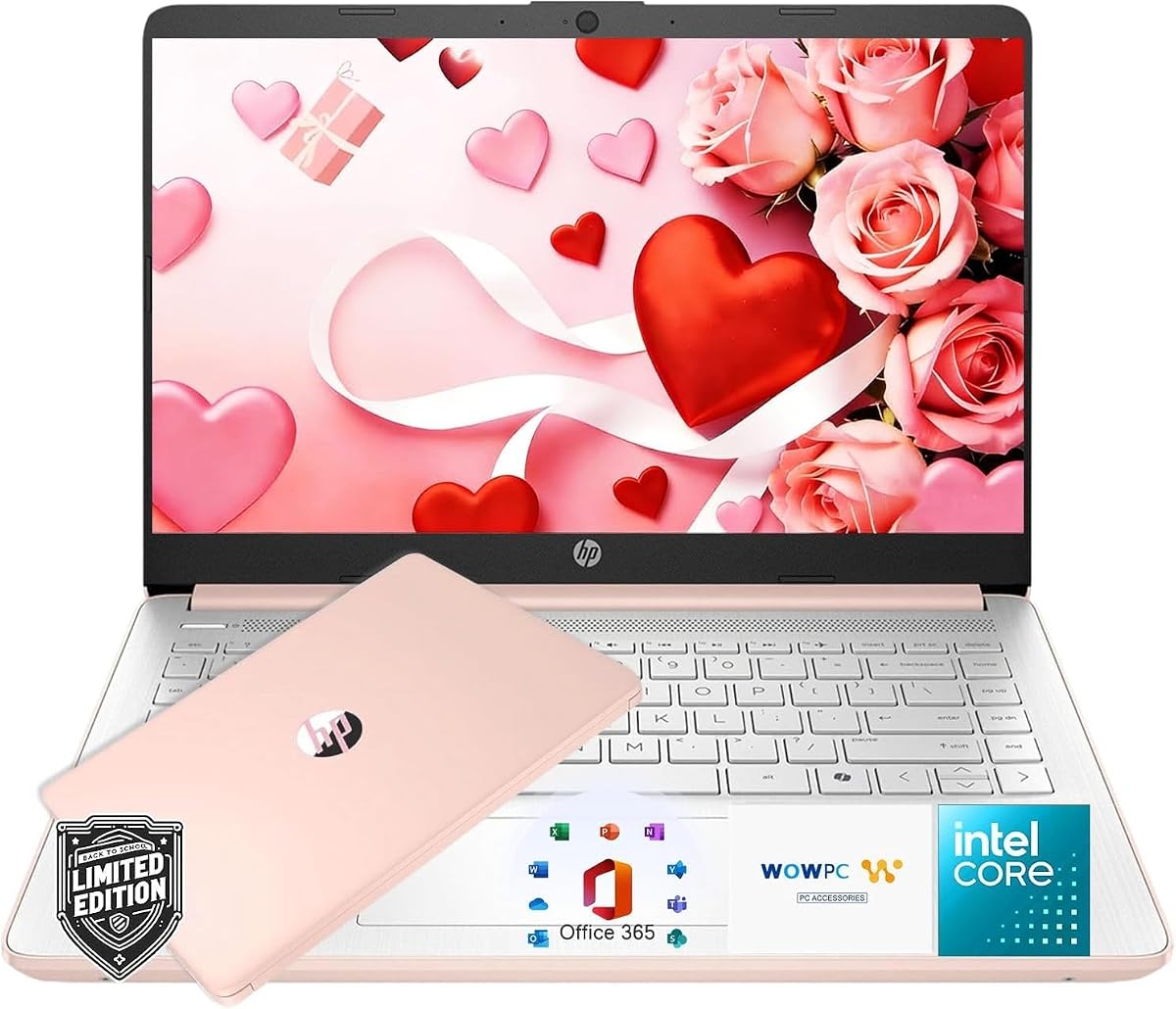


The HP 14-inch Ultra-Light Laptop combines a familiar Windows 11 experience with a portable 14-inch form, making it a straightforward option for students who need more flexibility than a Chromebook. Its 4-star rating reflects a budget-focused configuration, but the included Microsoft 365 subscription, Wi-Fi 6E, fast charging, and advertised battery life make it useful for lectures, research, and everyday productivity.
We may earn a commission when you buy through this link, at no additional cost to you.
Storage totals 128GB through 64GB of eMMC plus a 64GB SD card, and the product information also mentions a three-year warranty on the expanded SD storage. Connectivity is unusually helpful for an entry-level model, with USB-C, two USB-A ports, HDMI, a headphone and microphone combination jack, an SD reader, and an AC smart-pin charging connector. The micro-edge display also supports two external monitors at up to full HD resolution and 60Hz.
The main limitation is 4GB of DDR4 memory. It should handle browser tabs, word processing, video calls, and light coursework, but students running many applications, large spreadsheets, or demanding software may encounter slower performance. The N4500 processor is likewise designed for light workloads rather than advanced engineering, data analysis, or intensive gaming. Those constraints are understandable for this class of affordable laptop.
This is a strong choice for a student who wants Windows, a familiar keyboard and trackpad, ample connectivity, and a battery designed for a full study day. It is less suitable for specialized coursework that demands more memory or processing power. For general college assignments, document editing, research, streaming, and online classes, it offers a useful mix of portability and functionality.
The generous mix of USB-A, USB-C, HDMI, and full-size SD access makes it easier to connect a mouse, external storage, headphones, and classroom displays without relying on a single adapter. Wi-Fi 6E and Bluetooth 5.4 also suit students connecting to campus networks and accessories.
The combination of built-in eMMC and an included SD card offers more flexibility than the internal capacity alone suggests. The one-year Microsoft 365 subscription provides access to Word, Excel, and PowerPoint for immediate school use, while Windows 11 Home in S mode can be switched to the full Home edition.
We may earn a commission when you buy through this link, at no additional cost to you.
The HP Chromebook 14 is one of the most practical choices for students whose college work centers on web-based applications, Google Workspace, online research, and virtual classes. Its 4.3-star rating, thin design, long advertised battery life, and Chrome OS make it an approachable and efficient option that avoids the complexity of a conventional Windows notebook.
We may earn a commission when you buy through this link, at no additional cost to you.
The quad-core Intel Celeron N4120 is designed to balance performance and power consumption. With 4GB of RAM and 64GB of eMMC storage, the Chromebook is equipped for common assignments, multiple browser tabs, streaming, and Android apps through Google Play. The 14-inch micro-edge anti-glare display has a 1366-by-768 resolution, which is suitable for documents, lectures, and routine video content.
Its portability and endurance are the major advantages. HP advertises up to 14 hours of battery life, while fast charging can move the battery from zero to approximately 50 percent in around 45 minutes. The downside is that Chrome OS is less forgiving of specialized desktop software than Windows, and 64GB of storage can feel restrictive for large downloads or offline media. Students in specialized programs should verify their software requirements first.
Choose this Chromebook for assignments centered on the browser, inexpensive accessories, long days between outlets, and a preference for a secure operating system with automatic updates. It is less suitable for students who need Windows-only engineering, statistical, creative, or virtual-machine software. For most general college work, it remains one of the strongest budget picks.
The advertised 14-hour maximum makes this model attractive for full days of classes, library work, and travel. Rapid charging also reduces downtime during breaks, although real battery life varies with screen brightness, network activity, and the applications being used.
Chrome OS integrates the browser, Google Play apps, and cloud-based productivity tools into a simple environment. This is effective for online lectures, Google Docs, research, email, and communication, with less overhead than a full desktop operating system.
We may earn a commission when you buy through this link, at no additional cost to you.
The HP Stream 14-inch Laptop stands out for students who want more storage flexibility than a conventional budget notebook offers. Its 4.3-star rating and 1.12TB combined storage package make it appealing for coursework, downloaded media, and a separate library of files. It runs Windows 11 and includes a one-year Microsoft 365 subscription.
We may earn a commission when you buy through this link, at no additional cost to you.
Storage consists of 128GB UFS plus a 1TB docking station, with a 32GB microSD card and several cables also included in the bundle. The Intel Processor N150 supports everyday browsing, office work, streaming, and communication, while Wi-Fi 6 and Bluetooth 5.4 provide current wireless connectivity. Ports include USB-C, two USB-A ports, HDMI, a media reader, and a headset connection.
The main compromise is 4GB of RAM. That amount is adequate for typical coursework, but heavier multitasking may benefit from additional memory if the system permits upgrades. The docking station is another factor to consider because it adds desk space and may be unnecessary for students who only carry the laptop between classes. Buyers should distinguish the internal capacity from the total bundle capacity when evaluating storage.
This model fits students who maintain sizable project folders or want convenient desktop expansion without purchasing a separate dock. It is a sensible option for general school productivity, video meetings, and document-heavy work. However, students whose programs rely on demanding Windows software should consider a configuration with more memory and processing power.
The bundled seven-in-one docking station can simplify connections to peripherals and displays at a dorm or home desk. It also provides a separate 1TB storage device, allowing students to keep course files and media separate from the laptop's internal UFS drive.
The N150 processor and 4GB of memory target routine productivity rather than intensive workloads. At 3.24 pounds, however, the laptop itself remains easy to carry between classes, and the anti-glare screen helps with long reading sessions.
We may earn a commission when you buy through this link, at no additional cost to you.
The HP 14-inch 8GB Laptop is the strongest all-around choice in this guide, combining the most balanced set of specifications with a 4.5-star rating. Its 8GB of RAM is the key advantage over many competing budget models, giving students more room for browser tabs, video calls, documents, and background applications.
We may earn a commission when you buy through this link, at no additional cost to you.
The Intel Processor N150 has four cores and can reach up to 3.6GHz with Turbo Boost. Windows 11, a one-year Microsoft 365 subscription, and Copilot support cover the basics of college productivity. Wi-Fi 6, USB-C, HDMI, Bluetooth, and a 720p camera provide practical connectivity for classes and remote study. The machine weighs 3.24 pounds, making it easy to carry.
Storage is the clearest limitation. At 128GB UFS, the laptop has enough room for an operating system, coursework, and selected applications, but users should rely on cloud storage, external drives, or removable media for larger collections. The listing also references light gaming, which should be understood as casual rather than demanding 3D gaming. Neither storage nor graphics makes it ideal for specialized creative workloads.
This laptop best suits students who want Windows, enough memory for realistic multitasking, a compact body, and a claimed battery life of up to 11 hours. It avoids the most significant weakness of cheaper 4GB models while remaining reasonably portable. It is the most versatile recommendation here for students who do not have highly specialized software requirements.
Memory has a direct effect on how many applications can remain open without slowing down. An 8GB configuration gives students more headroom for simultaneous browser tabs, a video meeting, a word processor, and cloud-storage utilities than the common 4GB alternative.
The 3.24-pound design and advertised 11-hour battery make the laptop practical for back-to-back classes. A 720p camera, dual connectivity options, and full-size productivity applications support online lectures, study groups, and assignments.
We may earn a commission when you buy through this link, at no additional cost to you.
The HP 14-inch N150 Laptop combines modern components with a familiar 14-inch form, offering a practical option for students who need efficient everyday computing. Its 4.3-star rating is supported by a current processor, Wi-Fi 6, USB-C with DisplayPort support, and a design intended for daily portability.
We may earn a commission when you buy through this link, at no additional cost to you.
Its Intel N150 has four cores, four threads, up to 3.6GHz boost speed, and a 6MB L3 cache. The listed 4GB LPDDR5-4800 memory provides fast bandwidth, while 128GB UFS supports quick access to applications and files. The 14-inch anti-glare display includes 250 nits of brightness, and a 720p camera handles video conferencing.
The four gigabytes of RAM is the main limitation for heavy multitasking, and the 1366-by-768 resolution is less detailed than a full HD panel. However, the product data provides unusually clear battery expectations, including up to 11 hours of video playback and 7.5 hours of mixed use. This helps buyers compare the system with their actual study routine.
Choose this model for browsing, documents, research, communication, streaming, and light productivity in a compact Windows machine. It is well suited to students prioritizing efficiency and modern connectivity over premium display resolution or abundant memory. Those with heavier workloads should look toward a higher-memory or full HD configuration.
LPDDR5 memory and UFS storage help the system respond quickly while supporting an efficient power profile. The N150 is appropriately matched to routine academic tasks, including online classes, email, browsing, presentations, and document editing.
USB-C with DisplayPort, two USB-A ports, HDMI, and an audio jack cover most student accessories. Stated video and mixed-use battery estimates provide a more useful basis for planning than a vague maximum figure alone.
We may earn a commission when you buy through this link, at no additional cost to you.
The HP Everyday Slim Laptop is the highest-rated product in this selection, earning a 5-star rating from the supplied data. It is designed around the everyday needs of students: Windows 11, a 14-inch anti-glare display, a lightweight 3.24-pound body, current wireless connectivity, and one year of Microsoft Office 365.
We may earn a commission when you buy through this link, at no additional cost to you.
The Intel N150 processor is appropriate for browsing, online classes, office tasks, and streaming. Internal storage is 128GB SSD, supplemented by a stated 1TB of cloud storage. Connectivity includes USB-C, two USB-A ports, HDMI 1.4b, an SD reader, a headset jack, Wi-Fi 6, and Bluetooth 5.4, which is a well-rounded collection for dorm rooms and shared workspaces.
The most important uncertainty is memory. The supplied product data does not specify the RAM capacity, so buyers should check the current configuration carefully. The 1366-by-768 display is also less sharp than a full HD panel, and 128GB remains modest for local files. Cloud storage helps with access and backup but does not replace local capacity for large applications or offline media.
This laptop is a strong match for a student seeking an attractive, portable Windows system with the necessary connectivity and productivity software. Its rating and broad everyday feature set make it appealing, but the unspecified memory prevents a more confident recommendation for heavy multitaskers. Verify the live listing before ordering.
The natural silver finish, slim profile, and 3.24-pound weight suit students moving between libraries, classrooms, and shared spaces. The anti-glare panel supports comfortable reading, while the dedicated Copilot key provides quick access to on-device assistance.
Two USB-A ports support existing peripherals, USB-C handles modern accessories, and HDMI enables an external display. The SD reader is especially useful for moving media between a camera, phone, and laptop.
We may earn a commission when you buy through this link, at no additional cost to you.
The Windows 11 i3 College Laptop is the strongest premium-style selection in this roundup, offering the largest display, most memory, and most internal storage among the highlighted models. Its 4.5-star rating reflects a well-balanced configuration for students who want room to multitask and view documents or lectures comfortably.
We may earn a commission when you buy through this link, at no additional cost to you.
An Intel Core i3 processor with two cores and four threads runs up to 3.4GHz, while 12GB of RAM and a 256GB SSD create a more comfortable workspace than many 4GB entry-level machines. The 15.6-inch full HD anti-glare screen offers a 1920-by-1080 resolution, and the backlit keyboard is useful during evening study sessions.
The laptop weighs 3.6 pounds and measures 19.5mm thick, so it is portable but less compact than the 3.24-pound HP alternatives. Battery life is advertised at approximately seven hours under mixed use, which is less impressive than the 11- to 14-hour claims elsewhere in the guide. Nevertheless, USB 3.0, HDMI 2.1, USB-C charging, Wi-Fi 6, and an expandable TF card slot create a useful accessory setup.
Choose this model when screen size, memory, storage, and a backlit keyboard matter more than maximum portability. It is especially appropriate for long document work, split-screen research, and students carrying multiple external devices. Its larger chassis is the trade-off, but the full HD panel and 12GB of memory make this a convincing all-around college system.
The 15.6-inch full HD panel gives students more room for split-screen research, detailed spreadsheets, and lecture notes. Anti-glare treatment helps maintain readability under classroom lighting, while the full HD resolution produces a sharper image than the HD panels used by many rivals.
Twelve gigabytes of RAM provides one of the strongest capacity levels in this list. It allows a student to keep research tabs, a video call, and office applications open with more confidence than a 4GB system, especially when the operating system runs in the background.
We may earn a commission when you buy through this link, at no additional cost to you.
The HP 14-inch Student Chromebook delivers a familiar Chrome OS experience with a 4.4-star rating, placing it among the better-received products in this guide. It is aimed directly at students and pairs a 14-inch anti-glare display with a quad-core processor, web-focused software, and a bundled set of CUE accessories.
We may earn a commission when you buy through this link, at no additional cost to you.
The Intel Celeron N4120 provides four cores and threads, a 1.1GHz base clock, and boost speed up to 2.6GHz. With 4GB of LPDDR4x memory and 64GB of eMMC storage, it is designed for browsing, Google Workspace, online classes, and Android applications. Port selection includes two USB-A ports, one USB-C port, HDMI, and a headphone jack.
Students should consider the 64GB storage limit, particularly if they need large software libraries or extensive offline media. The 1366-by-768 display is appropriate for routine tasks but not especially detailed. As with any Chromebook, compatibility with course-specific applications is the critical consideration; Chrome OS works best when assignments are browser-based and cloud-connected.
This is a compelling option for students seeking a straightforward Chromebook with accessories and a slightly higher rating than the other HP Chromebook in the list. It suits introductory courses, communication, research, and collaborative online work. It is less appropriate for programs requiring specialized Windows applications, large local files, or advanced gaming.
The included CUE accessories add value for a student setting up a study space or carrying the device between classes. A webcam, speaker system, and Chrome OS applications cover common communication and collaboration requirements.
The Celeron N4120 divides routine workloads across four cores, supporting responsive browsing and Google-based applications. Its power-efficient design also aligns well with the stated goal of long battery life between classes.
We may earn a commission when you buy through this link, at no additional cost to you.
The 15.6-inch FHD Laptop offers an accessible route to a large, sharp display and unusually clear storage expansion. Its 4-star rating reflects a capable budget configuration with Windows 11, a 1.9GHz 5205U processor, 128GB of internal storage, and a dedicated expansion slot for an additional 1TB SSD.
We may earn a commission when you buy through this link, at no additional cost to you.
The full HD IPS panel gives documents, videos, and online lectures a sharper image than the common 1366-by-768 alternative. Connectivity includes USB-C, HDMI, an SD card reader, dual-band Wi-Fi, and Bluetooth 4.2. The laptop weighs 3.6 pounds, making it more substantial than the lightest 14-inch models but still suitable for daily transport.
The 4GB of RAM is the main limitation. It supports general coursework and communication, but a student running many tabs or demanding applications will benefit from more memory. Bluetooth 4.2 also lacks the efficiency and modern accessory support associated with newer versions. Buyers should verify the available upgrade path for memory and confirm which expansion components are included.
This laptop fits students who prioritize a large full HD screen and plan to add storage later. It may be especially useful for media viewing, document-heavy work, and students who want Windows without the cloud-first limitations of Chrome OS. Those needing intensive software or extensive multitasking should choose a faster, higher-memory alternative.
The 128GB internal drive provides a starting point for applications and current coursework, while the 1TB SSD expansion slot allows students to add capacity as their project files grow. This is more flexible than relying exclusively on cloud storage.
A 1920-by-1080 IPS display offers more detail and a broad viewing surface for lectures, research, and entertainment. The anti-reflective properties of an IPS panel can also make longer sessions more comfortable in varied indoor lighting.
We may earn a commission when you buy through this link, at no additional cost to you.
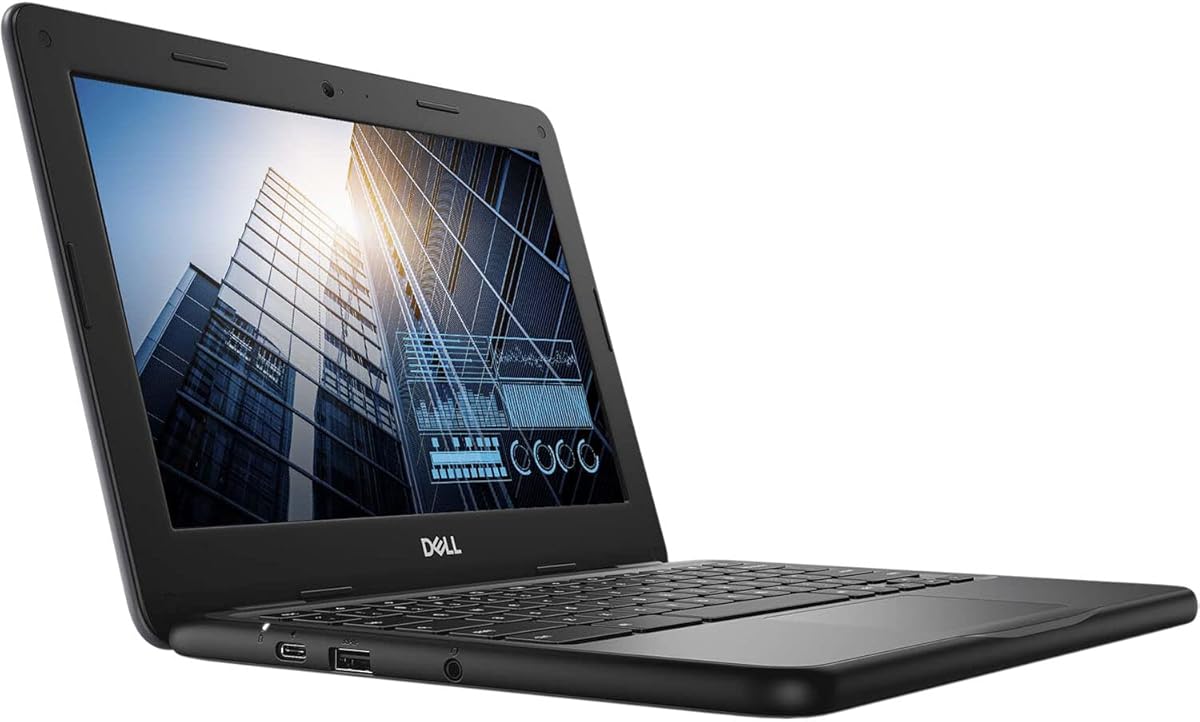
The Dell Chromebook 11 3100 is the most economical way to obtain a functional college computer in this guide. Its 4.1-star rating comes with the usual caveats of a renewed device, while the core configuration—an 11.6-inch HD screen, Celeron N4020, 4GB of RAM, and Chrome OS—suits lightweight academic work.
We may earn a commission when you buy through this link, at no additional cost to you.
Chrome OS keeps the system centered on the Chrome browser and Android applications, making it effective for email, web research, Google Workspace, and online classes. Bluetooth is included for peripherals, and Intel HD Graphics handles ordinary visual content. The small screen can be advantageous for students who want a highly compact device, although it offers less room for side-by-side work than a 14-inch or 15.6-inch model.
Storage is the defining constraint. With only 16GB of flash memory, the Chromebook depends heavily on web-based files and cloud storage. It may struggle with large local media or multiple demanding applications. Because this is a renewed product, the condition of the battery, display, keyboard, and exterior may vary, making the warranty and return terms especially important to review.
Choose this model as a low-cost, lightweight secondary computer for browsing, notes, email, and basic online coursework. It may suit a student whose programs require only cloud-based tools or who wants a backup machine. It is not the best choice for large files, specialized software, or users who need dependable local storage.
Chrome OS performs routine academic tasks through the browser with relatively little overhead. For students accustomed to Google Docs, web research, and online learning, that simplicity can make a small and inexpensive device feel surprisingly capable.
A renewed listing can provide major savings while still meeting functional needs. Students should check the condition description, included accessories, battery expectations, warranty coverage, and return policy before treating it as their primary course computer.
We may earn a commission when you buy through this link, at no additional cost to you.
Choosing an affordable college laptop involves balancing operating system, processor, memory, storage, display, portability, and battery life against your specific coursework. Prioritize the capabilities your courses actually require rather than selecting by screen size or processor naming alone.
In short, choose Windows for flexibility and choose Chrome OS for simplicity, web-based learning, and battery efficiency.
For general college work, a current N-series processor can be adequate; for demanding programs, prioritize more capable processing hardware.
Eight gigabytes is a sensible target for general college use, while 4GB should be reserved for lighter workloads.
Aim for at least 128GB on Windows, use cloud or external storage strategically, and verify the available upgrade path before purchasing.
Choose 14 inches for balance, 15.6 inches for workspace, and 11.6 inches for compactness; favor full HD when the budget allows.
Prioritize a battery that covers your longest class day and a weight you can comfortably carry between every lecture.
Choose a port mix that matches your daily peripherals and confirm that any required adapters are included.
Confirm included software, warranty duration, return terms, and repair support before finalizing a purchase.
Begin by signing in with the account associated with your college email and completing the operating system's initial setup. Update Windows or Chrome OS, install required course applications, verify browser access, and connect essential accessories before classes begin. Create separate folders for each term or subject, enable automatic cloud backups, and make sure important files are also stored remotely rather than only on the laptop.
For daily study, adjust screen brightness and power settings to match your surroundings, enable the keyboard's backlight only when needed, and use battery-saver mode during long lectures. Keep vents clear, store the computer on a hard surface, and avoid leaving it in a hot vehicle. A protective sleeve or padded backpack can prevent damage during movement between buildings. Charge the device to its recommended level and keep the charger in your bag for full days away from an outlet.
Back up important coursework on a schedule, and perform a clean installation or system update before each demanding semester. Review storage and memory usage before the term starts rather than waiting for slowdowns. For a Chromebook, update Chrome OS and installed Android applications; for Windows, install current updates and run the built-in storage cleanup tools. If performance declines, close unused browser tabs, transfer large media to external storage, and check whether the machine needs more memory.
For general coursework, 8GB of RAM provides a better balance than 4GB, especially when students use many browser tabs, video calls, and office applications together. A 4GB machine can still work for light browsing and note-taking, but it may slow down when several tasks are active. If your program uses specialized software, virtual laboratories, large data sets, or media editing, consider 12GB or more.
A Chromebook can be an excellent college computer when courses rely on browser-based tools, Google Workspace, online research, and communication. It offers a simple operating system, strong security, and often favorable battery life. However, students should check every required application before purchasing because specialist desktop programs and some laboratory software do not run natively on Chrome OS.
A 14-inch model is easier to carry and usually less expensive, making it practical for students moving frequently between classes. A 15.6-inch model provides a larger workspace and is often better for split-screen research, spreadsheets, and long reading sessions. If a full HD panel is available at 15.6 inches, it can also offer noticeably sharper text and images.
It can be enough if you use cloud storage, an SD card, or an external drive for large files and keep downloaded media under control. Applications, the operating system, and active coursework consume space quickly. Students who need substantial offline access should choose more internal capacity or confirm that the laptop supports an inexpensive storage upgrade.
Most general college tasks do not require one. Browsing, documents, video calls, and standard office applications are well served by integrated graphics. Students in game design, 3D modeling, video editing, architecture, or advanced engineering may need more graphics capability, but that requirement usually increases the cost and weight of a portable laptop.
A renewed laptop can provide useful savings when the device has been inspected and includes a clear warranty. Check the condition grade, battery condition, ports, keyboard, display, operating system status, included accessories, and return policy. A renewed Chromebook can be especially practical for basic online work, while a primary course machine may justify spending more for better hardware support.
The included subscription provides immediate access to current Word, Excel, PowerPoint, and other Microsoft applications, which is useful at the beginning of a term. Compare the subscription period with your expected graduation timeline because it may expire during college. Your college may also provide free institutional access to Microsoft 365 through its technology services.
Most students benefit from a protective backpack or sleeve, a USB-C charger or compatible power adapter, headphones with a microphone, and an SD card for inexpensive file transfers. A mouse and short HDMI or USB-C hub are helpful at a dorm desk. Avoid buying accessories before confirming which ports your chosen laptop includes and what your school already provides.
The HP 14-inch 8GB Laptop is the best all-around pick because it combines 8GB of memory, a current N150 processor, portable construction, Windows 11, and a useful battery claim without overwhelming a student with unnecessary extras. The HP 14-inch Chromebook is the best budget choice for browser-centered learning, while the Windows 11 i3 College Laptop is the best premium option for students who prioritize a large full HD screen, 12GB of RAM, and a backlit keyboard.
Before choosing, compare the operating system with your required coursework, then prioritize memory, storage, keyboard comfort, and the weight you can carry every day. A 4GB machine can handle light assignments, but 8GB offers a safer margin for multitasking. Likewise, check that ports, wireless standards, and battery expectations suit the way you work rather than relying on a single specification.
Finally, remember that laptop prices, discounts, configurations, and included bundles can change. Check the current Amazon listing, customer feedback, warranty terms, and exact component details before purchasing. The right cheap laptop for college is the one that supports your courses, survives your schedule, and fits your budget without forcing trade-offs that will interfere with learning.