
Baby Headphones for Noise
4.6Editor score
24 dB stated noise reduction
Three-position adjustable headband
Two wearing configurations included
Discover the best noise canceling headphones for babies, with expert comparisons of noise protection, soft fit, comfort, portability, and real-world travel use.
Noise canceling headphones for babies are designed to soften unpredictable environmental sounds while protecting sensitive developing ears. The best option should balance meaningful noise reduction, a soft pressure-free fit, dependable materials, and a design that adapts as an infant grows. It should also be practical enough for naps, travel, and family outings.
This guide compares ten baby earmuffs based on the supplied product information, including stated attenuation, age and head-circumference ranges, construction, comfort features, adjustability, certification claims, and included accessories. The list covers both classic and updated Alpine Muffy models, the versatile 2-in-1 design from HOIGRBOM, and the compact BBTKCARE earmuffs.
Each review explains the product's strongest qualities, limitations, and most suitable circumstances, helping you distinguish basic protection from more specialized designs. Rankings reflect the provided ratings and specifications rather than personal testing. Product availability, design details, and manufacturer information may change, so verify the latest listing before purchasing.
4.6Editor score
4.6Editor score

4.6Editor score
The comparison highlights each product's stated noise reduction, age range, fit system, and intended use. Pay particular attention to the differences between the classic 23 dB Alpine Muffy models and the updated 24 dB versions, as well as the added versatility of the 2-in-1 HOIGRBOM design.


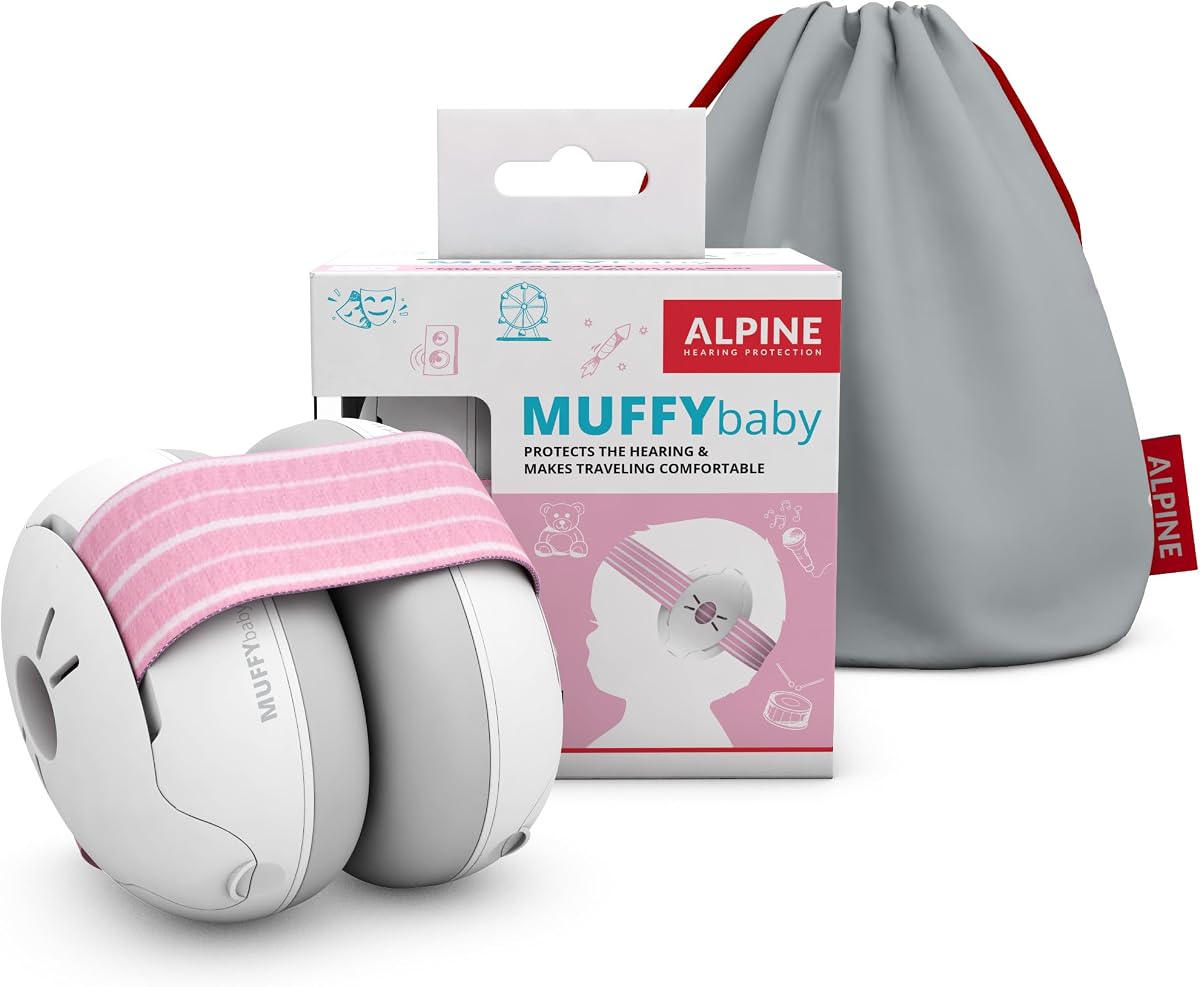
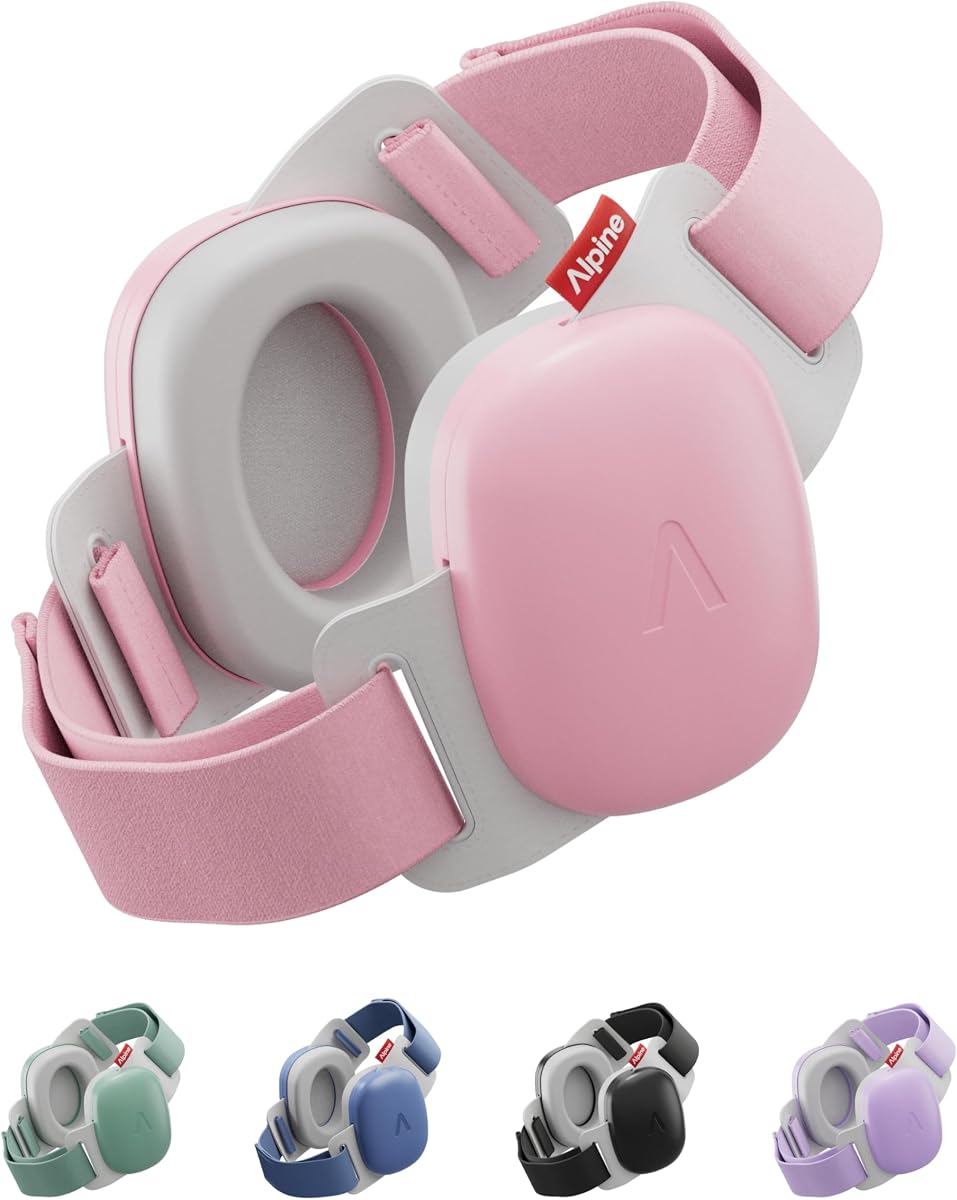

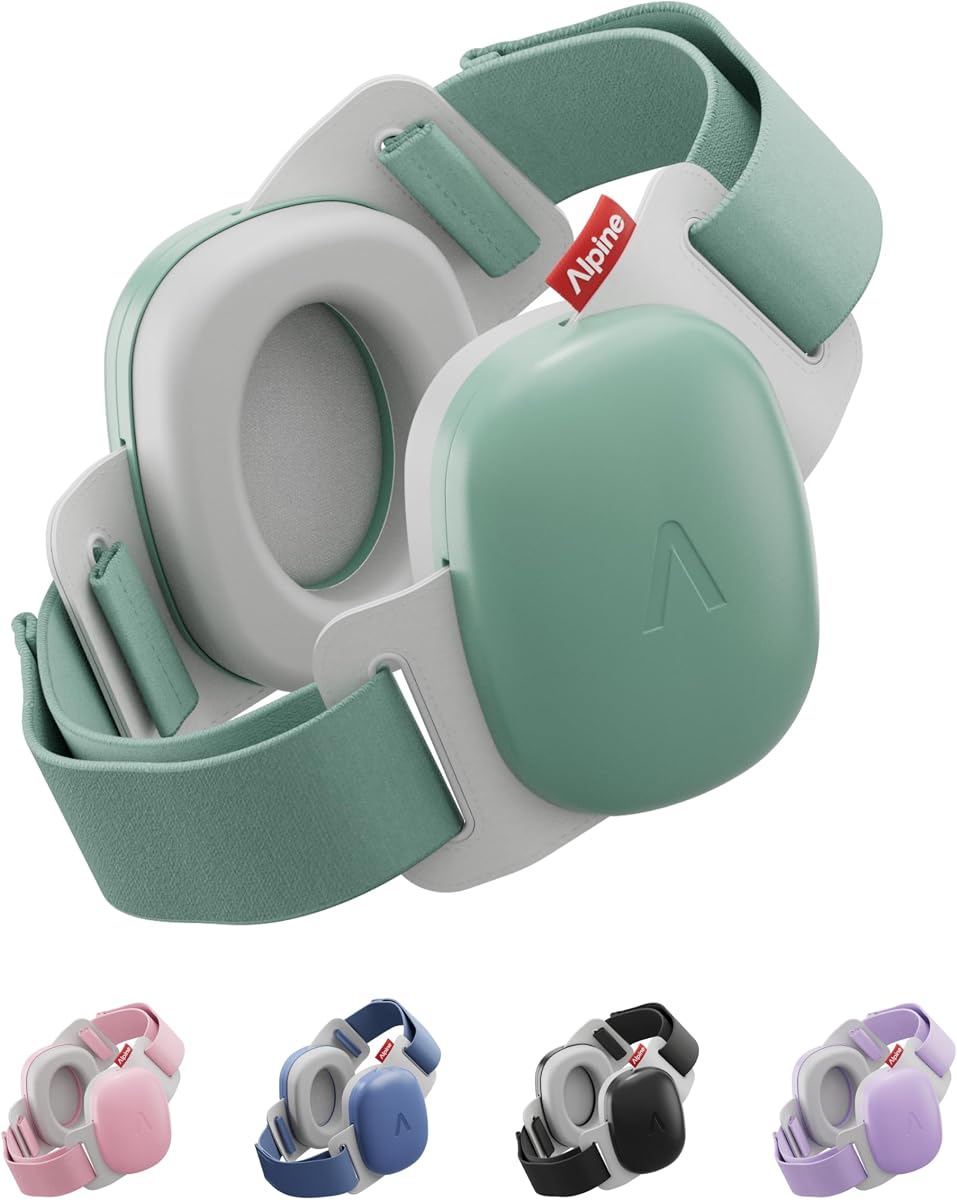
The Baby Headphones for Noise 2-in-1 Baby Ear Muffs earn a 4.6 rating in the supplied data and stand out for their unusually versatile design. Rather than asking parents to choose between a traditional earmuff position and a headband-only configuration, this set supports both. That flexibility is particularly useful when a baby prefers one arrangement during sleep but another during travel or an active outing.
We may earn a commission when you buy through this link, at no additional cost to you.
Protection is listed at 24 dB of noise reduction, placing the product among the stronger attenuation figures in this guide. The construction combines an ABS shell with sponge-filled PVC cushioning, and the manufacturer describes the materials as child-safe, BPA-free, non-irritating, waterproof, and easy to clean. The headband rests across the forehead rather than over the fontanelle, reducing concern about pressure on a baby's soft spots.
The principal trade-off is that the supplied listing does not mention CE, ANSI, or another specific testing certification, even though it makes a stated noise-reduction claim. Parents who prioritize formally documented certification may prefer an Alpine Muffy model. The 2-in-1 arrangement also adds components, so it may be less minimal than a single fixed earmuff design, and infants may need time to become accustomed to either configuration.
This is a strong choice for families seeking adaptable protection in one package, particularly when travel, car rides, naps, and events overlap. It may also appeal to parents who want a wider stated age range than many competing products. Confirm that the fit feels comfortable and that the headband stays in position before relying on the earmuffs during a particularly loud environment.
The interchangeable configurations can make the earmuffs easier to adapt to a baby's changing behavior. Try the conventional position for focused ear coverage and the headband position when a more open, less enclosed feel is preferable.
A forehead-resting, three-position elastic band supports the stated 0–48 month range while avoiding direct pressure across the fontanelle. Always check the contact points after adjusting the band.
We may earn a commission when you buy through this link, at no additional cost to you.
The Alpine Muffy Baby listing carries a 4.4 rating and represents the brand's established style of protective earmuffs for babies and toddlers. The design is built around multiple layers of noise-reducing foam, soft closure padding, and adjustable anti-slip headbands. Its practical travel pouch also makes it easier to keep the earmuffs protected and organized in a diaper bag or carry-on.
We may earn a commission when you buy through this link, at no additional cost to you.
The supplied information states 23 dB SNR noise reduction under US and EU regulations, giving this model a clearer testing context than some competing listings. It is suitable for children up to four years and fits a stated head circumference of 15.4 to 19.7 inches. An ABS cover, PVC and PU padding, and a polyester headband round out the listed materials.
The listing also cites a survey of 152 pediatricians who reviewed leading baby hearing-protection earmuffs, making pediatrician recommendation a prominent product claim. That distinction does not make the product universal, and parents should still fit it carefully. Its four-year upper range is narrower than the updated five-year models, while the traditional cup shape may feel more enclosed to some children than a thinner design.
The Alpine Muffy is a sensible pick for parents who prioritize documented attenuation, established construction, and a straightforward travel accessory. It works particularly well for airplane, car, event, and fireworks scenarios where reducing environmental noise is the main goal. Check the head circumference before ordering and give the child time to acclimate to the padded closure.
The stated 23 dB SNR and multi-layer foam construction make this model a practical choice when parents want more than a simple padded hood. The test standard provides useful context for comparing the claim with similar products.
The included carrying pouch reduces the chance of losing the earmuffs or crushing the cushions in a bag. A dedicated case is especially helpful for flights, long drives, and family vacations.
We may earn a commission when you buy through this link, at no additional cost to you.
This Alpine Muffy Baby listing has a 4.4 rating and shares the familiar 23 dB SNR protection, layered foam, and padded ear-cap design seen across the brand's classic range. The distinguishing message is Alpine's Dutch design heritage and stated experience in hearing protection. That positioning appeals to buyers who value a focused safety brand rather than a fashion-oriented baby accessory.
We may earn a commission when you buy through this link, at no additional cost to you.
The earmuffs are intended for babies and toddlers up to 48 months, with a stated head-circumference range of 15.4 to 19.7 inches. Multiple noise-reducing foam layers and soft padding help create closure around the ears, while the upgraded anti-slip headband is designed for comfortable adjustment. Materials include an ABS cover, PVC and PU padding, and a polyester band.
As with the other classic Alpine Muffy listings, its 23 dB SNR figure is paired with compliance under US and EU regulations. That gives parents a clearer basis for judging the protection claim, though real-world outcomes can vary with fit and noise type. The design is also more enclosed than the updated thin model, which may not appeal to every sensory-sensitive child.
This version is best suited to families seeking established hearing protection, a carrying pouch, and a model intended to last through approximately four years. It is particularly useful for flights, car journeys, fireworks, and busy public events. Confirm the fit, allow time for adjustment, and inspect the cushions and band before regular use.
Alpine describes the product as part of a wider hearing-protection range developed in the Netherlands. That brand focus may be reassuring to parents who want a purpose-built design rather than a general-purpose sleep accessory.
Layered foam provides the primary acoustic cushioning, while the padded ear caps and anti-slip headband help keep the assembly in place. A snug but comfortable adjustment is important for consistent protection.
We may earn a commission when you buy through this link, at no additional cost to you.
The updated Alpine Muffy Baby receives a 4.6 rating and offers a balanced combination of 24 dB stated noise reduction, certified safety features, and a wider fit range. It is designed for children up to five years and accommodates a stated head circumference of 16.1 to 23.6 inches, making it suitable for babies and toddlers as they grow.
We may earn a commission when you buy through this link, at no additional cost to you.
Its pre-attached ear cups simplify setup, while the contoured headband and soft Velcro make on-the-fly adjustment straightforward. The product information specifically notes that the design avoids pressure on delicate areas such as the fontanelle. It also carries CE and ANSI certification claims, giving shoppers a stronger documented safety framework than they receive from many generic alternatives.
The trade-off is that the supplied listing does not mention a carrying pouch, unlike several classic Alpine Muffy entries. Some families may also find this fuller ear-cup design less discreet than the newer thin models. The listed rating is based on customer feedback rather than an independently reproduced test in this guide, so the manufacturer's certification and stated attenuation should be evaluated as supplied information.
This is an excellent all-around recommendation for parents who want documented protection, a long usable range, and easy adjustment. It is well suited to airplane travel, celebrations, fireworks, and everyday naps in noisy surroundings. Choose it over the classic model when formal certification, a five-year range, and a contoured fit are more important than having a pouch included.
The combination of 24 dB stated attenuation and CE and ANSI certification makes this updated model attractive for flights, events, and other situations where sound levels are less controllable. Check that both ear cups sit fully around the ears.
A contoured band and soft Velcro make it easy to refine the fit as head size changes. The stated 16.1–23.6 inch circumference range also gives this model a longer useful lifespan than the classic version.
We may earn a commission when you buy through this link, at no additional cost to you.
BBTKCARE's blue baby ear protection has a 4.6 rating and focuses on a compact, portable form with a zero-pressure padded design. The listed dimensions are 5.4 by 2.75 by 6 inches, which makes it easy to place in a diaper bag, stroller organizer, or carry-on without taking up much room.
We may earn a commission when you buy through this link, at no additional cost to you.
The earmuffs are listed as reducing noise by a minimum of 23 dB and are intended for babies from three months to three years. Their construction combines an ABS cover with PU padding, and the adjustable headband is designed to create a close fit. The listing also identifies the materials as silicone-free and BPA-free, adding useful material information for cautious parents.
The main limitation is the more limited age range. A child who uses this model for several years may outgrow it sooner than one of the Alpine Muffy options that extend to four or five years. The listing mentions certification in the US and EU but does not provide the same detailed CE and ANSI terminology used for the updated Alpine models. The blue color designation is also specific to this listing.
This is a practical pick for parents who need compact protection for air travel, trains, sporting events, fireworks, naps, and car rides during the early-childhood years. It combines a strong stated attenuation figure with simple adjustment and portable dimensions. Verify the fit around the ears and inspect the headband frequently as the baby moves or sleeps.
The compact measurements are one of this model's most attractive practical features. A dedicated earmuff that takes up little room is easier to remember and less likely to be left behind before a trip.
The listing specifies an ABS cover, PU padding, and silicone-free, BPA-free materials. Parents concerned about particular material categories can use these details alongside the certification claim when comparing options.
We may earn a commission when you buy through this link, at no additional cost to you.
This Alpine Muffy Baby listing has a 4.4 rating and delivers the brand's recognizable combination of 23 dB SNR protection, multi-layer foam, and padded ear caps. It is made for babies and toddlers through 48 months, with a 15.4–19.7 inch stated head-circumference range and a carrying pouch for travel.
We may earn a commission when you buy through this link, at no additional cost to you.
The anti-slip headbands are designed to remain comfortable and adjustable as the child moves. Foam layers create the main sound-absorbing structure, while soft padding improves closure and the overall feel around the ears. The ABS cover, PVC and PU padding, and polyester headband make this a conventional, straightforward construction that should be easy to understand and maintain.
Compared with the updated Alpine models, its stated attenuation is one decibel lower, and it does not offer the newer contoured band, thin cup profile, or soft Velcro system. The fuller design may also feel more enclosing for a baby who dislikes objects around the head. The supplied information does not identify a specific color, so the visual appearance should be confirmed on the listing.
This remains a strong option for parents who want a traditional Alpine Muffy with documented noise reduction and a protective travel case. It is appropriate for airplane rides, family car travel, fireworks, concerts, and other loud outings. Its straightforward adjustment and multi-layer construction make it a dependable choice when coverage and portability matter most.
The included pouch turns the earmuffs into a ready-to-pack travel item. It is a small but meaningful convenience for parents managing baby supplies in airports, stations, and unfamiliar locations.
Multiple foam layers and soft padding work together to create a close acoustic seal without relying on a hard, rigid rim. The fit should be snug around the ears but free from pressure on the head.
We may earn a commission when you buy through this link, at no additional cost to you.
The Alpine Muffy Baby entry with the strongest pediatrician-related listing language has a 4.4 rating and combines that recommendation claim with 23 dB SNR protection. It is suitable for babies and toddlers up to four years and uses layered noise-reducing foam and soft padding to improve ear coverage.
We may earn a commission when you buy through this link, at no additional cost to you.
A survey of 152 pediatricians is cited in the product information, covering protection, quality, safety, comfort, and design among leading earmuffs. The product is also described as tested to 23 dB SNR in accordance with US and EU regulations. These points make it a useful option for parents who prioritize recognizable testing language alongside a soft, practical design.
The adjustable, anti-slip headband is designed to remain comfortable, while the absence of hard external parts is intended to make the earmuffs safer during normal use. However, the classic model does not offer the updated five-year range, thinner profile, or contoured Velcro headband. As a result, it may be less attractive for parents seeking the newest fit system.
This listing is a good fit for families seeking a traditional baby earmuff with strong pediatrician-survey and regulatory language. It includes a carrying pouch and works well for airplane, car, event, and fireworks protection. Confirm the stated head-circumference range and ensure a complete seal around the ears before relying on it in a loud setting.
The cited survey of 152 pediatricians provides unusually specific context for the listing's recommendation language. It remains a manufacturer-reported survey claim, but it can help distinguish this listing from less documented alternatives.
Layered foam, soft padding, and an adjustable anti-slip band create the basic protection system. The design avoids hard external parts and is straightforward for caregivers to put on and remove.
We may earn a commission when you buy through this link, at no additional cost to you.
The updated Alpine Muffy Baby in this listing has a 4.6 rating and emphasizes a slimmer, flatter design intended to fit little ears more closely. It is suitable from three months through five years, giving it one of the broadest age ranges among the products compared. Pre-attached ear cups also simplify the design.
We may earn a commission when you buy through this link, at no additional cost to you.
Noise reduction is stated at 24 dB, and the product carries CE and ANSI certification claims. A contoured headband and soft Velcro make adjustment simple, while the product information specifically says the earmuffs avoid pressure on the fontanelle. The thin profile is visually and physically less bulky than the classic Alpine design, which may make it easier to introduce to a baby.
The trade-off is that no carrying pouch is mentioned in this particular listing. With five colors advertised, some variations may be easier to find than others, and the supplied information does not identify the available color for this ASIN. The product also lacks the explicit pediatrician-survey language found in some classic listings, although it offers more specific certification terminology.
This model is a strong choice for parents seeking a modern, low-profile design that can begin at three months and remain useful through five years. It is particularly appealing for family outings, flights, and children who might resist the bulkier classic style. Check the chosen color, confirm the fit, and use the ear cups only when they sit fully and comfortably around the ears.
The thinner, flatter ear cups are designed to fit small ears and reduce the overall visual bulk of traditional earmuffs. That lighter appearance may make the product easier for a baby to accept during naps or outings.
Starting at three months and extending through five years creates useful longevity for a single product. The soft Velcro headband allows the fit to be refined as the child's head changes.
We may earn a commission when you buy through this link, at no additional cost to you.
This Alpine Muffy Baby variant has a 4.6 rating and is distinguished in the supplied data by its fabric construction. It otherwise uses the updated model's strong feature set: 24 dB stated noise reduction, pre-attached ear cups, a contoured headband, and suitability for children from three months to five years.
We may earn a commission when you buy through this link, at no additional cost to you.
The product is described as soft and specifically designed not to press on the fontanelle. Its slim cup geometry is intended to fit smaller ears, while a soft Velcro system allows easy adjustment. CE and ANSI certification claims provide a formal safety framework, and the 24 dB attenuation figure is among the highest stated in this roundup.
Because the listing identifies fabric as the primary material but gives limited information about cleaning and care, owners should follow the manufacturer's care instructions closely. No carrying pouch is mentioned. The listing also does not include the pediatrician-survey wording found in certain classic Alpine Muffy entries, so the strongest differentiators here are the fabric build, updated shape, and certification details.
This is a strong premium-style recommendation for parents who prefer a fabric-based, low-profile design with formal certification claims and a broad age range. It should suit families looking for a modern take on the classic Alpine Muffy concept, particularly for travel and noisy family events. Confirm the fit, keep the ear cups correctly positioned, and review care instructions before routine cleaning.
The fabric construction differentiates this listing from the ABS-and-padded versions. It may offer a distinctive tactile feel, but caregivers should confirm the stated material and cleaning guidance in the final product information.
The combination of 24 dB stated attenuation, pre-attached cups, a contoured band, and a thin profile keeps the design focused. It offers a good balance of protection and everyday wearability for growing children.
We may earn a commission when you buy through this link, at no additional cost to you.
The final Alpine Muffy Baby listing has a 4.4 rating and combines the brand's classic 23 dB SNR protection with pediatrician-survey and regulatory-testing language. It is intended for babies and toddlers up to four years, with a stated head-circumference range of 15.4 to 19.7 inches.
We may earn a commission when you buy through this link, at no additional cost to you.
The earmuffs use multiple layers of noise-reducing foam, soft padding, and an adjustable anti-slip headband. The product information emphasizes the absence of hard parts, while the carrying pouch adds convenience for travel. Materials are listed as an ABS cover, PVC and PU padding, and a polyester band, giving shoppers a clear picture of the main construction elements.
Compared with the updated 24 dB models, this version offers one decibel less stated attenuation and a shorter upper age range. Its traditional, fuller ear cups may also feel more enclosed than the newer slim profile. These are not major flaws for many families, but they are worth considering if a child is sensitive to bulky headwear or if maximum longevity is a priority.
This listing is a good choice for parents seeking a well-documented classic Alpine Muffy that includes a travel case. It suits flights, car travel, fireworks, sporting events, and other situations where reducing surrounding noise is useful. Verify the head circumference, adjust the band without pressure points, and make sure the ear cups remain centered over the ears.
The stated 23 dB SNR figure and US and EU regulatory compliance provide useful context for the product's noise-reduction claim. Parents can compare those details with alternatives that make broader or less specific statements.
The included carrying pouch and anti-slip adjustable band make this version practical for regular outings. Its main appeal is straightforward protection with established supporting details.
We may earn a commission when you buy through this link, at no additional cost to you.
The most useful baby earmuffs combine credible attenuation with a fit that is secure, gentle, and appropriate for the child's age. Because comfort determines whether a baby will actually wear the protection, parents should consider more than the headline noise-reduction number.
Noise reduction is the core performance claim, but it is most useful when the listing also provides a measurement standard. Products in this roundup state either 23 dB SNR or 24 dB noise reduction, and several Alpine Muffy models reference testing under US and EU regulations. Those figures provide a useful basis for comparison, but they are not a guarantee of identical real-world performance. Noise type, frequency, fit, and the quality of the seal around the head all influence what a child experiences.
Look for a clearly stated attenuation figure and any certification or test-standard language. Choose a product with complete ear coverage and an adjustable fit, and do not rely on a number alone.
Age labels provide only a rough guide because children's head sizes vary. The most useful listings also state a circumference range: 15.4–19.7 inches for the classic Alpine Muffy models, 16.1–23.6 inches for one updated model, and three months to five years for the slimmer updated designs. Measure the child's head before ordering, then check the fit with the earmuffs on. A product that seems slightly loose may shift during sleep, while a tight fit can create pressure and discomfort.
Select a range that contains the measured head circumference and allows room for growth. Confirm the minimum age guidance as well.
A baby's skull is delicate, and the fontanelle is an area parents understandably want to avoid. Several products use a contoured or forehead-resting band, while the HOIGRBOM model specifically positions its headband across the forehead. Soft ear cushions and a flexible band can improve comfort, but padding alone does not guarantee a pressure-free fit. Check the forehead, temples, top of the head, and area around the ears immediately after putting the earmuffs on.
Prioritize a broad, soft contact surface and a band that can be adjusted without squeezing. The child should not show lasting marks or persistent discomfort.
A baby who rolls, crawls, naps in a stroller, or moves during travel needs the earmuffs to stay in the correct position. The products compared use elastic or anti-slip headbands, three-position adjustment, contoured shapes, or soft Velcro. These systems should be easy for one caregiver to adjust, but they also need enough tension to avoid slipping. If the ear cups move away from the ears, the protection becomes inconsistent. Test the fit while the child is sitting, lying down, and moving.
Choose simple adjustment that a caregiver can repeat quickly. A secure fit should remain stable without leaving pressure marks.
Material details help parents make informed choices for sensitive skin and young children. The roundup includes listings specifying BPA-free materials, silicone-free construction, PU or PVC padding, ABS covers, polyester bands, and fabric. Different material combinations may affect feel, durability, cleaning, and weight. Certification claims such as CE or ANSI can add useful context, but parents should still read the current product listing and manufacturer care instructions rather than assuming every certification applies in the same way.
Favor products that clearly identify materials and provide specific safety or testing information. Check for substances that may irritate your child.
Baby earmuffs are easiest to use consistently when they travel well. The classic Alpine Muffy models include a carrying pouch, while the BBTKCARE model is noted for compact dimensions and the HOIGRBOM set includes a storage bag. The updated Alpine listings do not mention a pouch. Accessories should not determine the decision, because a case cannot compensate for a poor fit, but a protective case can make the product easier to store and less likely to be misplaced.
Consider a model with a case or compact footprint if you travel often. Ensure the earmuffs dry fully before storage.
Even a technically protective product will not help if the baby removes it immediately. Some children prefer the fuller classic Alpine Muffy cups, while the updated thin design or the 2-in-1 HOIGRBOM arrangement may be easier to introduce. Allow several short, low-pressure practice sessions before using the earmuffs in a loud environment. Pair them with calm routines, but never force prolonged wear if the child appears uncomfortable. The goal is consistent use without making the experience stressful.
Introduce the product gradually and stop if it causes distress. A familiar routine and neutral response can improve acceptance.
The best product for airplane travel may differ from the one best suited to daily naps, a concert, fireworks, or a noisy car. Full-size travel accessories add convenience, while a compact design is useful for diaper bags and strollers. Consider whether the child will wear the earmuffs continuously, briefly, or only during predictable loud events. Also assess the environment's temperature, because padded headphones can feel warm indoors. The supplied products are marketed for multiple situations, including aircraft, cars, trains, concerts, parties, and fireworks.
Match the design to the main use case and expected wearing time. Portability matters most for frequent, on-the-go protection.
Begin by checking the headband, ear cups, cushions, and adjustment points before the first use. Fit the earmuffs so both cups sit fully around the ears without crossing the baby's hair or pressing on the eyes. Adjust the band until the earmuffs feel secure but do not leave marks. For the first few outings, use the product in a quiet setting so the child can become familiar with the sensation.
Put the earmuffs on before entering a loud environment rather than waiting until the child is already upset. For naps, check the fit once the baby changes position and again after waking. Avoid pulling the earmuffs off by the headband, and do not force wear if the child becomes distressed. If the baby removes them repeatedly, shorten the session and try again later rather than increasing the struggle.
Follow the manufacturer's cleaning and care instructions for the specific materials. Check the cushions for trapped moisture, hair, or debris, and clean only as directed. Let every part dry completely before use or storage, particularly when using the included pouches. Inspect the band and ear cups regularly for wear, damage, or loosened padding, and replace the product if its protection or fit becomes unreliable.
They can be used when the manufacturer states an appropriate minimum age, the fit is comfortable, and the ear cups correctly cover the ears. The products in this guide list ranges beginning at three months or, for one model, from birth to 48 months. Always follow the specific age and head-circumference guidance, and consult a pediatrician if you have concerns about a very young or medically sensitive child.
Baby earmuffs use passive attenuation rather than electronic active noise cancellation. They typically consist of padded ear cups, acoustic foam, and a headband designed for small heads. Adult-style active headphones may contain electronics, larger controls, and volumes intended for older users, making them less appropriate as a first choice for infants.
Both ear cups should sit fully around the ears, and the headband should remain centered without sliding. The fit should feel secure without pressing on the fontanelle, temples, eyes, or sides of the head. A good check is to move the child around briefly and look for shifts, gaps, or marks that do not fade quickly.
Many of the listed products are marketed for sleep and travel, but your child should still wear them comfortably. Check the fit whenever the sleeping position changes, keep hair and loose bedding from interfering with the seal, and remove them if the child becomes sweaty, restless, or distressed. Never leave them in place if they can become tangled or dislodged in an unsafe way.
Not necessarily. The stated figure is meaningful only when the measurement method, test standard, and complete fit are understood. A well-fitted model with a documented test may serve a family better than a higher but poorly documented claim. Ear-cup coverage, padding, seal, noise frequency, and consistent wear all affect the real-world result.
Yes, the supplied product information specifically identifies airplanes, cars, trains, concerts, parties, sporting events, and fireworks as intended environments. Choose a model with secure ear coverage and put it on before the sound becomes intense. For air travel, fit the earmuffs before takeoff and during the noisier phases of the journey.
The products compared generally use padded cups, foam, or fabric rather than reusable silicone inserts. Clean the earmuffs according to the instructions for their listed materials, and do not soak electronics or materials unless the manufacturer expressly permits it. Remove moisture and debris from cushions before reusing or storing the product.
Durability depends on use, storage, cleaning, and the child's growth. Inspect the band, Velcro, foam, and cushions for compression or damage, and monitor the head-circumference range. Replace the earmuffs when they no longer fit securely, when the seal deteriorates, or when the stated protection can no longer be expected.
The Baby Headphones for Noise 2-in-1 set is the most versatile option, offering two wearing styles, 24 dB stated reduction, and a broad developmental range. The updated Alpine Muffy Baby is the strongest all-around choice for parents who prioritize certification, a contoured fit, and use from three months through five years. The fabric Alpine variant provides a distinctive premium-style alternative with the same stated attenuation and updated comfort design.
For most families, prioritize a complete ear seal, a gentle fit, and a child who is willing to wear the product. Certified 24 dB models make logical choices for frequent travel and loud events, while the classic 23 dB Alpine Muffy designs remain useful alternatives with carrying pouches. The BBTKCARE model deserves consideration when portability and a compact footprint matter most.
Before making a final selection, measure the child's head, compare the stated age and circumference ranges, and read the current materials and care information. Also verify that the chosen variation matches your needs. Product details, availability, and manufacturer information can change, so check the latest listing before purchasing.