
Washable Positioning Bed Pad
4.8Editor score
Thirty-four by fifty-two inches
Waterproof absorbent underpad construction
Non-slip backing with eight handles
Positioning bed pads help caregivers turn, lift, and reposition people with limited mobility while protecting the mattress and surrounding bedding. The most useful models combine reinforced handles, a stable surface, comfortable materials, and a manageable way to clean accidents or moisture.
We compared all ten featured products by examining handle configuration, dimensions, material, waterproof protection, absorbency, washability, supported weight, and intended caregiving applications. The list covers standard transfer pads, extra-large bariatric models, absorbent underpads, and multi-layer options for home or institutional care.
Each review explains the product's standout features, practical trade-offs, and best-fit users so you can choose confidently. Product availability, ratings, and pricing can change over time, so compare the current listing details before making a final purchase.
4.8Editor score

4.8Editor score

4.6Editor score
As an Amazon Associate we earn from qualifying purchases.
This side-by-side comparison highlights the key differences in size, handle count, materials, fluid protection, and supported user weight across the ten positioning bed pads.



The Improvia Positioning Bed Pad combines a transfer surface with absorbent and waterproof protection, giving it a broader purpose than a basic sliding sheet. It holds a 4.8 rating and stands out with eight reinforced handles, a soft upper layer, and a moisture-wicking center designed to dry in 10 minutes.
We may earn a commission when you buy through this link, at no additional cost to you.
Its layered construction addresses several common caregiving problems at once. The absorbent padding can hold 12 ounces of fluid, while the waterproof component helps prevent moisture from reaching the mattress. A nonslip surface adds stability, and the eight handles offer multiple grip positions when turning, lifting, or moving a person who has limited mobility.
The main trade-off is that this is a multi-purpose polyester pad rather than a bare waterproof transfer sheet. Polyester provides a softer, breathable contact layer, but it may retain more warmth than nylon. It is also important to follow the care instructions and confirm that the pad's stated support limit matches the needs of the person using it.
This is an excellent general recommendation for caregivers who want one reusable product for positioning and routine moisture protection. Its balanced feature set, quick-drying design, and relatively compact concept make it particularly useful for home care, overnight monitoring, and everyday repositioning.
The reinforced handles make the pad useful for turning and transfers, while the absorbent, waterproof layers help manage unexpected moisture. That combination reduces the need to keep separate transfer and underpad products on hand.
A moisture-wicking center and washable construction support repeated daily use. The listed ability to remain reusable for up to 500 washes makes the pad appealing for households seeking a durable alternative to disposable bedding.
We may earn a commission when you buy through this link, at no additional cost to you.
This second Improvia model offers the same broad combination of transfer support, absorbency, and waterproof mattress protection. It carries a 4.8 rating and uses eight reinforced handles to help caregivers turn, shift, or lift a person weighing as much as 400 pounds.
We may earn a commission when you buy through this link, at no additional cost to you.
The defining feature is its quick-drying design. A soft top layer, absorbent padding, and moisture-wicking center are intended to keep the user dry and reduce irritation. The pad also functions as an incontinence underpad, helping contain up to 12 ounces of fluid while protecting the mattress underneath.
Its polyester construction prioritizes comfort and breathability, which can be useful during prolonged use. The trade-off is that it is less specialized than a fully waterproof nylon transfer sheet. It also has a listed support ceiling, so a larger person would require a product specifically designed for greater loads.
Choose this option when a caregiver wants a versatile pad for repositioning, light incontinence protection, and routine bed care. The balanced construction makes it useful for a broad range of daily situations without requiring complicated setup.
The moisture-wicking center is designed to dry quickly after cleaning or exposure to moisture. This is particularly helpful when one pad must be used repeatedly throughout the day.
Eight reinforced handles give caregivers several points of control. The handles can also help reduce pressure on the arms and back during a transfer compared with grabbing fabric alone.
We may earn a commission when you buy through this link, at no additional cost to you.
The Zheeyi 48 x 40 positioning pad is a lightweight nylon transfer sheet designed for turning, repositioning, and lifting a person with limited mobility. It has a 4.6 rating, eight reinforced handles, and a surface described as waterproof and breathable.
We may earn a commission when you buy through this link, at no additional cost to you.
Its 48-by-40-inch dimensions fit many standard beds without extending far beyond the mattress. The double-sided nylon construction provides a consistent transfer surface, while the reinforced webbing handles offer secure gripping points around the perimeter. It can also serve as a protective sheet during an accident involving fluid.
The important limitation is that waterproof nylon fabric does not mean the nylon webbing handles are waterproof. Users should still clean and dry the handles after a spill. Compared with absorbent models, this pad focuses on fluid containment and movement rather than drawing moisture into a padded core.
This is a strong choice for caregivers who prioritize a lightweight, easy-to-wash transfer surface and want the ability to turn or move someone in bed. It is especially useful when a smooth, wipe-clean layer is more important than underpad-style absorbency.
The nylon body helps keep accidental moisture away from the mattress and bedding. It can be wiped or laundered according to the care instructions, while the webbing requires separate attention because it is not waterproof.
At 48 by 40 inches, the pad provides a familiar footprint for repositioning in a standard bed. Its relatively light construction makes it easier to spread, fold, and store than a bulky absorbent underpad.
We may earn a commission when you buy through this link, at no additional cost to you.
This Improvia positioning bed pad delivers the same 4.8-rated blend of transfer assistance, quick drying, and absorbent protection as the leading Improvia listing. It includes eight reinforced handles and supports users up to 400 pounds, making it a versatile option for regular caregiving tasks.
We may earn a commission when you buy through this link, at no additional cost to you.
The soft top layer supports comfort, while the absorbent center and waterproof mattress protection help manage spills. Because the center is designed to dry in 10 minutes, caregivers can return it to service more quickly than with a heavily saturated conventional pad. A nonslip backing further improves stability on the bed.
The dual-purpose design is convenient, but a single pad cannot offer unlimited fluid capacity. The stated 12-ounce capacity may not be sufficient for prolonged or repeated incontinence events, and users should avoid stretching the support limit to accommodate a larger person.
This model suits caregivers seeking a reusable, quick-drying pad for everyday transfers and moderate moisture protection. It offers an effective balance of grip, comfort, and maintenance convenience for a broad range of home-care situations.
The same pad can support a positioning transfer and help manage small fluid incidents. This versatility can simplify bedside organization and reduce the number of separate layers required.
A machine-washable design and a listed lifespan of up to 500 washes suit frequent use. Keeping two pads in rotation can also make the drying process more practical.
We may earn a commission when you buy through this link, at no additional cost to you.
The Washable Positioning Bed Pad with eight reinforced handles combines an XL underpad with a turning and lifting aid. It holds a 4.8 rating and is constructed for adults, seniors, and children who need both mobility assistance and routine incontinence protection.
We may earn a commission when you buy through this link, at no additional cost to you.
The soft, breathable top layer draws moisture away while the absorbent padding and waterproof base help prevent leaks and odors. Its nonslip backing provides a stable foundation, and the eight handles give caregivers control during turns and transfers. A listed 400-pound support limit covers a broad range of users.
As with any reusable absorbent pad, the 34-by-52-inch size is not as extensive as the oversized bariatric model in this list. It is better suited to individual bed care than to two-person or full-body coverage. The claimed 500-plus wash durability also depends on correct laundering and drying.
This is a strong budget-oriented choice for families seeking one pad for positioning, moisture control, and mattress protection. Its high rating, quick-drying design, and dual-purpose construction provide more capability than a standard disposable underpad.
The padded center manages ordinary moisture while the waterproof base shields the mattress. Eight handles add a mobility function that a conventional absorbent pad would not provide.
The product is intended for home, hospital, and nursing-facility use. Its washable design supports routine care while reducing reliance on single-use absorbent bedding.
We may earn a commission when you buy through this link, at no additional cost to you.
The Zheeyi Nylon Patient Pad is a 4.6-rated transfer sheet designed for caregivers handling patients or loved ones with limited mobility. Its 48-by-40-inch format, eight reinforced handles, and double-sided nylon surface support turning, lifting, and repositioning.
We may earn a commission when you buy through this link, at no additional cost to you.
The product's defining advantage is straightforward waterproof protection. Lightweight nylon helps prevent accidental fluid from reaching the sheets, and the smooth material can also function as a positioning surface beneath a person. It is fully machine washable and can be air-dried for reuse.
This model is not an absorbent underpad, so liquid remains on the surface rather than being drawn into padding. The handle webbing is also not waterproof. Caregivers should account for both facts when selecting it for someone with frequent incontinence.
Choose this pad for dependable repositioning and spill containment in a standard bed. It remains a practical, straightforward option for care teams that want a reusable nylon surface without a bulky padded center.
The double-sided nylon surface is intended to help a person move across the bed. It can be positioned beneath the hips or torso to give caregivers a controlled way to turn or slide.
Machine washing and natural air drying keep care routines uncomplicated. The pad can be folded between uses without adding absorbent bulk to bedside storage.
We may earn a commission when you buy through this link, at no additional cost to you.
The Extra Large Positioning Bed Pad is the most specialized option in this roundup. Its 79-by-40-inch size, ten reinforced handles, waterproof double-sided nylon, and 500-pound rating make it designed for bariatric users, full-body support, and transfers involving a single caregiver.
We may earn a commission when you buy through this link, at no additional cost to you.
The pad provides 3,160 square inches of coverage, substantially more than a standard 48-by-40 sheet. Handles surround the perimeter, allowing a caregiver to reach from different positions while pulling on wide webbing that distributes force. The coated nylon surface contains fluid and can be wiped clean.
Its exceptional coverage creates a practical trade-off: the pad is bulky, takes more space to launder, and may be difficult to fold into a compact bedside area. The handle webbing is water-resistant rather than fully waterproof, so it still needs proper care after a spill.
This is the premium choice for caregivers who need more surface area, greater support capacity, or bariatric repositioning. For a smaller person in a standard bed, however, a more compact pad may be easier to manage on a daily basis.
The extended length provides substantially more support than a standard transfer pad. That additional coverage can reduce the need for careful body placement when turning or preparing a move out of bed.
Perimeter handles offer more ways for a caregiver to maintain control. Their wide construction is intended to distribute pulling force and protect the caregiver's hands during repositioning.
We may earn a commission when you buy through this link, at no additional cost to you.
The CoolShields Positioning Bed Pad emphasizes user comfort while retaining the practical features required for everyday repositioning. It has a 4.8 rating, eight reinforced handles, a soft polyester surface, and a TPU waterproof backing for protection against spills.
We may earn a commission when you buy through this link, at no additional cost to you.
Its 34-by-52-inch footprint offers a useful balance of coverage and manageability. The smooth top surface is designed to reduce friction during turns and movement, while the waterproof layer shields the mattress. A stated support capacity of 450 pounds is higher than several competing models.
The product is not described as an absorbent incontinence pad, and no specific quick-drying time is provided. It may therefore be less suitable when substantial liquid must be drawn away from the skin. The extreme wash-life figure also depends on following the stated care requirements.
This pad is a good fit for assisted living, home care, or everyday turning where softness and a smooth sliding surface are priorities. It offers a strong support rating without the footprint of an extra-large bariatric sheet.
The soft top is intended to make repositioning feel less abrasive against the skin. A smooth face is also useful for sliding movements in which minimizing drag is important.
The TPU backing protects the mattress from everyday spills while the washable construction supports repeated use. The stated 450-pound limit makes it suitable for many adult care situations.
We may earn a commission when you buy through this link, at no additional cost to you.
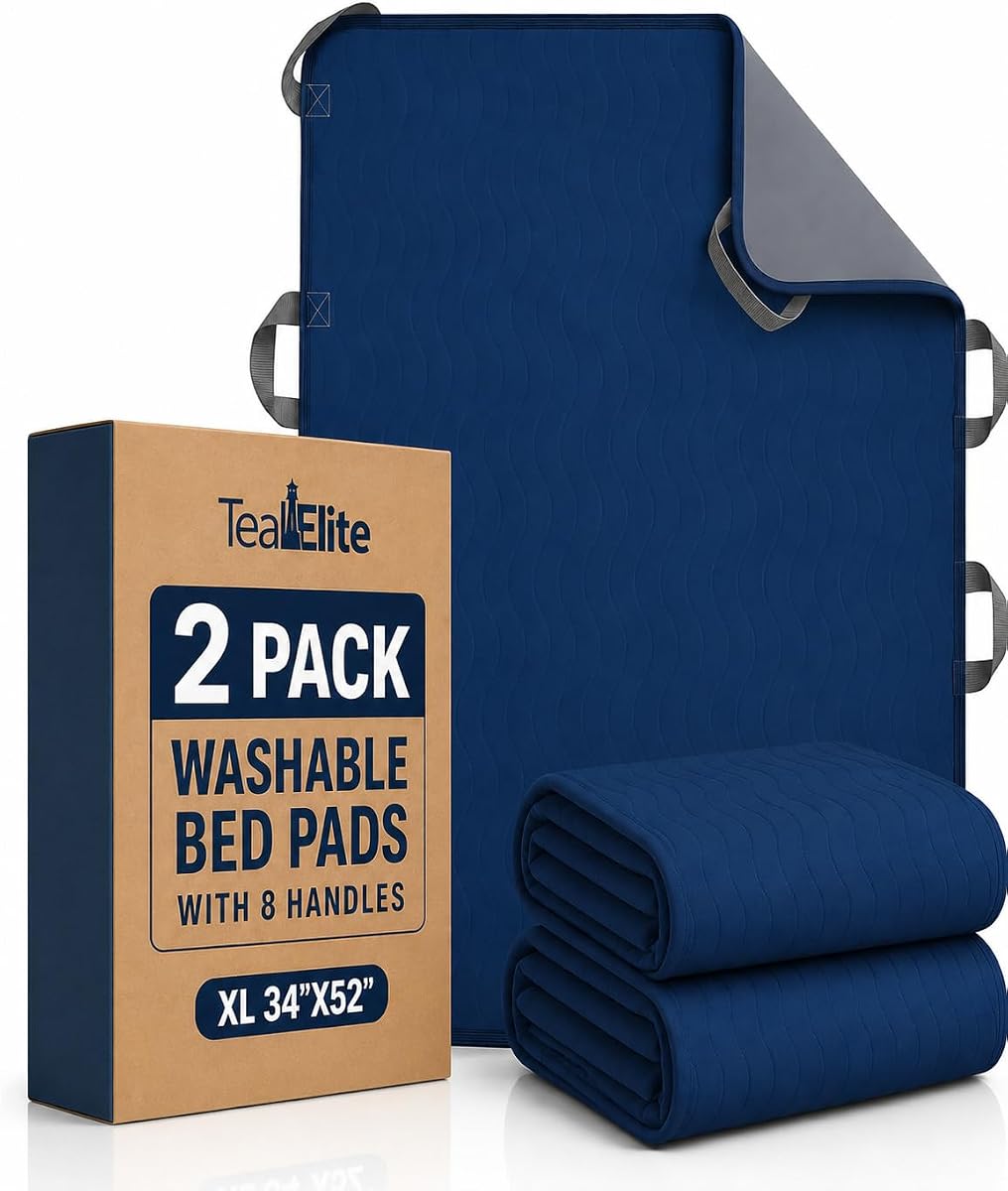
This two-pack version of the Washable Positioning Bed Pad is a practical choice for caregivers who want an uninterrupted rotation. It includes two 34-by-52-inch pads, each rated 4.8 overall, with eight reinforced handles, quick drying, and absorbent waterproof protection.
We may earn a commission when you buy through this link, at no additional cost to you.
Two pads solve a common laundry-day problem: one can remain on the bed while the other is being cleaned and dried. Each pad has a breathable top, absorbent padding, waterproof base, and nonslip backing, making it suitable for both repositioning and routine incontinence care.
The trade-off is storage. Two XL pads take up more room than a single model, although the two-piece set may be worth the space for households with frequent care needs. As with the single version, users should remain within the 400-pound support limit and avoid treating the pad as an unlimited fluid reservoir.
Choose this option for continuous caregiving, overnight monitoring, or settings where a clean replacement must always be available. The included pair improves workflow more than any individual feature.
Keeping one pad in use while the other dries is more convenient than waiting for a single pad to dry. This makes the set useful for frequent changes and around-the-clock care.
Each pad can manage moisture while its eight handles assist with turning and lifting. The combination is practical for users who require both bed mobility support and routine incontinence protection.
We may earn a commission when you buy through this link, at no additional cost to you.
The NurtureCare three-layer positioning bed pad combines a 48-by-40-inch footprint, waterproof nylon, and eight reinforced handles. Its 4.7 rating reflects a versatile design for turning, lifting, and repositioning bedridden users at home or in care environments.
We may earn a commission when you buy through this link, at no additional cost to you.
The three-layer construction is intended to balance durability, comfort, and moisture protection. It can function as a transfer sheet, glide sheet, or draw sheet and may also be used with common patient-moving equipment, inflatable turning devices, and other bed-mobility aids.
One limitation is the absence of a clearly stated maximum user weight. Caregivers should not assume a support capacity from the handle count alone. The pad is also primarily a waterproof transfer surface rather than an absorbent underpad, so it may not replace a product designed to draw away heavy moisture.
Choose this model for caregivers who want a versatile, layered sheet compatible with multiple transfer approaches. Its washable construction and balanced dimensions make it a practical middle ground between compact sheets and extra-large bariatric pads.
The three-layer design aims to provide a comfortable upper experience while maintaining waterproof protection. That balance makes the pad suitable for both sliding assistance and everyday bed mobility.
The pad is designed to work with bed-moving devices, patient transfer aids, and sliding equipment. That versatility allows caregivers to build a transfer process around the tools already available in their care setting.
We may earn a commission when you buy through this link, at no additional cost to you.
The right positioning bed pad depends on the user's size, mobility needs, moisture-control requirements, and the caregiver's preferred handling method. Compare dimensions, handles, materials, construction, and care requirements before purchasing.
Choose a pad that provides enough surface area to support the intended movement without creating an unwieldy bundle. A 48-by-40-inch pad is a familiar size for standard-bed repositioning, while a 34-by-52-inch pad may work better for moving lengthwise or tucking around a narrower mattress. Extra-long 79-by-40-inch coverage is valuable for bariatric users, full-body positioning, or transfers where a caregiver needs more reach.
Eight handles are common because they offer several grip options around the perimeter without making the pad excessively difficult to store. A ten-handle model provides even more access, which can be helpful for large users or caregivers who need to pull from different positions. Look for reinforced webbing and stitching because the handles, rather than the center fabric, usually experience the greatest pulling forces.
A waterproof transfer sheet blocks fluid from reaching the mattress but does not necessarily draw it away from the person. An absorbent positioning underpad adds a padded center that can manage small spills and improve dryness. Choose a waterproof-only surface when fluid containment and smooth sliding are the priorities, or an absorbent model when moisture control and incontinence care are equally important.
Nylon is typically lightweight, smooth, and effective for reducing friction during movement. Polyester can provide a softer, more breathable contact layer, while a TPU backing creates a waterproof barrier beneath the upper surface. Consider the skin condition of the user and the likelihood of prolonged contact. A smooth surface may assist sliding, but a comfortable top layer can be preferable for someone with fragile skin.
A stated support limit is more useful than the handle count alone because users differ greatly in weight and mobility. Standard models in this roundup are generally listed for up to 400 pounds, one supports up to 450 pounds, and the extra-large option is rated for 500 pounds. For a bariatric transfer, choose a product explicitly designed and rated for the required load, and confirm that the caregiver can safely manage the movement.
Machine-washable construction is valuable for products used every day. A quick-drying center or waterproof surface that can be wiped clean can reduce delays between uses. Products claiming hundreds or thousands of washes still require appropriate detergent, water temperature, and full drying. Keeping two pads in rotation may be more practical than relying on one pad to dry quickly.
A nonslip backing helps the pad remain stable when a caregiver pulls on the handles. The surface should lie flat under the user, with the handles positioned for access and away from areas that could create pressure points. Check how the product is intended to function: some work best beneath the hips or torso, while others are used as an underpad over a broader section of the bed.
Some positioning pads are designed to work with patient lifts, bed genies, inflatable turning devices, transfer slings, or sliding systems. If your care routine already includes such equipment, verify that the dimensions, material, and handle configuration are compatible. A smooth slide sheet may work well with a glide system, while an absorbent underpad may be better when protecting the mattress is the main concern.
Before use, inspect the pad, seams, and handles for damage, and make sure the mattress is clean, dry, and flat. Place the pad where it will support the intended movement without creating folds. If using it as a transfer sheet, position it beneath the hips or torso, depending on the planned movement, and keep the handles within easy reach.
Coordinate the transfer with the user and the caregiver rather than pulling from a single handle. Use two or more caregivers when the person's size, condition, or transfer complexity warrants assistance. Maintain a firm, level surface, keep the user's weight distributed, and avoid twisting the back or sharply bending at the waist. Stop if the pad shifts, a handle tears, or the person experiences discomfort.
Follow the manufacturer's cleaning instructions. Waterproof surfaces may be wipeable, while absorbent layers usually require machine washing. Use the recommended detergent and cycle, avoid harsh chemicals, and let the pad dry completely before reuse. Do not treat webbing as waterproof, and inspect the pad after every wash to ensure stitching and handles remain secure.
A positioning bed pad helps a caregiver turn, slide, lift, or reposition someone with limited mobility. Many models also protect the mattress from fluid. They are commonly used for elderly, bedridden, post-surgery, or otherwise mobility-limited patients, either at home or in professional care settings.
Eight handles are a common and versatile choice because they provide several grip points around the perimeter. Ten-handle models may be easier to control for bariatric users or when a caregiver needs more access. The most important considerations are reinforcement, secure stitching, and whether the handles are positioned where the caregiver can reach safely.
Not always. A positioning pad may function as a transfer aid, an absorbent underpad, a waterproof mattress protector, or a combination of those roles. A traditional slide sheet is primarily designed to reduce friction during movement. Choose a positioning pad when you also need handles, fluid protection, or absorbency.
Only when the product's dimensions and stated weight rating support the user's needs. Among the featured options, the 79-by-40-inch extra-large pad is specifically rated up to 500 pounds and provides extensive coverage. A standard pad should not be pushed beyond its published limit, and large transfers may require additional equipment or more than one caregiver.
Check the manufacturer's care instructions before washing because finishes and handle materials may differ. A non-absorbent waterproof surface may be wipeable, while absorbent models generally need machine washing. Dry the pad fully before reuse, and remember that waterproof fabric does not necessarily make the handle webbing waterproof.
Reusable pads can be more practical for frequent care because they combine waste reduction with positioning support. They require proper laundering, adequate drying time, and occasional inspection. Disposable pads may still be useful for temporary containment or situations where sending a reusable item through laundry is impractical.
A positioning pad can support safer turning and help keep the skin cleaner and drier, but it should not be treated as a guarantee against pressure injuries. It may also need to be used alongside a suitable pressure-relief mattress, regular repositioning, appropriate nutrition, and professional clinical guidance.
Two pads can be highly useful when one must remain in service while the other is being washed or dried. The included two-pack is especially convenient for frequent caregiving or overnight use. A single pad may be sufficient for occasional repositioning if adequate drying and storage are available.
The Improvia positioning bed pad leads the roundup because it combines eight reinforced handles with absorbent, waterproof, quick-drying construction. The Washable 34 x 52 Pad offers a strong budget-focused alternative, while the extra-large ten-handle model stands out for bariatric coverage and a 500-pound support rating.
Prioritize the function your care routine needs most: smooth waterproof movement, absorbent moisture control, extra coverage, or a high load rating. Also consider whether one pad dries quickly enough or whether a two-pad rotation would make caregiving easier. Checking the dimensions, care instructions, and support limit before ordering helps prevent mismatched expectations.
Ratings, product details, and prices can change, so review the current Amazon listing before making a final decision. The links provided here lead to the featured products and allow you to confirm the latest available options.
