
Displex Plastic Display Polish
3.5Editor score
Designed for plastic LCD screens
Removes scratches and residues
Works with an ordinary cloth
Our Scratch Remover for Phones guide compares liquid coatings, polishing kits, and display polishes for restoring scratched screens safely at home.
Scratch remover for phones products offer a practical way to improve light surface marks without immediately replacing a display. The right option depends on screen material, scratch depth, and whether you want a protective coating or an abrasive polishing system.
We compared the ten available products by examining their stated repair methods, included accessories, device compatibility, customer ratings, and treatment of different screen types. The list covers liquid screen protectors, plastic-display polishes, multi-step kits, and products intended for several electronic devices.
Each review explains what makes the product distinctive, where its approach is most appropriate, and which limitations deserve consideration. Product availability, seller offers, and customer feedback can change over time, so readers should verify the current listing and compatibility before purchasing.
3.5Editor score

5.0Editor score
2.2Editor score
The comparison below highlights each product's repair approach, included materials, stated screen compatibility, and strongest buying consideration to help distinguish coatings, dedicated polishes, and complete scratch-removal kits.


The Screen Scratch Remover Kit for Phone Screens is the strongest all-around choice in this guide because it directly addresses the central consumer need: reducing light scratches, scuffs, and surface marks without arranging professional screen repair. Its 5.0 customer rating is also the highest among the ten products. Rather than presenting itself as a universal coating or a device-specific polish, it offers a focused kit-and-buffing approach for phone screens.
We may earn a commission when you buy through this link, at no additional cost to you.
The stated benefits are practical and easy to understand. The kit is designed to restore clarity, treat minor screen damage at home, and work with glass and other smooth display surfaces. Its complete-kit format reduces the need to source separate polishing materials, while the described step-by-step process may appeal to first-time users who want a guided repair rather than a single unidentified compound.
There are reasonable trade-offs. The listing does not provide the same granular information about grit levels, polishing compounds, or separate cleaning tools that appears in the more elaborate kits. It also focuses on minor damage, meaning a deep gouge or damaged digitizer is unlikely to be solved by surface restoration. Confirm that the screen is compatible and test the product conservatively before treating the entire display.
This is the most attractive option for someone with light marks who values a straightforward kit and a strong customer rating. It is less suitable for someone whose screen has a deep groove, substantial display separation, or multiple layers of old coatings. Overall, it offers the most balanced combination of focused purpose, accessibility, and apparent customer satisfaction.
The kit's central appeal is its ability to treat light scratches and surface marks at home. That focus makes it a sensible first option when the damage affects visibility rather than the structure or function of the display.
Compatibility with glass and smooth display surfaces gives the product broader potential than a plastic-only polish, although buyers should still verify their specific phone material and follow the supplied directions.
We may earn a commission when you buy through this link, at no additional cost to you.
The Phone Screen Repair Liquid is a coating-based alternative rather than a conventional abrasive scratch-removal system. Its 2.0 customer rating places it near the bottom of the list, so the product's attractive claims should be evaluated with appropriate caution. It is intended for users who want to apply a protective film and potentially improve the clarity of an already lightly marked screen.
We may earn a commission when you buy through this link, at no additional cost to you.
According to the product information, the liquid forms a protective film, improves screen clarity, and resists everyday wear from keys or other objects. The at-home repair proposition is convenient because it does not require a multi-stage polishing routine or extensive tools. The seller also invites customers to contact the manufacturer with questions, which may be helpful if application instructions are unclear.
The principal concern is the low rating combined with limited technical detail. The listing does not specify which screen coatings or display materials are safe, whether the treatment can be removed, or how the liquid interacts with tempered-glass protectors. It also does not clearly distinguish between repairing an existing scratch and preventing future wear. Those distinctions matter when deciding whether the product will meet expectations.
This product may suit a cautious buyer who wants a simple preventive coating and accepts that results will vary. It is a less convincing choice for someone seeking a proven polishing system for visible scratches, particularly on a high-value phone with an expensive display. Checking recent customer feedback and confirming compatibility before application is essential.
The liquid format is appealing for quick home care because it focuses on forming a protective film rather than following a lengthy polishing sequence. Its main purpose is therefore closer to surface protection than aggressive scratch restoration.
With a 2.0 rating, the product's claims deserve more scrutiny than those of the higher-rated alternatives. Recent reviews can provide evidence about application, clarity effects, and compatibility that the abbreviated listing does not fully explain.
We may earn a commission when you buy through this link, at no additional cost to you.
The first 7TECH listing combines a nano-style screen coating with a broad device-compatibility claim. Its 3.3 rating is moderate rather than exceptional, but the product addresses more than one need: scratch protection, water resistance, and an invisible-looking shield over the display. The stated coverage allows one bottle to treat two to three smartphones, making it relevant to households with multiple devices.
We may earn a commission when you buy through this link, at no additional cost to you.
The listing names a broad range of phones, tablets, smartwatches, and glass accessories. It states that the coating can be applied with a few drops and is suitable for flat, curved, or concave screens. It also claims to resist scratches and water without developing bubbles, although individual application conditions may affect real-world performance.
Buyers should interpret the title carefully. The product is described as a scratch remover and cracked repair liquid, but a coating does not necessarily restore a physically fractured display. The more credible use case is adding a protective layer and potentially improving clarity over lightly marked glass. Compatibility with cases, existing screen protectors, coatings, and curved edges also deserves careful review.
This is a reasonable choice for someone who wants one protective treatment for several electronic devices, especially when scratches are shallow and preventive coverage is the priority. It is less appropriate as a professional-grade repair for a badly cracked screen. Confirm compatibility, apply in a clean environment, and avoid stacking incompatible coatings without guidance.
Coverage for two to three smartphones gives the product a practical advantage for multi-device owners. It can also serve watches and tablets when their surfaces are compatible with the stated coating.
The product is best understood as a protective coating with potential clarity benefits. A deep crack, separated display, or nonresponsive touch layer calls for professional assessment rather than repeated coating application.
We may earn a commission when you buy through this link, at no additional cost to you.
The Displex Plastic Polish Revitalizer is a targeted solution for older or specialty plastic displays rather than a general phone-screen treatment. Its product information explicitly instructs buyers to use it only on plastic displays of phones, MP3 players, and PSP devices. That narrow limitation helps define the audience but rules out many modern glass-covered smartphones.
We may earn a commission when you buy through this link, at no additional cost to you.
The main benefit is controlled polishing of plastic surfaces. A small amount of product followed by buffing can reduce light scratches and revive a dull display without introducing a permanent protective layer. The included microfiber cloth adds convenience and gives buyers a dedicated applicator for distributing and removing the polish evenly.
The product's 3.2 rating suggests mixed customer experiences, and the specialized plastic-only instructions are significant. Applying a plastic polish to glass, oleophobic-coated panels, or an LCD subpixel structure may not produce the intended effect. Because the information emphasizes plastic screens so strongly, owners of modern phones should not interpret the general 'cell phone LCD screens' title as universal device compatibility.
This is the appropriate pick for a device with a confirmed plastic display and minor surface wear. It is a poor match for glass phones and should not be used on screens with deep gouges. Find the display material first, then consider this polish if your device falls within its stated range.
The product's value comes from being formulated for plastic rather than claiming to handle every display surface. That specificity can be reassuring when applied to the correct older or specialty device.
A dedicated microfiber cloth helps users avoid smearing residue during polishing. It also supports the straightforward at-home process described by the product format.
We may earn a commission when you buy through this link, at no additional cost to you.
This second 7TECH option offers a similar nano-coating proposition with a slightly different compatibility description. Its 3.3 rating places it in the middle of the field. The product is marketed for phones, tablets, smartwatches, and glass objects, with one bottle stated to cover up to three smartphones. It is designed for users who want scratch and water resistance in an invisible-looking layer.
We may earn a commission when you buy through this link, at no additional cost to you.
The application process is simple: a few drops are placed over the screen, and the coating is spread before drying. The listing states compatibility with flat, curved, and concave screens and says the product works with phone cases. These features broaden its appeal for devices that do not have perfectly flat glass, although careful coverage around edges and sensors remains important.
Like the other 7TECH product in this guide, this listing uses broad cracked-repair language that should not be read as a guarantee of structural restoration. The more credible benefits are added protection, scratch resistance, and improved clarity. Its 3.3 rating indicates that not every buyer is equally satisfied, making recent reviews and clear instructions especially valuable before treating an expensive device.
This listing suits shoppers who want a versatile protective coating for several glass devices rather than an abrasive polish for one screen. It is less suited to users seeking guaranteed removal of deep scratches. Confirm that existing screen protectors and coatings can coexist, test a small section, and follow the application directions carefully.
Support for flat, curved, and concave surfaces is a notable feature for modern devices. Buyers should still check whether edges, camera lenses, or screen protectors need to be masked during application.
The few-drops format reduces the number of separate tools required. It may be particularly convenient for owners of multiple devices that can accept the same coating.
We may earn a commission when you buy through this link, at no additional cost to you.
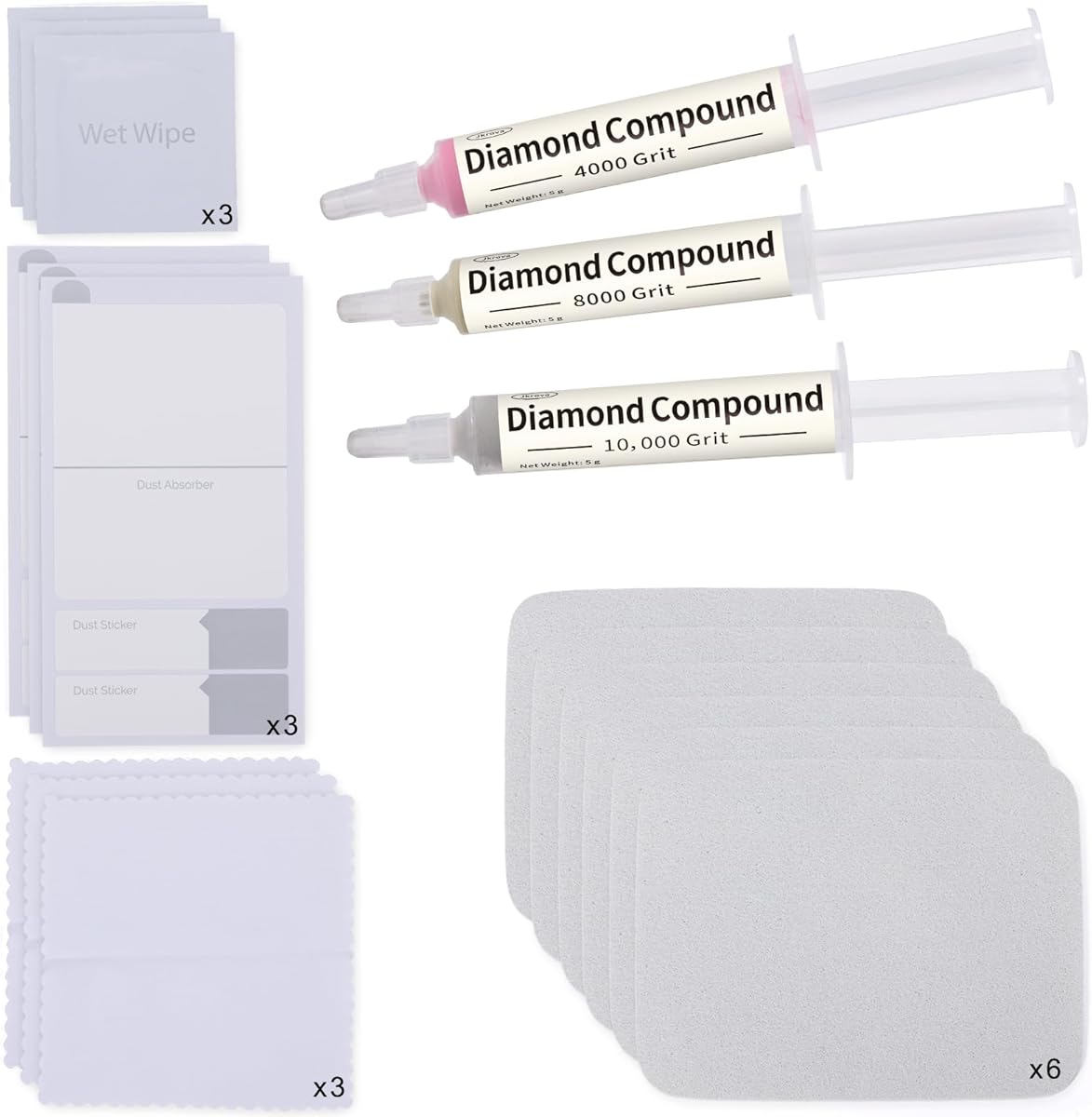
The Three-Stage Screen Polishing Kit is the most fully equipped and methodical product in the comparison. It includes 4000-grit, 8000-grit, and 10,000-grit diamond polishing compounds, six polishing cloths, and three cleaning kits containing microfiber cloths, wet wipes, and dust-removal stickers. Its 2.2 rating is notably low, but the kit's specificity gives it a distinct appeal for careful users.
We may earn a commission when you buy through this link, at no additional cost to you.
The intended process moves from standard polishing to fine polishing and finally mirror polishing. Each stage has a defined role: 4000 grit addresses ordinary surface scratches, 8000 grit smooths the surface, and 10,000 grit is intended to restore gloss. The kit is also marketed for digital watches, smartwatches, and tablets, giving it more application scope than a single-product polish.
The trade-offs are significant. A 2.2 rating indicates customer dissatisfaction or inconsistency that the listing does not explain. The product is explicitly limited to light scratches, and its description acknowledges that deep gouges may require patience or repeated polishing without guaranteeing full restoration. A multi-compound system also places more responsibility on the user to apply each stage correctly.
Despite its rating, this is the best premium choice for a meticulous buyer who wants a complete polishing system rather than a single liquid coating. It may suit someone restoring several compatible screens, provided they are willing to test carefully and accept that deep damage may not disappear. Read the instructions fully and avoid aggressive work on an unknown display.
The three grit levels create a controlled route from scratch reduction to final gloss. This staged system can be more methodical than using one compound for every part of the restoration.
Cleaning wipes, dust-removal stickers, and multiple cloths help users prepare the surface and change cloths between stages. Those details make the kit more convenient for repeated polishing.
We may earn a commission when you buy through this link, at no additional cost to you.
The Displex Plastic Display Polish earns the Best Budget designation because it combines a straightforward application method with the highest customer rating among the more affordable dedicated polishes. Its 3.5 rating is modest but stronger than several coating and multi-step alternatives. The product is described as suitable for LCD screens and intended to polish displays until they look refreshed.
We may earn a commission when you buy through this link, at no additional cost to you.
Unlike a liquid protector, this is a true polish that can be worked across the screen with an ordinary cloth. It is said to remove scratches and unwanted residues while leaving the display looking new. The lack of complicated accessories also makes it convenient for owners who want a straightforward maintenance product rather than a multi-stage kit.
Compatibility is the main uncertainty. The title says cell phone LCD screens, while the product name says plastic display polish, and modern phones may combine glass, laminated plastic, coatings, and touch-sensitive layers in different ways. It should not be assumed that the product is suitable for every smartphone screen. The 3.5 rating also suggests that results may vary.
This is a sensible budget choice for an older or confirmed plastic LCD screen with light marks. It is less appropriate for a modern glass display unless the seller explicitly confirms compatibility. Use a clean, soft cloth, work gently, and verify the screen material before starting.
The product can be used with a cloth already at home, reducing setup and avoiding the need for a full collection of accessories. Its ease of use is a major part of its budget appeal.
The product is best suited to superficial scratches and residue rather than structural damage. A matte or visibly damaged LCD may require more intensive restoration than a light polish can provide.
We may earn a commission when you buy through this link, at no additional cost to you.
The 2PCS Eyeglass Scratch Remover takes a familiar lens-care formula and lists cameras, watches, phones, and tablets among possible applications. Its 1.7 rating is the second-lowest in this guide, making it a speculative choice despite its broad stated uses. The product is primarily a fine-scratch wax rather than a dedicated phone-screen restoration system.
We may earn a commission when you buy through this link, at no additional cost to you.
Its selling point is convenience and versatility. The formula is described as gently polishing micro scratches and abrasions while removing oil smudges, and it is also said to clean oxidized metal and plastic frames. Two units allow one to be kept at home and another in a work bag, office, or travel kit.
The low rating is a meaningful drawback. Since the product was formulated around optical lenses, buyers should not assume that every lens coating, phone display, camera lens, or watch material will react identically. Optical treatments and phone screen coatings can differ, and abrasive polishing carries a risk of creating hazy areas if the application is excessive.
This product is most defensible for someone who already owns an optical lens scratch remover and wants a spare for occasional, carefully tested use on a compatible surface. It is not a strong recommendation for a valuable phone whose screen material is unknown. Confirm compatibility, use minimal product, and stop if haze or unevenness develops.
A small wax format can be useful for maintaining several compatible glass or coated surfaces around the home. The two-pack improves availability without requiring separate tools.
Products designed for optical lenses may not be appropriate for every modern phone coating. A small test area and careful application are more prudent than polishing an entire display immediately.
We may earn a commission when you buy through this link, at no additional cost to you.
The second Three-Stage Screen Repair Kit listing offers the same detailed system as the premium-selected kit but has a 1.0 customer rating. Its component list is substantial: three diamond polishing compounds at 4000, 8000, and 10,000 grit, six polishing cloths, and three cleaning kits. On paper, it offers a disciplined approach to light surface scratch restoration across several device types.
We may earn a commission when you buy through this link, at no additional cost to you.
The staged system is designed to progress logically. The coarser compound performs standard polishing, the middle stage smooths the surface, and the finest stage is presented as a mirror-polishing step. Cleaning wipes and dust-removal stickers help prepare the screen, while the varied cloths allow users to separate application and finishing tasks.
Despite the detailed presentation, the 1.0 rating is the most serious concern in the comparison. It suggests substantial dissatisfaction, although the supplied data does not reveal whether concerns involve the product, instructions, shipping, packaging, or results. The listing itself also limits the intended work to light scratches and acknowledges that deeper gouges may not be fully corrected.
This kit may appeal to buyers who want the convenience of a complete system and are patient with repeated polishing. However, the low rating makes it difficult to recommend without examining recent customer feedback. It is not a suitable choice for deep damage, and the surface should be tested carefully before a full treatment.
The three compounds create an intuitive progression from scratch reduction to smoothing and gloss. This structure can help users avoid jumping directly to an aggressive or unnecessarily fine stage.
The combination of compounds, cloths, wipes, and dust-removal tools reduces the need for separate supplies. It is a complete format for users who expect a careful, staged process.
We may earn a commission when you buy through this link, at no additional cost to you.
The Displex Scratch Remover for mobile devices is one of the more specialized products in the guide. It targets LCD displays from older phones, PDAs, Apple iPods, MP3 players, and PSP systems. Its 2.9 rating reflects the limitations of an older-device solution in a category dominated today by glass smartphones and capacitive touchscreens.
We may earn a commission when you buy through this link, at no additional cost to you.
The product is presented as a long-lasting, all-weather treatment that produces a reflective high-gloss finish. It reportedly does not stain when it contacts rubber or plastic, and the formula is described as solvent-free and environmentally friendly. Those attributes may make it appealing for restoring an aging display or maintaining a collection of legacy electronics.
The decisive restriction is explicit in the product information: it is not for use with touchscreen displays. That eliminates it for the vast majority of contemporary smartphones, whose front surfaces generally include touch input and glass or laminated display construction. Its high-gloss result may also be excessive for users who prefer an original anti-glare appearance.
This polish makes sense only for a confirmed compatible legacy LCD. It should not be considered for a modern phone based solely on the broad device references in its title. For current phones, choose a product expressly formulated for the relevant screen type and verify compatibility before applying any abrasive compound.
The product offers a dedicated option for older phones, iPods, MP3 players, and PSP systems. Those devices may be especially satisfying restoration projects because their materials and replacement costs differ from modern flagships.
The instruction not to use the product on touchscreen displays eliminates it for most modern phones. This limitation should be checked before any purchase based on broad device terminology.
We may earn a commission when you buy through this link, at no additional cost to you.
The right scratch remover depends primarily on screen material, the depth of the damage, and the result you want. Consider coating versus polishing methods carefully, review included accessories, and check every compatibility warning before applying a product to an expensive display.
Screen material is the most important compatibility factor. Some products are explicitly restricted to plastic LCD displays, while others mention glass or smooth surfaces. Modern phones may use a glass cover over an LCD or OLED panel, and some devices also carry factory oleophobic coatings. A product suitable for an old plastic handheld may be entirely wrong for a modern glass display, so verify the construction before ordering.
Choose a product specifically approved for your display type, and do not infer compatibility solely from a broad phone-model list. If the screen material is uncertain, contact the manufacturer or seller and ask for confirmation before application.
Liquid coatings are designed primarily to add a protective film and may improve the appearance of very light marks. Abrasive polishes work by gently wearing down the surface to reduce visible scratches. Multi-stage kits provide progressively finer compounds for a more methodical restoration. None of these methods will properly repair a shattered panel, separated display, or failed touch layer.
For light scuffs, start with the gentlest appropriate method. For deeper marks, a staged polishing system may offer more control, but repeated work increases the chance of haze. Structural or touch-related damage should be evaluated by a qualified repair professional.
A useful scratch remover should explain application quantity, surface preparation, drying or buffing time, and whether a cleaning cloth is included. Clear directions are especially important with liquid coatings because excess product can create haze or residue. Polishing kits benefit from clear sequencing so users know when to move from a coarser stage to a finer one.
Prioritize products with specific, usable guidance over vague promises. If the listing does not explain the process, ask the seller before purchasing and do not improvise with unrelated cleaning agents.
A complete kit may include polishing compounds, microfiber cloths, wet wipes, dust-removal stickers, or other preparation supplies. These accessories can make the process cleaner and reduce the risk of introducing grit during polishing. A single-polish product may still be sufficient if you already own an appropriate soft cloth.
Compare the package contents rather than assuming more accessories mean better results. The most valuable kit is the one that includes everything required for its stated method and matches the surfaces you intend to treat.
A coating that covers several phones, tablets, watches, or other glass objects can be economical for households with many devices. Multi-device claims are useful only when the surfaces are genuinely compatible. Optical lenses, watch crystals, camera glass, and phone screens can use different coatings and constructions.
Choose a multi-device product for convenience, but verify each surface separately. Test a discreet corner and check for haze, reduced touch response, or coating problems before treating every device.
Customer ratings provide an important signal because scratch-removal results depend heavily on scratch depth, technique, and device compatibility. A 5.0 rating is encouraging, while products with ratings near one or two merit closer review of recent feedback. Pay particular attention to comments about clarity, application difficulty, hazing, and whether the product delivered any visible improvement.
Ratings are not a substitute for compatibility, but they can help flag products that fail consistently. Read several recent reviews and look for recurring patterns rather than relying on a single isolated comment.
The strongest products in this guide target light scratches, scuffs, and surface marks. Deep gouges may require repeated polishing and may not disappear completely. A product can improve a display's appearance without restoring the original factory surface, and a polished display may show subtle haze under strong light.
Photograph the damage before treatment and compare it under consistent lighting afterward. Manage expectations by choosing a product for minor wear rather than treating scratch remover as a substitute for display replacement.
Begin by confirming that the product is compatible with your phone's screen and checking the manufacturer's directions. Work in a clean, well-lit area, power the phone off, disconnect accessories, and remove the case if the instructions recommend it. Clean the display with a suitable microfiber cloth and ensure that no grit remains on the surface before applying any compound.
For a liquid coating, apply only the specified number of drops and spread them according to the instructions. Use a clean, lint-free applicator if required, keep moisture away from openings, and allow the coating to cure for the full stated period. For a polish or multi-stage kit, begin with the designated first stage, use light pressure, and change cloths or compounds as directed rather than skipping directly to the finest grit.
After treatment, remove excess material, buff the screen gently, and inspect it under natural and artificial light. Do not press hard on the display, and avoid using the phone until the coating has fully cured if you applied a liquid. Going forward, use a protective case, keep keys and hard objects in separate pockets, and clean the screen with a safe microfiber cloth to reduce new abrasion.
Most scratch removers can improve light surface marks but cannot repair a physically cracked display, separated screen, or damaged touch function. A coating may reduce the visibility of superficial scuffs, while polishing may reduce the depth of a shallow scratch. Structural cracks generally require professional assessment or display replacement.
No. Modern phones may have glass, laminated plastic, oleophobic coatings, and other layers that respond differently to abrasives and liquid treatments. Check the product's explicit compatibility statements and test a small area first. Do not use a plastic-display polish on glass unless the manufacturer explicitly approves it.
No. A liquid screen protector forms a protective coating that may improve clarity and help resist future wear. A polish uses mild abrasion to reduce the appearance of existing superficial scratches. Coatings are generally preventive, while polishes target marks that are already present.
Deep gouges usually respond poorly to consumer scratch removers. The kits in this guide are primarily designed for light surface scratches, and their descriptions acknowledge that deeper marks may require repeated polishing or may not be fully restored. Extensive polishing can also create haze, so severe damage is better handled through professional repair.
Power off the device, clean the screen thoroughly, and use the stages in the order specified by the manufacturer. Apply only a small amount of compound, use light pressure, and keep separate cloths for different grit levels. Avoid openings and sensors, and test the process on a discreet section before polishing the entire display.
Properly used products formulated for compatible screens should minimize interference with touch sensitivity, but excessive pressure, incompatible chemicals, or a wrong display material can cause problems. Confirm compatibility, avoid aggressive polishing, and stop if the screen becomes hazy, uneven, or less responsive. Structural touch issues should be handled by a repair professional.
A single polish with an ordinary soft cloth offers the simplest process, while a liquid coating may be convenient for adding future protection. A multi-stage kit offers more control but requires careful preparation, sequencing, and repeated buffing. Ease of use should be balanced against the type and depth of the damage.
Photograph the screen before treatment and use the same lighting and camera angle afterward. Compare the mark's visibility, check for haze or residue, and test touch response. Because lighting changes perceived scratches, a consistent comparison is more meaningful than judging the result from a single bright reflection.
The Screen Scratch Remover Kit for Phone Screens is the best overall choice because it offers a focused, accessible kit for light marks and carries the strongest customer rating in the comparison. The Displex Plastic Display Polish is the practical budget option for confirmed plastic LCD screens, while the Three-Stage Screen Polishing Kit is the premium selection for buyers who want a detailed, multi-level process and a comprehensive accessory package.
Prioritize screen compatibility before considering grit, coating type, or included accessories. The best product is not necessarily the one with the most ambitious claims; it is the one whose instructions, materials, and intended use match your display and the light scratches you hope to reduce. For anything beyond superficial wear, professional assessment is safer than aggressive home polishing.
Finally, verify current product details, customer feedback, seller information, and availability before buying. Product listings and offers can change, and two products may appear similar while using different formulations or compatibility guidance. Checking the latest page information helps ensure that the selected scratch remover is still appropriate for your device.