
Permatex Clear RTV Adhesive Sealant
4.6Editor score
Sensor-safe general-purpose formula
Waterproof and vibration resistant
Wide operating temperature range
Our guide compares the 10 best silicone sealants for electronics, comparing cure speed, insulation, flexibility, temperature resistance, application ease, and
Silicone sealants for electronics help protect sensitive components from moisture, dust, vibration, chemicals, and changing temperatures while adding insulation or structural support. The right formula must cure reliably, adhere to the intended materials, and avoid creating problems around conductive or heat-sensitive parts.
This guide compares ten electronic-grade and general-purpose options using the supplied specifications, customer ratings, curing characteristics, temperature limits, packaging, application methods, and intended uses. It covers precision tube sealants, larger cartridges, multipurpose RTV adhesives, and removable putty designed to protect device connections.
Each review explains where the product stands out, where its design is less convenient, and which electronics-related jobs it best suits. The top selections reflect specialized features such as integrated applicators, non-conductive insulation, broad temperature resistance, or convenient entry-level packaging. Availability and prices can change.
4.6Editor score

5.0Editor score

5.0Editor score
The table below compares all ten sealants by their most relevant electronic-sealing attributes, including formulation, packaging, application method, temperature handling, and protection focus.




ASI 388 is a one-part, moisture-cure RTV silicone supplied in three 2.8-ounce squeeze tubes. Its 5.0 rating and electronic-grade positioning make it the top premium selection in this guide, particularly for technicians who want a specialized sealant rather than a general-purpose household formula. The cured result is described as a tough, durable, flexible rubber.
We may earn a commission when you buy through this link, at no additional cost to you.
Its defining strength is the combination of non-corrosive chemistry, excellent electrical properties, and advanced adhesion across various substrates. That makes it useful for bonding, sealing, encapsulating, and protecting electronic parts rather than simply filling a visible joint. Heat and cold resistance also allows the cured material to remain useful where temperature changes are part of the operating environment.
The three-tube pack provides more flexibility than a single small tube because separate portions can serve different assemblies, while individual tubes are easier to store and handle than a large cartridge. The trade-off is that this format offers less material per application than the 10.2-ounce cartridges, and the product depends on moisture exposure to cure. Users should also allow appropriate curing time before stressing a repaired connection.
This is a compelling choice for professional electronics work, prototyping, and careful maintenance involving mixed materials. It stands out because its stated benefits directly address the problems electronics sealants must solve: adhesion, electrical performance, environmental resistance, and long-term flexibility. The pack format makes it especially convenient for carrying a controlled amount of material to different jobs.
The product is formulated to bond and protect components made from a variety of substrates. Its flexibility and stress-relieving properties can also help reduce the effect of movement, vibration, and thermal cycling on a sealed electronic assembly.
Three separate squeeze tubes are useful when the amount needed varies by project or when technicians want to avoid repeatedly opening one larger container. They also make the sealant more convenient to organize alongside precision repair tools.
We may earn a commission when you buy through this link, at no additional cost to you.
This 10.2-ounce cartridge is a one-part, moisture-curing, neutral-cure silicone sealant and adhesive made for electrical and electronic production. Its 4.5 rating reflects a broadly capable product, while the larger cartridge format is especially relevant for assemblers who regularly seal or encapsulate multiple parts.
We may earn a commission when you buy through this link, at no additional cost to you.
A major advantage is its non-corrosive curing system. The stated use for protecting and insulating corrosion-sensitive materials such as copper, brass, and silver makes it a sensible option around connector components, conductive metals, and finished assemblies. The sealant cures to a tough, permanently flexible rubber and resists temperature changes from approximately minus 57°C to plus 204°C.
The neutral-cure system emits no objectionable odors during curing, which is helpful in confined work areas. Adequate ventilation is still advised during large-scale production, so buyers should not interpret the low-odor characteristic as permission to work without airflow. Its 100% silicone construction and non-slump behavior also distinguish it from more fluid general-purpose sealants.
This cartridge is best for production, maintenance departments, and repeat electronics work where a larger volume and consistent dispensing are priorities. It may be less convenient than a squeeze tube for a single delicate repair, but for recurring assembly or encapsulation tasks, the professional-oriented format makes it difficult to overlook.
The non-corrosive cure is particularly valuable around copper, brass, silver, and other corrosion-sensitive electrical materials. This makes the sealant more appropriate for sensitive assemblies than a general adhesive without a stated electronics or non-corrosive designation.
With a stated range from minus 57°C to plus 204°C, the cured seal can accommodate considerable temperature variation. That broad range supports use in assemblies exposed to heat from internal components as well as cooler operating environments.
We may earn a commission when you buy through this link, at no additional cost to you.
The ASI 388 10.2-ounce cartridge combines a 5.0 rating with a production-oriented electronic-grade formulation. It is a one-part, moisture-curing RTV sealant and adhesive designed to become a tough, permanently flexible rubber. The non-slump consistency is especially relevant when technicians need a controlled bead or a seal that stays in place during application.
We may earn a commission when you buy through this link, at no additional cost to you.
Its non-corrosive curing system makes it suitable for protecting, sealing, and insulating sensitive materials including copper, brass, and silver. That focus distinguishes it from sealants marketed primarily for windows, doors, and other construction joints. The product is specifically formulated for electrical and electronic production and assembly tasks.
A neutral-cure system is another practical feature. It emits no objectionable odor during curing and is described as suitable for confined areas, although adequate ventilation remains necessary during large-scale production. The stated temperature resistance extends from approximately minus 57°C to plus 204°C, giving the cured seal broad thermal tolerance.
This cartridge is a strong choice for production lines, repair benches, and builders who regularly work with electronics. Its larger volume reduces the need for frequent cartridge changes, while the non-slump formula helps maintain bead placement. For a one-off precision repair, however, a smaller tube with a narrow applicator may provide more control.
The non-slump consistency helps keep the sealant where it is placed during application. For connectors, housings, and assembly seams, this can make the work more orderly and reduce the risk of a seal spreading beyond the intended area.
Neutral curing and the absence of an objectionable cure odor make the product more comfortable to use in enclosed repair spaces. Large production applications still require proper ventilation, as recommended in the supplied product information.
We may earn a commission when you buy through this link, at no additional cost to you.
Permatex 80050 is a compact 3-ounce tube of clear, sensor-safe, general-purpose RTV sealant. Its 4.6 rating and accessible packaging make it the best budget choice for hobbyists, repair technicians, and electronics builders who need a dependable sealant for occasional jobs.
We may earn a commission when you buy through this link, at no additional cost to you.
The formula is designed to seal, bond, repair, mend, and secure glass, metal, plastics, fabric, vinyl, weather stripping, and other materials. It is waterproof and flexible, resisting water, weather, and vibration. Those properties translate well to cable-entry seals, housing seams, vibration-prone assemblies, and general electrical wiring protection.
Its stated temperature range is approximately minus 75°F to 400°F, or minus 59°C to 204°C, which is broad enough for many indoor and outdoor electronic repairs. The product is not presented as a dedicated electronic-grade neutral cure, so buyers with highly sensitive components should review compatibility before application. Depending on the materials and conditions, surfaces may need clamping while the silicone firms.
The clear appearance is useful when the joint should remain visually unobtrusive, while the 3-ounce tube is easy to store and carry. This is the most approachable option for routine sealing and bonding, although the ASI electronic-grade products offer more explicit corrosion protection and electronics-specific positioning. It remains a practical first choice for many non-critical repairs.
The sealant can protect electrical wiring, reinforce housings, and secure components or seams exposed to vibration. Its general-purpose bonding role makes it useful beyond a single project, especially for maintenance kits used around electronics workbenches.
A 3-ounce tube is easy to handle and store, and the clear formula minimizes visual disruption. It is a practical option for repairs where the finished appearance should remain understated.
We may earn a commission when you buy through this link, at no additional cost to you.
Permatex 81158 is a 3-ounce black RTV sealant intended for general-purpose indoor and outdoor use. Its 4.6 rating makes it a dependable companion to the clear Permatex option, while the black color and higher stated upper temperature limit give it a distinct identity.
We may earn a commission when you buy through this link, at no additional cost to you.
It is advertised for sealing, bonding, repairing, mending, and securing glass, metal, plastics, fabric, vinyl, weather stripping, and vinyl tops. For electronics, that versatility is useful for cable strain relief areas, exterior housings, and vibration-exposed components. The cured material is waterproof and flexible, resisting water, weather, and vibration.
The supplied specifications give it a temperature range from minus 75°F to 450°F, or minus 59°C to 232°C. That is the highest stated upper limit among the two Permatex products in this guide. It does not, however, carry the same explicit electronic-grade, neutral-cure, or non-corrosive designation as the ASI products, so material compatibility deserves attention on sensitive assemblies.
Users may need to clamp the bonded surfaces for approximately one hour or until the silicone is firm. That requirement is manageable for planned work but less convenient for repairs where the parts must move immediately. This sealant is well suited to technicians who prefer a durable, dark, general-purpose formula and need a higher temperature ceiling than the clear Permatex version.
Waterproofing, flexibility, and vibration resistance make this sealant relevant to electronics mounted in vehicles, outdoor equipment, or other moving assemblies. These qualities help the bond continue functioning when mechanical movement and environmental exposure are present.
The stated upper limit of 450°F gives the formula additional tolerance for heat near electronics. Actual suitability still depends on the substrate, joint design, cure state, and exposure level.
We may earn a commission when you buy through this link, at no additional cost to you.
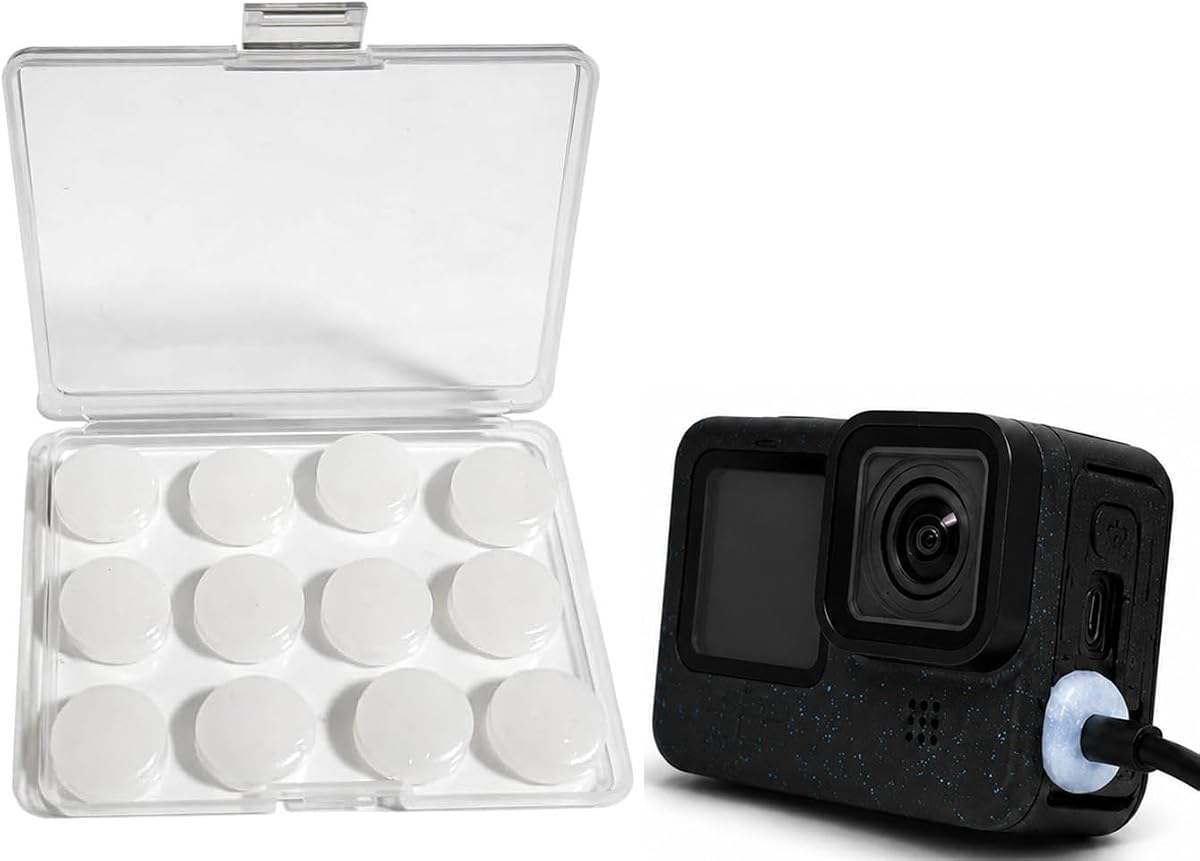
This silicone waterproof seal putty is designed around a specific electronics problem: protecting USB ports, cords, and connectors from water, dust, and moisture. Its 4.6 rating reflects a practical alternative to a liquid cartridge for field use, especially with cameras and other USB-powered devices.
We may earn a commission when you buy through this link, at no additional cost to you.
Application is straightforward. The user rolls out a portion, wraps it around the USB cord or connector, and presses it into a molded shape. It forms a tight waterproof barrier intended to keep the device powered while shielding the connection. The universal compatibility claim is specifically positioned around USB-powered equipment rather than every possible connector or board.
The reusable nature is the product's main distinction. Unlike a curing cartridge, the putty can be removed, reshaped, and reapplied without the supplied information indicating a loss of sealing strength. This makes it convenient for temporary field protection, changing equipment, and situations where a permanent adhesive seal is undesirable.
The putty is best for outdoor filming, camping, marine use, and other environments where cables may encounter rain, splashes, salt air, or dust. Its limitations are equally clear: it is a connection shield rather than a general-purpose bonding compound, and it should not be confused with a permanently cured electronics-grade RTV. Users who need structural adhesion or factory-like encapsulation should choose a cartridge or tube instead.
Because the material is rolled and pressed by hand, it avoids cartridges, applicator nozzles, and curing schedules. That makes it convenient when a camera or USB-powered device needs protection in the field.
The supplied information states that the putty can be removed, reshaped, and reapplied while maintaining its sealing strength. This makes it attractive for temporary protection and for users who rotate the same device between indoor and outdoor environments.
We may earn a commission when you buy through this link, at no additional cost to you.
Protection 10K+ is a 30ml silicone sealant created specifically for detailed electronics applications. Its 5.0 rating, integrated precision applicator, and explicit non-conductive positioning make it the editor's choice for technicians working around printheads, sensors, mainboards, and cable entries.
We may earn a commission when you buy through this link, at no additional cost to you.
The applicator is the product's standout practical feature. It supports accurate, low-volume placement around small components where excess material or a wide uncontrolled bead can create problems. The formula is described as waterproof, ink-proof, and suitable for securing critical components such as printheads, sensors, mainboards, and cable-entry points.
Its electrical characteristics are unusually specific for a consumer sealant. The supplied information states insulation of at least 10KV/mm when wet and at least 12KV/mm when dry. Because the sealant is non-conductive, it is presented as a way to reduce the likelihood of shorts in sensitive electronic assemblies. The compact tube also limits waste when only small quantities are needed.
Cure time is stated at four to 24 hours depending on layer thickness, so users should not judge readiness by surface appearance alone. This is the strongest choice for precision work where a dedicated applicator and electronics-specific protection are priorities. It is less suited to filling large gaps or covering extensive areas, and the small capacity means larger projects may require repeated tubes.
The integrated applicator places material accurately around printheads, sensors, and board-level connections. This control is valuable when a broad bead could interfere with nearby parts or trap residue in an unintended location.
Waterproofing and ink-proof protection address two common threats around printers and exposed electronic assemblies. Combined with the non-conductive formulation, this makes the product especially relevant to sensitive internal components and cable entries.
We may earn a commission when you buy through this link, at no additional cost to you.
J-B Weld 31310 is a 3-ounce clear RTV silicone sealant and adhesive designed for household or mechanical assembly. Its 4.5 rating supports inclusion in the roundup, although the supplied information is less electronics-specific than the descriptions of the ASI, Permatex, and Protection 10K+ products.
We may earn a commission when you buy through this link, at no additional cost to you.
The central benefit is flexibility of purpose. A single product can be used to seal or bond components, which is convenient for maintenance work where a technician may encounter different joints and materials. Its clear appearance also keeps the repaired area visually understated, making it useful for housings, covers, and visible equipment seams.
The trade-off is that the product information does not state a detailed temperature range, cure schedule, non-corrosive rating, or specific electrical-insulation performance. Buyers therefore need to assess compatibility with sensitive components and operating conditions rather than assuming the same protections offered by products explicitly formulated for electronics production.
J-B Weld Clear RTV is most appropriate for general sealing and bonding tasks around electronics, including noncritical housings and mechanical assemblies. It serves as a practical option for a broad toolkit, while specialized products are stronger choices for production sealing, fine board-level work, or applications where documented electrical and thermal performance is essential.
The combined sealant-and-adhesive role reduces the number of products needed for general electronic maintenance. It can handle sealing and bonding tasks without requiring a separate product for each function.
This sealant lacks the detailed electronics-focused specifications found among the leading choices. That simplicity can be an advantage for general work, but sensitive assemblies benefit from a product whose non-corrosive, electrical, or curing behavior is clearly documented.
We may earn a commission when you buy through this link, at no additional cost to you.
GE Advanced Silicone Caulk is a clear 2.8-fluid-ounce tube built primarily for window and door sealing. Its 4.6 rating and strong environmental specifications make it useful for protecting electronics housed outdoors, provided the surfaces and exposure conditions are appropriate.
We may earn a commission when you buy through this link, at no additional cost to you.
The 100% silicone formula is described as waterproof and weatherproof, with a cured sealant designed to resist stain-causing mold and mildew. It offers strong adhesion and permanent flexibility, while also resisting shrinking and cracking caused by temperature fluctuations. These are useful qualities around exterior housings, cable penetrations, and equipment exposed to rain.
A rain-ready time of as little as 30 minutes is a meaningful advantage when an enclosure must be exposed before the job is fully finished. Compatibility extends across many construction and fabrication materials, including metals, woods, glass, ceramics, drywall, composites, masonry, and several other common surfaces.
The product is not presented as an electronics-grade sealant, and its core application is construction rather than circuit protection. It is most appropriate for external enclosures and weather-facing joints where a robust waterproof seal matters more than fine dispensing or documented non-corrosive performance. Users should still verify compatibility with the specific electronics housing and nearby components.
Waterproofing, mold and mildew resistance, flexibility, and temperature-fluctuation durability make this sealant a practical choice for outdoor electronics housings. It is better aligned with environmental sealing than with delicate board-level encapsulation.
The broad compatible-material list increases its usefulness for heterogeneous assemblies. It can address joints involving metal, glass, ceramic, composite, or wood, subject to confirming that each surface and chemical exposure is suitable.
We may earn a commission when you buy through this link, at no additional cost to you.
The 706 silicone adhesive sealant is explicitly positioned for high-temperature electronic insulation. It is a compact option for sealing electrical components, but its supplied information is limited, so buyers should treat it as a specialized choice requiring additional compatibility and performance verification before critical use.
We may earn a commission when you buy through this link, at no additional cost to you.
Its stated functions are insulation, rubber fixing, waterproof sealing, and high-temperature service for electrical components. Those qualities make it relevant to heat-exposed assemblies, fixed rubber components, and applications where moisture resistance is needed alongside electrical insulation. Unlike a general caulk, its description is explicitly oriented toward electronics.
The main drawback is limited documentation. No numerical temperature range, cure time, non-corrosive claim, electrical insulation value, or detailed substrate list is provided. It also has no available customer rating, so there is no rating-based evidence to help distinguish its real-world consistency from the more thoroughly documented products in the list.
This sealant is best considered for a clearly defined heat-tolerant electrical sealing task where the application instructions and available information match the assembly. It should not automatically replace a documented electronics-grade product for sensitive connectors, printed circuit boards, or production work. Confirming cure behavior, temperature limits, and material compatibility before use is especially important.
The stated high-temperature and electrical-insulation focus makes the product more purpose-specific than general construction silicone. It may be useful where heat and environmental sealing are both central to the repair.
Because the information does not provide numerical limits or detailed compatibility guidance, technicians should confirm the requirements of the assembly before use. A documented specialty formula may be preferable when failure could affect sensitive electronics.
We may earn a commission when you buy through this link, at no additional cost to you.
Choosing an electronics sealant requires balancing electrical safety, environmental resistance, adhesion, application precision, and cure behavior. The most important first step is matching the formulation to the component, joint, environment, and required service life.
An electronics-grade sealant should be non-corrosive, electrically compatible, and capable of protecting sensitive conductive materials over time. The ASI products explicitly describe a non-corrosive curing system and suitability for materials such as copper, brass, and silver, while Protection 10K+ explicitly identifies itself as non-conductive for printheads, sensors, and mainboards. These stated attributes are more meaningful for sensitive assemblies than a generic waterproof claim.
Silicone is commonly selected for electronics because it can seal while remaining electrically insulating, but the degree of insulation varies by formulation. Protection 10K+ is the only product here with specific insulation figures in the supplied information: at least 10KV/mm when wet and at least 12KV/mm when dry. For other choices, look for a clear electrical-properties statement and confirm that the intended application does not require a documented dielectric threshold.
Look for a range that covers the coldest and hottest conditions the sealed assembly may encounter, including possible heat from power components. The ASI electronic-grade cartridges and Permatex Clear RTV are specified up to 400°F, Permatex Black RTV up to 450°F, and the 706 product claims high-temperature resistance without supplying a numerical range. A broad published range is more useful than a vague high-temperature description.
Application needs vary more than the basic choice between liquid sealant and putty. Protection 10K+ offers an integrated applicator for small printheads, sensors, and mainboards, while cartridges suit production lines and larger bead applications. Rollable putty is convenient around removable USB connections. Squeeze tubes balance portability with controlled dispensing, and caulk tubes are familiar for broad weatherproof joints.
A product that feels dry at the surface may not have cured through its full thickness, so follow the stated cure guidance before exposing the joint to water or mechanical stress. Protection 10K+ specifies four to 24 hours depending on layer thickness. The ASI products are moisture-curing RTV sealants, which means atmospheric moisture is part of the curing process. Good ventilation and appropriate assembly conditions help the intended cure proceed reliably.
A sealant can have excellent general properties and still perform poorly on the surface actually present in the device. Review the stated compatible materials and the need for cleaning, preparation, clamping, or surface treatment. ASI 388 emphasizes advanced adhesion to various substrates, while GE lists a broad construction-material range. Permatex notes that some bonded surfaces may need clamping until the silicone firms.
Permanent bonding is not always desirable. The reusable silicone putty is intended to be removed, reshaped, and reapplied around USB connections, making it useful for temporary outdoor protection and equipment rotation. By contrast, liquid RTV products are better for lasting seals, encapsulation, and structural bonds. Think about whether the joint will be opened, replaced, or exposed to different environmental conditions during its service life.
Package capacity affects both convenience and material use. A 30ml precision tube reduces waste for a small repair, while 10.2-ounce cartridges are efficient for production or repeated use. The ASI three-pack keeps separate portions available for different tasks, and 3-ounce tubes are easy to store. Select a format that matches the scope of work instead of buying a large package for a single delicate assembly.
Begin by identifying the surfaces, the materials involved, and the environment the finished assembly will face. Confirm compatibility, especially around printed circuit boards, connectors, sensors, heat-producing components, and printed or sensitive surfaces. Clean away dust, oils, and loose residue according to the product instructions, and make sure the joint is dry before applying sealant.
Dispense the smallest practical amount. Use the integrated applicator for fine electronics work, a controlled bead for larger cartridge applications, or mold the putty around the connection. Keep the material away from contacts, vents, moving mechanisms, and components that must remain serviceable unless the product is specifically approved for those locations. Follow the stated cure period before stressing, powering, or exposing the repair.
After curing, inspect the joint for gaps, movement, cracking, or separation, especially after temperature changes. Reusable putty can be removed and reshaped as needed, while cured RTV generally requires mechanical removal and surface preparation before resealing. Store cartridges and tubes with their outlets protected, and dispose of material according to local requirements and the manufacturer’s safety information.
Protection 10K+ is the most explicitly precision-focused option because it combines a narrow applicator with non-conductive electrical characteristics, waterproofing, and ink-proof protection. The ASI electronic-grade cartridges are strong alternatives when a larger production format, neutral cure, and documented non-corrosive performance are more important. The correct choice depends on the component and the required application.
A general silicone caulk can be suitable for some noncritical housing or weatherproofing tasks, but not every product provides the same information about corrosion, insulation, or chemical compatibility. Products labeled for electronics or electrical components are generally a safer starting point. Always confirm material compatibility and avoid covering heat-producing parts, contacts, vents, or service points.
A purpose-designed moldable putty can create a temporary reusable barrier around a USB connection, while a precision silicone can protect a cable entry more permanently. The joint must not interfere with the plug, strain the connector, or trap moisture inside the device. Remember that a permanent cured seal can make the port harder to service.
A neutral-cure silicone is described as emitting no objectionable odor during curing, which can make work in a confined area more comfortable. It does not mean that ventilation is unnecessary. The supplied guidance still recommends adequate ventilation, particularly during large-scale production, and users should follow the product’s safety instructions.
Curing time depends on the product and bead thickness. Protection 10K+ recommends four to 24 hours based on layer thickness, while the other products do not provide a complete cure schedule in the supplied information. Do not infer full curing from the surface alone, and avoid powering, moving, or wetting a repair before the manufacturer’s stated time has passed.
It can, but the level of insulation depends on the formulation and application. Protection 10K+ states at least 10KV/mm when wet and at least 12KV/mm when dry. Other products emphasize electrical properties without supplying comparable figures, so safety-critical work should use documented values or otherwise verified testing.
No. The reusable putty is designed to provide a removable seal around USB-powered device connections, not to create a permanent structural bond or encapsulate a circuit board. Use a curing RTV or adhesive sealant for permanent joints, and use the putty when temporary protection and easy removal are the priorities.
The range should cover the assembly’s actual operating and storage conditions, including heat generated by nearby electronics. Several products here are specified to 400°F, and Permatex Black RTV is specified to 450°F. The 706 sealant claims high-temperature resistance but does not provide a numerical range, so buyers should verify that specification before relying on it.
Protection 10K+ is the strongest precision choice because its integrated applicator, non-conductive formulation, and specific insulation figures directly address delicate electronic work. Permatex Clear RTV is the most accessible general-purpose option, while the three-pack of ASI 388 tubes stands out for specialized electronics protection and convenient project-sized packaging.
Prioritize the features your assembly actually needs: non-corrosive performance around sensitive metals, documented electrical insulation for exposed circuitry, a verified temperature range for heat, and controlled application for small components. Consider cure time and serviceability carefully, especially when a joint may need to be reopened or replaced in the future.
Before purchasing, verify the current listing details, package contents, cure instructions, and compatibility for your exact materials. Availability and prices can change, so comparing the latest product information can help ensure that the selected sealant still matches the project and remains available in the required quantity.