
Starlink Mini Tripod Mount
4.6Editor score
Tool-free Starlink Mini adapter
Full 360-degree positioning
Foldable travel-friendly frame
Includes storage bag
A satellite tripod mount can determine whether a portable dish performs consistently, remains properly aimed, and stays secure outdoors. The right model must match the antenna, provide enough height and tilt control, and offer a stable base without making transport unnecessarily difficult.
We compared all ten products by examining antenna compatibility, dimensional information, adjustment ranges, stabilizing features, weight capacity where stated, portability, and outdoor construction. The list covers portable RV antennas, general satellite dishes, DirecTV and Dish installations, and several Starlink-specific designs.
Each review explains the product's strongest benefits and practical limitations so you can match a mount to your equipment and location. Ratings reflect the supplied customer feedback, while prices and availability can change, making it wise to verify current listing details before purchasing.
4.6Editor score

5.0Editor score

4.6Editor score
As an Amazon Associate we earn from qualifying purchases.
This side-by-side comparison highlights antenna fit, height range, positioning control, portability, and outdoor stability across ten portable and fixed satellite mounting solutions.


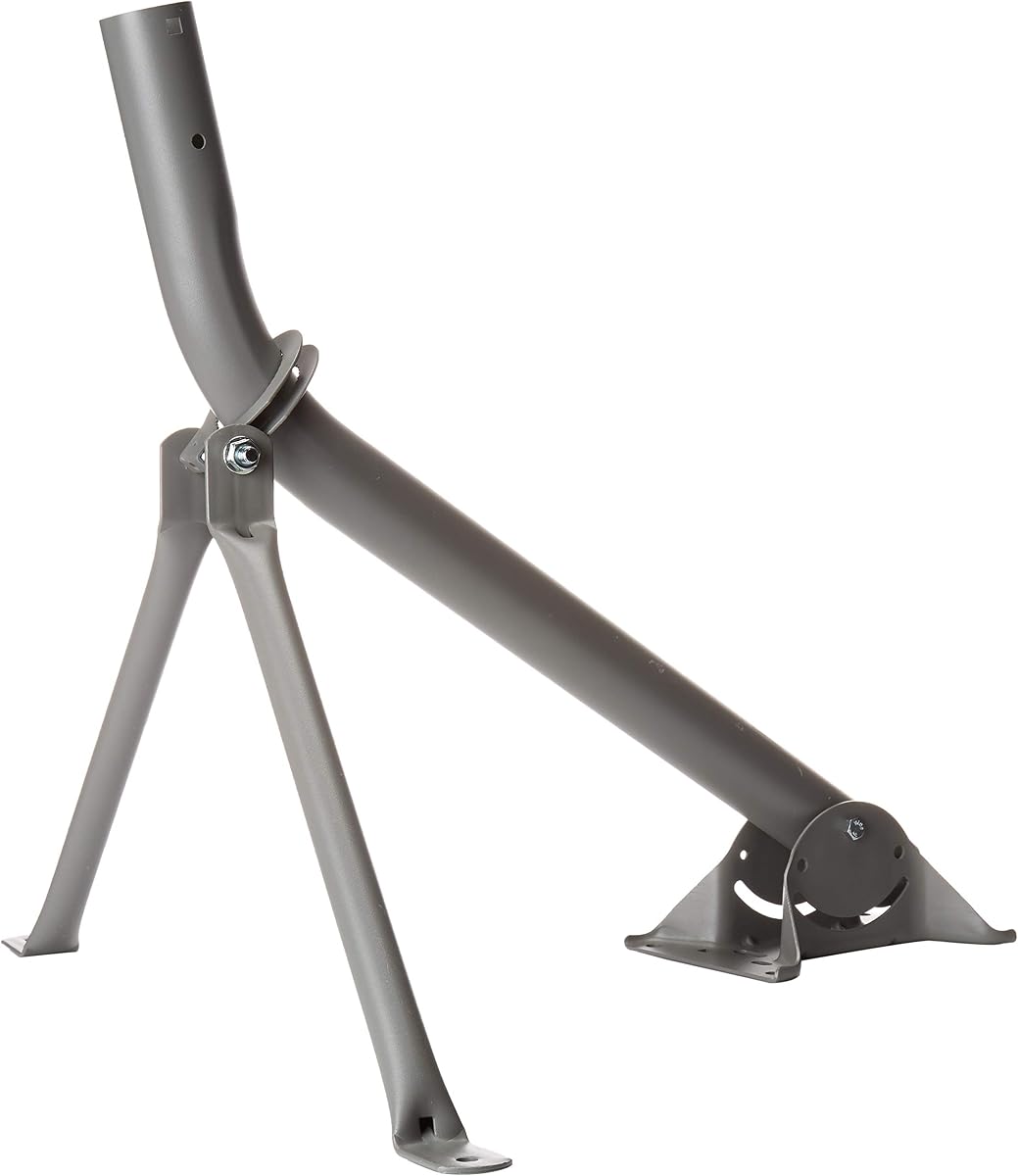


The TR-1518 Compatible RV Mount is a portable support designed for several Carryout, Pathway, and Playmaker satellite antennas. With a 4.4 rating, it offers a practical combination of quick installation, durable construction, and adjustable height. Its 14.5-to-22-inch range gives users some freedom to raise the dish above surrounding obstructions.
We may earn a commission when you buy through this link, at no additional cost to you.
Its primary strength is compatibility. The listing specifically identifies Carryout GM-1518, GM-1599, and GM-MP1 models, along with Pathway and Playmaker antennas and DISH Playmaker, Pathway X1, Pathway X2, Carryout G2, and Carryout G2+. That level of detail makes it easier for RV owners to verify an antenna match before ordering.
The mount can be installed and removed quickly, which is valuable for temporary roadside, campsite, or yard setups. Its strong material is intended to protect the antenna from damage, while the adjustable horizontal height helps place the dish more effectively. A ground anchor or bungee provides additional restraint where movement or wind could otherwise affect the setup.
The main limitation is that it is intended for a defined group of portable RV antennas rather than every dish on the market. Buyers should check the exact antenna model and connection geometry rather than relying only on a broad brand impression. For RV travelers with one of the listed systems, it is a sensible, focused mounting solution.
Quick installation and removal make this mount practical for travelers who need to relocate their satellite system. The included ground-anchor or bungee option adds security after the basic support is positioned.
The mount is designed around several Carryout, Pathway, and Playmaker models. Confirming your antenna model before purchase will help prevent compatibility issues and make height adjustment more predictable.
We may earn a commission when you buy through this link, at no additional cost to you.
The Three-Foot Satellite Tripod Mount with 2-Inch OD Mast is a straightforward option for satellite setups requiring a three-foot support and a two-inch mounting mast. Its 4.5 rating reflects solid customer satisfaction, while the traditional tripod format makes it relevant to both temporary and more permanent installations.
We may earn a commission when you buy through this link, at no additional cost to you.
The most important specification is the two-inch OD mast. If the dish, pole, or antenna support uses that diameter, the connection can be more straightforward than with an adapter-based design. The three-foot height provides useful elevation for antennas operating around vehicles, campsites, yard equipment, or low outdoor obstructions.
Its listed dimensions are 37.4 by 6.3 by 5.5 inches, giving buyers a clearer sense of its storage footprint than many compact alternatives. The tripod form should also provide a familiar three-point base that can be positioned on different types of ground, provided it is adequately secured and leveled.
The product information does not list tilt adjustment, included hardware, exact material, or an anchor, so buyers should inspect the package and verify their installation requirements. Despite those unspecified details, it is a practical pick for a standard two-inch mast and users who value height over fine positioning controls.
The two-inch OD mast specification gives standard satellite installers a clear basis for compatibility. Measure the antenna support before ordering if your dish uses a different pole diameter or a proprietary connector.
A three-foot support can improve the dish's position relative to nearby obstacles. The listed dimensions also suggest a structure that is easier to handle than a full-height permanent tower.
We may earn a commission when you buy through this link, at no additional cost to you.
The Winegard TR-1518 is a purpose-built tripod mount for Winegard portable satellite antennas. Its 4.5 rating and focus on Winegard compatibility distinguish it from universal-looking mounts. It combines a foldable design, adjustable height, and a wide stance for users who need a dependable elevated position.
We may earn a commission when you buy through this link, at no additional cost to you.
Elevation is central to the product's purpose. Raising the antenna can improve its relationship to nearby obstructions, which is especially relevant around parked vehicles, campground furniture, terrain, or other objects that might interrupt the signal path. The broad base is intended to resist wind, bumps, and shifting ground.
Portability is another strong point. Folding the mount makes it more convenient to store between outings and easier to carry than a rigid full-height assembly. The adjustable mounting height gives owners some flexibility for different dishes and locations without turning the process into a complex installation.
This mount is most appropriate when the antenna is a compatible Winegard portable model. It does not advertise Starlink Mini support or a broad range of proprietary adapters, and the listing does not identify a precise tilt mechanism. Buyers should verify the physical connection and required accessories before ordering.
The tripod's primary function is to place a Winegard antenna higher than surrounding objects. A stable, elevated starting point can make the remaining aiming process easier and improve practical reception.
The collapsible form suits RV storage and frequent travel. Once folded, the mount takes less room than a rigid assembly and can be moved with the antenna as one portable setup.
We may earn a commission when you buy through this link, at no additional cost to you.
The Starlink Mount Gen 3 is designed for Standard 4, 4X, and V3 Starlink systems and combines a tall adjustable frame with angle control. Its 4.5 rating suggests a favorable balance of construction, portability, and positioning flexibility, while the removable top tube allows the user to reduce the stand's height when needed.
We may earn a commission when you buy through this link, at no additional cost to you.
The stated height reaches 53 inches, which gives the antenna more room to clear nearby objects and permits fine adjustment for different campsite or yard conditions. A 90-degree tilt adjustment helps users orient the dish for the best available view of the sky. Knobs secure the tubular sections and help prevent loosening or slipping.
For outdoor stability, the tripod includes ground spikes for soft ground. Its reinforced iron construction is described as resistant to rust and corrosion, and the stated maximum weight capacity is 60 pounds. The compact design also makes the stand suitable for camping, courtyard, and car-side use.
Compatibility is narrower than the product name may initially suggest. It does not fit Starlink Mini, Performance Gen 2, Performance Gen 3, or Standard Actuated dishes. Installation also requires care: the included screws secure the bracket rather than entering threaded dish holes, and they should be tightened gently.
The 53-inch maximum height can help a Standard Starlink dish rise above nearby obstructions. Removing the upper tube shortens the setup when maximum elevation is unnecessary.
Ground spikes add resistance against shifting on soil. Firm ground may call for the feet alone, while soft campground terrain benefits from careful spike placement.
We may earn a commission when you buy through this link, at no additional cost to you.
The Adjustable Satellite Dish Antenna Mount is the list's most explicitly fixed-installation option, with support for roof or wall placement. Its 4.3 rating reflects a versatile design aimed at users who want more permanent positioning rather than a lightweight camping accessory.
We may earn a commission when you buy through this link, at no additional cost to you.
The mount accommodates dishes or antennas up to 60 inches and uses a 45-degree pole with a stated 1.65-inch diameter. Its tripod-style structure supports the mast while adjustable height and tilt controls allow the installer to refine the antenna's position. The included hardware simplifies the basic assembly process.
Compatibility is presented broadly, including Dish Network, Starlink, DirecTV Slimline AU9, Globecast WorldTV, motorized dishes, and local broadcast antennas. The weatherproof material is intended to resist rust, corrosion, and ultraviolet exposure, which are important considerations for an exterior installation.
A roof or wall setup demands more planning than placing a portable tripod on level ground. Installers must account for attachment surfaces, weatherproof sealing, cable routing, and safe access. Those responsibilities make this mount best for experienced users or professionals, while the wide dish capacity remains its standout feature.
Roof and wall options create alternatives when ground-level placement is blocked. Elevating the dish can improve access to an unobstructed view without requiring a permanent ground tower.
Weatherproof materials help the mount endure outdoor exposure. Proper sealing at roof or wall penetrations remains important for preventing leaks and water intrusion.
We may earn a commission when you buy through this link, at no additional cost to you.
The Satellite Tripod for DirecTV or Dish is a broad traditional mounting solution for 2-inch and 1-5/8-inch OD satellite poles. With a 4.6 rating, it is among the strongest customer-rated products in the guide and appeals to users whose dishes may use either common mast diameter.
We may earn a commission when you buy through this link, at no additional cost to you.
Supporting DirecTV, Dish Network, and FTA systems makes it useful for a broad collection of conventional satellite installations. The ability to work with two pole sizes also reduces the need to search for a separate adapter, provided the user's pole matches one of the stated dimensions.
Its listed dimensions of 37.4 by 6.3 by 5.5 inches indicate a substantial but still recognizable tripod format. That makes it appropriate for temporary RV use, ground installations, or users who already know the dish requires a conventional mast rather than a proprietary Starlink attachment.
The sparse listing does not provide a precise tilt range, weight limit, material description, or included anchor details. Those omissions do not erase the compatibility advantage, but they make careful product-page inspection sensible. It is a strong choice for a conventional Dish, DirecTV, or FTA antenna with one of the specified pole sizes.
Accepting both two-inch and 1-5/8-inch OD poles broadens the range of dishes that can use the tripod. Measuring the existing pole before ordering remains the simplest way to confirm fit.
DirecTV, Dish Network, and FTA support make this a sensible option for conventional satellite antennas. It is less relevant to users seeking a dedicated Starlink Mini or Starlink Standard adapter.
We may earn a commission when you buy through this link, at no additional cost to you.
The Starlink Mini Tripod Mount is purpose-built for the compact Starlink Mini terminal and holds a 4.6 rating. Its strongest selling points are quick installation, extensive positioning control, and a foldable package that suits RV travel, camping, backyards, and other mobile uses.
We may earn a commission when you buy through this link, at no additional cost to you.
A precision snap-on adapter eliminates the need for screws or tools during dish installation. Once connected, the rotating ball head provides full 360-degree horizontal and vertical movement, allowing users to refine the terminal's direction without relocating the entire tripod. Height adjustment offers additional flexibility over uneven ground.
The alloy steel construction is designed to balance low weight with wear resistance. A reinforced locking knob holds the tripod firmly in place, while the retractable and folding structure makes the stand easier to carry. The included storage bag further reduces the chance of losing smaller components during transport.
The kit includes a tripod, pipe adapter base, adjustable tripod head, storage bag, and manual. It also provides a standard 1/4-inch screw mount for compatible cameras and phones. The essential limitation is simple: this is a Starlink Mini stand and does not serve as a universal mount for Standard or Performance systems.
The snap-on adapter simplifies setup when a Mini terminal is needed only briefly. Packing and deploying the dish becomes more convenient when no separate screws are required.
The 360-degree ball head allows the terminal to be turned and tilted while the base stays put. That separation between positioning and relocation is especially helpful when searching for a clear signal.
We may earn a commission when you buy through this link, at no additional cost to you.
The Adjustable TR-1518 Stand is a portable support for DISH, Pathway, and other compatible satellite antennas, with a listed height range of 14.5 to 22 inches. Its 2.0 rating is the lowest in this group, so buyers should investigate recent customer feedback and fit details carefully before deciding.
We may earn a commission when you buy through this link, at no additional cost to you.
The physical design includes a retractable, folding frame that should be easy to store and transport. A locking bolt holds the chosen height and helps limit unwanted movement. The metal construction is presented as a protective barrier against dirt, mud, snow, and rain around the antenna support.
Its claimed compatibility includes several portable antenna units, including PA-6002, PA-1000, PL-7000, and PL-8000 models. Raising the antenna within the 14.5-to-22-inch range may help place the dish above nearby obstructions, although the degree of signal improvement depends on the site and antenna.
The low rating and partially incomplete compatibility language are meaningful drawbacks. A potential buyer should compare exact model numbers, inspect photos and recent reviews, and verify the mounting interface. The compact concept remains useful, but this model needs more careful validation than the higher-rated alternatives.
The short adjustable range keeps the assembled stand relatively manageable for storage. It is well suited to temporary RV deployments where a full-height stand would be unnecessary.
A 2.0 rating suggests that some customers encountered fit, quality, or performance concerns. Reviewing the latest feedback for your exact dish model is more informative than relying on the general product description.
We may earn a commission when you buy through this link, at no additional cost to you.
The Extra-Large Starlink Base is a reinforced tripod for Standard 4, 4X, and V3 Starlink antennas. Its 4.5 rating, larger footprint, and 66-pound stated capacity distinguish it from lighter portable stands, particularly in environments where a broader base provides additional confidence.
We may earn a commission when you buy through this link, at no additional cost to you.
The extra-large base is designed to improve stability, while supplied ground spikes help anchor the tripod in soft soil. This makes the mount especially relevant for campsites, yards, and temporary installations where the surface may be uneven or where wind could move a narrow-footprint support.
Height reaches 51.2 inches and the pipe adapter offers 90-degree angle adjustment. The removable topmost tube can shorten the stand when maximum height is unnecessary. Reinforced iron and a rust- and corrosion-resistant finish support outdoor durability, while knobs keep the tubular sections connected.
The compatibility limits are specific: the mount does not support Starlink Mini, Performance Gen 2 or 3, or Standard Actuated models. Installation instructions and a video are referenced, and the included screws should be tightened gently after inserting the spacers to avoid damaging the dish.
The enlarged base spreads the load across a broader area than a compact tripod. Combined with ground spikes, it gives users additional options for firming up a temporary installation on grass or soil.
Users can reach 51.2 inches when clearance is needed or remove the upper tube for a lower profile. This flexibility makes the stand easier to adapt to changing campsite conditions.
We may earn a commission when you buy through this link, at no additional cost to you.
The OPKING Starlink Tripod Stand is the strongest all-around choice in this guide for supported Starlink Standard systems. It carries a 5.0 rating and combines broad model compatibility, tool-free height adjustment, 0–90-degree tilt control, ground anchoring, and a portable folding design.
We may earn a commission when you buy through this link, at no additional cost to you.
Compatibility extends to Standard 4, 4X, Gen 3, V3, and V4 antennas. The metal pipe adapter allows the terminal to move through a zero-to-90-degree range, helping users fine-tune the position for a clearer signal. Height adjusts from 26 to 46 inches through locking knobs, allowing rapid changes without tools.
Stability comes from a triangular base, non-slip rubber feet, and an included ground anchor. These features suit grass, soil, sand, gravel, and uneven ground. The reinforced iron frame has a rust-resistant coating, and a hidden cable opening helps keep wiring neat. For high winds, the listing recommends a sandbag, although one is not included.
The stand includes an adapter, ground anchor, and step-by-step manual. Its collapsible frame and carrying bag suit RV travel, camping, backyard use, and temporary sites. It excludes Starlink Mini, Actuated, and Performance models, so checking the exact terminal version remains essential before ordering.
Support for Standard 4, 4X, Gen 3, V3, and V4 reduces the risk of choosing a mount tied to only one generation. It remains a model-specific solution rather than a universal Starlink bracket.
Tool-free knobs change both height and tilt quickly. Users can raise the dish, rotate the adapter, and assess the connection without repeatedly searching for hardware.
We may earn a commission when you buy through this link, at no additional cost to you.
Choosing a satellite tripod mount requires matching the antenna interface, evaluating available clearance, and balancing adjustment features with portability and long-term stability.
Compare compatibility using the exact model designation printed on your antenna, not just the service or brand. When in doubt, measure the pole and examine the attachment hardware.
Measure nearby obstructions and select a height range that clears them with room for aiming. Locking knobs or bolts are valuable on uneven ground.
Prioritize adjustable tilt when obstructions make precise aiming difficult. For basic pole-mounted dishes, verify whether the antenna has its own positioning mechanism.
Choose a broad base for outdoor stability and use the included anchor on soft ground. Account for wind, uneven terrain, and the need for additional ballast in severe conditions.
Prioritize a complete folding kit with organized storage for mobile use. Confirm that the folded size fits your actual storage area.
Look for durable, weather-resistant materials and a credible capacity specification. Treat maximum capacity as a limit, not a target for demanding sites.
Choose a temporary tripod for flexibility and frequent relocation. Use a fixed roof or wall design only after assessing structural attachment, weather sealing, and safe access.
Check for the required adapter, anchor, spacers, and carrying case. A complete kit reduces setup time and the chance of missing essential hardware.
Begin by identifying the exact antenna model and checking the mount's compatibility notes. Assemble the tripod on the selected ground surface, spread the legs evenly, and adjust the legs until the base sits firmly without twisting. If the product includes ground spikes, install them only after confirming that the location is appropriate. A flat, open starting point usually makes it easier to optimize the dish's height and angle.
Attach the antenna using the specified adapter, mast, or snap-on fitting. Follow the manufacturer's installation instructions, particularly for products that use spacers or bracket-retaining screws. Tighten fasteners gradually and avoid forcing the dish. Once connected, set the approximate height and direction, then follow the antenna manufacturer's alignment process to confirm the signal. Keep cables clear of the legs and secure them through the designated route or opening to avoid snagging.
Before packing the mount, loosen the height and angle locks, remove adapters or removable tubes as directed, and wipe the metal surfaces clean. Let wet or muddy components dry before storing them to reduce corrosion. Check knobs, bolts, hinges, and spikes for looseness, and replace any worn hardware. Store the folded stand and small accessories together in a dry bag, especially during travel or extended periods of nonuse.
Check the antenna's exact model number and mounting connection before purchasing. Conventional dishes may use two-inch or 1-5/8-inch poles, while Starlink systems generally require a generation-specific adapter. Also verify any stated exclusions, such as Mini, Performance, or Actuated models, and compare the physical dimensions and included hardware with your installation.
A tripod can help by raising the antenna above nearby obstructions and providing a steady position during alignment. It cannot eliminate every source of interference, and performance also depends on the dish, service, location, and surrounding environment. The greatest benefit usually occurs where a low-mounted dish is blocked by vehicles, walls, terrain, or foliage.
The best height provides a clear view toward the required part of the sky without making the assembly unstable or difficult to move. Many portable RV mounts adjust from 14.5 to 22 inches, while dedicated Starlink stands can reach much higher. Measure nearby obstructions and use the lowest position that still provides sufficient clearance.
Anchoring is recommended when the ground is soft, the location is exposed, or the dish sits high enough to gain leverage. Ground spikes are useful in soil, while rubber feet work better on firm surfaces. In severe wind, follow the manufacturer's guidance and consider adding approved ballast; none of the reviewed products includes a sandbag unless explicitly stated.
Generally, no. The Starlink Mini tripod in this guide uses a dedicated snap-on adapter and is not intended for Standard dishes. Conversely, most Standard and Gen 3 mounts explicitly exclude Starlink Mini. Actuated and Performance versions may also use different connections, so model-specific compatibility notes should control the selection.
A conventional tripod is designed for ground placement unless the listing specifically includes rooftop attachment hardware. The roof or wall mount reviewed here is a dedicated option for that purpose, while the remaining products are intended as portable tripods. Roof installations also require secure structural attachment, weather sealing, and safe working conditions.
A locking knob or bolt is highly useful because it prevents the mast or tube from slipping as the tripod settles or is bumped. For adjustable-height models, it also holds the selected extension. Users should tighten it according to the instructions and periodically check that it remains secure after the legs are repositioned.
Store it in a dry location after cleaning away dirt and moisture. Fold or collapse it according to the instructions, protect the finish, and keep small adapters, screws, and anchors in a sealed bag. Inspect moving parts periodically for rust or looseness, especially if the stand remains near a campsite, garage, or exterior storage area.
The OPKING Starlink Tripod Stand leads for supported Standard systems because it combines a 5.0 rating with broad model support, tool-free height adjustment, precise tilt control, and included anchoring. The Starlink Mini Tripod Mount is a compact choice for Mini owners, while the DirecTV and Dish tripod remains useful for conventional systems using common pole sizes.
Prioritize exact antenna compatibility before considering height or construction. Choose a stable base and anchoring method appropriate to the terrain, use tilt controls when the site has obstructions, and confirm that the folded dimensions suit your storage plan. For Starlink Standard users, the OPKING stand offers the most balanced feature set; for RV travel, portability and a complete kit may be even more important.
Ratings and specifications can change as sellers update products or buyers provide new feedback. Before purchasing, verify the current listing, compatibility notes, included accessories, and seller information. Current prices also fluctuate, so compare the complete offer rather than judging a mount by its listing alone.