
Portable Transducer Bracket- Made in USA
4.5Editor score
Aluminum clamp-style construction
Adjustable 15–23 inch range
No-drill boat installation
Quick-removal mounting design
Threaded electronics mounting hole
Explore the 10 best depth finder transducer mount options for kayaks and boats, comparing adjustability, compatibility, installation, durability, and portabilit
A depth finder transducer mount determines where your sonar sensor sits beneath the boat, so choosing correctly can improve the consistency and usefulness of the readings. The best option should fit your vessel, suit your transducer, hold securely, and allow the angle and height to be adjusted as conditions change.
The products in this guide cover clamp-style, adhesive, rail-mounted, kayak-arm, plate, and universal portable designs. We compared their stated compatibility, adjustment ranges, materials, installation requirements, included hardware, and practical limitations to help separate purpose-built solutions from broader mounting systems.
Each review identifies the configuration that best benefits from a particular product and explains who is most likely to appreciate it. Product specifications and availability can change, so confirm your transducer, boat, and accessory requirements before purchasing, and check current pricing and manufacturer details at the time of purchase.
4.5Editor score

5.0Editor score

4.6Editor score
The table below compares all ten options by their mounting approach, key adjustment, material, and intended vessel type. Because several products serve different specialized roles, compatibility with your existing transducer and boat is more important than rating or feature count alone.


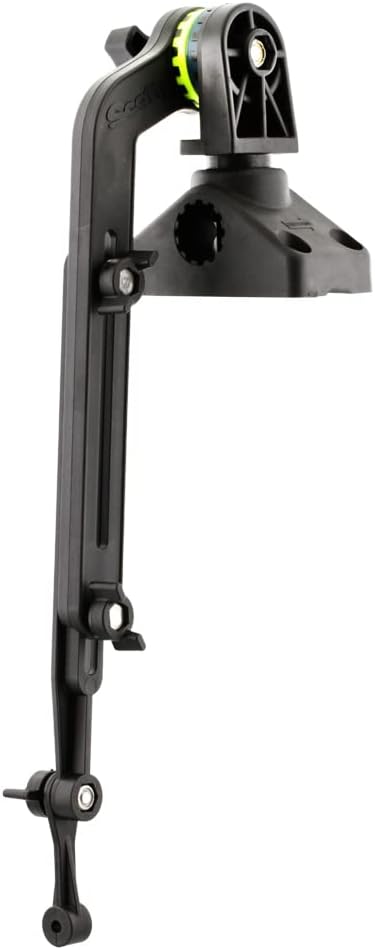
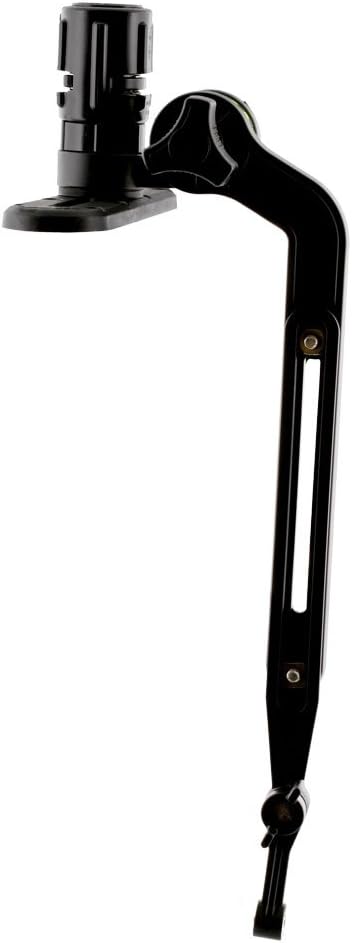


The Portable Transducer Bracket- Made in USA is a clamp-style, portable solution for putting a compatible transducer on a boat without permanently modifying the hull. Its 4.5 rating reflects a practical design centered on aluminum construction, quick removal, and an unusually broad 15- to 23-inch adjustment range. It is particularly useful when you want repeatable positioning but do not want to drill holes into your vessel.
We may earn a commission when you buy through this link, at no additional cost to you.
The central clamp has a 2.375-inch opening and supports an adjustable 15- to 23-inch bracket range, allowing the user to choose a useful transducer height for different hulls and operating conditions. A threaded hole on top of the clamp can accept an add-on electronics mount, while the quick-removal design makes it easier to move the setup between boats or stow it when it is not needed. The black powder coat and aluminum construction suit the marine setting described in the product data.
There are important limitations. The transducer is not included, so buyers must already own one or purchase it separately. The specified clamp opening and adjustment range also make compatibility with the hull geometry more important than with a small universal plate. Because it is a substantial external assembly, prospective buyers should consider storage, clearance, and the balance created by extending the transducer away from the transom.
This is our Best Premium pick for anglers who want a rigid, adjustable mount without permanent installation. It is especially compelling for people who move a transducer between boats or prefer a setup that can be removed after each outing. Confirm the clamp dimensions, desired height, and your transducer’s mounting pattern before buying, and plan how the long bracket will be protected during transport.
The 15- to 23-inch range gives users meaningful control over transducer height without rebuilding the mount. That range is valuable when a fixed starting position does not suit the hull, current conditions, or a particular electronics setup.
The clamp approach avoids permanent holes in the hull and allows the assembly to be removed quickly. It is a practical choice for rental boats, shared vessels, and anglers who want a flexible portable configuration.
We may earn a commission when you buy through this link, at no additional cost to you.
The Black Stern Pad is a focused adhesive mounting kit for standard-size transducers and compatible accessories. It earns a 4.6 rating for offering a straightforward alternative to screwing into a hull: the pad is bonded to the stern, while three screwless cable clips help organize the leads. Installation is listed as taking less than five minutes, although the adhesive needs an 18-hour cure period.
We may earn a commission when you buy through this link, at no additional cost to you.
Its 4.5 by 3.5 by 0.75-inch dimensions make it a relatively compact installation. The product is compatible with bottom paint, which helps it blend into a finished stern and avoids the need for messy epoxy work. An install kit is included along with the standard-size black pad and three cable clips, giving buyers the principal pieces needed for a tidy, permanent mounting arrangement.
The central compromise is permanence. Unlike a clamp or portable arm, the adhesive design is intended to stay on the hull, and the full 18-hour cure should be allowed before the boat is launched or heavily handled. The standard pad is explicitly not intended for large 3D scan transducers; the manufacturer instead points buyers toward a Jumbo version when a larger sensor is involved.
This is the Best Budget choice for a standard transducer on a boat where a low-profile, screwless stern pad is preferred. It is especially useful for owners who want clean cable management and do not mind making a semi-permanent installation. Verify the transducer dimensions, inspect the stern surface carefully, and allow the complete cure time before use.
The pad places a standard transducer directly against the stern, which can suit anglers seeking a simple installation with a small visual footprint. Its shallow profile also helps avoid the bulk of an external bracket or pole.
The three included screwless clips make it easier to route and secure the transducer cable. This creates a cleaner installation and reduces the chance that a loose cable will interfere with normal boat use.
We may earn a commission when you buy through this link, at no additional cost to you.
The MHX XNT Transducer Bracket is a transom-mounted solution built around compatibility with a broad list of XHS, HELIX, SOLIX, and other listed fish finder models. Its 4.6 rating makes it one of the stronger product-specific choices in the guide. The bracket is aimed at skimmer-style transducers and uses two slots to permit angle adjustment after mounting.
We may earn a commission when you buy through this link, at no additional cost to you.
The stated compatibility list is extensive, covering numerous XNT 9, XNT 14, XHS, HELIX, SOLIX, ION, and ONIX configurations. Marine-grade material is used for the bracket, which is intended to provide a secure structure in fresh or salt water. Installation uses three screws, and the included manual explains how to select the final angle and height before the third hole is drilled.
This is not a no-drill or universal solution. Three holes in the transom are required, and the useful adjustment range depends on the slot positions. The long compatibility list should also be read carefully: the transducer must physically match the supported mounting arrangement rather than merely share a brand name with one of the listed electronics families.
The bracket is a good fit for a boat owner with a listed XHS-style transducer who wants a transom installation with some angle flexibility. It is less appropriate for a kayak, a rental boat, or a setup that cannot be drilled. Match the exact transducer model, review the manual, and mark all three mounting positions before starting installation.
This bracket’s value comes from supporting a long list of named transducer and fish finder models. Buyers should identify the exact model number rather than relying on a general brand relationship.
The two-slot design allows the transducer angle to be adjusted. Fine-tuning that position can help an owner fit the sensor to the transom and obtain a more deliberate sonar alignment.
We may earn a commission when you buy through this link, at no additional cost to you.
The Universal Kayak Fish Finder Mount is designed for anglers who want a complete, quickly installed transducer support for a kayak gear track. It has a 4.1 rating, making it the lowest-rated option here, but its straightforward installation and stated support for major electronics brands give it a clear target audience. The package includes the mount base, kayak gear track, transducer arm, and hardware.
We may earn a commission when you buy through this link, at no additional cost to you.
Installation is tool-free and requires no drilling into the kayak, which makes this attractive for mobile or shared setups. The arm adjusts from 9 to 14 inches, allowing users to refine transducer height and angle. Marine-grade composite and stainless steel are used in the construction, a combination intended to handle sun, salt, and splash exposure without the corrosion problems associated with untreated metal.
The main constraint is the need for a compatible kayak gear track. Owners whose kayak lacks a suitable rail or track will need another mounting method. While the product states compatibility with most Garmin, Lowrance, and Humminbird fish finders, the transducer itself and its particular mounting interface still need to be checked before purchase.
This mount is best for kayak anglers who value rapid setup and removal more than a permanently fixed transom solution. It also suits anglers who move between kayaks with the same track configuration. Confirm your track dimensions, transducer attachment pattern, and desired clearance, then secure the arm and test the installation before heading onto the water.
The gear-track attachment avoids permanent changes to the kayak and can be removed quickly when fishing is done. That makes the system well suited to transport, shared boats, and anglers who frequently change watercraft.
The 9- to 14-inch arm provides enough range to refine the transducer’s position while keeping the assembly compact. Proper adjustment also helps avoid unwanted contact with the water, vegetation, or the kayak hull.
We may earn a commission when you buy through this link, at no additional cost to you.
The Scotty 140 Kayak/SUP Transducer Mounting Arm is a versatile option for people already using Scotty post mounts. Its 4.6 rating reflects a flexible design that combines a locking combination side/deck mount, a Scotty post, and a 415 slip disc for micro-adjustments. The transducer itself is not included.
We may earn a commission when you buy through this link, at no additional cost to you.
The arm telescopes from 11.5 inches when compact to 18 inches fully extended and swivels through 360 degrees. Those two degrees of freedom make it possible to reach a useful position while changing the transducer’s orientation. Because the post fits Scotty rod-holder mounts, owners can integrate the arm into a broader Scotty accessory setup rather than relying on a one-off mounting pattern.
The primary requirement is access to a compatible Scotty post mount. Anglers without that ecosystem may need to add the specified deck or side mount. The included slip disc is useful for fine alignment after the larger position has been established, reducing the need to make multiple small changes with the main locking mechanism.
This is a strong choice for kayak and paddle-board anglers who want a stable, adjustable, removable arm and may use other Scotty accessories. It is less convenient for someone seeking a completely universal, tool-free kayak rail system. Verify the deck or side mounting area, make sure the arm can reach the desired position, and test the final angle before fishing.
Extending the arm from 11.5 to 18 inches lets the owner set transducer height and reach for the kayak or SUP hull. This helps balance a useful sonar position against the need to keep the assembly compact.
The included post fits Scotty rod-holder mounts, making it easier to use the transducer arm alongside an established Scotty accessory system. This is particularly helpful for paddling anglers who already value modular equipment.
We may earn a commission when you buy through this link, at no additional cost to you.
The Scotty 141 Kayak/SUP Transducer Mounting Arm is a modular alternative to the Scotty 140. It includes a 438 gear-head track adapter designed to work with Scotty slide track equipment, allowing a fish finder mount or other post-mounted accessory to be attached and changed without replacing the whole system.
We may earn a commission when you buy through this link, at no additional cost to you.
The arm is made from high-strength composite material, swivels 360 degrees, and telescopes from 11.5 to 18 inches. These features let users orient and extend the transducer while keeping the assembly suitable for a kayak or SUP. The post-mount interface also allows a fish finder mount or another Scotty accessory to be dropped into place and locked.
Its modularity introduces extra components. The universal sounder mount, Scotty slide track, and other accessories are sold separately, so buyers may need more than the core arm to complete a transducer setup. The gear-head adapter is an advantage for owners building a wider Scotty-based platform, but it is unnecessary complexity for a basic one-purpose installation.
This product fits paddling anglers who want a flexible accessory ecosystem and already use or plan to use Scotty slide track hardware. It is a good alternative to the 140 when track integration matters more than the included locking combination side/deck mount. Map out the complete accessory chain before buying and confirm that every required component is included separately.
The locking post interface allows different Scotty accessories to be attached as needs change. An owner can build around a consistent mounting platform rather than replacing every component when moving from a sounder mount to another post-mounted device.
The composite arm extends and swivels while retaining a relatively compact base configuration. Those characteristics suit smaller watercraft where a large fixed bracket would add unnecessary weight and visual bulk.
We may earn a commission when you buy through this link, at no additional cost to you.
The Perception Kayaks Fish Finder Transducer Mounting Plate is a purpose-built option for compatible Perception and selected Wilderness Systems fishing kayaks. Its 4.2 rating reflects a design that removes much of the guesswork from installation: the mounting holes align with molded inserts on kayaks featuring the specified fish finder console and transducer scupper.
We may earn a commission when you buy through this link, at no additional cost to you.
Constructed from high-density polyethylene, the 4.5 by 3 by 0.5-inch plate can be drilled to match most transducer bracket hole patterns. A recessed side accommodates backing hardware, and stainless steel mounting hardware plus instructions are included. The listed compatible models include the Perception Pescador Pro 100 and 120, Pilot 120, Outlaw 11.5, and Crank 10, as well as Wilderness Systems Recon and Recon HD models.
Compatibility is narrower than the name may initially suggest. Buyers need one of the listed configurations and the appropriate molded console or insert. Transducer mounting hardware is not included, and the plate must be drilled to match the chosen bracket when its pattern differs. The stated 0.168-pound weight also makes it relevant for anglers who keep accessory weight in mind.
This plate is an excellent choice for a compatible Perception or listed Wilderness Systems kayak owner who wants a clean, purpose-built foundation. It is less useful for other hulls because the molded insert alignment is central to the product’s design. Check the exact kayak model and console arrangement, then confirm which additional fasteners your chosen transducer bracket requires.
Holes that line up with molded kayak inserts reduce the measuring and alignment work involved in installation. This makes the plate a natural choice for owners of the specifically supported fishing-kayak models.
Although the plate is model-focused, its high-density polyethylene can be drilled for most transducer bracket patterns. That adds useful flexibility when the kayak matches but the preferred transducer mounting arrangement does not.
We may earn a commission when you buy through this link, at no additional cost to you.
The RAM MOUNTS Fish Finder Mount is the highest-rated product in this guide at 4.8, but its role requires careful interpretation. It is a display and electronics mounting solution for Humminbird HELIX 8, 9, and 10 units and the SOLIX 10, not a direct transducer bracket. It is included because a secure, well-positioned fish finder display can be an important part of a complete sonar installation.
We may earn a commission when you buy through this link, at no additional cost to you.
The system uses RAM Mounts ball-and-socket technology to provide near-infinite adjustment. Its package includes a 3.68-inch round base with a D-size 2.25-inch ball, a short D-size double socket arm, and a 1.5 by 4.5-inch rectangular base with another D-size ball that connects to the marine electronics. Power-coated, marine-grade aluminum is used for durability.
The most important trade-off is scope. Buyers looking specifically for a sensor bracket below the hull should choose a transducer mount instead. The listed compatibility is also limited to particular Humminbird families even though the RAM mounting hardware can look more general at first glance. Actual installation depends on the selected base, the vessel, and the display’s mounting pattern.
This is an excellent companion for a compatible angler who wants precise display positioning, particularly when the fish finder must be viewed and adjusted from different seats. It is not a substitute for a transducer mount, and the two products should be evaluated as separate parts of the system. Confirm electronics compatibility and decide whether the round or rectangular base better suits your boat.
The articulating ball system allows the display to be turned, tilted, and repositioned with very fine control. This is useful when visibility differs between the operator, passenger, and helm positions.
The round and rectangular bases give the installer more than one way to approach the boat. That choice can make the RAM system more practical across varied surfaces, provided the mounting area and electronics are compatible.
We may earn a commission when you buy through this link, at no additional cost to you.
The White Stern Pad offers the same basic adhesive stern-mounting approach as the black version, with a 4.6 rating and a different finish for boats where a white pad is more appropriate. It is made in the USA with genuine 3M VHB adhesive and is designed for standard-size transducers and compatible accessories rather than large 3D scan transducers.
We may earn a commission when you buy through this link, at no additional cost to you.
The pad measures 4.5 by 3.5 by 0.75 inches and includes three screwless cable clips plus an install kit. Installation takes less than five minutes, but a full 18-hour cure is required. The adhesive method avoids drilling into the hull and does not require messy epoxy, while the bottom-paint compatibility allows the installed pad to blend into the surrounding finish.
Like the black version, the main drawback is that this is a semi-permanent solution. The stern must be properly prepared, the pad must remain undisturbed during curing, and the standard size is not suitable for every large scanning transducer. Choosing white solely for appearance without confirming hull color and finish can also leave the mount more noticeable than intended.
This is a worthwhile alternative for a standard transducer on a light-colored stern or boat where a white finish blends more naturally. It suits owners who prefer a clean adhesive installation and understand the waiting period before launch. Confirm the transducer size, follow the preparation and cure instructions, and include the included cable clips for a professional-looking result.
The white pad is a better visual match for light hulls and certain painted surfaces. Because it can be bottom painted, it can also be incorporated into a more uniform finish after installation.
Using genuine 3M VHB adhesive keeps the installation screwless and reduces the need for messy epoxy work. It is a practical approach when preserving the hull surface is a priority.
We may earn a commission when you buy through this link, at no additional cost to you.
The Universal Portable Transducer Bracket is a broad, adjustable mounting solution intended for boat rails, kayak tracks, canoe posts, and other suitable supports. It carries a 5.0 rating, the highest numerical rating among the ten products, and stands out for combining a 360-degree rotating bracket with a relatively large 3.15-inch maximum clamp opening.
We may earn a commission when you buy through this link, at no additional cost to you.
Construction combines high-grade nylon with CNC-machined aluminum alloy. The result is described as corrosion-resistant, lightweight, and suitable for salt or fresh water. The 4.7 by 31.5-inch assembly weighs 2.09 pounds, and its detachable design makes it portable among kayaks, canoes, small boats, and other craft. The bracket also permits free height adjustment and complete rotational positioning.
No permanent drilling is required, and installation is described as a quick tool-free process. Even so, the long 31.5-inch geometry creates storage and handling considerations, particularly on a small kayak. The advertised universal range also depends on the actual rail, track, or post dimensions, so the product is flexible rather than automatically compatible with every vessel.
This is our Editor's Choice for anglers who want one portable system across several types of watercraft. It is best suited to people willing to adjust and secure the mount at each launch, not those seeking a permanent low-profile stern solution. Measure the available support, check the transducer interface, and test the clamp and 360-degree positioning before heading out.
The ability to clamp the assembly to rails, tracks, or posts makes this a useful shared solution for anglers who move between a kayak, canoe, and small boat. The detachable design also simplifies packing and transport between trips.
The 360-degree freely rotating bracket lets users orient the transducer for a particular hull and operating style. Combined with height adjustment, it gives users several ways to refine the sensor’s position without changing the mounting support.
We may earn a commission when you buy through this link, at no additional cost to you.
The right mount depends on your boat, transducer, sonar package, and tolerance for permanent installation. Start with the sensor connection, then narrow the options by vessel type, adjustability, material, and mounting method.
The mount must support the physical shape, hole pattern, and connection requirements of your transducer. Some products are designed for specific model families, such as the MHX bracket for listed XHS-style sensors, while the Perception plate can be drilled for most bracket patterns. Others, including the Scotty arms and universal rail systems, may support a broader range of attachments but still require the correct adapter or transducer interface. Never rely only on the fish finder brand; the transducer model and mounting geometry are the more important details.
Boat, kayak, and paddle-board applications call for different solutions. A stern pad provides a low-profile adhesive installation for a compatible boat, while a transom bracket may require three drilled holes. Kayak owners can choose a gear-track mount, a Scotty post system, or a universal clamp. The Perception plate is specifically tied to listed kayak models and molded inserts. Considering hull shape, available attachment points, and how the boat is stored will narrow the list quickly and prevent an otherwise capable product from becoming awkward to use.
A transducer performs best when it is positioned deliberately rather than simply attached in the first available location. Look for height adjustment, telescoping reach, angle control, or 360-degree rotation. The Portable Transducer Bracket offers a 15- to 23-inch range, the universal portable bracket rotates fully, and the Scotty arms telescope from 11.5 to 18 inches. Less adjustable systems can still work, but only if the fixed position suits your hull, electronics, and expected operating conditions.
Portable and clamp-mounted systems are easy to remove, transfer between boats, and store, but they demand attention to clearance and retention. Adhesive stern pads create a cleaner permanent installation with no exposed long arm, yet they require careful surface preparation and an 18-hour cure. Drilled transom brackets create a strong dedicated position but alter the hull. Decide how often you will move equipment and whether cosmetic finish or repeated portability matters more before choosing.
The mount will encounter water, salt, sunlight, vibration, and repeated handling. Aluminum, stainless steel, high-density polyethylene, and marine-grade composite each have different advantages, but material alone does not guarantee a secure fit. The portable universal bracket uses nylon and CNC-machined aluminum, the Perception plate uses drillable high-density polyethylene, and the gear-track kayak mount combines composite with stainless steel. Review the complete assembly, including fasteners, clamps, adhesive, and moving joints, and choose a design intended for marine use.
The contents matter when a mount requires several parts to function. The black and white stern pads include cable clips and an install kit, while the universal kayak mount includes its base, track, arm, and hardware. The Scotty 141 uses a gear-head adapter, but its slide track, sounder mount, and other accessories are sold separately. The Perception plate includes stainless steel mounting hardware but not transducer hardware. Read the included-components list closely so you do not mistake a complete package for a basic bracket that still needs essential adapters.
A longer arm may provide better positioning but can interfere with launching, paddling, storage, or docking. The universal portable bracket extends to 31.5 inches, while the premium portable clamp uses a 15- to 23-inch bracket. Check the available clearance around the stern, rail, track, or post, including how the transducer behaves near the water. Also consider where the mount will be stored during transport, because a secure on-water position is not useful if the assembly is awkward to carry or vulnerable to impacts.
Begin by identifying the exact transducer model, the appropriate adapter, and every surface that will carry load. For adhesive pads, prepare the stern according to the installation instructions, keep the area dry, and position the pad before beginning the bond. For drilled brackets, mark all holes with the transducer in its intended final orientation, then drill only after confirming that the height and angle will work.
Install the mount using the supplied hardware and tighten it progressively. On adjustable systems, set the approximate height first, establish the angle, and then make smaller changes with the fine-adjustment mechanism. Route the cable away from sharp edges, propeller areas, and moving hardware. Use the included screwless clips where supplied, but do not overtighten a clamp or threaded joint simply to compensate for incorrect positioning.
Before every outing, inspect the mount, fasteners, adhesive edge, clamp opening, and cable routing. Rinse compatible parts with fresh water after use, especially in salt water, and dry the assembly before storage. Tighten loose hardware, replace worn clips, and keep adhesive pads free of impact. Recheck the transducer position after adding passengers, tackle, or electronics that change the boat’s trim, because a level hull can alter how the sensor aligns with the water.
The best kayak mount is usually a gear-track or post-based system that can be removed without drilling the hull. The Universal Kayak Fish Finder Mount is a direct choice for compatible gear tracks, while the Scotty 140 and 141 arms suit owners using Scotty posts or slide-track equipment. The Perception plate is the most specific option for the listed kayak models with compatible molded inserts. Confirm your track, post, console, and transducer before choosing.
A no-drill mount is convenient for rental boats, shared watercraft, and anglers who move their electronics frequently. A permanent adhesive or drilled mount usually provides a cleaner and more dedicated position but requires careful preparation. If your hull must remain untouched or you expect to change boats, use a clamp or rail system. If appearance and a fixed setup are more important, a stern pad or transom bracket may be preferable.
The correct depth depends on the transducer design, hull, water conditions, and the electronics it supports. Mount height and angle should keep the sensor in clean water while minimizing turbulence, bubbles, and contact with the hull. The products in this guide provide ranges from 9 to 14 inches, 11.5 to 18 inches, or 15 to 23 inches because there is no single position that suits every boat. Use the manufacturer’s guidance and test the setup in actual conditions.
A universal mount may accept many vessels, but it does not automatically fit every transducer. The transducer must have a compatible attachment point, and the mount must provide enough reach and secure retention. Some listed universal products support major fish finder brands, while others are designed around a specific post, track, or transom system. Check the exact transducer model, adapter requirements, and stated compatibility before purchasing.
The standard black and white Stern Pads included here are explicitly not designed for large 3D scan transducers. Those products measure 4.5 by 3.5 by 0.75 inches, and the product information directs buyers toward a Jumbo version for larger sensors. Use the size specified for your transducer and confirm that the adhesive surface and hull area are adequate before installation.
It depends on the product. Clamp, gear-track, and Scotty post mounts can avoid drilling, while the MHX XNT bracket specifically uses three screws. Adhesive stern pads also avoid holes but require proper preparation and a full 18-hour cure. Inspect the manufacturer’s instructions, confirm that the selected location is structurally suitable, and never drill before checking the final transducer angle and height.
Route the cable away from sharp transom edges, propellers, hinges, and moving clamp components. The stern pads include three screwless cable clips for a tidier route, and other systems may provide their own retaining hardware. Leave enough slack for movement without creating a tight bend, inspect the cable after each outing, and replace damaged clips or fasteners before the mount is used again.
No. The RAM MOUNTS product is primarily an adjustable mounting system for Humminbird HELIX and SOLIX electronics, not a bracket for the underwater transducer itself. It is included as a related fish finder mounting solution because display positioning affects usability. Anglers who need a sensor mount should choose one of the transducer-specific products and may consider the RAM unit separately for the display.
The strongest overall choice depends on the installation style you need. The Portable Transducer Bracket offers premium aluminum construction, wide adjustment, and no-drill convenience; the Black Stern Pad delivers a clean, budget-friendly adhesive solution for standard sensors; and the Universal Portable Transducer Bracket earns the Editor's Choice for its 360-degree positioning and broad use across rails, tracks, and posts.
Before buying, prioritize exact transducer compatibility and the type of vessel you use. Model-specific brackets can provide a more secure fit, while universal systems are useful when equipment moves between watercraft. Also account for clearance, included adapters, cable routing, cure time, and whether you need the transducer to be removable. A clean installation that fits the sensor properly is more valuable than a long feature list.
Finally, check current product details, availability, and pricing before placing an order, since configurations and manufacturer information can change. Use the Amazon links in this guide to review the latest listing, compare the included components, and confirm that the mount matches your transducer and boat before taking it onto the water.